


More news on this day
Swedish open access operator Snälltåget positioned 2021 as a pivotal year for growth, shifting focus from suspended 2020 services to an expanded cross-border night train network linking Sweden with Denmark and Germany.
Get the latest news straight to your inbox!
Pandemic disruption pushes operator to rethink 2020 plans
Snälltåget’s expansion drive emerged directly from the disruption of 2020. Faced with widespread uncertainty over international travel during the first phase of the coronavirus pandemic, the company suspended its seasonal overnight trains between Sweden and Germany. Publicly available information shows that management opted to concentrate resources on reshaping and strengthening services from 2021 instead of attempting a limited or unreliable 2020 operation.
Before the pandemic, Snälltåget’s Malmö to Berlin overnight train had built a loyal following, running several times per week and using the Trelleborg to Sassnitz train ferry to reach Germany. With that ferry link discontinued and cross-border travel volatile, the existing business model became increasingly difficult to sustain. The decision to halt the 2020 season created room for a more ambitious reconfiguration of routes, rolling stock use, and scheduling for the following year.
Reports indicate that the company framed this pause not as a retreat, but as an opportunity to prepare a broader offer. Investments made in additional coaches for international night trains and in the development of new itineraries were carried forward, with 2021 identified as the point when the new network could be deployed at scale once conditions stabilized.
New Stockholm–Copenhagen–Berlin night train at the core of the push
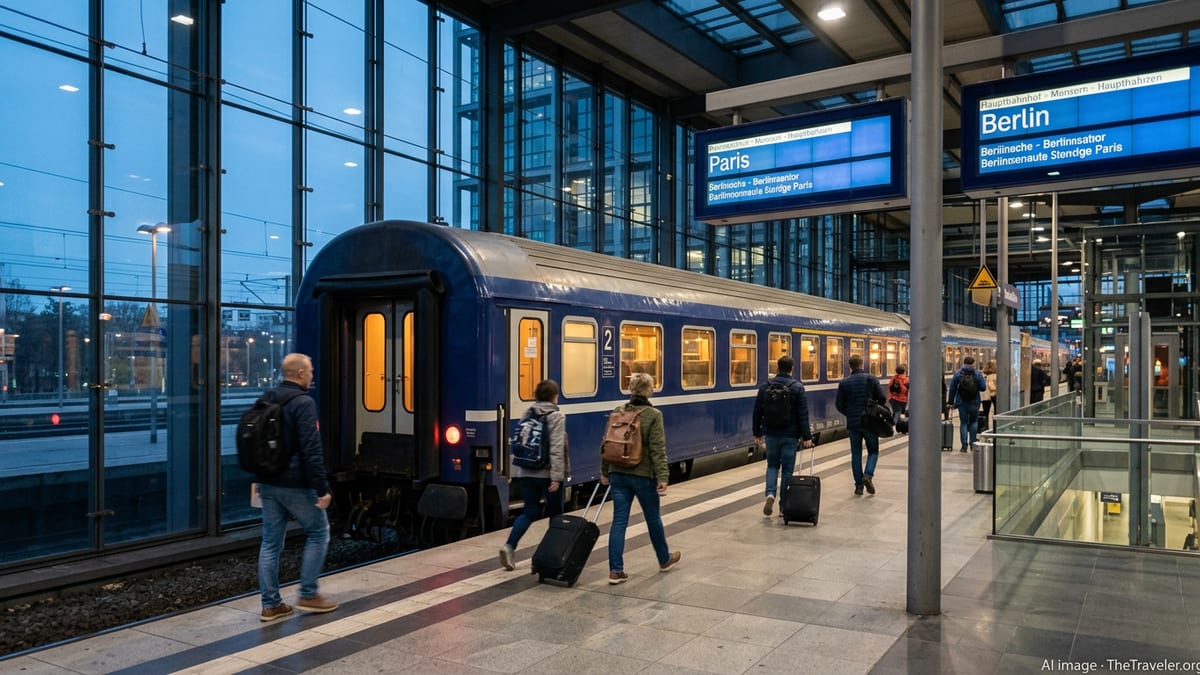
The centerpiece of Snälltåget’s 2021 expansion was a new overnight route connecting Stockholm, Malmö, Copenhagen, Hamburg, and Berlin. Published coverage describes this as an evolution of the previous Malmö–Berlin service into a longer, fully land-based link between three European capitals, using the fixed rail connections through Denmark instead of a ferry crossing.
Ticket sales for the reconfigured Stockholm–Berlin night train opened well ahead of the 2021 summer season, signaling a clear commitment to operate a substantially enlarged service pattern. Public information from the company and industry outlets notes that the new route was designed as a commercial, open access operation without direct operating subsidies, meaning that viability would depend on attracting sufficient passenger volumes throughout the operating period.
Timetables for 2021 indicated daily operation during the core summer months, followed by several departures per week into early autumn. The aim was to position the train as a practical alternative to air travel for leisure and city-break passengers, while also serving overnight business and long-distance rail enthusiasts interested in lower-carbon travel options.
Capacity increases and longer season on Sweden–Germany corridor
The 2021 plan went beyond simply changing endpoints on a map. Snälltåget targeted higher capacity and a longer season between Sweden and Germany, reflecting confidence that pent-up demand would emerge once travel restrictions eased. Company materials show that additional couchette and seating coaches were allocated to the cross-border route, enabling more berths and seats per departure compared with earlier Malmö–Berlin operations.
Industry reports suggest that the revamped service operated on well over 200 days per year once fully rolled out, a significant increase over the earlier pattern of a few weekly trains concentrated in peak holiday periods. Extending the season allowed the operator to spread fixed costs over more operating days while offering passengers more flexibility to travel outside the busiest summer weeks.
The strategy appears to have paid off. Subsequent data released by Snälltåget for the period after launch highlights strong passenger growth on the Stockholm–Malmö–Copenhagen–Hamburg–Berlin route, with the company later citing a multiple-fold increase in demand compared with the pre-2021 Malmö–Berlin train. This performance reinforced the view that a dense schedule and a clear, capital-to-capital proposition could make overnight trains competitive again on medium-haul European corridors.
Domestic and seasonal routes also targeted for 2021 growth
Snälltåget’s 2021 ambitions were not limited to the high-profile international night train. Public statements and press information from late 2019 and 2020 show that the operator also evaluated new or expanded domestic night services, including potential trains between western Sweden and the mountain region of Jämtland during winter and summer seasons.
The company had already built a presence on Swedish holiday routes, offering overnight services to ski and outdoor destinations in Jämtland and southern Lapland, often in combination with dedicated connecting buses. These services were intended to provide a car-free, lower-emission way for domestic travelers to reach resorts and hiking areas. Concepts under review for 2021 sought to preserve and extend this model despite broader uncertainty in the travel market.
Internally within Sweden, Snälltåget also continued to strengthen its core Stockholm–Malmö corridor. Information on the operator’s history notes the addition of bus links and through-ticketing to more regional destinations in earlier years, and the 2021 planning phase kept that integrated approach. By embedding the flagship international night train within a wider network of domestic trains and buses, the operator aimed to create a more resilient and interconnected timetable.
Part of a wider European revival of night trains
Snälltåget’s targeted 2021 expansion came at a time when interest in night trains was reviving across Europe. Transport policy debates in the European Union increasingly emphasized rail as a key tool for reducing emissions from medium-distance travel, while climate-conscious passengers began to look for alternatives to short-haul flights.
According to sector analyses and policy reports, private and public operators alike were experimenting with new cross-border night routes during this period. The Swedish operator’s decision to invest in its Stockholm–Berlin service, to grow capacity, and to extend operating days aligned with a broader trend of renewed confidence in overnight rail.
Industry coverage of Snälltåget in the years after 2021 suggests that the company’s early expansion strategy helped secure a strong foothold in this emerging market. The performance of the Stockholm–Copenhagen–Berlin night train, and the consolidation of the Sweden–Germany corridor more generally, demonstrated that commercially driven overnight services could attract substantial demand when marketed clearly and operated with consistent schedules.