


More news on this day
Air travelers using New York City, Boston and Philadelphia airports this holiday weekend are being warned to prepare for rolling ground holds and schedule disruptions as air traffic managers coordinate commercial flights with low‑flying military aircraft and maritime flyover activity along the Northeast corridor.
Get the latest news straight to your inbox!
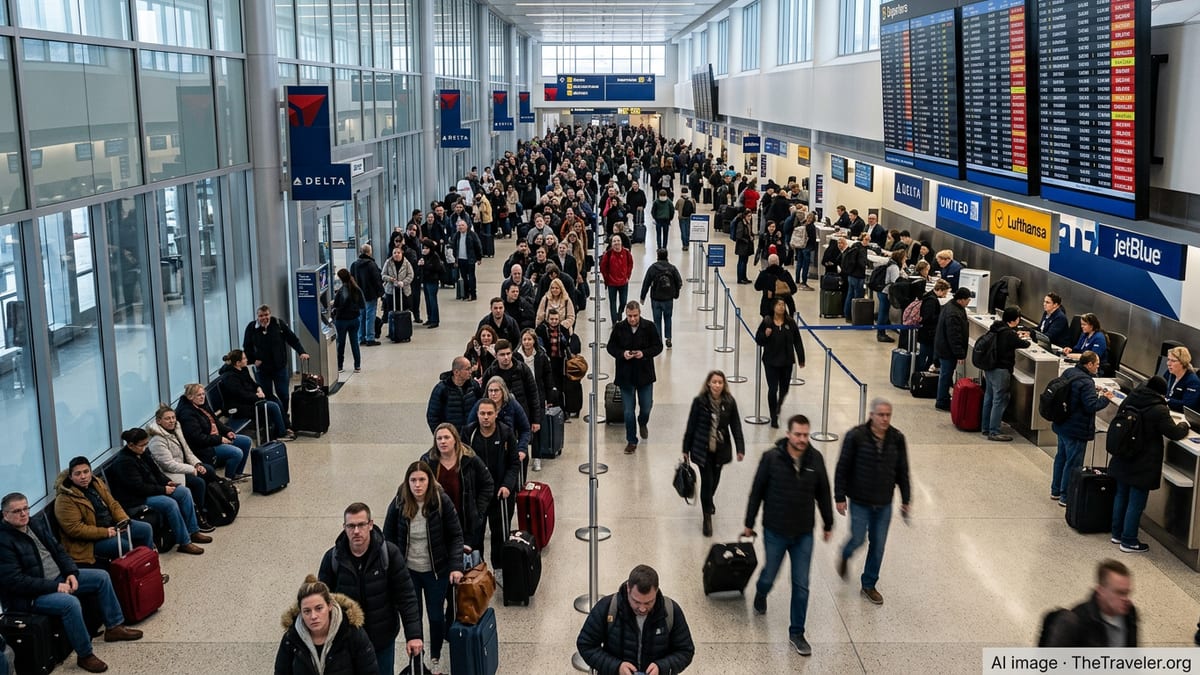
Coastal Flyover Activity Tightens Airspace Over Key Corridors
Public notices and aviation advisories indicate that special flight operations linked to July 4 commemorations and maritime demonstrations are concentrating military and ceremonial aircraft along the Hudson River, East River and adjacent coastal routes, narrowing the airspace available for routine airline traffic. Coordination of low‑level flyovers with ship movements and waterfront events is prompting short windows in which civilian traffic is rerouted or temporarily held on the ground.
In the New York region, air traffic planners are focusing on the heavily used approach and departure corridors that feed John F. Kennedy International, LaGuardia and Newark Liberty International. These routes run parallel to the shoreline and intersect the same airspace where slower, lower‑altitude flyover formations are expected to operate. When flyover activity begins, controllers typically rely on rolling traffic management initiatives that slow arrivals, meter departures and impose ground delays at multiple airports simultaneously.
Published information from federal aviation resources shows that when military or ceremonial flights share constrained airspace with dense commercial traffic, agencies lean on tools such as ground delay programs and ground stops to maintain safe separation. Those measures can cascade through the network because flights departing Boston Logan and Philadelphia International often pass through the same en‑route sectors that handle traffic into the New York City area.
As a result, even airports not directly hosting maritime or waterfront flight displays can experience knock‑on effects. Flights bound for or departing from Boston and Philadelphia may be slowed or rerouted to accommodate short‑notice priority windows for flyover aircraft operating along the coastline or in the vicinity of major harbors.
Rolling Holds at JFK, LaGuardia, Newark and Beyond
Traffic management advisories issued in recent weeks illustrate how rolling holds are used on busy summer weekends along the East Coast. When special operations or weather constraints develop near the New York metropolitan area, the Air Traffic Control System Command Center typically sequences delays across multiple hubs, gradually expanding or contracting restrictions as conditions change.
For this holiday period, travel guidance from aviation authorities highlights a combination of factors that can contribute to holds: surging passenger demand, summer thunderstorms and special‑use airspace reserved for flyovers. When those elements overlap, New York’s three major airports often become the focal point for delays that then spread to feeder airports up and down the corridor.
Boston Logan and Philadelphia International are particularly exposed because many of their flights must transit high‑density en‑route sectors serving the New York area before turning inland or continuing along the shoreline. When JFK, LaGuardia or Newark are placed under temporary flow restrictions, traffic managers frequently respond by reducing the rate of departures from Boston and Philadelphia to avoid gridlock in shared airspace.
Historical delay data published by federal agencies shows that traffic management initiatives related to volume and special events can quickly ripple outward from a single constrained hub. A brief halt on specific departure routes at JFK or LaGuardia can result in holding patterns or ground delays for flights still at gates hundreds of miles away, as airlines and controllers wait for new release times.
Holiday Passenger Volumes Magnify Disruption Risk
The latest summer travel outlooks from aviation agencies describe this season as one of the busiest in more than a decade, with flight schedules in the Northeast approaching or surpassing pre‑pandemic levels. Port Authority forecasts for recent July periods point to record passenger volumes at JFK, LaGuardia and Newark, and comparable demand is expected again around this year’s Independence Day weekend.
High passenger volumes limit the system’s ability to absorb additional constraints from maritime flyovers. When runways and taxiways are already near capacity, any reduction in arrival or departure rates to accommodate special flights can create longer lines of waiting aircraft. Rolling holds are used to meter that flow, but they also prolong turnaround times and increase the likelihood of missed connections.
Airlines have already trimmed some schedules at congested Northeast airports in response to staffing and equipment limitations, particularly at Newark. However, even leaner schedules can encounter disruption when unique events trigger new restrictions on already complex arrival and departure paths. Carriers often respond by preemptively offering travel waivers, encouraging customers to shift away from peak hours or rebook for less affected days.
For travelers, this means that a flight that appears on time at booking can be exposed to delay risk that only becomes apparent as airspace reservations for flyovers are finalized. Departure slots may be pushed back in narrow increments, turning what begins as a modest traffic management program into a multi‑hour series of rolling holds if demand, weather and special operations stack up.
What Travelers in New York, Boston and Philadelphia Can Expect
Publicly available planning materials and recent advisories suggest that the most acute impacts from maritime‑linked flyover operations will cluster around peak daytime hours over the long weekend. During these periods, rolling holds may temporarily pause departures from New York City, Boston and Philadelphia airports while specific formations enter or exit shared airspace along the coast.
Passengers flying into or out of JFK, LaGuardia, Newark, Boston Logan or Philadelphia International should be prepared for last‑minute gate holds, extended taxi times and airborne holding patterns near destination airports. Even when local weather appears favorable, flights may be sequenced more slowly than usual to maintain separation between commercial jets and participating military aircraft.
Travelers connecting through the New York airports are likely to be most exposed, because any delay on an inbound leg can cause missed onward flights during already crowded bank periods. Those with tight connections at Boston or Philadelphia may also feel the effects if departures are adjusted to accommodate flow restrictions tied to New York‑area airspace.
While the duration and intensity of rolling holds can vary from day to day, experience from prior summers indicates that early morning and late evening flights are sometimes less affected than midday departures when ceremonial activity and storm risk tend to overlap. However, with holiday demand running high, even off‑peak hours can see pressure if earlier disruptions cascade through the daily schedule.
Practical Steps for Minimizing Weekend Disruption
In advance of the holiday weekend, federal aviation guidance is urging passengers to monitor flight status closely and to build extra time into their plans. Travelers are being encouraged to sign up for airline notifications, use carrier apps and check real‑time airport status tools to track evolving ground holds and departure metering programs.
At the airports themselves, agencies recommend arriving earlier than usual, especially at JFK, LaGuardia and Newark, where security queues and roadway congestion can lengthen during peak travel waves. Passengers connecting through New York from Boston, Philadelphia or other East Coast cities may benefit from longer layovers that provide a buffer against rolling delays triggered by flyover or maritime operations.
Those with flexible plans might also consider scheduling flights outside of the busiest daytime windows or shifting travel to days just before or after the core holiday period. Although no timing can guarantee an on‑time departure, spreading demand away from the hours most likely to see concentrated flyover routes and thunderstorms can reduce exposure to the most severe holds.
For now, publicly available information points to a weekend in which celebratory aerial and maritime displays share a crowded sky with routine commercial traffic. As controllers balance safety, special events and heavy holiday demand, passengers across New York, Boston and Philadelphia are being advised to anticipate delays, stay informed and prepare for a more complicated journey through some of the nation’s busiest airspace.