


More news on this day
Australian travellers heading to Europe this northern summer are being warned to brace for severe disruption as the European Union’s new biometric Entry/Exit System triggers hours-long queues, missed flights and mounting pressure on border operations across major Schengen hubs.
Get the latest news straight to your inbox!
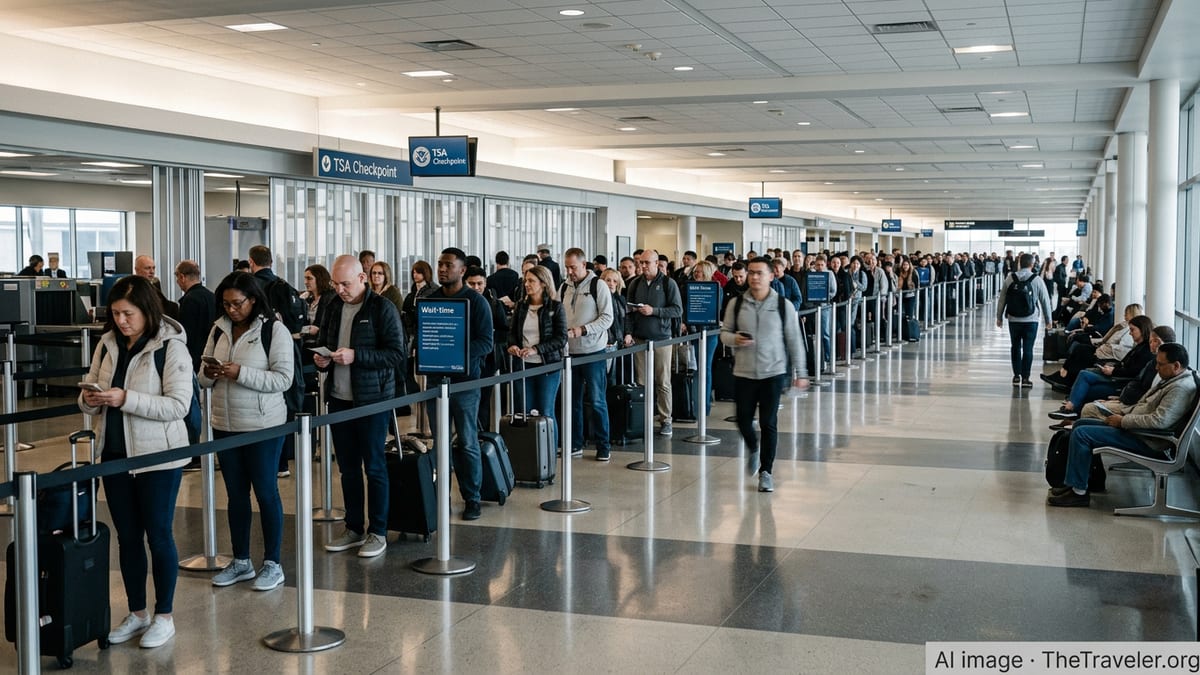
New EU border system collides with peak 2026 travel demand
The EU’s Entry/Exit System, fully operational since April 10, 2026, is designed to replace passport stamping for non-EU nationals with biometric checks and a centralised digital register of entries and exits. Publicly available EU documentation describes the system as a way to strengthen border security and better enforce the 90/180-day stay rules that apply to many third-country visitors, including Australians.
In practice, the rapid switch to mandatory fingerprinting and facial scans at busy air and land borders has collided with record post-pandemic travel demand. Industry statements and airport updates indicate that processing times for non-EU passengers have jumped sharply at many gateways, with border queues stretching into multiple hours even outside peak holiday weekends.
Reports from airport and airline associations in early April pointed to waiting times of two to three hours at passport control at several major European hubs on the first days of full EES operations. Subsequent coverage from travel and aviation outlets has documented instances of even longer lines, missed departures and widespread schedule knock-on effects as airlines hold flights for delayed passengers or struggle to rebook those who are stranded.
European institutions have already moved once to push back the full implementation timeline, granting member states flexibility to phase in the system through 2026. However, with the core infrastructure now live and the northern summer peak beginning, the operational strain is increasingly visible at front-line airports.
France, Italy, Spain and Greece emerge as flashpoints
The impact is being felt across the Schengen Area, but countries with a high share of leisure traffic such as France, Italy, Spain and Greece have emerged as key flashpoints. Airport trade groups and regional media coverage describe persistent congestion at passport control in major hubs including Paris, Rome, Madrid and Athens as border officers work through slower biometric checks for non-EU arrivals.
French airports experienced pronounced disruption in mid-April, with French-language and specialist travel reporting citing queues of up to three hours for non-EU passengers at Paris Charles de Gaulle and other large gateways in the first full days of mandatory EES use. Similar scenes have been described at Spanish and Portuguese airports, where flows of British, American and Australian holidaymakers converge with intra-European traffic during busy weekends.
In Italy, concerns are sufficiently acute that Rome’s airport operator has publicly warned of the risk of summer travel chaos if current procedures are not adapted. Recent European travel coverage indicates that authorities in Italy and several other states have explored options such as temporarily scaling back biometric registration at specific times or for certain flows in order to prevent terminals from becoming overwhelmed.
Greece, heavily reliant on summer tourism, has also featured in reports of lengthy border queues and evolving guidance around how strictly and how quickly to apply the new checks. Industry voices across southern Europe are increasingly urging the EU and national governments to provide more flexibility in how the system is run during peak periods, citing a widening gap between policy expectations and operational reality at busy holiday gateways.
Queues of up to six hours and growing pressure on EU institutions
Warnings from airline groups and airport councils have escalated in recent months as the effects of EES filter through the network. Joint statements from European airline and airport bodies in February and April highlighted what they called “significant delays” for passengers, with some hubs reporting two to three hours of waiting at border control even before the main summer surge.
Further analysis from travel industry publications in May and June has pointed to worst-case scenarios of queue times stretching to four hours or more at certain airports during busy waves of non-EU arrivals. One recent international insurance and travel industry briefing warned that travellers could face waits of up to six hours at some European airports this summer unless additional staff and process adjustments are put in place.
Alongside the long queues, there are reports that the new system has contributed to hundreds of missed flights and widespread knock-on delays where passengers fail to clear border checks in time to board. Some airports have spoken of periods where arriving non-EU travellers faced more than three hours at passport control, with congestion spilling back into terminal circulation areas and forcing ad-hoc crowd management measures.
The growing disruption has prompted renewed lobbying in Brussels for further review of the rollout. Airport associations argue that the current rules on how many travellers must be fully registered, and how quickly, are too rigid for real-world operations. Industry groups are calling for temporary easing of thresholds, additional funding for staffing and technology, and more flexibility for states such as France, Italy, Spain and Greece that handle a disproportionate share of long-haul leisure arrivals.
Australia issues travel warnings as Europe trips surge
Against this backdrop, Australian travel planners are sounding the alarm about the implications for the country’s rapidly recovering outbound market to Europe. Public advisories and travel trade reporting in Australia highlight the risk that EES-related bottlenecks in France, Italy, Spain and Greece could derail carefully timed itineraries, particularly those involving tight connections or first-night events immediately after landing.
Europe remains one of the most popular long-haul destinations for Australians, with bookings for the 2026 northern summer widely reported to be at or above pre-pandemic levels. Package holidays, cruising and independent touring itineraries frequently rely on smooth arrivals at key Schengen hubs, where any additional hour at passport control can push travellers beyond the limits of hotel check-in windows, transfer schedules or connecting flights.
Australian travel agencies and consumer advocates are increasingly referencing European industry warnings in their guidance to clients. Many are advising travellers to assume significantly longer processing times on first entry into the Schengen Area and to plan their itineraries accordingly. Some are recommending that passengers avoid back-to-back flight connections within a few hours in the same airport, especially when arriving from long-haul flights where delays are already common.
Insurance and consumer groups in Australia are also drawing attention to differing levels of coverage for EES-related disruption. While many standard policies treat missed flights caused by long airport queues as a traveller’s responsibility, some higher-tier products may offer limited protection. Travellers are being encouraged to review policy fine print carefully before departure.
What Australian travellers can do now
With no swift technical fix in sight and the EU’s system already live across most Schengen border points, Australian travellers are being urged to focus on preparation rather than hoping conditions will improve by the peak of July and August. Airline notices and airport advisories across Europe are consistently recommending that non-EU passengers arrive well in advance of departure time and keep essential items in hand luggage in case of extended waits.
For Australians planning multi-country European holidays, practical steps include allowing generous buffers between connecting flights, especially where a Schengen border crossing is involved, and avoiding tight same-day transfers between air, rail and cruise services. Travel industry briefings also suggest building in flexible time on arrival days rather than scheduling non-refundable tours, theatre tickets or long onward drives immediately after clearing immigration.
Experts in the border management field note that some of the most time-consuming elements of EES, such as the initial fingerprint capture and identity verification, occur only on a traveller’s first entry into the Schengen Area. On subsequent trips, processing may be faster once biometric data is already stored. However, with airlines and airports still adjusting staffing and procedures, waiting times remain unpredictable from one airport or day to the next.
For now, publicly available information from European and industry sources converges on a clear message: Australians travelling to France, Italy, Spain, Greece and other Schengen destinations in 2026 should expect longer queues, factor in generous time allowances and stay closely informed about evolving guidance from carriers and airports as the EU’s new Entry/Exit System beds in under real-world summer conditions.