


More news on this day
Avianca has temporarily shifted its main gateway to Venezuela from Caracas to Valencia, opening a new air bridge with Bogotá after an earthquake severely disrupted operations at Simón Bolívar International Airport.
Get the latest news straight to your inbox!
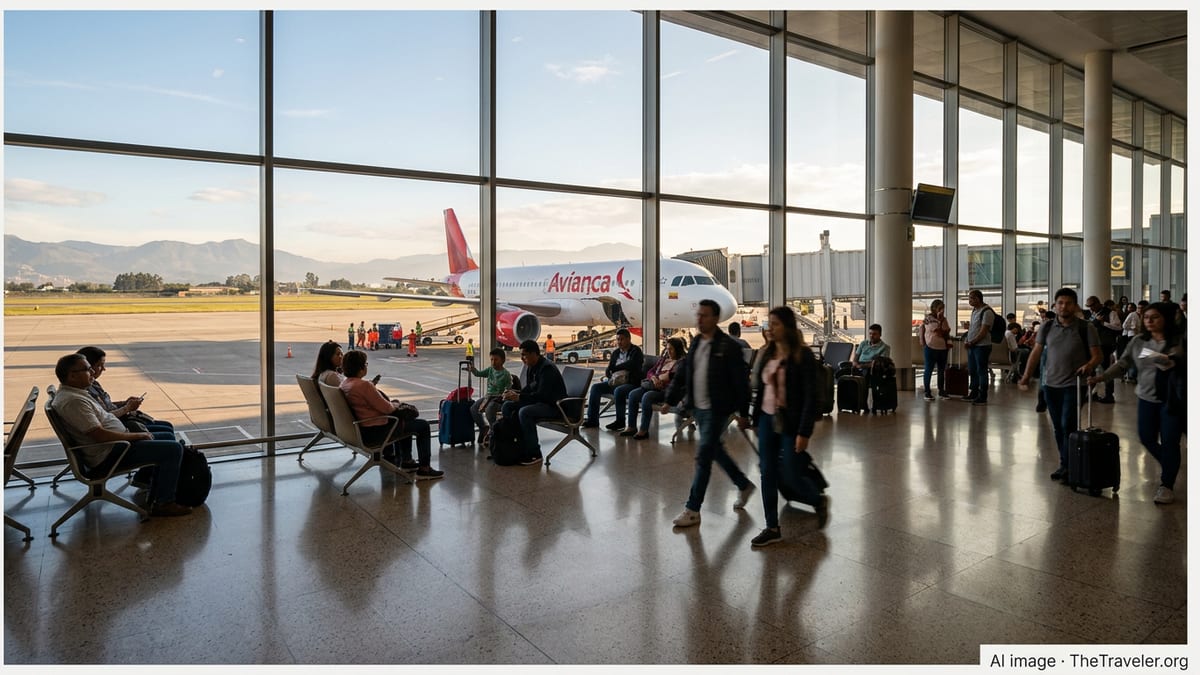
Earthquake Damage Forces Rapid Route Rethink
Publicly available information shows that a strong earthquake in late June triggered structural damage at Caracas’ Simón Bolívar International Airport, forcing authorities to restrict operations and prompting airlines to reassess their schedules. Avianca, which had only recently rebuilt its presence in the Venezuelan market, reacted by suspending Bogotá–Caracas services and looking for an alternative entry point into the country.
According to airline statements and industry coverage, the carrier has now reoriented its Venezuela operation through Valencia’s Arturo Michelena International Airport. This shift allows Avianca to maintain a direct link between Bogotá and Venezuela while Caracas remains partially closed and subject to ongoing safety assessments.
Travel advisories and help-center updates indicate that passengers booked on Bogotá–Caracas flights between late June and mid-July are being offered rebooking options, with Valencia designated as the primary substitute gateway in Venezuela. The change is framed as a temporary contingency measure, but it represents a notable adjustment in regional connectivity patterns.
Operationally, the move helps Avianca sidestep uncertainty over when full operations at Simón Bolívar International Airport will resume. With infrastructure inspections still underway and temporary closures of terminals and runways reported, rerouting traffic buys valuable time while airport authorities and engineers determine the extent of repairs needed.
Valencia Steps Into the Spotlight
Valencia’s Arturo Michelena International Airport, long a secondary option to the country’s capital gateway, is suddenly in the spotlight. Historically, the airport has served domestic routes and a smaller selection of international services, but it now finds itself hosting one of the region’s most important Colombia–Venezuela links.
Industry reports describe Avianca’s Bogotá–Valencia link as an “air bridge,” designed both to reconnect stranded travelers and to support the broader relief effort surrounding the earthquake. The airline has announced at least two daily frequencies on the route, operated by Airbus A320-family aircraft, with schedules closely mirroring the previous Bogotá–Caracas timetable.
For passengers, Valencia offers both advantages and trade-offs. The city lies roughly two hours by road from Caracas under normal conditions, creating a practical but not seamless substitute for direct access to the capital. Travelers connecting onward by land must factor in additional journey time, road conditions and any local fuel or transport constraints that may arise during an emergency.
The sudden elevation of Valencia as a primary international gateway also tests the airport’s capacity. Terminal facilities, ground handling and immigration services are being asked to manage a higher volume of international traffic on short notice, while still supporting existing domestic and regional operations.
Passenger Policies and Flexible Options
Avianca’s customer guidance for the Caracas disruption emphasizes flexibility. Help-center notices state that passengers holding tickets to and from Caracas for travel in late June and the first half of July can make one change without additional charges, subject to seat availability, when rerouting their journey through Valencia or selected Colombian airports.
The airline is also allowing itinerary adjustments that switch arrival and departure points between Caracas and Valencia, reflecting the reality that some travelers may still need to reach the capital while flights operate only to the alternative airport. Reports indicate that change-fee waivers and fare-difference exemptions are being applied within specified travel windows, providing some relief to passengers caught up in the disruption.
Travel-industry commentary notes that coordination remains crucial. Some passengers are booked on multi-airline or multi-ticket itineraries, and synchronization between carriers, travel agencies and online booking platforms will determine how smoothly rebooking is handled. For travelers with complex connections beyond Bogotá, updated schedules and minimum connection times at the Colombian hub are now central considerations.
Consumer advocates frequently recommend that travelers in such situations monitor their reservations directly through the airline’s website or mobile app and reconfirm ground arrangements within Venezuela. With airports, roads and public services all adjusting to the aftereffects of the earthquake, on-the-ground conditions can evolve more quickly than standard itinerary updates.
Regional Connectivity and Competitive Landscape
The shift from Caracas to Valencia also reshapes the broader map of air connectivity into Venezuela. In recent years, a limited group of Latin American and Caribbean carriers has maintained regular international links, often juggling operational, regulatory and economic challenges. The sudden loss of capacity at the main capital airport places additional strain on those networks.
Regional aviation outlets report that other airlines have temporarily suspended or reduced Caracas operations while keeping services to secondary Venezuelan cities largely intact. That dynamic reinforces the role of alternative gateways such as Valencia, Maracaibo and Barcelona as pressure valves when Caracas encounters major disruptions.
By rapidly deploying a standardized A320 fleet on the Bogotá–Valencia route, Avianca is attempting to preserve its role as a key connector between Venezuela and its extensive network across the Americas and beyond. The Bogotá hub remains a critical transfer point for traffic to North America, Central America and the Southern Cone, and keeping at least one Venezuelan point in the system helps sustain those flows.
However, analysts caution that the situation remains fluid. Any prolonged closure or capacity restriction at Caracas could alter airline strategies, prompting extended use of alternative airports or even longer-term schedule redesigns. Much will depend on how quickly airport infrastructure inspections progress and what additional safety or structural work is required.
What Travelers Should Expect in the Coming Weeks
For travelers planning near-term trips between Colombia and Venezuela, the key takeaway is that Caracas-bound itineraries are now likely to involve Valencia. Schedules published by the airline indicate at least daily service through mid-July, with the possibility of adjustments as demand and operational conditions evolve.
Passengers with existing tickets are being encouraged, through publicly available notices, to verify their latest flight details, including departure airports, check-in times and any reissued booking references. Given the short-notice rerouting and increased demand on call centers, many travelers are turning to self-service tools to manage changes and select new dates.
On the ground in Venezuela, the rerouting is expected to push additional traffic onto intercity roads between Valencia and Caracas. Travelers may encounter fuller buses, higher demand for private transfers and longer overall journey times compared with a direct arrival into the capital’s airport.
In the broader context, the Avianca shift underscores how quickly airline networks can be redrawn by a sudden infrastructure shock. A route that, days earlier, led seamlessly into Caracas now terminates in Valencia, illustrating both the vulnerability of key hubs and the agility airlines must demonstrate when an airport at the heart of a country’s aviation system is suddenly taken offline.