


Travelers planning a few days in Naples usually zero in on blockbuster names like Pompeii, Herculaneum or Capri. Far fewer make it to Cuma, the quiet archaeological park tucked into the volcanic landscapes of the Phlegraean Fields west of the city. Yet this was the first Greek colony in the western Mediterranean and the legendary home of the Cumaean Sibyl, guardian of the gateway to the Underworld. So is Cuma actually worth visiting during a trip to Naples, or should you spend your limited time elsewhere? The answer depends on what you value most in your travels, and how you structure your day.
Get the latest updates straight to your inbox!
What Makes Cuma Special Compared With Naples’ Big‑Name Sites
Cuma is not just another set of ruins. Founded around the 8th century BC by Greek settlers, it is considered the earliest Greek colony in mainland Italy and a precursor to Neapolis, today’s Naples. Walking through the site, you are effectively tracing the roots of the entire region, from archaic Greek foundations to Roman temples and late antique churches built on top of them.
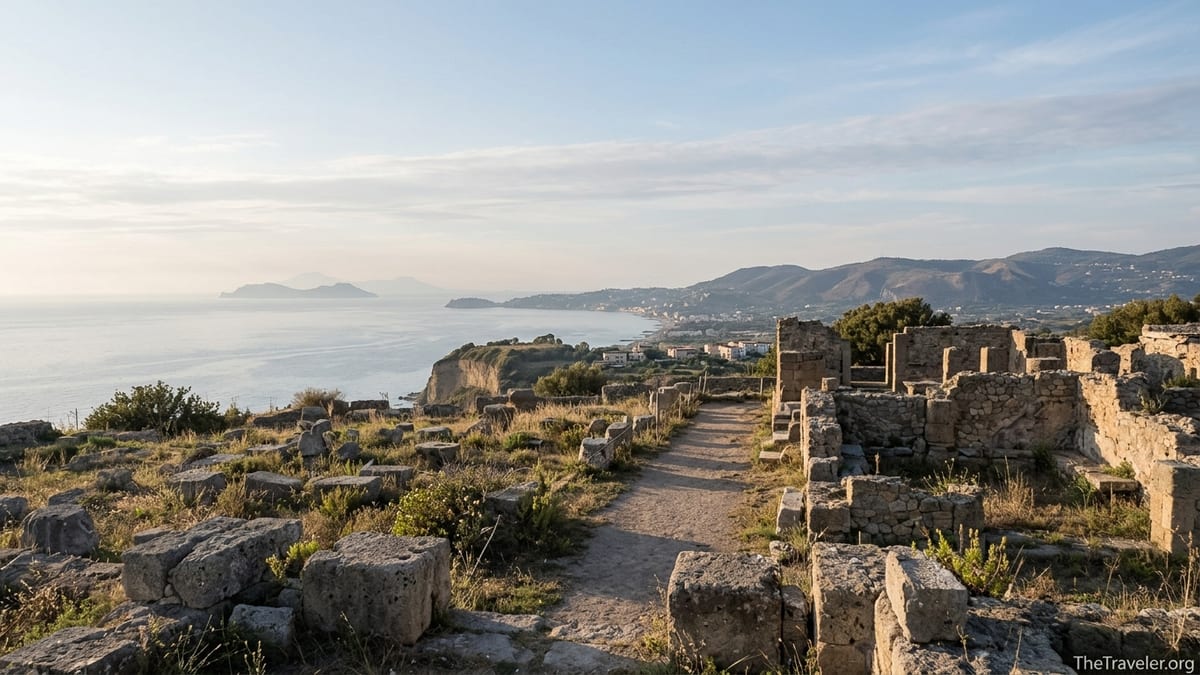
The park centers on the acropolis, a hilltop plateau that gathers its main monuments: the famous Antro della Sibilla (Sibyl’s Cave), the Byzantine Tower and belvedere, and the upper and lower temple terraces commonly referred to as the temples of Apollo and Jupiter. The lower city with its forum, baths and monumental necropolis is still being developed for visitors and currently opens only on special occasions, so most travelers focus on the acropolis and its sweeping views over the Tyrrhenian Sea and the Phlegraean volcanic craters.
Compared with Pompeii’s vast sprawl or the dense streets of central Naples, Cuma feels compact and contemplative. Typical visits take around 1.5 to 2 hours, rather than a full day. This makes it an attractive add‑on if you want a dose of ancient history without committing to the marathon of a full Pompeii visit, or if you are returning to the region and looking for something less obvious.
For many visitors, the real appeal is the atmosphere. On a weekday morning outside peak holiday periods, it is common to find only a handful of other people wandering the terraces and the tuff‑carved corridors of the Sibyl’s Cave. The combination of myth, coastal scenery and relative solitude can feel far more evocative than more crowded sites, which is a strong argument in Cuma’s favor if you value mood as much as sheer monument quantity.
Practicalities: Opening Hours, Tickets and Crowds
Cuma belongs to the Archaeological Park of the Phlegraean Fields, a group of sites managed together that also includes the Flavian Amphitheatre in Pozzuoli and the underwater remains of Baiae. As of mid‑2026 the acropolis is regularly open, while parts of the lower city open only for special events. Visitors are asked to reserve in advance and entry numbers are limited in time slots, with a maximum stay of around two hours and smaller limits for the Sibyl’s Cave itself. These measures are meant to protect the fragile tuff corridors and keep the visitor flow manageable.
Standard full tickets for Cuma alone cost in the mid single digits in euros per adult, with reduced rates for EU citizens in certain age brackets and free entry for children and some other categories. Prices can change, but you should budget roughly the cost of a light lunch in Naples. If you plan to explore several Phlegraean sites, it is worth checking whether a combined ticket or a regional pass such as the Campania Artecard will cover Cuma alongside Pozzuoli and Baiae, which can make a multi‑site day substantially better value than paying separate entrance fees.
Because access is controlled, Cuma rarely sees the crushing crowds common at Pompeii or the Naples Archaeological Museum. Even in late spring and early autumn, when cruise ship passengers fill the Circumvesuviana trains to Pompeii, Cuma tends to remain comparatively quiet. The busiest days are typically Sundays and Italian public holidays, when local families and school groups add to the numbers. If you want maximum peace and the coolest temperatures, early morning entry on a weekday is ideal.
Facilities on site are relatively simple compared with larger parks. Expect a small ticket area, toilets, a modest bookstall or kiosk and occasionally vending machines for water and snacks, rather than full cafes and restaurants. This means you should arrive hydrated and, in warmer months, consider bringing a refillable bottle and a small snack, especially if you plan to combine Cuma with a beach stop at nearby Miseno or a visit to Baiae afterwards.
Getting to Cuma from Central Naples
Cuma lies in the municipality of Bacoli, roughly 20 to 25 kilometers west of central Naples. Drivers usually follow the tangenziale (ring road) toward Pozzuoli and then continue through the Phlegraean Fields, with the final approach along local roads signposted for Cuma and the archaeological park. In light traffic, the drive can take 35 to 45 minutes from the historic center; in rush hour or high summer weekends, it can easily stretch past an hour because of local congestion near the coast and popular beaches.
Public transport requires a little more planning but is perfectly feasible. Many travelers start at Montesanto station in central Naples, a short walk uphill from the Spanish Quarter and reachable by metro Line 2 or the funiculars. From there, the Cumana railway operated by EAV runs toward the Phlegraean coast. You ride as far as stations such as Fusaro or Torregaveta and then take a local bus or taxi to Cuma. The journey to the coast usually takes around 35 minutes by train, plus another 10 to 20 minutes by road depending on traffic and where you transfer.
Because Cuma sits away from major residential centers, the last legs by bus can be infrequent and their timetables change from season to season. Taxis or pre‑booked car services from Pozzuoli or Baia are often more reliable, especially if you are traveling in a small group that can split the cost. As a rough guide, a short taxi transfer from the Pozzuoli area might cost the equivalent of a mid‑range pizza dinner for two in Naples. Many visitors also choose to rent a car just for the day, combining Cuma with other Phlegraean highlights like the lakes of Averno and Fusaro or a lunch overlooking the harbor of Baia.
If you prefer not to manage logistics yourself, several local tour operators and guides based in Naples and Pozzuoli offer private or small‑group excursions to the Phlegraean Fields that include Cuma. These usually bundle round‑trip transport, entry tickets and guided visits to multiple sites over the course of a full day. Prices vary widely by season and group size, but for a couple or small group the cost often works out similar to hiring a taxi for several hours plus on‑site guide fees, with the advantage of streamlined logistics.
What You Actually See at Cuma: From the Sibyl’s Cave to Sea Views
Most visits to Cuma start at the lower level of the acropolis, with a path that leads directly into the Antro della Sibilla. This long, trapezoidal corridor cut into the tuff rock is dimly lit and atmospheric, with side chambers and a dramatic opening at the far end. Ancient authors associated this sanctuary with the Cumaean Sibyl, the prophetess who, according to myth, guided Aeneas into the Underworld. Whether or not this exact structure was her legendary cave, the setting does a credible job of bringing the story to life, especially when an on‑site guide explains how the space may have functioned as an oracular sanctuary.
From the cave you climb gradually onto the hilltop terraces, passing remnants of fortifications and emerging onto the so‑called Temple of Apollo on the lower terrace. Here, scattered columns, foundations and later Christian additions tell a layered story. Informational panels explain how the sanctuary evolved from a Greek temple to a Roman complex and then into a church with a baptistery, whose colored marble fragments still cling to the walls. On clear days, the terrace opens onto a panorama of the coastline and the flat lands that once held the lower city.
Continuing upward, the path reaches the upper terrace generally referred to as the Temple of Jupiter, perched on the summit of the acropolis. The ruins themselves are austere but impressive: massive blocks, steps and wall sections that evoke the scale of the sanctuary when it dominated the region’s religious life. From here, the views are among the best in the Phlegraean Fields, taking in Cape Miseno, the islands off the coast and the craters and lakes that dot the volcanic landscape. In late afternoon light, the combination of golden stone, low sun and shimmering sea can be striking.
Below the acropolis, ongoing excavations in the lower city continue to reveal the Roman forum, bath complexes and residential quarters. At the time of writing, these areas generally open only during special cultural events or guided visits coordinated by the Archaeological Park, so most independent travelers will not be able to wander there freely. Still, even from the acropolis you can appreciate how the urban layout once stretched from the hill down to the plain, and some visitors pair a visit to Cuma with the Archaeological Museum of the Phlegraean Fields at Baia, where many artifacts from Cuma are displayed.
Who Will Appreciate Cuma Most (And Who Might Skip It)
Cuma is particularly rewarding if you are already interested in ancient history and mythology. Travelers who have read Virgil’s Aeneid or studied Magna Graecia often find it thrilling to stand in a place that marks the western frontier of early Greek colonization and the narrative gateway to the Underworld. Enthusiasts of archaeology will appreciate the chance to see Greek, Roman and late antique layers stacked on the same hill, without the commercial bustle that can distract in more famous sites.
Photographers and landscape lovers also tend to rate Cuma highly. The site’s position within the Phlegraean Fields means you are constantly catching glimpses of volcanic calderas, coastal lagoons and the Tyrrhenian Sea. On hazy days the scenery can look almost dreamlike, while in winter the air is often clear and the outlines of the islands stand out sharply. Because visitor numbers are controlled, it is easier to capture wider shots without crowds, whether of the tuff corridors of the Sibyl’s Cave or the temple terraces at sunset.
On the other hand, travelers with only one or two full days in Naples who have never visited Pompeii or Herculaneum may find those more famous sites a better use of limited time. Cuma is compact; it does not offer the miles of preserved streets, frescoed houses and snack bars that make Pompeii such an immersive dive into daily Roman life. Families with young children who tire quickly might also prefer a shorter stop at the Naples Archaeological Museum, where they can see many of the best finds from sites across Campania without navigating multiple transfers.
Cuma is less well suited to travelers with serious mobility issues. The paths from the parking area to the cave and up to the terraces involve slopes, uneven stone surfaces and some steps without handrails. For those who use walking sticks or have limited stamina, a partial visit focusing only on the lower areas may still be possible, but it is important to set realistic expectations and, if necessary, consult directly with the Archaeological Park staff before planning a visit.
Pairing Cuma with Other Phlegraean Highlights
Because Cuma itself can comfortably be visited in about two hours, most travelers will want to combine it with other nearby attractions for a fuller day. One classic pairing is Cuma plus the archaeological area of Baiae, where the remains of luxurious Roman seaside villas and bath complexes are partly submerged in the bay. Glass‑bottom boat tours and snorkeling excursions in good weather let visitors peer down at mosaic floors and collapsed columns under the water’s surface, offering a vivid contrast to Cuma’s hilltop temples.
Another natural partner is the Flavian Amphitheatre in Pozzuoli, one of the largest Roman arenas in Italy. Its remarkably preserved underground corridors and animal pens provide a different perspective on ancient spectacle and engineering. Many visitors report that they find the experience at Pozzuoli more intimate and less crowded than the Colosseum in Rome, with ticket prices that are typically lower. Linking Cuma in the late morning with the amphitheatre in the afternoon makes for a satisfying loop through the Phlegraean Fields, with a lunch stop at one of Pozzuoli’s waterfront trattorias in between.
For those who enjoy nature as much as ruins, Cuma can also be paired with a walk around Lake Averno or Lake Fusaro, both set in volcanic craters and fringed with greenery. Around Averno, short lakeside trails lead past vineyards and small restaurants serving seafood and local white wines. At Fusaro, you can admire the Bourbon‑era hunting lodge known as the Casina Vanvitelliana, its pale structure reflected in the water. These stops require a car or carefully timed buses, but they showcase the unique mix of geology and history that defines the Phlegraean Fields.
Travelers with more time in the area sometimes dedicate a full Phlegraean Fields day, folding in Cuma, Baiae, Pozzuoli and a stop at the Archaeological Museum of the Phlegraean Fields housed in the Aragonese Castle of Baia. The museum brings together artifacts from across the region, including Cuma, and the castle’s terraces offer another set of sweeping views across the coast, rounding out a day that balances ruins, landscapes and local food.
How Cuma Fits into a Typical Naples Itinerary
If you are in Naples for three full days or more, it is realistic to include Cuma without sacrificing the city’s headline experiences. Many travelers devote one day to the historic center, Spaccanapoli and the Naples Archaeological Museum, one day to Pompeii or Herculaneum plus Mount Vesuvius or a coastal town, and then a third day to the Phlegraean Fields, with Cuma as the anchor. This structure gives you a balance of urban life, major classical ruins and lesser‑known landscapes.
For shorter stays of two days or less, Cuma becomes more of a trade‑off. If you have already visited Pompeii or Herculaneum on a previous trip, Cuma offers a fresh angle on the region’s ancient past and is an excellent way to escape the intensively touristed corridors of central Naples. If this is your first visit and you want the broadest possible introduction, prioritizing Naples itself and one major site like Pompeii may give you a more rounded sense of the area in less time.
Budget is another factor. A day centered on Cuma and the Phlegraean Fields can be relatively economical compared with long excursions to Capri or the Amalfi Coast. Local train fares, modest site entry fees and lunches in Pozzuoli or Bacoli usually add up to less than the cost of high‑season ferry tickets and restaurant prices on the islands. Travelers watching their spending but eager to see more than the immediate city may find Cuma an appealing way to deepen their experience without straining their wallet.
Seasonality matters as well. In high summer, when temperatures in Campania can soar, the exposed terraces of Cuma can feel very hot in the middle of the day. Early morning or late afternoon visits are far more comfortable, and combining Cuma with a late swim at nearby beaches such as Miseno can turn a history outing into a mixed cultural and seaside day. In cooler months, from late autumn to early spring, the light is often crisp and visits to Cuma can be atmospheric, though you should always check for any seasonal adjustments to opening hours before setting out.
The Takeaway
So, is Cuma worth visiting during a trip to Naples? For travelers who are curious about the deeper roots of the region, interested in Greek as well as Roman history, and drawn to quieter, more atmospheric sites, the answer is a clear yes. Cuma offers a concentrated slice of myth and archaeology set against one of Italy’s most striking volcanic landscapes, with ticket prices and crowd levels that are modest by the standards of the country’s best‑known ruins.
If your time in Naples is extremely limited or this is your first encounter with Campania’s ancient heritage, you may reasonably choose to focus on Naples itself and a marquee site like Pompeii instead. But if you have at least three days in the area, or if you have already experienced the headline attractions and want something with more local flavor and fewer tour buses, Cuma and the wider Phlegraean Fields merit serious consideration.
In practical terms, Cuma works best as part of a broader day in the Phlegraean Fields, stitched together with Baiae, Pozzuoli, the crater lakes and perhaps the regional archaeological museum. With a bit of planning, you can move from the dim corridor of the Sibyl’s Cave to a seafood lunch on a harbor and a sunset over volcanic hills, all within easy reach of central Naples. For many travelers, that combination of myth, landscape and manageable logistics is exactly what makes Cuma worth the journey.
FAQ
Q1. How long do I need to visit Cuma?
Most visitors spend about 1.5 to 2 hours exploring the acropolis, including the Sibyl’s Cave and the temple terraces, not counting travel time to and from Naples.
Q2. Can I visit Cuma and Pompeii on the same day?
It is technically possible but not advisable for most travelers, as each site plus transport can be tiring. A better plan is to pair Cuma with nearby Phlegraean sites like Baiae or Pozzuoli.
Q3. Do I need to book tickets for Cuma in advance?
Current access rules encourage advance reservations, and visitor numbers are limited in time slots, so booking ahead is recommended, especially in weekends and holiday periods.
Q4. Is Cuma suitable for children?
Cuma can be enjoyable for children who like stories of myths and ruins, but there is little shade and some uneven paths. Bringing water, sun protection and snacks is important for family visits.
Q5. Are there guided tours available at Cuma?
Licensed guides based in Naples and Pozzuoli frequently offer private or small‑group tours that include Cuma, and some tour operators bundle it with other Phlegraean sites in a full‑day excursion.
Q6. What should I wear and bring for a visit to Cuma?
Wear comfortable walking shoes with good grip, bring a hat and sunscreen in warmer months, and carry water since on‑site services are limited compared with larger archaeological parks.
Q7. Is Cuma open all year round?
The acropolis is generally open throughout the year, although exact opening hours and any temporary closures can vary by season and by day of the week, so it is wise to check close to your visit.
Q8. Can I reach Cuma by public transport from Naples?
Yes, you can combine the Cumana railway from central Naples with a local bus or taxi for the final stretch, though connections may require planning and schedules can be less frequent than in the city.
Q9. Is Cuma crowded like Pompeii?
No, Cuma typically sees far fewer visitors, thanks to its location and controlled access. Even in busy months, it usually feels calm compared with the major Vesuvian sites.
Q10. Is Cuma worth it if I have already seen Pompeii and Herculaneum?
Yes, many travelers who have visited the larger sites appreciate Cuma for its Greek origins, mythological associations and tranquil setting within the Phlegraean Fields, which offer a different perspective on the region.