


Flight delays and cancellations are stressful enough without having to navigate legal jargon and airline stonewalling. Services like Compensair promise to handle the heavy lifting of EU261 and UK261 flight compensation on your behalf, often on a no win, no fee basis. Yet many travelers still see their claims stalled, reduced, or even rejected entirely for avoidable reasons. Understanding how Compensair works in practice, and the mistakes that most often trip people up, can make the difference between a smooth payout and months of frustration.
Get the latest updates straight to your inbox!
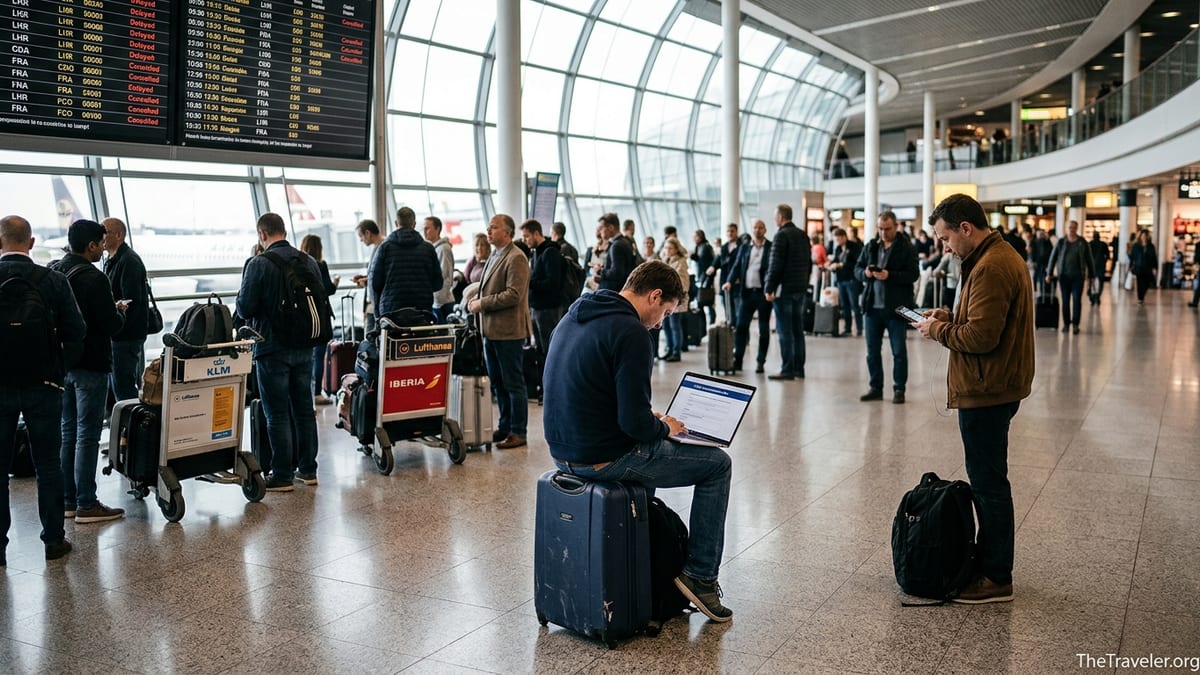
How Compensair Works and Why Details Matter
Compensair is a claim management company that helps passengers pursue compensation for disrupted flights under EU261, UK261 and similar regimes. In broad terms, if your eligible flight was delayed by more than three hours on arrival, cancelled at short notice, or you were denied boarding because of overbooking, Compensair may pursue a cash payment from the airline on your behalf. Their business model is typically contingency based: you pay nothing upfront, and they take a percentage service fee from any compensation successfully collected.
In practice, this means you hand over your case and much of the communication with the airline to Compensair. They gather details of your trip, check eligibility, and, if they accept the case, draft formal claims or escalate to enforcement bodies and legal partners where necessary. Because they act in your name, they often need authority to represent you, and in some cases to receive the compensation into their own client account before forwarding your share to you.
That setup can be convenient, especially if you do not have time to argue with an airline or you are unsure how EU261 works. But it also means that missing documents, inaccurate details, or misunderstanding Compensair’s role can seriously slow the process. Many negative reviews and complaints about the service trace back to issues that began at the moment the traveller submitted the initial claim form.
Take a typical example: a British Airways flight from Barcelona to London arrives four hours late because of a technical fault. Under EU261, a passenger on this route could be entitled to around 400 euros in compensation, depending on exact distance and rerouting. If the traveller submits their claim to Compensair without the correct flight number or misstates the date by one day, the airline can easily reject the first approach. Fixing that mistake later can add weeks or months to the timeline.
Incomplete or Inaccurate Flight Information
One of the most common and easily avoidable mistakes is submitting incomplete or incorrect flight details when you first file with Compensair. Their online form typically asks for the airline, flight number, departure and arrival airports, date, and the nature of the disruption. It is tempting to rush through this step from your phone in a taxi or hotel lobby, but any errors here ripple through the whole process.
For example, travelers frequently mix up flight numbers when they have multiple connections on the same day. Someone flying Prague to Amsterdam to New York might enter the long-haul KLM flight number instead of the delayed regional connection that actually triggered the right to compensation. In that scenario, Compensair may initially submit a claim to the wrong airline or for the wrong segment, and the airline will very likely respond that no disruption occurred on that flight.
Another recurring problem is entering the wrong travel date. If your flight left after midnight local time or if you crossed time zones, it is easy to misremember whether the disruption happened on the 12th or the 13th. Airlines keep precise operational records, and if the date on the claim does not match their logs, they can push back or say they cannot trace the incident. Correcting such discrepancies is possible, but it lengthens the back-and-forth and may force Compensair to refile.
To avoid these problems, always base your claim on documentary evidence rather than memory. Open your airline confirmation email, check the boarding pass in your digital wallet, or review messages from the airline app. If your Amsterdam to London flight KL1234 on 5 March arrived at 18:42 instead of the scheduled 15:20, make sure those exact details are what you enter into Compensair’s form.
Forgetting Essential Documents and Proof
A second, equally damaging mistake is failing to upload all the documents Compensair needs to prove your case. Even though the service makes the process feel hands-off, airlines often demand precise evidence before paying out under EU261. Compensair therefore typically asks for items such as your booking confirmation, boarding pass, ID details, and sometimes proof of arrival time or receipts for extra expenses.
Consider a family of four whose Rome to Paris flight is cancelled by a low-cost carrier and rebooked 11 hours later. Reviews on consumer sites show such cases can lead to compensation of several hundred euros per passenger, yet only if each traveler is properly documented. Submitting just the main booking confirmation without the names and dates of birth of all family members can delay or limit payouts. Compensair may need to circle back and ask you to provide the missing boarding passes or copies of passports before they can proceed.
Another real-world example involves proof of arrival time. A flight might technically land three hours and five minutes late, crossing the threshold for compensation, but the airline claims it was two hours and fifty-five minutes. If you kept a photo of the airport’s arrivals board or a timestamped screenshot from a flight-tracking app on your phone, Compensair can use that as supporting evidence. Many travelers, however, delete these items once they reach their hotel, not realising their value in a future claim.
The simplest way to avoid this pitfall is to create a small digital folder for each disrupted trip. As soon as something goes wrong, save boarding passes, gate-change emails, delay notifications, and any receipts for meals or last-minute hotels. When you later open Compensair’s claim form, you can upload this bundle in one go rather than trying to reconstruct events from memory weeks later.
Misunderstanding Fees, Payouts and Timelines
Compensair’s model is built on contingent fees: they only charge if they successfully collect compensation, usually as a percentage of the amount received from the airline. A frequent source of disappointment is not reading the fee terms closely before submitting a claim. Some travelers expect to receive the full 600 euros they have seen quoted for long-haul delays, then feel misled when a service fee is deducted.
To avoid this, take a moment at the outset to understand how the math works in your specific situation. Suppose you are entitled to 400 euros for a Paris to Istanbul delay and Compensair’s commission is approximately 30 percent plus VAT, where applicable. If the airline pays the full amount, you might see around 260 to 280 euros in your bank account after fees. That can still be a good outcome compared with getting nothing by going it alone, but it should not come as a surprise.
Another common misunderstanding involves the route the money takes. In many cases, airlines prefer to transfer compensation to a single account, which may be controlled by Compensair. The company then deducts its fee and forwards the remainder to you. Some customers become concerned when they hear that the airline has already sent funds to Compensair but their own payout has not yet arrived. Complaints on review platforms show that disputes can arise around the timing of withdrawals and the transparency of intermediary accounts.
You can reduce the risk of confusion by carefully checking the payment options Compensair offers before signing any agreement. Note which currencies and methods are supported, whether there are any extra bank transfer fees, and how long payouts typically take after the airline settles. If Compensair indicates that it may be several weeks between the airline payment and your own, factor that into your expectations and financial planning.
Ignoring the Power of Attorney and Representation Terms
When you file a claim, Compensair often asks you to sign a document giving them authority to act on your behalf. This can range from a simple mandate to correspond with the airline to a more formal power of attorney if the matter escalates to court or external enforcement bodies. Many travelers sign these forms on autopilot without reading what they actually authorize.
In some jurisdictions, granting a broad power of attorney can allow a company to open specific-purpose accounts or email aliases in your name to receive payments or communicate with airlines. That can streamline mass processing of claims, but it also raises questions about control and data handling. There have been online complaints from passengers who later discovered that dedicated email addresses or virtual bank sub-accounts had been created using their identity details, and they felt uncomfortable that they had not fully understood this in advance.
Before you agree, read the representation terms slowly and ask yourself a few practical questions. Are you comfortable with Compensair submitting documents, statements, or even legal complaints in your name without asking for approval of each draft? Under what circumstances can you revoke the mandate if you want to take over direct negotiation with the airline? If the compensation is paid first to an account opened for the claim, how soon must the company pass it on to you and what records will you receive?
In real cases, misunderstandings here can sour what is otherwise a successful outcome. Imagine that your delayed Lisbon to Berlin flight qualifies for 250 euros, the airline pays Compensair, and you later see only a brief email saying that a transfer to you is “in process” with no statement or breakdown. If you knew beforehand exactly how representation and payment flows work, you would be less likely to worry that something was amiss or to engage in drawn-out disputes with support staff.
Not Checking Eligibility or Airline Responsibility
Another frequent error is assuming every frustrating flight qualifies for EU261-style compensation and sending marginal cases to Compensair without checking eligibility. While the regulations are generous, they do not cover every situation. If your New York to London flight on an American carrier is delayed leaving the United States, for example, EU261 usually does not apply, even if you land in Europe. Conversely, a Madrid to Chicago flight operated by a European airline often does fall within the rules.
Compensair does run basic automated eligibility checks, but these tools are only as good as the information provided. If you incorrectly state that your London to Dubai flight was cancelled because of a crew issue, you might initially pass the filter, only for the case to collapse later when the airline proves that severe air traffic control restrictions were to blame. That can mean months of waiting only to find out your claim was never likely to succeed.
Responsibilities also vary depending on whether you accepted rerouting, vouchers, or refunds at the time of disruption. Some passengers accept generous hotel and meal vouchers in the airport, then are disappointed to learn later that this does not automatically entitle them to full cash compensation on top. Others voluntarily move to a later flight in exchange for a travel credit and then try to claim as though they were involuntarily denied boarding.
To reduce the risk of wasting time on ineligible claims, quickly review the basic contours of EU261 or UK261 before submitting anything. Focus on whether your flight departed from the EU or UK, whether it was operated by an EU or UK carrier, how many hours late you arrived at your final destination, and whether the root cause was within the airline’s control. If your Munich to Athens holiday flight arrived four and a half hours late due to a crew shortage, it is a strong case. If your Toronto to Frankfurt flight was diverted because of a medical emergency on board, compensation is unlikely, and Compensair may eventually tell you the same after initial screening.
Failing to Monitor Communication and Follow Up
Many travelers view Compensair as a set-and-forget solution. They submit a claim, forward some documents, and then expect to receive money with minimal further involvement. While this can happen in straightforward cases, airlines frequently delay or obstruct compensation claims, and Compensair’s staff may need additional information or signatures from you as they escalate.
A common mistake is ignoring follow-up emails or messages asking for clarifications or extra documents. If Compensair sends a request for a more legible passport scan, confirmation that you did not accept vouchers, or consent from a fellow passenger on the same booking, and you reply weeks later or not at all, the case can stall. In some situations, deadlines imposed by national enforcement bodies or courts mean that missing a simple confirmation can force Compensair to drop or restart the claim.
Real-world experiences shared by travelers show a pattern: initial contact feels swift and reassuring, but months later, updates become infrequent and passengers grow frustrated. Sometimes this reflects slow responses from the airline or ongoing negotiations. In other cases, it is because a crucial question from Compensair went unanswered, and the file was effectively on hold without the customer realizing it.
To avoid this, treat your claim as a joint project rather than a product you bought and forgot. Set a recurring reminder in your calendar to check the email address you used for the claim. When Compensair asks for more information, respond in days rather than weeks, even if only to say that you are gathering documents. If you have not heard anything for a month or more, send a polite status request, referencing your case number and original flight details.
The Takeaway
Working with Compensair can turn a stressful flight disruption into a tangible payout, especially if you are unfamiliar with EU261 rules or simply lack the time to argue with airlines. But the service is not magic. It relies on accurate information, complete documentation, clear expectations about fees and timelines, and active cooperation from you as the passenger. Many of the complaints and frustrations that surface online trace back to avoidable missteps made at the very beginning of the process.
If you want your claim to run smoothly, slow down when you first submit your case. Double-check flight numbers and dates against your booking confirmation, gather and upload every relevant document you have, read the fee and representation terms before signing, and make sure your situation genuinely fits the basic criteria for EU261 or UK261 compensation. After that, keep an eye on your email and be ready to respond quickly if Compensair needs more information.
Handled thoughtfully, a Rome to Paris cancellation or a Berlin to Lisbon delay that once felt like a ruined trip can at least yield a measure of financial redress. By avoiding the most common mistakes travelers make when filing a claim through Compensair, you give yourself the best chance of turning an unpleasant travel story into a resolved case and a payment that actually arrives.
FAQ
Q1. Is it better to claim compensation directly with the airline instead of using Compensair?
It depends on your situation. If you are comfortable citing EU261 or UK261, have time to follow up, and the airline has a clear online form, claiming directly can save you the service fee. If you prefer a third party to handle legal arguments, reminders, and possible escalation, Compensair can be worthwhile even after their commission.
Q2. How long does a typical Compensair claim take from submission to payout?
Timeframes vary widely. Simple cases where the airline quickly accepts responsibility can resolve in a few weeks. More complex disputes, or those involving appeals to enforcement bodies or courts, can take many months. You should be prepared for several months as a realistic horizon and ask Compensair for an estimated timeline for your specific case.
Q3. What happens if the airline pays compensation but Compensair does not transfer my share right away?
Compensair usually deducts its fee and then sends the remaining amount to you using the payment method you selected. Bank processing times, internal checks, or missing payout details can cause delays. If you know the airline has paid, contact Compensair with your case number and request a written breakdown and expected transfer date.
Q4. Can I change my mind and handle the claim myself after I have already signed with Compensair?
In many legal systems, you can revoke a mandate or power of attorney, but the exact process and consequences depend on the agreement you signed. If Compensair has already invested significant work or initiated legal action, withdrawing may be complicated. Always read the termination and withdrawal clauses before signing and contact their support in writing if you wish to end cooperation.
Q5. Do I still owe Compensair a fee if the claim is unsuccessful?
Compensair’s model is generally no win, no fee, meaning you should not owe a service fee if no compensation is collected from the airline. However, you should confirm this in the specific terms you agree to, and check whether any external court or administrative fees might apply if you authorized legal escalation.
Q6. What documents should I prepare before starting a claim with Compensair?
At a minimum, have your booking confirmation, boarding passes, passport or ID details, and any messages from the airline about delays, cancellations, or rebooking. If possible, also keep screenshots of delay notifications, photos of the airport departure board, and receipts for any extra expenses like meals or hotels you had to pay yourself.
Q7. Are all flight delays covered by EU261 or UK261 when using Compensair?
No. The regulations typically apply to flights departing from the EU or UK on any airline, and to flights arriving in the EU or UK when operated by an EU or UK carrier. Delays must usually exceed three hours on arrival, and the cause must be within the airline’s control. Weather, air traffic control restrictions, and certain security issues often fall outside compensation rules.
Q8. Can Compensair help with non-European routes or domestic flights outside the EU and UK?
Compensair focuses primarily on compensation regimes similar to EU261 and UK261, which are largely European in scope. For purely domestic flights in other regions, such as within the United States or within Asia, different consumer protection laws apply, and Compensair may not always be able to assist. You should check on their website which jurisdictions and routes they currently support.
Q9. Is it safe to share my personal and banking details with Compensair?
Any claim service handling payouts will need some level of personal and bank information. Before sharing, review Compensair’s privacy policy and data protection measures, ensure you are on their official site, and avoid sending sensitive details over unsecured channels. If you are uncomfortable with certain requests, ask whether alternatives like PayPal or other transfer methods are available.
Q10. What should I do if I think Compensair mishandled my claim or my data?
First, contact Compensair’s support in writing and clearly explain your concerns, attaching any evidence. If you are not satisfied with the response, consider raising the issue with your local consumer protection authority or data protection regulator, especially if you believe your personal data was used in a way you did not understand or consent to. In serious cases, you may also wish to seek independent legal advice.