


More news on this day
A freight train derailed on a main line northeast of Montreal with no reported injuries, according to early regional media and agency updates that also indicate no immediate threat to nearby communities.
Get the latest news straight to your inbox!
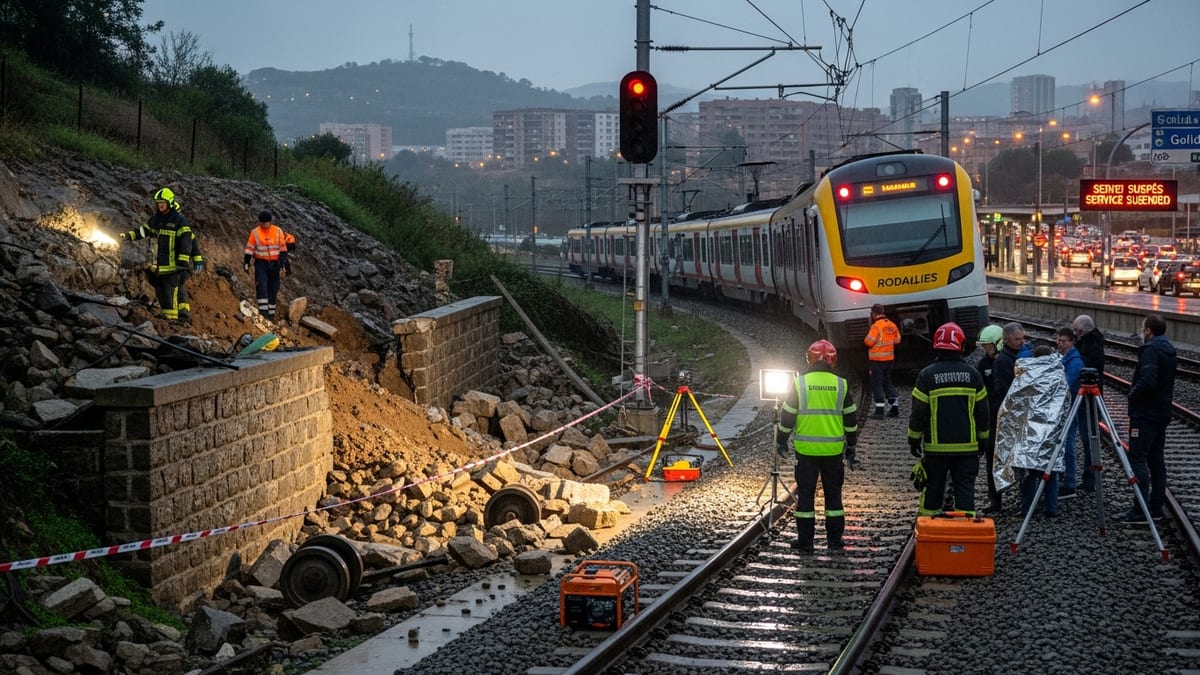
Location, timing and first reports
Initial coverage indicates the derailment occurred on a corridor linking Montreal to eastern Quebec, a key freight and passenger route that carries a mix of consumer goods, bulk commodities and intercity travelers. Early information points to the incident taking place outside densely populated areas, which limited the direct impact on homes and businesses close to the tracks.
Reports describe several cars leaving the rails, although the exact number and makeup of the consist have not yet been detailed. Publicly available dispatch and railway updates suggest the incident happened during regular operating hours, when both freight and passenger services typically share infrastructure in the region.
Regional outlets note that emergency responders, railway personnel and technical teams were sent to the scene shortly after the derailment was detected. Visual assessments were followed by more systematic inspections of the track structure, signaling equipment and rolling stock.
By late in the day, information circulating from transport agencies and rail operators continued to highlight the absence of injuries, while stressing that a full understanding of what happened would depend on a formal investigation.
No injuries and limited immediate environmental risk
According to published coverage, there were no injuries among crew members or people in the surrounding area. That outcome is consistent with several recent freight derailments in Canada and the United States where cars left the rails but did not cause major structural damage or fires.
Preliminary information indicates that hazardous materials were either not present in the derailed portion of the train or remained contained. Environmental teams and railway hazardous material specialists typically conduct air-quality checks and visual inspections of the right-of-way after such events, and early accounts from this incident point to no significant leaks or spills.
Local officials in past rail incidents have often ordered precautionary perimeters and brief road closures while safety screenings are completed. In the area northeast of Montreal, reports suggest any such measures were temporary and targeted, aimed mainly at giving railway and emergency staff secure access to the site.
While the absence of casualties and major contamination has tempered immediate concern, the derailment still prompted questions about long-term infrastructure condition and how traffic will be managed while recovery is underway.
Service disruptions and detours for travelers
The corridor northeast of Montreal carries a mix of long-distance passenger trains and regional services in addition to freight. Published advisories from Canadian rail operators in similar cases show that derailments on shared tracks often lead to short-term cancellations, reduced frequencies or bus-bridge substitutions while crews clear and inspect the line.
Travelers planning journeys between Montreal and communities along the lower St. Lawrence and toward the Maritimes are being encouraged, in media coverage and service notices, to check train status before departure. Even when passenger equipment is not involved in an incident, dispatchers may reroute trains onto single-track sections, impose lower speed limits or hold services to allow heavy machinery to work on or near the line.
Local road traffic can also be affected when derailments occur near level crossings, bridges or access roads that parallel the tracks. In comparable events in Quebec and Ontario earlier this year, temporary closures were put in place to accommodate cranes, excavators and ballast trains, occasionally forcing drivers onto longer detours until the right-of-way was cleared.
For now, publicly available information indicates that disruptions from the derailment northeast of Montreal are expected to remain regional rather than national in scope, with freight timetables more heavily affected than intercity passenger schedules.
Investigation and focus on track and equipment conditions
Rail incidents of this type in Canada are normally reviewed by internal company teams and may also be examined by the Transportation Safety Board of Canada if the circumstances meet federal reporting thresholds. While specific mandates for this derailment had not yet been publicly detailed at the time of early reporting, coverage indicates that cause analysis is underway.
Investigations typically examine track geometry, rail wear, ballast condition, signaling data and the mechanical state of locomotives and cars. Event recorders, trackside detectors and wayside cameras, where available, provide additional evidence about train speed, brake performance and any pre-existing alarms or faults.
In previous derailments on Quebec main lines, public reports have highlighted factors such as track defects, extreme weather, drainage issues and equipment failures. Safety recommendations often address inspection intervals, slow-order policies and the handling of heavy or mixed freight consists through curves, grades and junctions.
The derailment northeast of Montreal is expected to undergo a similar review, with findings likely to inform any remedial work along the affected subdivision and potentially guide broader system-wide maintenance priorities.
Context: Quebec’s rail safety record and community concerns
Quebec’s rail network has experienced a range of incidents over the past two decades, from non-injury freight derailments to high-profile disasters that reshaped national policy on hazardous materials and train operations. Publicly accessible safety studies frequently cite those past events when evaluating current risk tolerance in communities along major corridors.
Since those earlier tragedies, federal regulations and operator practices around tank car standards, speed limits for dangerous goods and crew training have been progressively tightened. Recent derailments without injuries or spills, including the latest incident northeast of Montreal, are often viewed against that regulatory backdrop as tests of whether safeguards are working as intended.
Community groups along rail lines in Quebec remain attentive to the mix of cargoes moving through their towns and to the proximity of tracks to residential neighborhoods, schools and waterways. When derailments occur, even without casualties, they can reinforce calls for additional investment in grade separations, noise mitigation, emergency planning and faster modernization of older infrastructure.
Travel and tourism interests also monitor these events, since reliable intercity rail connections form part of the broader transportation offering to visitors moving between Montreal, Quebec City and destinations further east. Early indications that no one was hurt and that environmental risk remains low will be important for sustaining traveler confidence while the investigation and repairs proceed.