


DiscoverCars has become a popular way to compare rental car prices worldwide, but many travelers still arrive at the counter shocked by deposits, extra insurance pushes, or unexpected fees. The problem is rarely the platform itself. It is that people skim the rental conditions, assume insurance is included, or do not realize that DiscoverCars is an intermediary and not the actual rental company. With a bit of preparation, you can avoid the most common and expensive mistakes long before you hit the “Book” button.
Get the latest updates straight to your inbox!
Forgetting That DiscoverCars Is a Broker, Not the Rental Company
One of the biggest sources of confusion starts with DiscoverCars’ role. DiscoverCars is an online agency that aggregates offers from hundreds of suppliers worldwide, from well-known brands like Budget and Europcar to small local firms at places like Ponta Delgada in the Azores or Cagliari in Sardinia. The booking, payment of the initial amount, and customer support before the trip go through DiscoverCars, but the actual rental contract you sign and the rules you must follow belong to the local rental company at the counter.
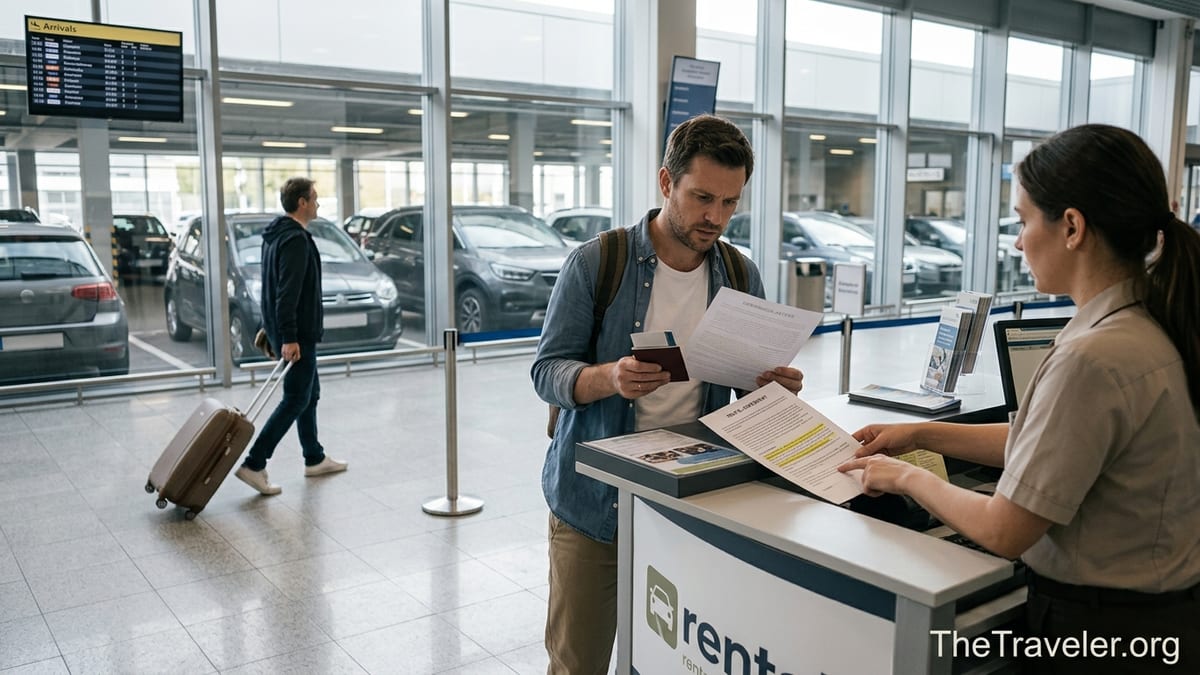
This matters when something goes wrong. For example, a traveler might see a compact car in Lisbon for about 15 euros per day on DiscoverCars, then arrive at the airport to find the desk branded with another company’s logo and a long terms-and-conditions sheet to sign. If the local company declines your debit card or insists on a higher deposit, DiscoverCars cannot override its policies, because DiscoverCars does not own the fleet. You agreed to the local supplier’s conditions when you booked.
To avoid frustration, treat DiscoverCars as a powerful comparison tool, not as your ultimate point of contact once you reach the counter. Before booking, note the supplier name and look up their standard policies, especially for payment cards, deposits, and cross-border travel. If you would not be comfortable renting directly from that company, you should not book them via DiscoverCars either.
It is also important to understand who you should call in a dispute. If the problem relates to pricing or what was displayed on the DiscoverCars listing, contact DiscoverCars customer service with screenshots of your voucher and offer page. If the issue is about damage charges, fuel level, or behavior at the desk, keep all paperwork and photos and be ready to engage with both the local rental company and DiscoverCars, since they will often ask the supplier for a written explanation before deciding on any refund.
Misunderstanding Insurance, CDW, and DiscoverCars “Full Coverage”
Few topics create as much anxiety at the rental desk as insurance. DiscoverCars typically shows whether Collision Damage Waiver (CDW) and theft protection are included in the base offer and what the excess or deductible amount is. The excess is the maximum amount you pay if the car is damaged or stolen, assuming you follow the rental agreement. On many European rentals, that excess can be high, often from around 900 to more than 2,000 euros, which is why the security deposit can feel so steep.
DiscoverCars also sells its own Full Coverage product. It is not the same as a CDW sold by the rental company and it does not replace the supplier’s insurance. Think of it as a reimbursement product: if the rental company charges you for bodywork damage, a chipped windshield, towing, or similar, you pay the local company first, then later file a claim with DiscoverCars to get reimbursed up to the policy limit. If you arrive in Rome convinced that DiscoverCars’ Full Coverage means “no excess and no deposit at the desk,” you will be upset when the local firm still blocks 1,500 euros on your card.
A common real-world scenario looks like this. A traveler books in Cagliari with a cheap local supplier, adds DiscoverCars Full Coverage for roughly 6 euros per day, and assumes they are fully protected. At pickup, the local agent says their own insurance is mandatory and charges an extra 300 euros, plus a deposit for a full tank of fuel. The renter feels they are paying twice for protection. In reality, the local company is applying its own standard insurance rules and does not recognize the third-party Full Coverage sold by DiscoverCars. This does not mean DiscoverCars coverage is useless, but it does mean you must understand that the two products serve different roles.
Before booking, read the “What is included” and “Insurance” sections of the offer carefully. If you already have primary coverage through your own auto policy or a credit card’s rental benefit, you might skip extra waivers from the rental company but still consider DiscoverCars Full Coverage to cover the excess and some excluded parts like glass or tires. If you prefer to walk away from the desk with a near-zero liability, you may instead want to buy the rental company’s own zero-excess package, even if it is more expensive per day.
Ignoring Security Deposits and Payment Card Rules
Security deposits are one of the most frequent pain points for DiscoverCars users. The deposit is blocked or charged by the rental company, not by DiscoverCars, usually to cover the CDW excess, fuel, and potential fines. In some destinations, especially islands or locations with limited fleets, deposits of 1,500 to 3,000 euros are not unusual. Travelers are often surprised because they focused only on the daily rental rate and not the deposit specified in the Rental Conditions section.
Consider a traveler heading to the Azores who finds an attractive deal on DiscoverCars for a small car with a local company like Way2Azores. The base rate might be under 25 euros per day, but the rental conditions show a 3,000 euro deposit. If the traveler arrives with only a debit card or a credit card close to its limit, the rental company may simply refuse to release the vehicle. In online discussions, people often describe this as a “scam,” but from the supplier’s point of view, they are enforcing terms that were disclosed in advance.
Another common issue is that many suppliers insist on a physical credit card in the main driver’s name. Virtual cards or digital wallet numbers sometimes fail when the provider attempts to place a hold. Even when debit cards are accepted, they often require purchasing the supplier’s premium insurance, which can easily double the overall cost. If you arrive in Barcelona with only a debit card and no extra funds, you may be forced into a far more expensive package at the counter or turned away entirely.
To avoid this, inspect the “Deposit & Franchise” section on DiscoverCars before you confirm. Check the required card type, whether the funds must be available as a credit limit, and whether debit cards come with strings attached. If you see a deposit that would strain your finances, look for offers that specifically highlight “low deposit” or “no deposit” even if the daily rate is higher. Paying 10 euros more per day for a 300 euro deposit can be much easier to handle than a rock-bottom rate tied to a 2,000 euro hold.
Overlooking Local Fees, Fuel Rules, and Cross-Border Restrictions
Many negative stories about DiscoverCars begin with unexpected local fees that were technically mentioned in the small print but not absorbed by the traveler. For example, a renter might see an attractive price for a compact automatic in Dubrovnik and only later notice that crossing into neighboring countries like Montenegro or Bosnia and Herzegovina carries a cross-border fee charged by the supplier. These charges can run from around 10 to 40 euros per border crossing or per rental, depending on the company and region, and may be capped by local regulations, but they are still significant if you are driving through multiple countries.
Fuel policies can also be confusing. Some suppliers still use a “full-to-empty” or “pick-up full, return empty” model where you prepay a full tank at the desk at a marked-up rate, then receive no refund for unused fuel. More common are “full-to-full” policies where you must return the vehicle with a full tank, using nearby stations that sometimes charge airport premiums. A traveler collecting a car at Lisbon Airport late at night, when only one costly station is open, might end up paying much more to refill than they expected if they did not plan ahead.
Other local costs that can catch DiscoverCars customers include mandatory winter tires in parts of Germany, Austria, or the Czech Republic, environmental fees for entering low-emission zones in cities like Milan, and after-hours pickup or drop-off charges when your flight arrives well outside normal office times. These items often appear only in the supplier-specific rental conditions that are linked from the DiscoverCars listing.
To minimize nasty surprises, map out your route and check whether you plan to cross borders, drive on toll-heavy highways, or visit city centers with restricted zones. Then cross-check those plans against the rental conditions of the specific supplier available on DiscoverCars. If you see vague language like “additional local charges may apply,” take a moment to contact either DiscoverCars support or the rental company directly to ask for examples and typical amounts in your chosen destination.
Arriving Late, Unprepared, or Without Required Documents
Car hire through comparison platforms often comes with strict pickup windows. Some DiscoverCars partner companies cancel reservations if you arrive more than about an hour after the scheduled time and do not inform them in advance. This can be a nasty shock if your flight is delayed or if passport control is slow. Several travelers have reported arriving more than two hours late to find that their car has been released to someone else and that the local firm treats them as a no-show.
Documentation can be just as critical. Many European countries require an International Driving Permit (IDP) in addition to your home license if it is not in Roman script or if you are from outside the EU or UK. A traveler from the United States picking up a car in Sicily might be fine with only a standard American license at one supplier, while another insists on an IDP and refuses the rental without refund. Even when DiscoverCars passes along generic guidance, the final word rests with the local company and local law.
There are also age limits and young driver surcharges to contend with. A 24-year-old planning to drive around the Dolomites may face additional daily fees or be barred from certain higher-class vehicles altogether. These surcharges can easily add 10 to 30 euros per day and are often excluded from the base price displayed in large type on the comparison page.
To protect your booking, add generous buffer time between your flight arrival and the pickup. If you see that your plane will land late, call the local supplier number shown on the DiscoverCars voucher and email DiscoverCars support to document that you have informed them. Before traveling, confirm what documents you need in that specific country and for that supplier, including your license, IDP, passport, proof of address if required, and a credit card matching the name on the booking.
Skipping a Proper Vehicle Inspection and Documentation
Many travelers wrongly assume that because they bought DiscoverCars Full Coverage or rely on a credit card benefit, they do not need to worry too much about minor scratches or dings when picking up the car. In practice, failing to do a careful inspection can mean being charged for pre-existing damage, then facing a long process to claim reimbursement. Even if you are confident DiscoverCars will eventually pay, the local company may still block or charge hundreds of euros from your card in the meantime.
Imagine arriving in Faro, Portugal, tired after a long flight, and collecting a white hatchback in a dimly lit garage. The agent quickly circles a few obvious marks on the damage report and hands you the keys. The next day, you notice a deep scratch on the rear bumper that was not marked. If you return the car without any photographic proof showing that the scratch was already there, the rental company may attribute it to you and bill you the full excess.
A more cautious approach is to treat pickup like a brief inspection ritual. Walk around the car slowly with the agent, taking clear, time-stamped photos or videos of all sides, close-ups of each scratch or dent, and shots of the wheels, windshield, and roof. Make sure the fuel level and mileage match the paperwork. If you spot new damage, ask the agent to mark it on the form or email you an updated report. This takes five to ten minutes but can save weeks of dispute later.
At drop-off, repeat the process. If the return is unstaffed, photograph the car parked in the approved bay, showing its condition, fuel gauge, and odometer. Keep all receipts for fuel and tolls. If a damage charge later appears that you believe is unfair, you will have a solid package of evidence to provide both to the rental company and to DiscoverCars if you open a claim under their Full Coverage product.
The Takeaway
Booking a car through DiscoverCars can be a smart way to compare prices, access smaller local suppliers, and secure flexible cancellation. Most frustrations arise not because the platform itself is unreliable but because travelers underestimate how much still depends on the local rental company’s rules and on local laws. When you know that DiscoverCars is a broker, understand how CDW and Full Coverage work, and prepare for deposits, card requirements, and local fees, you are far less likely to be caught off guard.
Before you click “Book,” slow down and read the rental conditions of the specific offer you are choosing. Confirm the deposit, card types, age rules, insurance inclusions, and border or fuel policies, and make sure they fit your situation. Once you arrive, show up on time, with the right documents and a credit card that can handle the hold, then take a few minutes to document the vehicle carefully.
With these habits in place, DiscoverCars can be a useful part of your travel planning toolkit rather than a source of stress. The cheapest headline rate is rarely the best deal if it comes with high deposits, rigid rules, or unclear insurance. Choose transparency over a rock-bottom price, and you are far more likely to drive away smoothly and return the car with your budget and peace of mind intact.
FAQ
Q1. Is DiscoverCars a legitimate company or a scam?
DiscoverCars is a legitimate online car rental broker that connects you with independent rental companies worldwide. Complaints usually stem from misunderstandings about local suppliers’ terms, not from the platform taking money without delivering a booking.
Q2. Why was I asked to pay for extra insurance at the counter when I already bought Full Coverage on DiscoverCars?
DiscoverCars Full Coverage is a reimbursement product that refunds eligible charges after the fact. Local rental companies often still require their own CDW or theft protection and may offer or push additional zero-excess packages that are separate from what you bought online.
Q3. Can I rent a car through DiscoverCars with a debit card instead of a credit card?
It depends on the specific supplier and country. Some will accept a debit card only if you buy their premium insurance or accept a higher deposit, while others insist on a traditional credit card in the main driver’s name. Always check the payment card section of the rental conditions before booking.
Q4. How can I avoid huge security deposits when booking on DiscoverCars?
Look closely at the deposit amount listed in the rental conditions for each offer and favor suppliers that advertise lower or no deposits, even if their daily rates are higher. In some locations, choosing a larger international brand or a package with the supplier’s own full protection can significantly reduce the deposit hold.
Q5. Does DiscoverCars insurance replace the rental company’s CDW and local liability coverage?
No. DiscoverCars Full Coverage does not replace mandatory coverage from the rental company or any legally required third-party liability. It is designed to reimburse you for certain charges like excess, damage to specific parts, and some fees after the rental company has billed you.
Q6. What happens if my flight is delayed and I pick up the car late?
Many suppliers working with DiscoverCars allow only a limited grace period and may cancel your reservation as a no-show if you are significantly late without warning them. If you anticipate a delay, contact the local rental desk and DiscoverCars as soon as possible to document the situation and try to keep the booking active.
Q7. Do I need an International Driving Permit when renting through DiscoverCars?
Requirements vary by country and rental company. In some European destinations, an International Driving Permit is strongly recommended or required for non-EU licenses, especially if your license is not in Roman script. Check the driver requirements in the rental conditions as well as official guidance for the country you are visiting.
Q8. How can I avoid surprise fees like cross-border charges or fuel penalties?
Plan your route in advance and carefully read the sections on cross-border travel, fuel policy, tolls, and additional fees in the supplier’s conditions. If any points are unclear, contact the rental company or DiscoverCars before booking to ask for examples of typical charges for your specific itinerary.
Q9. What should I do if I am charged for damage I do not believe I caused?
Gather all your evidence, including time-stamped photos from pickup and drop-off, the signed check-out and check-in forms, and any correspondence with staff. Dispute the charge with the rental company in writing and simultaneously open a case with DiscoverCars if you purchased their Full Coverage, providing all documentation to support your claim.
Q10. Is it better to buy the rental company’s insurance at the counter or DiscoverCars Full Coverage online?
Each option has trade-offs. Buying the rental company’s zero-excess package usually reduces your liability on the spot and can simplify claims, but it is often more expensive per day. DiscoverCars Full Coverage tends to be cheaper but requires you to pay the rental company first and then wait for reimbursement. Choose based on your budget, risk tolerance, and how much effort you are willing to invest if something goes wrong.