


For transatlantic travelers, co-branded airline credit cards can be powerful tools. Used well, they can turn everyday spending into upgrade certificates, partner redemptions, and hundreds of dollars in statement credits. Used poorly, they sit in your wallet costing an annual fee. Here is a side by side, real world look at the Air France KLM World Elite Mastercard and the British Airways Visa Signature Card so you can decide which one actually fits the way you fly.
Get the latest updates straight to your inbox!
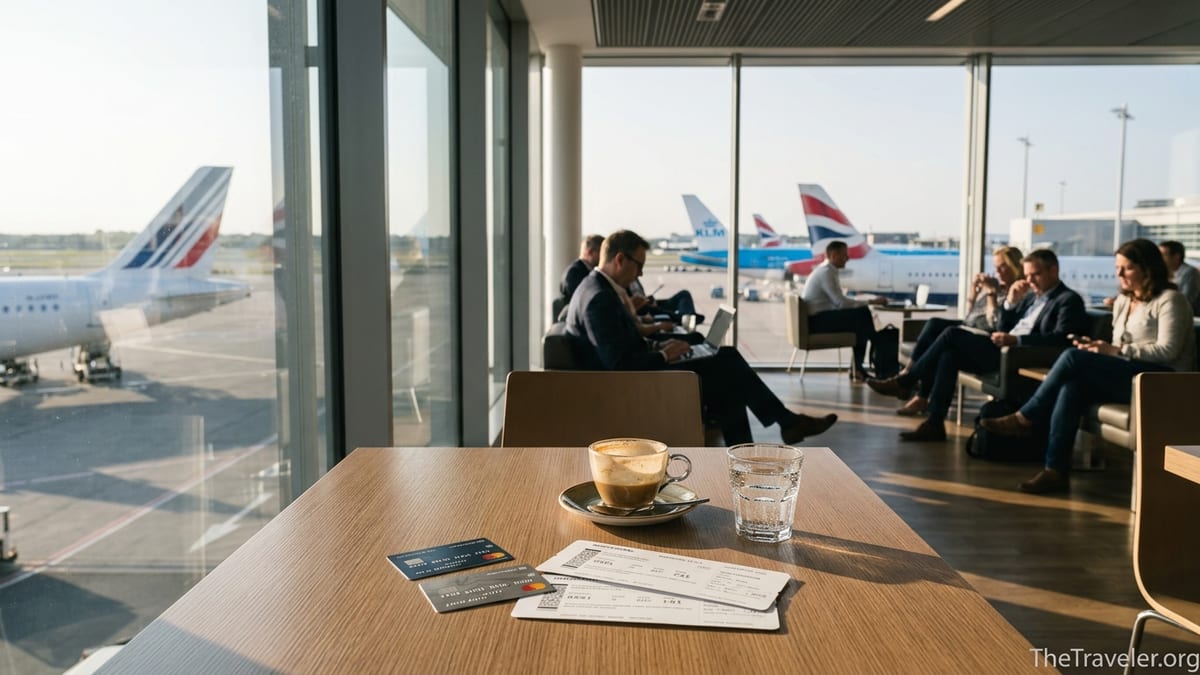
The Cards at a Glance
The Air France KLM World Elite Mastercard is tied to the Flying Blue program and is issued in partnership with Brim Financial in Canada. It is designed for travelers who frequently fly Air France or KLM between North America and Europe, and who value fast-tracking Flying Blue elite status. The annual fee is typically in the mid to high three figures in Canadian dollars, though new cardholders are often offered the first year free and a bundle of Flying Blue Experience Points, or XP, as a welcome perk.
The British Airways Visa Signature Card is issued in the United States and earns Avios, the shared currency across British Airways, Iberia and Aer Lingus. Its annual fee is in the double digits, around the cost of a budget one way ticket between New York and Boston, which makes it relatively easy to justify if you fly British Airways at least once a year and can use the built in discounts and statement credits.
Both cards are aimed squarely at travelers who already lean toward their respective airline alliances. The Air France KLM card fits with the SkyTeam network anchored by Air France, KLM and Delta. The British Airways Visa Signature Card ties into the oneworld alliance, where British Airways partners with American Airlines, Qatar Airways and others. In practice, that means your day to day spending on either card can translate into reward flights far beyond the home airline’s own network.
From a purely structural standpoint, both products follow a similar formula: a one time welcome bonus, elevated earning on airline purchases, enhanced earning on select everyday categories, and a collection of travel protections and smaller perks layered on top of the payment network’s own benefits.
Welcome Bonuses and First Year Value
Welcome bonuses are often what first attract travelers. The Air France KLM World Elite Mastercard has historically offered a bonus of tens of thousands of Flying Blue miles plus a chunk of XP for meeting a minimum spend in the first few months. In recent years that bonus has been large enough to cover an off peak one way economy ticket between Montreal and Paris or Toronto and Amsterdam, sometimes with miles left over for a connecting flight within Europe.
Imagine you are based in Toronto and planning a spring trip to Paris. You sign up for the Air France KLM card during a promotion, meet the minimum spend on groceries and utilities, and receive enough miles to book a one way economy reward seat to Charles de Gaulle. Taxes and fees on Flying Blue economy redemptions for transatlantic flights often fall in the low to mid hundreds of dollars range per direction. That is still real cash, but it is meaningfully less than the full cash price for a peak season ticket.
The British Airways Visa Signature Card’s current public offer in mid 2026 is a welcome bonus of around 75,000 Avios after you spend several thousand dollars in the first three months. That haul is enough for, as a concrete example, three off peak one way flights between New York JFK and London in economy when British Airways runs reduced Avios promotions, or a one way off peak business class ticket from the East Coast to London with a companion ticket layered on in later years. You will still pay surcharges, and British Airways is known for higher fees on award tickets, but the Avios themselves can cover the base fare.
From a first year value perspective, both cards can easily return several times their annual fee in travel value if you plan one or two transatlantic trips and can be flexible with dates. Travelers who can take advantage of a Flying Blue Promo Reward sale or a British Airways off peak calendar will extract outsized value from those initial miles.
Earning Miles on Flights and Everyday Spending
Ongoing earning is where the day to day value shows. The Air France KLM World Elite Mastercard earns Flying Blue miles on every purchase, with elevated earning on Air France and KLM tickets and, in some cases, partner offers. Cardholders earn additional bonus miles per euro or dollar spent directly with Air France and KLM, which stack on top of the miles you already earn as a Flying Blue member when you fly. In practice, a return ticket from Montreal to Amsterdam booked directly with KLM could generate miles from the flight itself plus several thousand extra from charging the ticket to the card.
Outside of airline purchases, earning rates on the Air France KLM card are more modest. Everyday categories such as supermarkets, gas, or streaming services tend to earn a single base mile per dollar, sometimes slightly more on travel or dining. For a family in Vancouver putting roughly 2,000 Canadian dollars a month on the card for groceries, gas and household bills, that still adds up to around 24,000 miles a year before flight purchases, enough for one way short haul flights within Europe or to top up for a bigger redemption.
The British Airways Visa Signature Card earns Avios at an elevated rate on purchases with British Airways, Iberia, Aer Lingus and LEVEL. Cardholders receive 3 Avios per dollar spent on those airlines, 2 Avios per dollar spent on hotel purchases made directly with the hotel, and 1 Avios per dollar on all other purchases. Using a simple example, if you book two economy tickets from Chicago to London at 900 dollars each, that 1,800 dollar charge would earn 5,400 Avios just from the card. Add a 1,000 dollar hotel bill in London paid directly to the hotel, and you have another 2,000 Avios.
For travelers who do not put a lot of airline purchases on their cards, the difference between these earning structures may be less pronounced. If most of your spending is at supermarkets, you will generally earn around 1 mile or Avios per dollar with either card. If you frequently book long haul tickets on the co branded airline and its partners, the British Airways card’s clear 3x on partner airlines and 2x on direct hotel bookings may be easier to maximize than the more layered accelerators on the Air France KLM card.
Elite Status, XP and Long Term Loyalty
Where the Air France KLM World Elite Mastercard clearly distinguishes itself is in how it interacts with Flying Blue elite status. The card awards XP each year simply for holding it, and often includes an extra batch of XP as part of the welcome package. Because XP is the metric Flying Blue uses to determine your status level, this essentially moves you partway up the ladder before you even board a plane.
Consider a traveler in Calgary who flies to Europe twice a year on Air France and KLM, in economy or premium economy. Without the card, that person might fall just short of renewing Flying Blue Silver status each year. With the card’s annual XP deposit, those same flights can be enough to comfortably requalify for Silver or even work toward Gold over a couple of years. That shift is not abstract: Flying Blue Silver status brings benefits such as priority check in, extra baggage allowance on many fares, and earlier access to seat selection, all of which make a long haul journey smoother.
The British Airways Visa Signature Card does not directly hand out Executive Club Tier Points, which are the British Airways equivalent of XP. Instead, it encourages loyalty via the Travel Together Ticket, also called a companion certificate. After you spend a high five figure amount on the card in a calendar year, you earn a certificate that lets a companion fly on the same reward itinerary for no additional Avios, or allows a solo traveler to use half the Avios required for a reward ticket. Taxes and surcharges still apply, but in premium cabins the Avios savings can be significant.
In practice, if a New York based couple uses their British Airways Visa Signature Card for most of their spending and hits the spending threshold, they could redeem Avios for a Club World business class ticket to London and add a second business class seat for just the surcharges. On popular dates when a cash ticket can run several thousand dollars, the companion ticket can outweigh years of annual fees, especially if used for long haul flights beyond London, like connecting to Cape Town or Dubai.
Travel Benefits, Credits and Protections
Beyond earning miles, both cards layer on travel related benefits. The Air France KLM World Elite Mastercard sits on the World Elite Mastercard platform, which brings a suite of travel and lifestyle perks. These often include access to a travel services portal, some form of hotel rate and satisfaction guarantee, and limited airport concierge services. In Canada, World Elite cards also commonly provide strong travel medical insurance, trip interruption coverage and rental car collision coverage when you charge your trip to the card, though exact coverage varies by issuer.
For instance, a Montreal traveler booking a two week holiday in Italy that includes a car rental in Tuscany could charge flights and rental to the Air France KLM card and decline the rental agency’s basic collision damage waiver if the card’s policy covers collision loss damage. If a fender bender occurs on a narrow countryside road, the card’s insurance could reimburse the repair costs up to its limit, saving hundreds of dollars.
The British Airways Visa Signature Card, although it does not carry the World Elite label, still provides a robust package of Visa Signature benefits. Cardholders pay no foreign transaction fees when using the card abroad, which translates into real savings on a weeklong trip to London where restaurant meals, Tube passes and theater tickets are all charged in pounds. The card also includes trip cancellation and interruption insurance, baggage delay coverage, and in many cases secondary rental car collision coverage when you decline the rental agency’s damage waiver.
One particularly tangible perk on the British Airways card is the series of statement credits available when you pay taxes, fees and carrier charges on reward bookings departing from the United States. For example, if you book two off peak economy reward tickets from Los Angeles to London using Avios and pay the associated surcharges with your British Airways Visa Signature Card, you can receive a statement credit that partially offsets those charges. Used up to several times per year, this benefit alone can cover the card’s annual fee for many families.
Fees, Acceptance and Where You Live
Although both cards target transatlantic travelers, they are not interchangeable. The Air France KLM World Elite Mastercard powered by Brim is available to residents of Canada, with account terms specified in Canadian dollars. Its annual fee typically falls in the upper range for premium cards in that market, reflecting both the travel insurance package and the World Elite platform. For Canadians who primarily earn and spend in Canadian dollars, that structure is straightforward, though it does mean the product is not an option for a U.S. based traveler reading about Flying Blue.
The British Airways Visa Signature Card is a U.S. issued product. Its annual fee is lower in absolute terms than the Air France KLM World Elite fee in Canada, and the card has no foreign transaction fee, which is essential for a card marketed to international travelers. Because it runs on the Visa network, acceptance is very wide, from small cafes in London to train kiosks in Madrid. For a U.S. traveler who spends summers in Europe, being able to tap the card in contactless form at local transit gates without added currency conversion fees is a quiet but meaningful perk.
One subtle but real difference lies in how each card fits into common application rules and credit strategies in its home market. The British Airways card is issued by a major U.S. bank that is known for considering a customer’s recent number of new credit accounts. Frequent points enthusiasts in the United States often plan their applications carefully so that picking up the British Airways Visa Signature Card does not block them from other valuable cards. In contrast, the Air France KLM World Elite Mastercard sits in the Canadian ecosystem, where the specific mix of cards in your wallet and your goals for airline status will drive the decision more than a single bank’s informal rules.
For day to day usability abroad, however, both cards work well. Air France, KLM and British Airways all accept their own co branded cards for onboard purchases like duty free or buy on board meals. In European cities, contactless payments are now standard, and both products support tap to pay functionality. Travelers should still carry a backup card in case of network outages, but in normal conditions either card behaves like a mainstream global credit card.
Which Card Fits Which Traveler?
Choosing between these two comes down to where you live, which airline you actually fly, and what you value most: elite status shortcuts, companion tickets, or straightforward statement credits. A Canadian traveler in Montreal who splits their time between Paris and Amsterdam for work will likely get more value from the Air France KLM World Elite Mastercard. The card’s XP bonuses and extra Flying Blue miles on Air France and KLM bookings directly support that person’s existing flying pattern, making it easier to maintain at least Silver status and enjoy perks like extra baggage and priority queues.
On the other hand, a U.S. based traveler in Boston or New York who visits family in the United Kingdom every year is an obvious candidate for the British Airways Visa Signature Card. The ability to earn 3 Avios per dollar on British Airways tickets, collect a substantial welcome bonus, and eventually unlock a Travel Together Ticket dovetails naturally with a pattern of annual transatlantic trips. Even if that traveler occasionally books an American Airlines codeshare, they can often still collect Avios on those flights and pay for the tickets with the card.
There are also hybrid cases. A Vancouver couple might use the Air France KLM card primarily to build Flying Blue miles and XP, but also hold the British Airways card for occasional itineraries through London and to access the statement credits on reward bookings. In practice, serious international travelers often carry two or more airline credit cards and shift spending between them depending on which airline they are booking, what promotions are running, and where they see the best redemption opportunities over the next year.
Ultimately, the decision is less about which card is objectively better and more about which ecosystem you want to anchor your travel around. Flying Blue and Avios both have quirks. Flying Blue runs regular Promo Rewards with discounted miles on specific routes, making it attractive for flexible travelers based near Air France and KLM gateways. Avios excels at short haul redemptions within Europe and partner sweet spots, such as intra Asia flights on Cathay Pacific or domestic flights in the United States on American Airlines when award space cooperates.
The Takeaway
If you live in Canada and see Air France or KLM on your boarding passes most years, the Air France KLM World Elite Mastercard is built for you. Its strengths lie in the way it connects card spending to Flying Blue status through XP and how it layers extra miles onto paid Air France and KLM tickets. Used strategically, it will help you climb or maintain status tiers while slowly building a balance for a future reward trip.
If you live in the United States and find yourself pricing out flights to London or beyond on British Airways, the British Airways Visa Signature Card is likely the better fit. Between the generous welcome bonus, 3x Avios on British Airways and partner flights, and the Travel Together Ticket, it can make premium cabins more attainable and offset its annual fee many times over when you redeem wisely.
For frequent transatlantic travelers, it is even reasonable to see these cards as complementary pieces in a broader strategy. You might use the Air France KLM card for trips connecting through Paris or Amsterdam, while the British Airways card anchors trips routing through London. Whatever you choose, align the card with the airline and alliance you genuinely fly, and focus your redemptions on the specific sweet spots each program offers. That is how an annual fee turns from a cost into an investment in your future travel.
FAQ
Q1. Is the Air France KLM World Elite Mastercard available in the United States?
The Air France KLM World Elite Mastercard powered by Brim is primarily a Canadian product. U.S. based travelers generally cannot apply and are instead steered toward the separate Air France KLM Visa products issued in the United States.
Q2. How much is the annual fee for the British Airways Visa Signature Card?
The British Airways Visa Signature Card has an annual fee in the mid double digits in U.S. dollars. For many travelers, that cost is offset by the welcome bonus, statement credits on reward bookings, and ongoing earning on British Airways, Iberia and Aer Lingus tickets.
Q3. Which card is better for earning airline elite status?
The Air France KLM World Elite Mastercard is stronger for directly supporting airline status because it awards Flying Blue Experience Points each year. Those XP deposits reduce the amount of flying needed to reach or maintain Flying Blue Silver or Gold levels, whereas the British Airways Visa Signature Card encourages loyalty mainly through the Travel Together Ticket rather than tier points.
Q4. Do either of these cards charge foreign transaction fees?
The British Airways Visa Signature Card does not charge foreign transaction fees, which makes it a good choice for U.S. travelers spending in pounds, euros or other currencies abroad. The Air France KLM World Elite Mastercard’s foreign transaction fee policy can vary by market and issuer, so Canadian travelers should check their specific card terms to see whether purchases in foreign currencies incur an extra percentage fee.
Q5. Can I use Avios from the British Airways card on other airlines?
Yes. Avios earned from the British Airways Visa Signature Card can be used on partner airlines within the oneworld alliance, such as American Airlines, Iberia and Qatar Airways, subject to award availability. This flexibility is one of the strengths of Avios and can make the card appealing even if you do not always fly British Airways itself.
Q6. Can Flying Blue miles from the Air France KLM card be used on partner flights?
Flying Blue miles earned with the Air France KLM World Elite Mastercard can generally be redeemed on a wide network of SkyTeam partners, including Delta, Aeromexico and others. For example, a Canadian traveler might use Flying Blue miles for a Delta flight within the United States or a partner flight in Asia, provided Flying Blue has access to award space on that route.
Q7. How hard is it to earn the British Airways Travel Together Ticket?
The Travel Together Ticket requires a relatively high annual spend on the British Airways Visa Signature Card, which many casual travelers will not reach. However, for a household that runs most expenses, including groceries, utilities and travel, through the card, the threshold can be realistic, and the companion certificate can then be used to unlock premium cabin redemptions at half the Avios cost per person.
Q8. Which card is better for everyday spending not related to travel?
For purely non travel spending, neither card is a standout compared with general purpose rewards cards, since both tend to earn around 1 mile or Avios per dollar on everyday categories. Travelers who want to maximize non travel purchases might pair one of these airline cards with a separate cash back or flexible points card for groceries and gas, while using the airline card specifically for flights and eligible travel.
Q9. Are the travel insurance benefits on these cards enough to skip standalone insurance?
Both cards offer some level of travel protection, but coverage limits and eligibility conditions vary. For short trips and travelers who are comfortable with some risk, the included trip interruption, delay and rental car coverage may be sufficient. For longer, more expensive international itineraries, many travelers still prefer to buy standalone insurance, using the card’s protections as a secondary layer.
Q10. If I fly both Air France KLM and British Airways, should I get both cards?
Frequent travelers who regularly fly both networks may find value in holding both cards, using each for its own airline’s tickets and leveraging the specific perks, such as Flying Blue XP from the Air France KLM card and the Travel Together Ticket and statement credits from the British Airways card. The key is to ensure that the combined annual fees are justified by the miles, status shortcuts and credits you actually use each year.