


More news on this day
A sprawling late-November storm system and residual operational disruptions from a recent nationwide ground stop are causing hundreds of flight delays and cancellations across the United States, including at New York’s John F. Kennedy International Airport (JFK) and Washington’s Ronald Reagan Washington National Airport (DCA), affecting Thanksgiving-period travelers on Friday, November 27, 2026.
Get the latest news straight to your inbox!
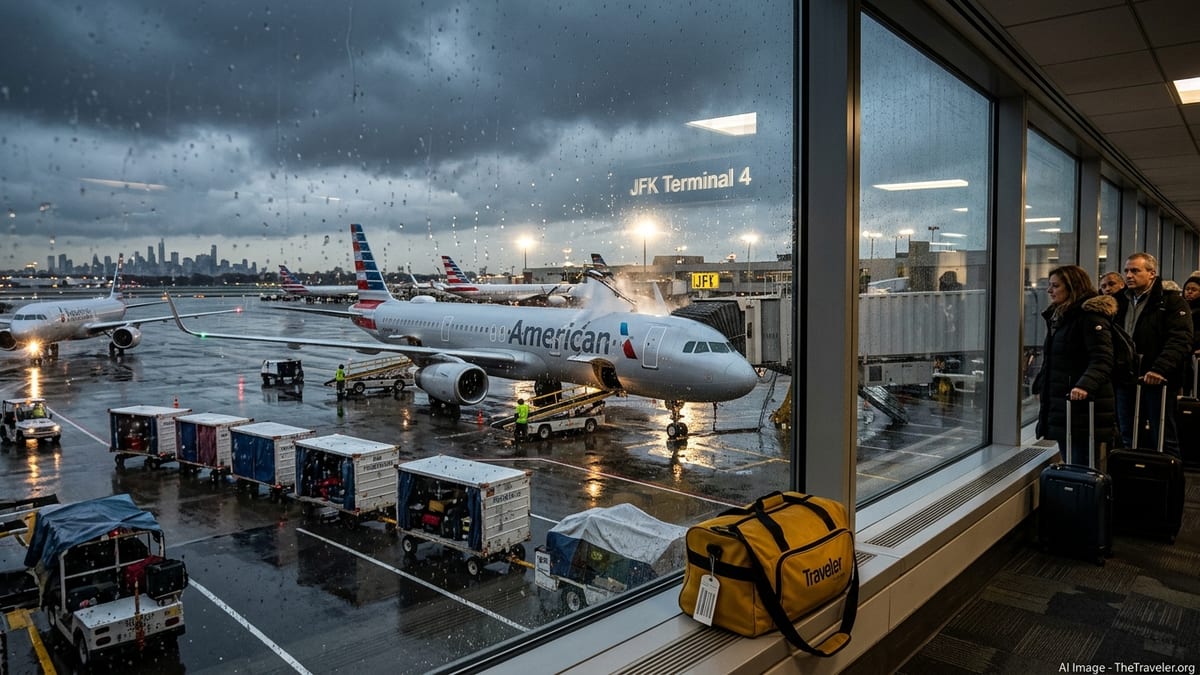
Stormy Thanksgiving Week Keeps Pressure On Major East Coast Hubs
The latest wave of delays is unfolding on the heels of a strong storm that swept the East Coast during the Thanksgiving period, bringing heavy rain, strong winds and localized flooding from New York to Virginia. National Weather Service forecasts in the days leading up to the holiday had warned of wind gusts above 40 miles per hour along the Interstate 95 corridor, with the potential for airport disruptions in the New York and Washington regions.
As the weather system moved through on November 26 and into November 27, flight tracking data showed widespread knock-on effects. One overnight tally reported more than 2,200 delayed flights and over 400 cancellations at U.S. airports as the storm impacted operations in multiple states. Those nationwide figures cover a broad set of airports, but the combination of busy holiday schedules and marginal flying conditions left major coastal hubs particularly exposed to disruption.
New York’s large international gateways have been repeatedly flagged in federal planning documents as vulnerable to congestion when weather or staffing are constrained. Recent Federal Register notices about slot and scheduling rules at JFK and neighboring LaGuardia Airport highlight that delays in the New York terminal area airspace can cascade because of the density of traffic and the limited flexibility for rerouting or rescheduling during peak travel periods.
What Is Happening At JFK And Reagan National Today
By Friday, November 27, conditions at JFK and DCA had improved compared with the worst of the Thanksgiving storm, but neither airport had fully returned to pre-storm normality. Real-time airport status tools and airline tracking data show that both airports are operating without an active Federal Aviation Administration ground stop or ground delay program in place, meaning the FAA is not currently imposing broad flow restrictions on departures or arrivals.
Even without formal programs in effect, residual delays remain. Overnight into Friday, JFK recorded dozens of delayed departures and arrivals, along with a smaller number of cancellations, as airlines worked aircraft and crews back into position after weather-driven disruptions. One contemporaneous tally cited 29 delayed flights and eight cancellations at JFK alone in the hours after midnight on November 27, reflecting how even partial schedule interruptions can take time to unwind.
At Ronald Reagan Washington National Airport, which serves central Washington, D.C., the pattern is similar on a smaller scale. Data collated from airline and FAA feeds for early November 27 indicate at least a dozen delays and a handful of cancellations at DCA in the preceding hours, most of them linked directly or indirectly to adverse weather and traffic management initiatives during and immediately after the storm.
Weather Still A Factor Around Washington, While New York Sees Gradual Improvement
For travelers, the key distinction on November 27 is that weather remains a more active factor in the Washington region than in New York, even though the worst conditions have passed. Official weather observations at DCA on Friday report variable winds strong enough to affect runway configurations and approach procedures, with gusts in the mid-20-knot range. The airport’s own advisory on its website notes that airlines may continue to delay or cancel flights because of current or expected weather and encourages passengers to check directly with carriers for the latest status.
Supplementary delay-monitoring tools that track FAA advisories show that DCA was under a weather-related delay regime at times during the previous 24 hours, with some departures running more than an hour behind schedule and arrivals also affected. While those formal constraints appear to have eased, the recovery period can still feel like a disruption for passengers, as aircraft arrive and depart out of their planned sequence and subsequent rotations drop behind schedule.
In New York, forecasts and live observations indicate that the most severe wind and rain linked to the Thanksgiving nor’easter have abated. JFK is no longer subject to special FAA traffic management programs, and some third-party monitoring sites list the airport as operating without major systemwide delay. However, airlines at JFK are still working through delayed aircraft and crew assignments from the previous day, which can result in scattered gate holds, minor departure delays and occasional cancellations even under improving weather.
Impact Of Earlier Nationwide Ground Stop On Today’s Operations
The current pattern of scattered delays is also influenced by an earlier, separate nationwide disruption that is still echoing through airline networks. On November 13 and 14, a communication problem affecting multiple air route traffic control centers prompted the FAA to order a rare nationwide ground stop, halting most U.S. departures for a period. Major carriers, including American Airlines and others with large operations at both JFK and DCA, later reported that the system outage triggered significant cancellations and missed connections that took well into the following days to resolve.
Although that nationwide ground stop has long since been lifted, its timing in the lead-up to Thanksgiving left airlines with compressed recovery windows before the peak holiday rush. Industry data and federal summaries of on-time performance in recent months show that even modest disturbances can ripple for days when airlines operate schedules close to capacity. Against that backdrop, the weather-driven delays on November 26 and 27 have interacted with already stretched networks, increasing the likelihood of rolling disruptions rather than isolated, short-lived issues.
Government statistics for 2026 also indicate a generally higher baseline of delays across several major U.S. hubs compared with previous years, owing to a mix of weather, staffing and airspace constraints. New York-area airports, including JFK, feature prominently in those analyses, while Reagan National has episodically experienced ground delay programs linked to both staffing and weather. That context helps explain why today’s storm-related issues can feel more severe to travelers, even when there is no single, ongoing national emergency.
What Travelers Using JFK And DCA Should Do Next
For passengers flying from or through JFK and Reagan National on Friday, November 27, the main practical implication is that their flight is more likely than usual to be delayed, but not necessarily cancelled, and that conditions can change quickly as airlines adjust to clearing backlogs. With no broad ground stop in effect, many flights are still departing and arriving close to schedule, yet small perturbations at one point in the network may cascade into tighter connection windows or aircraft swaps later in the day.
Because the underlying storm system is moving away, weather-related air traffic restrictions are expected to continue easing over the coming 12 to 24 hours, particularly in New York. In Washington, intermittent gusty winds and any remaining rain bands could still prompt tactical air traffic control measures, especially during peak departure banks, but official forecasts do not currently point to a renewed large-scale shutdown on the scale seen during the earlier nationwide ground stop. Travelers should be aware that the situation can evolve with new forecasts and updated FAA advisories.
Anyone scheduled to travel through JFK or DCA today or over the remainder of the Thanksgiving weekend should rely on real-time information from their airline, including mobile apps and text or email alerts, rather than assuming previously printed itineraries remain accurate. Airport operators in both cities are advising passengers to arrive earlier than usual, allow more time to clear security, and prepare for potential gate or schedule changes even when their flight is still listed as operating. Monitoring official FAA airport status pages and carrier-specific travel alerts before leaving for the airport can help passengers make informed decisions about whether to adjust plans, rebook or pursue alternate routings as the East Coast air travel system gradually returns to more typical operations.