


More news on this day
A powerful storm system that peaked over Thanksgiving Day 2026 has flooded East Coast communities, cut electricity to hundreds of thousands of customers and triggered rare disruptions to some of the country’s most high-profile holiday travel and parade traditions, with impacts still lingering into Friday, 27 November.
Get the latest news straight to your inbox!
Record Coastal Flooding, High Winds and Widespread Power Cuts
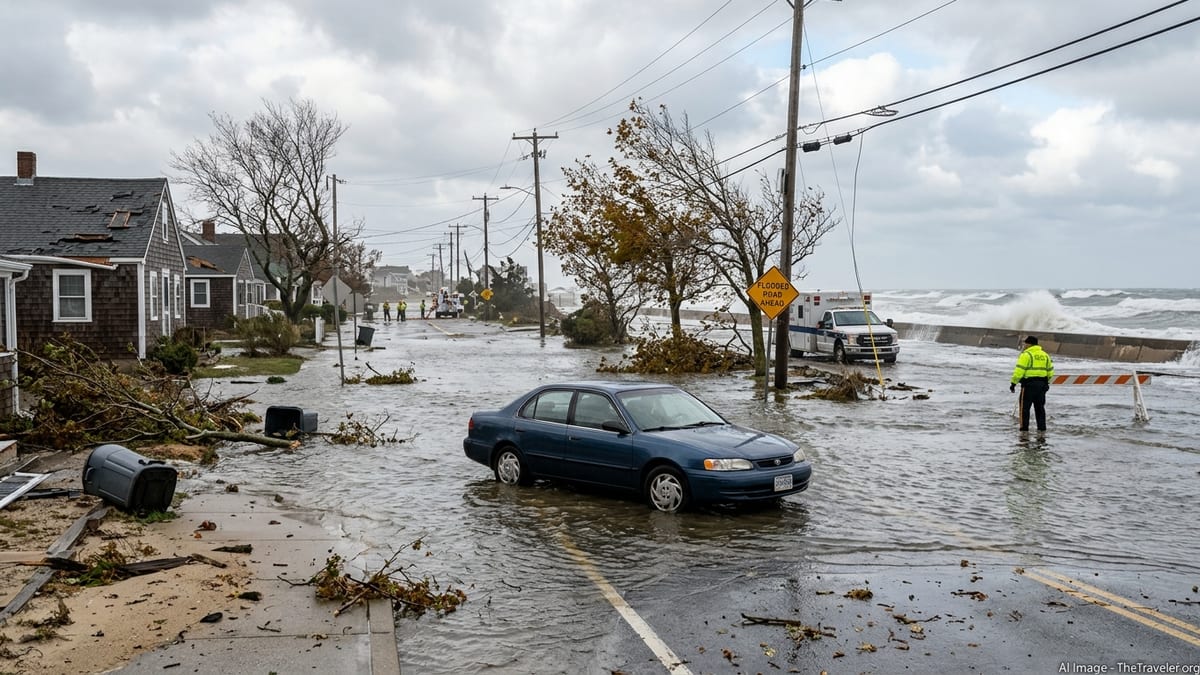
The Thanksgiving storm brought a mix of coastal flooding, heavy rain and damaging winds from the Mid-Atlantic to New England, with forecasters and state officials reporting some of the worst impacts in low-lying coastal communities. Coastal flooding was recorded from coastal Virginia through New Jersey as high tide arrived on Thursday, 26 November, with water overtopping seawalls, inundating streets and forcing temporary road closures in towns along the Jersey Shore and the Chesapeake region.
State outage trackers and utility data showed that nearly 1 million customers lost power at some point during the storm on Thursday, with Pennsylvania, New Jersey, Maryland and Virginia among the hardest-hit states. By early Friday, 27 November, roughly 600,000 to 700,000 homes and businesses remained without electricity nationwide as repair crews worked through downed trees and blocked roads to restore lines. Pennsylvania continued to record the largest number of ongoing outages, while New Jersey, Maryland and parts of Virginia and Missouri also reported six-figure totals.
National Weather Service advisories in the run-up to the holiday had warned of wind gusts reaching 50 to 70 mph along parts of the Mid-Atlantic and New Jersey coasts, conditions that can easily down trees and power lines. Those forecasts materialized in several locations, with wind damage blamed for many of the outages and for scattered structural damage to buildings near the shore. In response, governors in New Jersey and New York issued emergency declarations ahead of the worst of the weather, citing the risk of coastal flooding, high winds and extended power loss.
Flooded Roads, Closed Highways and Travel Disruptions on the Ground
For travelers on the roads, the combination of high tides, wind-driven waves and torrential rain created difficult driving conditions and localized emergencies. Video and local reports on Thursday showed vehicles attempting to drive through deep water in coastal New Jersey communities, with some drivers becoming stranded as tide and surge pushed water across normally busy streets. Police and emergency responders in towns on the Jersey Shore and in low-lying neighborhoods around the Chesapeake Bay carried out vehicle rescues and closed off flooded stretches of roadway until water levels receded.
Farther south, key links to barrier islands and peninsulas also came under pressure. The Chesapeake Bay Bridge-Tunnel in southeastern Virginia closed for several hours on Thursday morning because of high winds, interrupting traffic on the nearly 18‑mile crossing and forcing detours onto already busy Thanksgiving alternatives. In North Carolina’s Outer Banks, state officials reported that NC 12, the only highway connecting Hatteras Island to the mainland, was temporarily closed after seawater breached dunes and covered the two-lane roadway with sand and floodwater.
Even away from the immediate coastline, heavy rain created standing water and poor visibility on major interstates across the Mid-Atlantic and Northeast, slowing journeys on one of the busiest travel days of the year. Forecasters noted that some locations set daily rainfall records for 26 November, adding to runoff and backing up storm drains in older urban areas. Authorities repeatedly urged drivers to avoid attempting to cross flooded streets, to check local advisories before setting out and to allow significantly extra time for journeys, particularly on secondary coastal routes that remained vulnerable to subsequent high tides on Friday.
Macy’s Parade Postponed, Philadelphia Parade Altered and Flight Schedules Strained
The storm’s highest-profile cultural impact came in New York City, where Macy’s Thanksgiving Day Parade was postponed for the first time in its near century-long history. Organizers confirmed that the 100th edition of the parade, originally scheduled for the morning of Thursday, 26 November 2026, would instead take place on Saturday, 28 November, after consultations with city officials and meteorologists indicated that forecast wind speeds in Manhattan’s skyscraper canyons could exceed safety thresholds for the event’s giant balloons.
New York authorities subsequently published updated street-closure notices for Saturday’s parade, confirming that the route, start time and general format would remain broadly the same but shifted by two days. While the decision preserved the centennial celebration, it required visitors who had traveled specifically for the Thanksgiving morning tradition to alter hotel bookings and activity plans, and prompted transport operators serving Midtown Manhattan to adjust staffing and crowd-control arrangements for the new date.
Elsewhere in the Northeast, the conditions also reshaped holiday parades. In Philadelphia, local officials moved their Thanksgiving parade program indoors and curtailed outdoor elements in response to the rain and wind, avoiding a full cancellation but significantly changing the experience for both participants and spectators. Other smaller community events along the East Coast reported weather-related schedule changes, although in many cases details varied by municipality and were announced through local channels on short notice.
In the air, the combination of low clouds, wind and heavy rain at major hubs translated into significant Thanksgiving Day delays. Flight-tracking data cited by national media indicated that roughly 2,900 flights within, into or out of the United States were delayed on Thursday and around 450 to 500 were canceled outright. Airports in the New York and Washington metropolitan areas recorded some of the highest disruption levels as carriers slowed operations during the worst of the conditions and then attempted to work through backlogs once ceilings and visibility began to improve.
Aviation specialists noted that passengers should expect residual disruption to continue into Friday and potentially Saturday, even as the weather improves, because aircraft and crews were left out of position by Thursday’s cancellations. Travelers were advised to monitor airline apps and airport information screens closely, confirm departure times before leaving for the airport and be prepared for gate changes or rolling delays as carriers rebalanced schedules at the tail end of the holiday rush.
King Tides and High Surf Batter the California Coast
While the East focused on flooding rains and high winds, a separate but related set of hazards unfolded along the Pacific coast. A period of very high astronomical tides, often referred to as king tides, coincided with energetic surf along parts of California and the Pacific Northwest, prompting coastal flood advisories and high surf warnings from the National Weather Service. These king tides did not stem from the same storm system as the East Coast nor’easter but compounded ongoing erosion and infrastructure concerns in low-lying Pacific communities.
In Pacifica, south of San Francisco, video verified by multiple outlets showed a powerful wave striking the municipal fishing pier on Wednesday, 25 November and tearing away a section of the structure, sending concrete into the ocean. Local authorities subsequently closed the remaining portions of the pier to the public while engineers assess the damage. Images from other stretches of the California coast showed waves overtopping seawalls, flooding beach parking areas and sending spray onto coastal roads, though reports of serious injuries remained limited.
Passenger rail along parts of the Southern California shoreline also faced disruption. Amtrak’s Pacific Surfliner announced more than a dozen itinerary changes beginning on Thursday morning, including cancellations and truncated services between San Diego and Los Angeles. One key pinch point was the bluff-top alignment near San Clemente, where earlier storms and ongoing erosion have repeatedly forced closures. The operator cited track damage and washouts associated with high tide conditions, and indicated that buses were being used on some sectors while inspection and stabilization work continued.
Local emergency management offices along the Pacific urged residents and visitors to stay away from piers, jetties and exposed rock ledges during the king tide period, cautioning that sneaker waves and collapsing coastal structures could pose life-threatening risks even under otherwise clear skies. Travelers planning coastal walks or scenic drives were advised to verify that viewpoints, beaches and oceanfront trails were open before setting out, as some municipalities temporarily closed seafront promenades and parking lots during peak tides.
What Travelers Should Expect Through the Weekend
By Friday afternoon, 27 November, meteorologists reported that the core of the East Coast storm was weakening and moving away, with rainfall easing in many areas and winds gradually dropping below warning thresholds. However, forecasters also highlighted that coastal flood warnings and advisories would remain in place for parts of the Mid-Atlantic and Northeast through at least one more cycle of high tide, and that pockets of standing water, damaged roads and scattered debris would continue to affect ground transportation in some coastal corridors.
Inland, attention was beginning to shift toward colder air and lingering wraparound precipitation, with the National Weather Service flagging the possibility of snow in higher elevations of the central and northern Rockies, including portions of Colorado, Wyoming and Montana. While that winter weather threat was more localized than the Thanksgiving rain and wind, it has implications for motorists using mountain passes to return from holiday destinations, particularly after dark or where recent rainfall could refreeze.
For air travelers, airlines signaled that they would spend much of Friday and Saturday working through passenger backlogs created by Thursday’s cancellations, prioritizing rebookings on remaining holiday weekend flights that still have available seats. Given the high baseline demand at this time of year, observers noted that options for same-day rebooking could be limited on certain city pairs, increasing the importance of monitoring flight status and considering alternative routings if connections are missed.
Shoppers and city visitors planning Black Friday and weekend activities were urged to confirm local conditions before heading out, particularly in communities that experienced extended power outages or serious flooding. Some retail locations and restaurants in hard-hit neighborhoods remained closed or operated on limited hours on Friday because of power restoration work, cleanup or staffing challenges. In both coastal New Jersey and parts of Maryland and Virginia, local utilities cautioned that final reconnections for smaller pockets of customers might not occur until late Friday or into Saturday, depending on access and the extent of damage.
Travelers with plans along either coast over the coming days are advised to check the latest forecasts from the National Weather Service, review any updated advisories from state transportation departments and transit agencies, and allow additional margin for delays on routes that cross flood-prone or erosion-affected areas. With the Macy’s Thanksgiving Day Parade rescheduled for Saturday in New York and king tides persisting intermittently along the Pacific, large crowds and localized closures are likely in both regions even as the broader weather pattern improves.