


More news on this day
As cruise arrivals surge across the Bahamas and the wider Caribbean, new infrastructure, digital monitoring tools, and health partnerships are reshaping how ports welcome a growing wave of first-time tourists with safety firmly in focus.
Get the latest news straight to your inbox!
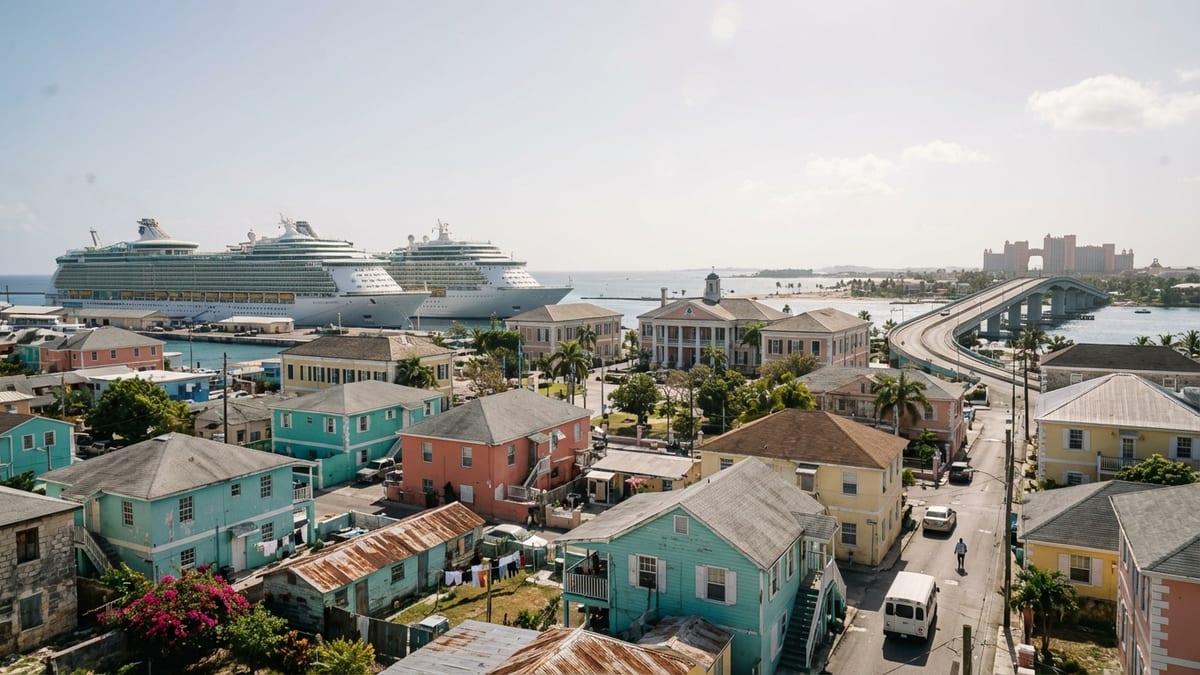
Bahamas Cruise Sector Expands With Safety at the Center
Recent government budget documents for the 2025 to 2026 period highlight cruise tourism as one of the Bahamas’ strongest growth drivers, with private island destinations and enhanced port facilities projected to play a leading role in the country’s gross domestic product over the next several years. Publicly available figures indicate that cruise visitors reached about 9.4 million in 2024, accounting for more than four fifths of total tourist arrivals, underscoring the scale of passenger movements that ports must manage safely.
Within this expansion, authorities have framed safety, security, and public order as critical to sustaining growth. Budget communications describe additional resources for policing in key urban centers such as New Providence and Freeport and reference investments tied to new cruise terminals and port-side commercial districts, designed to channel larger crowds through controlled areas with upgraded infrastructure and surveillance.
Major projects include the multi-hundred-million-dollar redevelopment of Nassau Cruise Port, which officially opened its expanded facilities in 2023, creating capacity to handle more large-class vessels at once. Reports on the project emphasize modernized berths, widened pedestrian zones, and new landscaped public spaces intended to manage passenger flows more efficiently and reduce congestion around the waterfront.
At the same time, the United States government’s travel advisory for the Bahamas continues to flag crime risks, particularly on New Providence, and notes specific concerns such as the use of unregulated watercraft and personal water sports equipment. The advisory serves as a reminder that first-time cruise visitors are being encouraged to balance new port amenities with basic precautions, including using licensed operators and staying within well-trafficked tourist corridors.
Smart City Technology and Port Design Support Safer Shore Days
Safety for first-time cruise tourists increasingly begins at the gangway, where port design and digital technology are used to monitor crowds, traffic, and environmental conditions. Nassau Cruise Port’s redevelopment incorporated several eco-friendly and operational features, including a large solar array, upgraded LED lighting, and expanded green space. Technical disclosures on the project also highlight shade structures and redesigned circulation routes that separate vehicles and pedestrians, elements that can reduce accidents and improve emergency access.
In early 2025, the Bahamas’ tourism authorities launched a “Smart City” program in downtown Nassau that extends high-speed Wi-Fi from the cruise piers through key visitor zones. According to official announcements, the project layers connectivity with AI-supported video monitoring, radar-based traffic management, and environmental sensors for air and noise quality, as well as beacon alerts in selected areas. These tools are promoted as a way to improve situational awareness for local agencies and operators while giving visitors better access to maps, guidance, and emergency information on their phones.
Nassau Cruise Port’s published health, safety, and environment materials point to regular patrols, debris removal, and environmental management as standard practice around the harbor. The port operator also highlights long-term sustainability measures, such as water and energy efficiency programs, alongside security frameworks required for facilities serving large international vessels.
First-time visitors typically encounter these systems indirectly, experiencing them as cleaner walkways, visible cameras, more lighting, and clearer signage. As ports across the Bahamas modernize, the combination of physical upgrades and digital monitoring is positioned as a key reassurance for travelers who may be stepping off a ship in a foreign country for the first time.
Private Islands and New Cruise Hubs Target Controlled, Family-Friendly Environments
Beyond the main urban ports, private and semi-private cruise destinations are playing a growing role in how first-time tourists experience the Bahamas. Government budget documents and trade guidance highlight a series of high-profile projects, including Celebration Key on Grand Bahama, Disney’s Lookout Cay at Lighthouse Point, and Royal Caribbean’s planned Royal Beach Club on Paradise Island. These developments are framed as “major tourism anchors” with dedicated beaches, pools, shopping villages, and family attractions designed for cruise passengers.
Corporate sustainability filings describe Celebration Key, for example, as a multi-hundred-million-dollar port destination expected to eventually welcome around two million guests each year. The project narrative emphasizes curated experiences, structured shore excursions, and a master-planned layout, features that allow operators to centralize security, first-aid facilities, and crowd management within a defined perimeter.
On Grand Bahama, the planned redevelopment of the Grand Lucayan resort into a cruise-oriented complex with water parks, marinas, and expanded entertainment venues is framed by the government as a catalyst for the island’s economic relaunch. Related statements reference a pipeline of investments that also includes a new MSC cruise terminal at Freeport Harbour, suggesting that multiple controlled-access hubs will emerge along the island’s coast in the coming years.
For first-time cruisers, these destinations often serve as an introduction to the country in a highly structured environment, where excursion options, transportation, and beach access are pre-arranged. Industry observers note that such settings can make it easier to manage lifeguards, security patrols, and emergency response, while still allowing visitors to access local vendors and cultural programming through vetted partnerships.
Regional Health Partnerships and Cruise Line Guidance Shape Onboard Safety
While ports invest in infrastructure and security, health protections on ships and at the quay are increasingly shaped by regional cooperation. In 2025, the Caribbean Public Health Agency organized regional workshops on a revamped Caribbean Vessel Surveillance System, an early warning platform that uses real-time data from cruise ships to flag illness clusters before arrival at ports. Participants from Caribbean governments, international organizations, and major cruise companies were involved in discussions on how to use the system to support safer tourism across member states.
The surveillance initiative is presented as an evolution of the region’s response to communicable diseases, aiming to give health authorities better visibility into conditions on board and enable targeted measures at ports of call when needed. For travelers, particularly those new to cruising, such systems are largely invisible yet can influence the sanitation protocols, isolation procedures, and communication practices they encounter if illness is reported during a voyage.
Cruise lines are also updating public-facing guidance for first-time passengers. Recent advisories from major brands outline steps such as completing mandatory safety briefings, using mobile apps for digital check-in, and familiarizing oneself with muster stations and ship layouts. Many lines stress the importance of following onboard hygiene recommendations and paying attention to instructions from crew during drills and any operational changes.
These materials typically position safety as a shared responsibility between operators and guests, encouraging newcomers to be proactive about understanding emergency signage, staying within railings on open decks, and reporting concerns promptly. Combined with port-side surveillance and regional health monitoring, this guidance shapes a layered approach that aims to reassure travelers who may have questions about everything from seasickness to medical facilities on board.
Balancing Adventure and Awareness for First-Time Cruise Visitors
The Bahamas’ official visitor information highlights both the appeal of its islands and the practical steps travelers should take ashore. Government travel FAQs point to a visible police presence in tourist areas and urge visitors to book excursions through hotels, cruise lines, or established providers, use caution with personal watercraft, and follow common-sense practices such as avoiding isolated areas after dark.
These messages mirror the tone of the United States travel advisory, which maintains a cautious stance on crime in certain districts while noting that millions of visitors travel to the Bahamas safely each year. For cruise passengers, particularly those on their first voyage, the guidance underscores the importance of staying aware of surroundings, securing valuables, and understanding local regulations, including visa requirements for travelers who would normally need one when arriving by sea.
As new ports, smart-city corridors, and private destinations come online, industry and government materials increasingly frame the Bahamas as a region where tourism growth is being matched with updated safety and health systems. For first-time cruise tourists stepping into Nassau’s revitalized harbor or onto a newly built island pier, the experience combines the classic promise of turquoise water and white sand with a more visible infrastructure of cameras, patrols, and health protocols that aim to keep those memories focused on the scenery rather than on risk.
Bahamas Ministry of Tourism cruise visitor statistics
Bahamas 2025-2026 national budget communication
Nassau Cruise Port smart city announcement