


More news on this day
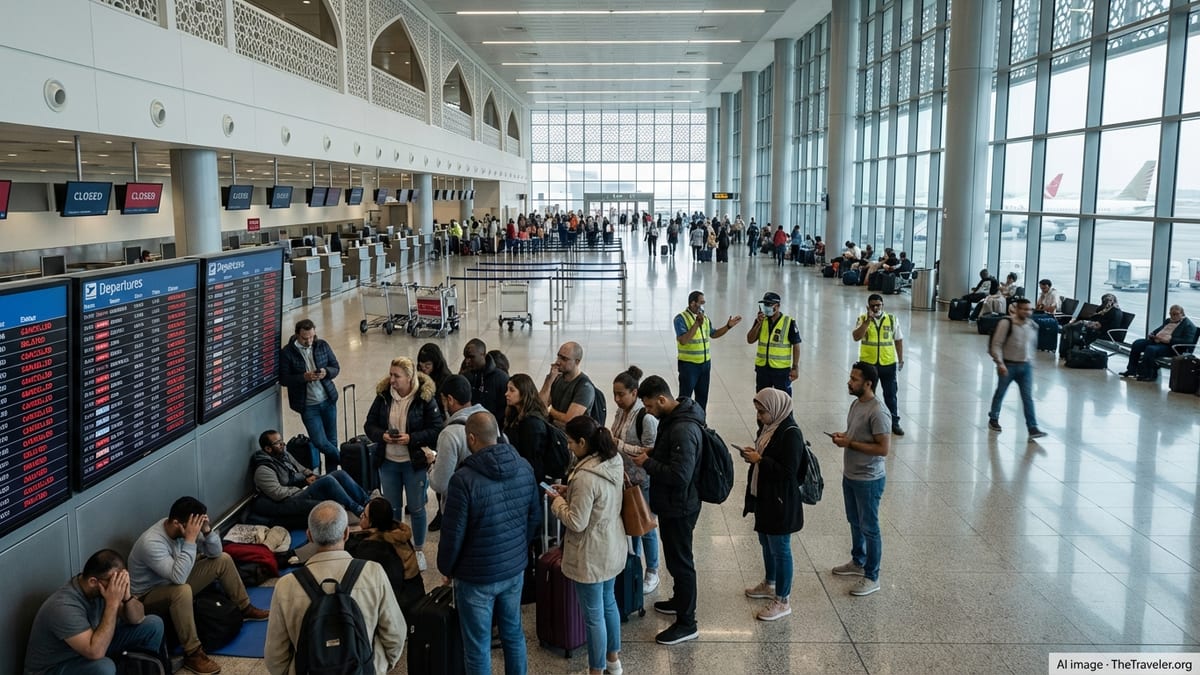
Bahrain International Airport has experienced a new wave of disruption in 2026, with publicly available flight-tracking data showing at least 39 delays and 6 cancellations in a single operational window, compounding months of instability for one of the Gulf’s key regional hubs.
Get the latest news straight to your inbox!
Regional Tensions Trigger Fresh Airport Shutdown
The latest disruption unfolded in mid-July 2026, when Bahrain’s airspace was again affected by regional security tensions linked to the ongoing conflict involving Iran and several Gulf states. Published coverage from regional media indicates that the airport faced a temporary closure after airspace restrictions were activated, forcing inbound traffic either to divert or return to origin airports.
One high-profile example involved an Abu Dhabi–Bahrain service that was compelled to turn back after Bahrain International Airport halted operations, according to reports from Gulf-based outlets. Subsequent schedules show that services on the same route were cancelled for the rest of the day, contributing to the tally of six cancellations directly connected to the disruption window.
These measures followed months of intermittent airspace closures and restrictions around Bahrain earlier in 2026, which were introduced as part of broader regional security responses. Earlier advisories from aviation and logistics operators had already warned that Bahrain’s airspace, though formally reopened, was operating with limited capacity and heightened caution.
Flight-tracking and operations reports suggest that the July disruption was shorter than the complete shutdowns seen earlier in the year but still severe enough to push a concentrated burst of delays across tightly scheduled Gulf and long-haul networks.
39 Delays and 6 Cancellations in a Compressed Timeframe
Data compiled from live departure and arrival boards, as well as independent flight-statistics services, points to at least 39 delayed flights and 6 outright cancellations at Bahrain International Airport during the peak of the July 2026 disruption. The affected flights span departures and arrivals and involve both regional and long-haul services.
Most of the recorded delays ranged from 45 minutes to several hours, with knock-on effects for onward connections through major hubs in the United Arab Emirates, Saudi Arabia, Turkey and Europe. For carriers relying on Bahrain as a transfer point between Europe and South or Southeast Asia, relatively short ground delays translated into missed connections further along the route network.
The six cancellations appear to be concentrated among services scheduled during or immediately after the temporary airspace shutdown. In line with earlier episodes in March and April, publicly available statements from airport and airline channels attribute the disruption primarily to external security factors and regional airspace management decisions rather than technical failures at the airport itself.
Operational updates published by logistics firms serving the Middle East had already flagged Bahrain as an airport where capacity remained constrained in June 2026. Those same bulletins warned clients to expect intermittent delays and selective cancellations if security conditions changed, a scenario that appears to have materialised again in July.
Global Routes and Hub Networks Feel the Strain
Although Bahrain International Airport handles far fewer passengers than mega-hubs in Dubai or Doha, its role as a connector between Gulf, European and Asian markets means even short closures can send ripples across international networks. According to recent aviation and supply-chain updates, routes linking Bahrain to major cities such as London, Frankfurt, Istanbul, Delhi and Bangkok have been especially sensitive to schedule volatility in 2026.
The latest cluster of 39 delays and 6 cancellations added strain to an ecosystem already reconfiguring around earlier airspace closures across parts of the Gulf. Airlines have had to re-route flights to avoid conflict zones, add extra flight time to detour around closed corridors and, in some cases, consolidate services through alternative hubs in Saudi Arabia or the United Arab Emirates.
For passengers, these operational decisions translate into missed long-haul connections, last-minute rebookings and extended airport stays. Accounts shared on social platforms and in consumer-focused travel coverage describe travellers facing unplanned stopovers, rerouting via Dammam or other regional gateways, and uncertainty about when regular Bahrain flights would resume.
Freight movements have also been affected. Supply-chain advisories throughout May and June highlighted Bahrain as an airport where limited capacity and routing restrictions could generate longer transit times for time-sensitive shipments, particularly pharmaceuticals and high-value goods that typically move via Gulf hubs.
From Airspace Closure to Gradual Recovery
The July disruption cannot be viewed in isolation. Since February 2026, Bahrain has navigated a series of airspace closures and partial reopenings driven by the wider Gulf security situation. Earlier in the year, national and regional media reported periods when Bahraini airspace was closed almost entirely, prompting the suspension of many scheduled passenger and cargo services.
By late spring, official notices and port-advisory documents circulated to shipping and aviation clients indicated that Bahrain’s airspace had formally reopened, but with limited services in place. Those briefings stressed that flights would be subject to rapid adjustment if security assessments changed, and that cancellations to higher-risk destinations were likely.
In April, coverage from Gulf-based news outlets noted that flight operations at Bahrain were gradually resuming, with airlines rebuilding schedules and passengers beginning to transit through the airport again. However, the pattern since then has been one of fragile normalisation, with each new spike in regional tension threatening renewed disruption.
The events of mid-July, resulting in 39 delays and 6 cancellations over a short period, underline how quickly operating conditions at Bahrain International Airport can shift from manageable congestion to widespread schedule upheaval.
What Travellers and the Industry Are Watching Next
Travel industry observers note that Bahrain’s experience in 2026 reflects broader vulnerabilities across Gulf aviation, where dense airspace, geopolitical risk and strong dependence on hub-and-spoke networks magnify the impact of any disruption. Airlines, airports and logistics providers are monitoring several key variables as they plan for the coming months.
First, changes in regional security assessments will continue to shape airspace availability and routing options. As long as there is potential for renewed closures in or around Bahrain, carriers are expected to maintain contingency schedules, including reserve aircraft and alternative routings via neighbouring states.
Second, there is growing emphasis on passenger communication and rebooking processes. Consumer-focused reports from earlier shutdowns in March and April highlighted confusion among travellers about which flights were operating, how to access replacement itineraries and where to seek assistance when stranded between hubs. Industry briefings suggest that airlines serving Bahrain are now investing more heavily in real-time status updates and flexible rebooking policies.
Finally, analysts tracking Middle East aviation performance stress that even modest statistics such as 39 delays and 6 cancellations can be early signals of deeper capacity constraints. If similar episodes recur, Bahrain International Airport may face a prolonged period of elevated delay and cancellation rates, with knock-on effects for global routes that rely on the Gulf as a connective bridge between continents.