


More news on this day
A JetBlue flight operating as JBU1053 from New York to West Palm Beach diverted to Fort Lauderdale-Hollywood International Airport in July 2026, according to live flight-tracking data and schedule information, highlighting how fast-changing conditions on Florida’s busy aviation corridor continue to disrupt summer travel plans.
Get the latest news straight to your inbox!
Unexpected Reroute on a Routine New York–Florida Service
The flight, identified in schedules as JBU1053 and marketed on some systems as B61053, was planned to operate from New York’s John F. Kennedy International Airport to Palm Beach International Airport, a route that has become a staple of JetBlue’s Florida network. Publicly available timetable and tracking data for mid-July 2026 show the service as a regular link between the Northeast and South Florida, timed to capture peak leisure demand.
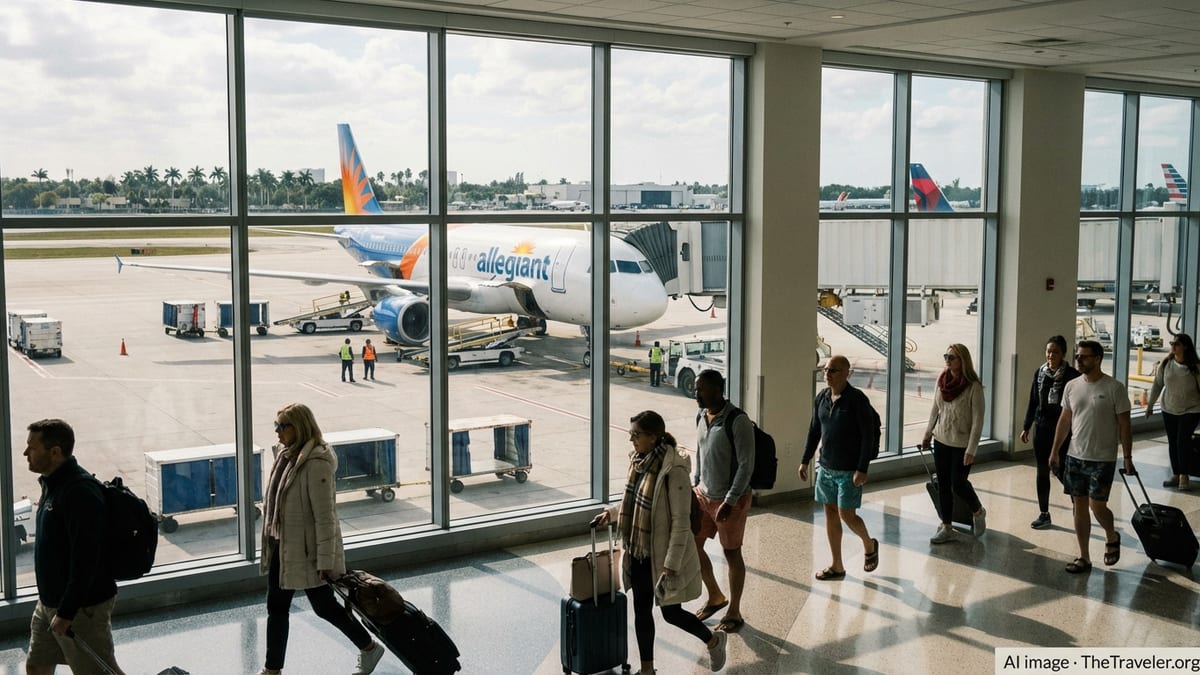
During the July 2026 operation in question, the aircraft did not complete its journey to West Palm Beach as filed. Instead, tracking records indicate the flight diverted south to Fort Lauderdale-Hollywood International Airport, one of JetBlue’s key focus cities. The diversion meant passengers landed about 50 miles from their intended destination, adding ground travel time but keeping them within the broader South Florida region.
Reports from flight-status platforms and schedule aggregators indicate the flight’s operating window coincided with an already busy afternoon for New York and Florida airports in the heart of the summer travel period. While exact, flight-specific reasons are typically documented only in internal operational logs, diversions on this corridor are commonly associated with thunderstorms, traffic flow restrictions, or temporary runway constraints.
Fort Lauderdale’s Expanding Role in JetBlue’s Network
The decision to divert to Fort Lauderdale underscores the airport’s growing strategic role for JetBlue. The carrier has been steadily expanding its South Florida footprint in 2025 and 2026, adding new routes and increasing daily departures from Fort Lauderdale-Hollywood International Airport. Company press materials and industry coverage describe Fort Lauderdale as one of JetBlue’s fastest-growing focus cities, with capacity rising significantly year over year.
By positioning more aircraft, crews, and maintenance resources at Fort Lauderdale, JetBlue has additional flexibility when irregular operations arise. A diversion that brings an aircraft into a large focus city can simplify crew scheduling, refueling, and potential aircraft swaps, while giving passengers more onward connection options if they require rebooking.
For travelers on JBU1053, arriving in Fort Lauderdale instead of West Palm Beach likely meant a mix of outcomes. Some passengers may have been able to continue by road to their original destination relatively quickly, while others connecting onward from Palm Beach may have required itinerary changes. The diversion nevertheless illustrates how a strengthened operational base can help an airline manage disruptions within a dense regional network.
Operational Pressures Along the New York–South Florida Corridor
The New York to South Florida corridor is among the most heavily trafficked in the United States, and JetBlue is one of several major carriers vying for market share. Industry data and consumer discussions in mid-2026 point to a challenging operating environment, with carriers balancing high demand against congested airspace, frequent convective weather, and tight aircraft utilization.
New York’s JFK airport is especially sensitive to weather and traffic constraints, and even relatively short ground holds can ripple through an airline’s afternoon and evening schedule. When storms build over central or South Florida, flights may face holding patterns, reroutes, or fuel concerns, any of which can trigger a diversion to an alternate airport with suitable facilities and available capacity.
Publicly accessible airport and airline performance data show that diversions, cancellations, and extended delays have been recurring themes in busy summer periods, particularly on Florida-bound routes. The JBU1053 diversion fits within this broader pattern of operational stress, in which carriers must frequently adapt flight plans to shifting conditions both at origin and destination.
Impacts for Passengers and What Diversions Typically Mean
For passengers, a diversion like the one affecting JetBlue flight JBU1053 can be both disruptive and confusing. Travelers booked to West Palm Beach suddenly find themselves at Fort Lauderdale, needing to evaluate options such as ground transportation, rebooking to a later flight, or adjusting hotel and car rental plans originally tied to Palm Beach.
Standard industry practice when a flight diverts within the same region is to prioritize safety, secure a timely landing at an appropriate airport, and then arrange onward support such as buses or rebooked flights where feasible. Publicly available guidance from airlines and regulators emphasizes that weather and air-traffic decisions related to diversions are generally treated as outside carrier control, which can affect eligibility for compensation or vouchers, although specific outcomes vary by case and airline policy.
In the case of a relatively short-distance diversion within South Florida, some passengers may opt to continue their journey by road, especially when the alternate airport provides access to nearby highways and intercity ground transport. Fort Lauderdale’s location between Miami and Palm Beach often makes it a practical fallback for flights that cannot safely or reliably reach one of the region’s other airports on schedule.
Broader Significance for JetBlue’s South Florida Strategy
The JBU1053 diversion occurs against the backdrop of JetBlue’s broader strategic pivot toward Fort Lauderdale as a central hub for its East Coast leisure network. Recent schedule announcements highlight new nonstop routes from Fort Lauderdale to domestic and international destinations, along with increased frequencies to existing cities, reflecting a long-term investment in the airport.
Analysts following the airline industry have noted that this strategy entails reshaping parts of JetBlue’s network elsewhere to free up aircraft and crew capacity for Fort Lauderdale growth. As the carrier concentrates more operations there, events like the New York to West Palm Beach diversion illustrate how that expanded presence can provide operational alternatives when weather or congestion affect other South Florida airports.
For travelers, the incident serves as a reminder that in a tightly interconnected network, a designated focus city can function not only as a destination but also as a relief valve during irregular operations. While diversions inevitably cause inconvenience, having a large, well-served alternate airport in the same region can help limit the disruption, especially during the peak summer travel season.