


Landing at Bali’s Ngurah Rai International Airport and heading straight to Nusa Penida or Nusa Lembongan is perfectly possible, but it takes some planning. Traffic between the airport and Sanur Harbour, fast boat departure times, and the practicalities of luggage and check in can make or break a same day island transfer. This guide walks you through the real world options from the arrivals hall to the sand, with concrete examples of routes, timings, and what to expect along the way.
Get the latest updates straight to your inbox!
Understanding the Route: From Airport to Sanur Harbour
Ngurah Rai International Airport, often referred to as Denpasar Airport, sits in the south of Bali near Kuta and Tuban. Sanur Harbour is on the southeast coast, roughly 15 to 20 kilometres away depending on the route your driver takes. In light traffic, you might cover that distance in 25 to 30 minutes via the Mandara Toll Road. At busy times, particularly late afternoon and early evening, the same journey can stretch to 45 to 60 minutes or more as traffic builds around the toll gates and Sanur’s main streets.
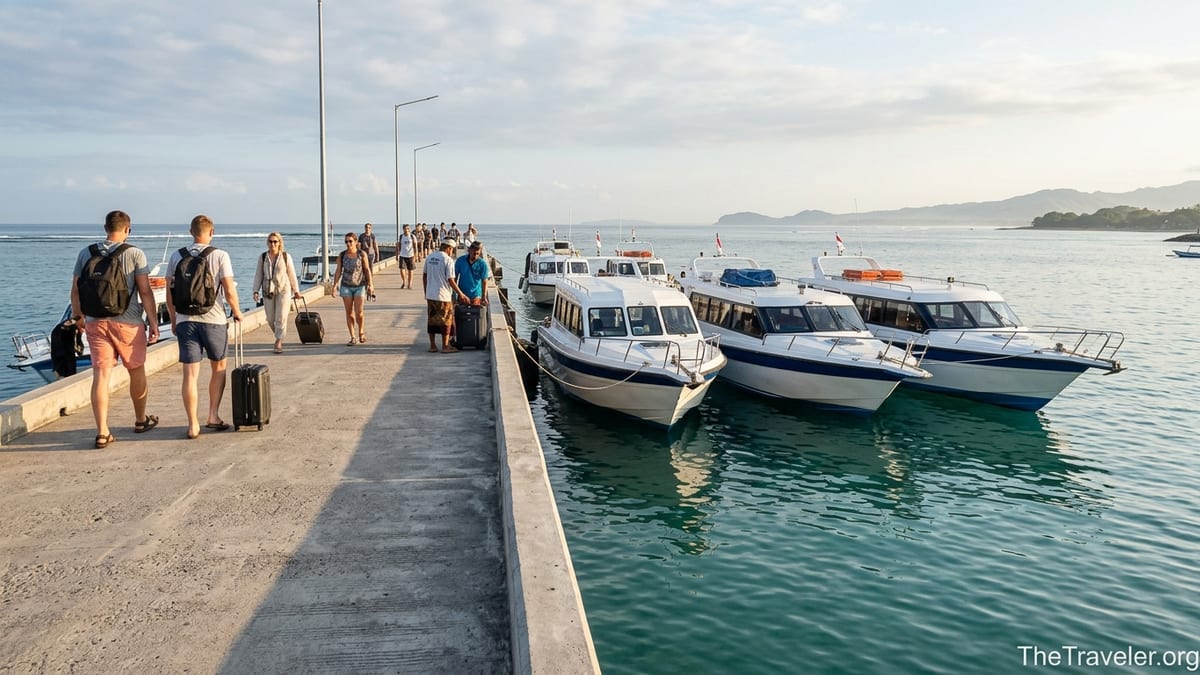
Most visitors reach Sanur using a private car, airport taxi, or ride hailing service. The drive is straightforward: you leave the airport via the eastern access road, join the Mandara Toll Road, then exit toward Sanur and follow the coastal bypass to the new Sanur Harbour terminal area. Since 2022, the harbour has been upgraded from a simple beach launch zone to a modern terminal with fixed piers, check in counters, and waiting areas. That means you now board fast boats from a jetty rather than wading through the surf, which makes transfers with luggage far easier than older reports online might suggest.
In practical terms, you should budget at least one hour from wheels down to reaching the harbour gate, and often longer. For example, if your plane touches down at 11:00, it is realistic to clear immigration and baggage by about 12:00, find your driver and depart by 12:15, then reach Sanur between 12:45 and 13:15 depending on queues and traffic. Any delays at immigration, baggage belts, or SIM card kiosks will push this back, so always add a buffer if you are hoping to catch a specific boat departure.
Transport Options: Taxi, Grab, Gojek and Private Transfers
Once you exit customs at Ngurah Rai, you have four main ways to reach Sanur: official airport taxis, prebooked private transfers, ride hailing apps such as Grab or Gojek, and hotel or boat company pickups. Each has its own trade offs in price, convenience, and predictability, and the best choice depends on your arrival time, group size, and how comfortable you are dealing with Bali’s sometimes hectic arrivals environment.
Official airport taxis and private drivers are the most visible options when you walk out. As of mid 2026, typical rates for an airport to Sanur Harbour transfer in a standard car sit roughly in the 180,000 to 300,000 rupiah range for one way, depending on bargaining, vehicle type, and whether the fare is arranged at the public taxi counter or prebooked through a transfer company. For example, a family of four arriving on an afternoon international flight might pay around 250,000 rupiah for a prearranged car with air conditioning and enough space for two large suitcases and hand luggage.
Ride hailing services like Grab and Gojek are officially present in Bali and can be used for airport pickups, but you must follow the current pickup instructions in the apps. In 2026, both companies route airport pickups to designated zones that can change occasionally as the airport reconfigures traffic. Travelers report Sanur fares through these apps in the approximate band of 120,000 to 200,000 rupiah, depending on surge pricing and vehicle type. Because you need data to request the ride, many visitors buy a local SIM card at arrivals or rely on airport Wi Fi just long enough to make the booking.
Private transfers bundled with your fast boat ticket are another attractive option. Many operators serving Nusa Penida and Nusa Lembongan let you add a paid “hotel or airport pickup” during booking. For example, a fast boat company might sell a combined airport to Sanur transfer and boat ticket for a modest surcharge per person. The advantage is simplicity: a driver waits with your name board, brings you to the correct harbour check in counter, and coordinates timing with the boat office. This can be especially helpful if you land around midday and are aiming for a mid afternoon departure when margin for error is small.
Sanur to Nusa Penida: Fast Boat Schedules & Check In
Sanur is the main gateway to Nusa Penida, with a dense network of fast boats running throughout the morning and early afternoon. Multiple operators, including Maruti Group Fast Boat, Angel Billabong Fast Cruise, Semabu Hills Fast Boat and others, run daily services. Current timetables typically show first departures around 07:30, with popular mid morning boats at 08:00–10:00 and several more sailings up to mid afternoon. Crossing time is usually around 30 to 45 minutes, depending on sea conditions and which part of Nusa Penida you are heading to, such as Toya Pakeh or Sampalan.
Schedules change seasonally, but as of July 2026 you will commonly find departures in windows such as 07:30, 08:30, 10:00, 13:00 and 16:30 from Sanur to Nusa Penida with well known operators. A late afternoon run around 16:30 is especially useful for travelers arriving on midday flights, although availability may be limited in peak season. Return boats from Nusa Penida to Sanur generally operate in the morning and early afternoon, which works well if you are catching an evening flight out of Bali.
Fast boat companies usually ask passengers to check in 30 to 60 minutes before departure. This involves presenting your booking confirmation at the company’s harbour office, collecting boarding stickers or tags, and sometimes waiting in a designated seating area until your boat is called. For instance, if you are booked on a 16:30 boat to Nusa Penida, you may be asked to arrive at the harbour office by 15:45 at the latest. With this in mind, aim to be at Sanur Harbour at least one hour before your scheduled departure when coming directly from the airport, and earlier in high season when queues at the new passenger terminal can grow.
Boats themselves are typically open deck or covered speedboats with rows of seats and limited inside storage. Most have basic life jackets and store larger bags at the rear or in front. Boarding is now via fixed piers at Sanur, but landings on Nusa Penida may still involve stepping into shallow water if the local jetty is busy or if you arrive directly on the beach. Wearing shorts and sandals rather than full length trousers is a practical choice if you want to avoid wet clothes when disembarking.
Sanur to Nusa Lembongan: Boats, Bays and Daily Rhythm
Nusa Lembongan lies closer to Bali than Nusa Penida, and the fast boat crossing from Sanur typically takes about 25 to 35 minutes. A cluster of operators runs the route, including Rocky Fast Cruise, D’Camel Fast Ferry, Tanis Lembongan Express, Setia Fast Ferry and several others. Services generally run several times per day, with more sailings in high season. Common arrival points are Jungutbatu Beach on the northwestern coast and Mushroom Bay on the southwest, each suited to different styles of stay.
Typical departure times from Sanur to Nusa Lembongan fall between about 08:00 and 17:00, with many companies operating three crossings daily in each direction. For example, a company might offer boats at 09:00, 13:00 and 16:00 from Sanur, returning from Nusa Lembongan at 08:00, 11:30 and 15:00. Last public boats often leave Sanur around 16:30 or 17:00. After that, options shrink to expensive private charters, which can easily cost more than a night in a midrange hotel, so most travelers arriving late in the day stay overnight in Sanur and connect to Nusa Lembongan the following morning.
Check in procedures are similar to those for Nusa Penida. You check in at the operator’s harbour counter, receive a sticker or boarding pass, and wait until staff escort your group to the pier. Some companies, such as Rocky Fast Cruise, use dedicated arrival and departure points on Nusa Lembongan with their own small jetties, which can make landings smoother in choppy conditions. Others still beach the boat and use a ladder or step system in shallow water, so expect a little splash if swells are up.
On Nusa Lembongan itself, free or low cost transfers to hotels are often bundled into the boat fare if you are staying in popular areas around Jungutbatu, Mushroom Bay or along the main coastal roads. For example, guests heading to a dive resort near Jungutbatu might be collected in the back of a small pickup truck within a few minutes of landing. More remote villas in the hills or on neighboring Nusa Ceningan may require a paid add on or self arranged scooter or buggy transfer across the yellow suspension bridge linking the islands.
Can You Realistically Transfer Same Day?
Whether a same day transfer from Bali Airport to Nusa Penida or Nusa Lembongan is realistic depends on three key variables: your scheduled landing time, how punctual your flight is, and the time of the last workable boat that day. For many travelers, flights arriving before about 13:00 give a comfortable margin to reach an afternoon fast boat. Arrivals between 13:00 and 15:00 are possible but increasingly tight, especially if you need to buy a SIM card, change money or wait for checked luggage. Evening arrivals almost always push the island transfer to the following morning.
Consider a couple flying from Singapore and landing at 11:30 in Bali. If immigration is busy, they may not exit customs until 12:45. A prebooked driver meets them and they are on the road by 13:00, reaching Sanur Harbour around 13:40 in average traffic. They could comfortably check in for a 15:00 boat to Nusa Penida or Nusa Lembongan. In contrast, a long haul flight from Europe scheduled to land at 15:30 might realistically see passengers leaving the terminal closer to 16:30. By the time they reach Sanur, most public fast boats will have departed, leaving only high priced private charters or an overnight stop in Sanur as options.
Sea and weather conditions add another layer of uncertainty. During the windy months, typically around July and August, afternoon crossings can be choppier, and operators sometimes adjust or cancel sailings. In these months, building in extra margin becomes even more important, and opting for a morning crossing the day after you land may be the least stressful plan. Families with small children, older travelers, or anyone prone to motion sickness usually find early morning departures more comfortable, since seas are often calmer earlier in the day.
The most conservative rule of thumb is simple: if your international flight is scheduled to land in Bali after about 14:00, plan to stay in Sanur for one night and take a morning boat. Sanur has a wide range of accommodation within a 5 to 10 minute drive of the harbour, from simple guesthouses to beachfront resorts. This approach removes the anxiety of racing the clock and lets you start your island trip rested rather than stressed. If your arrival is earlier and you are keen to connect the same day, prebook your boat ticket, arrange a private transfer, and allow generous buffers at each step.
Luggage, Comfort and Practical Tips
Traveling with luggage on the Bali to islands route is normal and generally straightforward, but there are a few practical points to keep in mind. Most fast boat operators allow a standard suitcase plus hand luggage per person without extra charge, and levy a small fee for surfboards, dive gear bags, or unusually heavy items. At Sanur Harbour, your larger bags are usually tagged and stowed by the crew, either stacked at the rear of the boat or in a low front compartment. You keep smaller items like daypacks and valuables with you on board.
Because the new Sanur terminal uses piers instead of beach launches, your luggage will usually stay dry during boarding. The greater risk of splashes comes when you arrive on Nusa Penida or Nusa Lembongan, especially at beach landing points. It is wise to pack electronics and passports in waterproof pouches inside your hand luggage and to avoid checked cases that are difficult to carry short distances over sand. Many travelers also bring a light foldable tote or dry bag to keep shoes and small items together while stepping off the boat.
Comfort on board depends heavily on sea state and boat design. In calm conditions the crossing feels like a fast bus ride, with spray on the windows and a steady hum from the engines. When swells pick up, the ride can turn bouncy, and passengers at the front feel it more. If you are prone to motion sickness, aim for seats midship toward the rear, avoid heavy meals immediately before boarding, and consider taking motion sickness tablets 30 to 60 minutes before departure on the advice of a medical professional. Carrying a lightweight jacket or sarong can also be helpful since cabins are often cool from both sea breeze and air conditioning.
On arrival, many boats operate basic porter style assistance, especially on Nusa Lembongan where staff often wade into shallow water to help move bags ashore. Tips are appreciated but not mandatory; small notes of 10,000 to 20,000 rupiah are common. If you prefer to carry your own belongings, communicate clearly and keep an eye on your bags from pier to pickup point. Although theft is not widely reported on these routes, the crowds at busy departure times make good travel habits worthwhile.
Choosing Between Nusa Penida and Nusa Lembongan
While this guide focuses on logistics, it helps to understand how the two islands differ when deciding which boat to book straight from the airport. Nusa Penida is larger, wilder and more spread out, famous for viewpoints like Kelingking Beach, Broken Beach and Angel’s Billabong, as well as Manta Point for diving and snorkeling. Roads can be rough and travel times between sights long, so basing yourself near the harbours at Toya Pakeh or along the north coast makes transfers easier, especially if you arrive later in the day.
Nusa Lembongan, by contrast, is smaller and more relaxed, with many guesthouses, surf shacks and beach clubs clustered around Jungutbatu and Mushroom Bay. It is especially popular for shorter stays and for travelers who value being able to walk or take a five minute scooter ride between their accommodation, the beach, and places to eat. For example, a couple arriving from Australia at midday might choose to go straight to Nusa Lembongan, check into a bungalow near Jungutbatu, and be watching sunset at a waterfront bar within an hour of landing on the island.
If your priority is underwater life, both islands offer excellent snorkeling and diving, but Lembongan has easier access to mellow reef sites and a compact dive shop scene, while Penida is better for big ticket encounters like manta rays and, in season, mola mola at deeper dive sites. From a logistics point of view, Nusa Lembongan also connects easily to Nusa Ceningan via the yellow bridge, making it simple to explore two islands during a short stay without long internal transfers.
Some travelers combine both islands in one trip, for example spending two nights on Nusa Lembongan, then taking a local boat across to Nusa Penida for another few days before returning to Bali. In this case, plan your airport segment around your final return day. Morning boats from Penida or Lembongan back to Sanur typically give enough time to reach the airport for flights departing after mid afternoon, as long as seas are calm and traffic flows normally.
FAQ
Q1. How long does it take to get from Bali Airport to Sanur Harbour?
In light traffic, the drive usually takes around 30 minutes, but in peak periods or bad congestion it can stretch to 45 to 60 minutes or more, so always allow at least an hour.
Q2. Can I use Grab or Gojek directly from Bali Airport to Sanur?
Yes, both Grab and Gojek operate at Bali Airport using designated pickup zones. You will need mobile data or Wi Fi to request a car, and fares to Sanur are typically similar to or slightly cheaper than official taxis.
Q3. What time is the last fast boat from Sanur to Nusa Penida?
Timetables vary by operator and season, but many companies run their final Sanur to Nusa Penida departure in the mid to late afternoon, often around 16:00 to 16:30.
Q4. What time is the last fast boat from Sanur to Nusa Lembongan?
Most public fast boats to Nusa Lembongan leave between early morning and late afternoon, with last departures commonly around 16:30 to 17:00. After that you would need a costly private charter.
Q5. Is a same day transfer from an afternoon flight to Nusa Penida realistic?
If your flight is scheduled to land before about 13:00 and is on time, a same day transfer is often realistic. For arrivals after mid afternoon, staying overnight in Sanur is usually safer.
Q6. Is a same day transfer from an afternoon flight to Nusa Lembongan realistic?
It can be, but it is tight. You need to clear the airport, drive to Sanur, and check in at least 30 minutes before the last boat, so late arrivals after roughly 15:00 should generally plan to travel the next morning.
Q7. How much should I budget for a taxi or transfer from the airport to Sanur?
As of 2026, typical one way prices range roughly from 180,000 to 300,000 rupiah for a standard car, with ride hailing apps sometimes a little cheaper depending on demand.
Q8. What happens to my luggage on the fast boat?
Large suitcases are usually tagged and stacked by the crew at the front or rear of the boat, while you keep smaller bags and valuables with you in the cabin. At beach landings, staff often help carry luggage ashore.
Q9. Will I get wet boarding or leaving the boat?
At Sanur’s new harbour you board via a pier and generally stay dry. On Nusa Penida and Nusa Lembongan, some landings still involve stepping into shallow water, so wearing sandals and shorts is practical.
Q10. Should I prebook my fast boat ticket or buy it on arrival?
Prebooking is strongly recommended in high season and if you plan a same day transfer from the airport. It secures a seat on a specific departure and often allows you to arrange a coordinated pickup transfer.