


Ngurah Rai International Airport in Denpasar is Bali’s only commercial airport and, for most visitors, the island’s first real test of patience. In 2026, rising arrival numbers, new digital systems and changing visa rules mean that getting through passport control, baggage claim and customs can take anywhere from a smooth 30 minutes to well over two hours, depending on when and how you arrive. This guide walks through each step of the process with realistic wait-time expectations and concrete tips to help you plan your post-landing schedule.
Get the latest updates straight to your inbox!
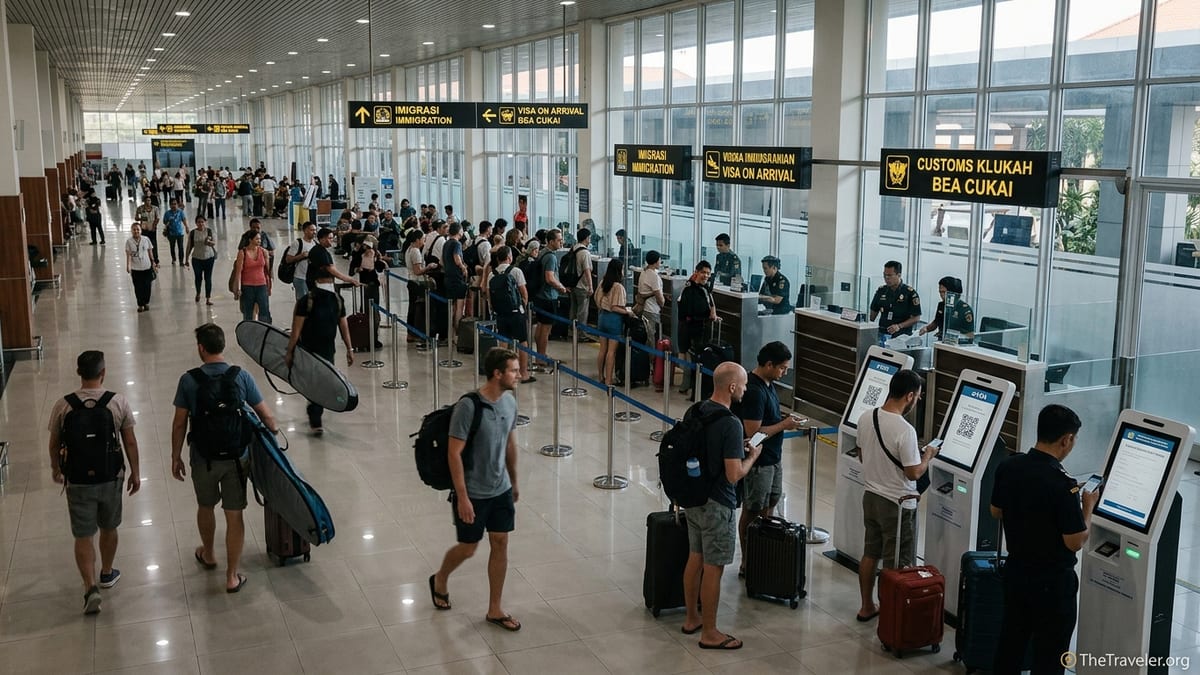
Understanding Bali’s Ngurah Rai Airport Layout on Arrival
Ngurah Rai International Airport, often referred to simply as Denpasar or DPS, sits just south of Kuta and is relatively compact compared with hubs like Singapore or Bangkok. International arrivals all funnel into a single terminal. After disembarking, passengers follow signs for “Immigration / Visa on Arrival” down a corridor that can feel crowded if two or three wide-body aircraft land at once. There are no trains or shuttle buses between aircraft and the terminal; you walk directly from the gate through the concourse.
The sequence once you enter the arrivals area is straightforward: first visa on arrival payment (if needed), then immigration passport control, then baggage claim, and finally customs. There are toilets and a few currency exchange counters before immigration, but you will not see ATMs until after customs, so carry at least some Indonesian rupiah or a working card for any fees. Most passengers move with the crowd, so even first-time visitors quickly find the right counters as long as they follow the overhead signs in English and Indonesian.
The airport uses a mix of traditional manned counters and electronic gates. In practice, the majority of foreign tourists still pass through staffed immigration desks, especially if they buy a paper visa on arrival. The e-gates are currently most useful if you have arranged an electronic visa on arrival (e-VOA) in advance and arrive at a relatively quiet time. Families with young children, passengers needing assistance and those with passport issues are usually directed to human officers, which can extend processing times.
Because Ngurah Rai is the only entry point for most Bali visitors, it regularly handles several thousand inbound passengers within a short window. This “bunching” effect is key to understanding why two travelers on the same day can report completely different experiences: one clearing the formalities in under 45 minutes after landing at 10:30 p.m., another waiting nearly two hours in an early afternoon queue when four international flights arrive back-to-back.
Visa on Arrival and e-VOA: What Actually Happens
Indonesia offers a visa on arrival option for many nationalities, including most travelers from Europe, Australia and North America. In 2026 you can obtain this in two main ways. The traditional approach is to purchase the visa at a dedicated counter before immigration, paying a fixed fee in Indonesian rupiah or by card. The more streamlined route is the electronic Visa on Arrival, or e-VOA, which you apply and pay for online before you travel and then present as a QR code or printout on arrival. Both typically grant 30 days, with an option to extend to 60 days through an immigration office.
In practical terms, the choice affects how much time you spend in the arrivals hall. Travelers who land without an e-VOA must first queue at the Visa on Arrival payment counters. When several flights arrive at once, that segment alone can add 20 to 40 minutes, especially in high season or during holiday periods. After payment, they join the main immigration queue with everyone else. Those with an approved e-VOA skip the payment line and proceed directly to passport control, often using special e-VOA or e-gate lanes that move faster when staffed.
Real-world reports from 2024 and early 2026 indicate that applying for e-VOA can cut total processing time noticeably. Travelers arriving around midday in peak months such as July and August have reported spending more than an hour extra in line if they bought the visa at the airport instead of online. By contrast, passengers who landed late evening with an e-VOA in hand have described walking straight to immigration, clearing in 15 to 25 minutes, and reaching baggage claim while the carousel was still filling.
It is important to prepare for occasional glitches. During major Indonesian holidays, online systems have previously been slow or temporarily unavailable, pushing more people back to the on-arrival counters. Card terminals at the airport sometimes go offline, causing staff to prefer cash payments. For that reason, many frequent Bali visitors treat e-VOA as their primary plan, with enough rupiah or an international card in reserve to pay at the counter if needed. Always check your eligibility and any recent policy changes a few days before departure, as Indonesia has adjusted visa rules several times since the pandemic.
Immigration Queues and Passport Control: How Long You Might Wait
Once you have settled your visa status, you join the immigration queue for passport control. The arrivals hall has roughly two dozen staffed counters, but they are not always fully manned, and processing has become slightly slower in recent years because officers capture fingerprints and photos for most visitors. Industry estimates and local airport services suggest that during an average hour, each counter can process perhaps 60 to 90 passengers, but that rate drops when many travelers arrive with incomplete forms, unclear itineraries or questions about their visas.
Queue times vary dramatically by time of day and season. In the shoulder months of May and October, a late-night arrival on a mid-size aircraft might see you through passport control in 20 to 40 minutes. In contrast, in high season from July through September and again around Christmas and New Year, afternoon arrivals between about 1 p.m. and 5 p.m. can be far slower. Travelers landing at Ngurah Rai in August have reported standing in immigration lines for 90 minutes or more when three or four wide-body jets from Sydney, Melbourne, Doha and Singapore touched down within a short period.
Online services that track airport queue times, as well as Bali-based meet-and-greet agencies, now warn clients to expect immigration alone to take 45 to 75 minutes on a typical busy day, with worst-case scenarios around two hours during peak holiday surges. Some offer fast-track packages where local staff meet passengers at the gate and escort them through priority lanes. These services can cost the equivalent of 40 to 80 US dollars per person, and they are mainly useful if you are landing during the busiest windows or traveling with children or elderly relatives who would struggle to stand for long periods.
One practical factor that many first-time visitors overlook is flight choice. For example, a traveler from Sydney who picks a red-eye flight arriving in Bali at 10:30 p.m. in March may breeze through immigration in under half an hour because there are fewer concurrent arrivals. The same traveler arriving on a midday flight from the same city in late July might stand in line for over an hour. When booking, it can be worth checking rough arrival schedules for other carriers from hubs like Singapore, Kuala Lumpur and Doha to avoid slots when multiple international flights are scheduled to land together.
Baggage Claim and Customs: What Happens After Passport Control
After clearing immigration, you walk down a short corridor into the baggage hall. There are a handful of carousels, each serving one or two flights. If you spent a long time in the passport queue, your luggage may already be circling when you arrive, and you might collect it within 5 to 10 minutes. If you cleared quickly, especially with e-VOA and short queues, you may wait 20 to 30 minutes for bags to appear. Ground handling at Ngurah Rai is generally reliable but not especially fast when several wide-body flights arrive at once.
The baggage hall has toilets, a few basic seating areas and some advertising stands, but limited food options, so it is wise to bring water and a snack from your flight if you expect delays. Oversize items like surfboards are delivered to a separate area near one end of the hall. During peak surf seasons, dozens of large board bags can accumulate there; labeling your gear clearly and using a brightly colored strap can make it easier to spot among similar items from Australia and Europe.
Once you have your bags, you proceed toward customs, where Indonesia now uses a digital arrival card known locally as the All Indonesia system. Most passengers complete this online up to three days before travel, generate a QR code and simply present it on their phone to customs officers. Those who have not completed it in advance may be asked to fill it out on their device using the airport’s Wi-Fi or by scanning a code near the hall entrance. In practice, scanning the QR code adds only a few seconds, but if many travelers arrive without having done the form, queues can back up at the customs doors.
Customs screening at Ngurah Rai focuses on items such as large quantities of electronics, commercial quantities of goods, and restricted products. Bags typically pass through an X-ray machine, and officers pull aside only those that trigger concern or appear suspicious. For most tourists carrying standard luggage, the process takes 5 to 15 minutes from joining the line to exiting into the public arrivals area. However, if your flight has a high proportion of passengers with surfboards, musical instruments or bulky boxes, X-ray capacity can become a bottleneck, adding extra waiting time after baggage claim.
Peak-Season Crowds, Bali Tourist Levy and New Digital Systems
Bali’s high season has become increasingly intense. Local tourism agencies reported that in peak months of 2026, tens of thousands of foreign visitors arrive daily, with particularly heavy days around Australian school holidays, European summer vacation and major Asian festivals. On such days, the combined effect of longer visa lines, full immigration halls and slower baggage delivery can turn what might be a 45-minute process in low season into a 2-hour ordeal from gate to curb.
On top of traditional formalities, the province of Bali now charges a foreign tourist levy of around 150,000 Indonesian rupiah per person, introduced in 2024. Many travelers pay this online before travel and present proof on their phone, while others choose to settle it at kiosks or counters at the airport. In practice, if you have not prepaid, you may spend an extra 5 to 15 minutes dealing with the levy, particularly if several planeloads of passengers are trying to pay at once or if card terminals are slow. Families of four or five should factor the levy into both their budget and their arrival timeline.
The Indonesian government has also begun rolling out an integrated digital arrival platform that combines immigration, customs, health and related declarations across major airports, including Ngurah Rai. The idea is that passengers complete most requirements online within three days before arrival, then simply show QR codes at various checkpoints. Early guidance for 2025 and beyond suggests this system will eventually replace older paper forms and reduce bottlenecks, but during the transition travelers may encounter inconsistent procedures, staff still adjusting to new scanners and passengers uncertain about which codes to show where.
Realistically, in 2026 travelers should expect mixed experiences with the new digital tools. Some report sailing through with e-VOA, a pre-completed customs declaration and prepaid tourist levy, finishing all formalities within 30 to 40 minutes after landing in the evening. Others, particularly those arriving in the afternoon high season waves without having done any online steps, describe spending close to two hours between queuing for VOA, waiting for immigration, collecting bags and then joining the levy payment line. The more tasks you complete before boarding your flight, the closer you are likely to be to the first scenario.
How Much Time to Allow After Landing
One of the most common practical questions is how long to plan between landing and your first commitment on the ground. Based on recent patterns, a conservative rule of thumb for Bali in 2026 is to allow at least 90 minutes from scheduled landing to exiting customs, and up to two hours in peak travel periods. If you land at 2:00 p.m. on a busy Saturday in August, telling your driver to expect you at 4:00 p.m. is safer than promising 3:00 p.m., especially if you still need to buy a SIM card or withdraw cash after customs.
For evening arrivals outside peak holidays, such as a flight landing at 10:30 p.m. on a Tuesday in May, you might reasonably expect to be in the arrivals pickup area within 45 to 75 minutes, provided you have e-VOA and a completed digital customs form. In that scenario, a 60-minute transfer to Ubud could still see you checked into your guesthouse before 1:00 a.m. However, because occasional delays at immigration or baggage can occur even at quiet times, avoid booking nonrefundable onward domestic flights or time-sensitive tours too close to your international arrival.
Families with small children, older travelers and those with mobility issues should add extra buffer time. Standing in a warm, crowded immigration hall for 60 to 90 minutes can be exhausting after a long-haul flight from Europe or North America. Booking a meet-and-greet fast-track service, scheduling a private driver rather than relying on meter taxis, and ensuring quick access to water and snacks can make a tangible difference to comfort. It is also sensible to inform your accommodation of your flight number and approximate exit time so they can track delays and adjust pickup logistics if necessary.
If you have a same-day domestic connection from Bali to another Indonesian island, such as Lombok or Komodo, plan carefully. While some travelers have successfully made connections within two and a half hours of landing, that assumes relatively short queues and prompt baggage delivery. If your international flight is delayed or you hit a peak immigration wave, you could easily burn through that margin. Booking a later domestic flight, or staying overnight near the airport before continuing, can reduce stress and the risk of misconnection.
Practical Tips to Reduce Your Wait
There is no way to guarantee a short wait at Denpasar’s customs and immigration, but informed choices can significantly improve your odds. Choosing later evening or early morning arrival slots, where available from your departure city, is one of the simplest strategies. For example, passengers on overnight services arriving from Doha or Dubai in the late evening often report shorter queues than those who land around midday on popular leisure routes from Australia and Southeast Asia. Checking approximate arrival banks for your travel date, even informally through airline timetables, can help you avoid the heaviest clusters.
Completing everything you can online before travel is equally important. Applying for an e-VOA several days before departure, filling in the All Indonesia or equivalent customs declaration within the permitted window, and paying the Bali tourist levy in advance all remove potential choke points in the arrivals hall. Many experienced Bali visitors now treat these digital steps as part of their standard pre-trip checklist, alongside travel insurance and hotel confirmations. Having screenshots or printouts of your QR codes and approvals provides a backup if mobile data or airport Wi-Fi is slow.
On the aircraft, use the final 30 minutes before landing to organize your documents. Keep your passport, e-VOA printout or QR code, details of your first accommodation, return or onward ticket and proof of tourist-levy payment together in a small folder or wallet. Immigration officers sometimes ask for your hotel address and departure date, and fumbling for these on your phone slows both you and everyone behind you. Hydrate before landing, as the immigration hall can feel warm, and consider a quick restroom stop on the way from the gate so you can stand in line comfortably.
Finally, have a realistic mindset. Bali’s airport is a gateway to one of the world’s most popular island destinations, and bottlenecks are part of that reality. Hearing that a friend once cleared in 20 minutes does not guarantee the same for you, even on a similar flight. If you treat the arrivals process as the final leg of your journey, build in sufficient slack, and avoid stacking appointments or restaurant bookings too close to landing, you are more likely to step out into the humid night air feeling relieved rather than frustrated.
The Takeaway
By 2026, arriving at Bali’s Ngurah Rai Airport has become a more digital, but not necessarily always faster, experience. Visa on arrival has evolved into a mix of traditional counter payments and online e-VOA approvals, customs has moved to QR-based declarations, and a provincial tourist levy adds another brief step for most foreign visitors. These changes can make the process quicker for those who plan ahead, but for anyone arriving unprepared in the middle of a peak-season rush, they can just as easily become additional points of delay.
For most travelers, a realistic expectation is 60 to 90 minutes from landing to exiting customs in normal periods, and up to two hours in busy holiday or high-season windows. Booking flights that arrive outside the heaviest afternoon banks, completing all available online forms and payments in advance, and organizing your documents before you reach the immigration hall are the most effective ways to keep your wait under control. When in doubt, err on the side of more buffer time rather than less.
Ultimately, the reward for navigating Denpasar’s customs and immigration is stepping into the warmth of Bali’s night air and beginning your journey to the beaches of Canggu, the rice terraces of Ubud or the cliffs of Uluwatu. With a clear understanding of what to expect and a little advance preparation, the queues at Ngurah Rai become a manageable inconvenience rather than a stressful surprise, allowing you to start your Bali trip in a calmer frame of mind.
FAQ
Q1. How long does it usually take to clear immigration and customs at Bali’s Denpasar Airport?
On an average 2026 day, most travelers take around 60 to 90 minutes from landing to exiting customs, though in peak afternoon or holiday periods it can stretch to about two hours.
Q2. Is it worth applying for an electronic Visa on Arrival (e-VOA) before flying to Bali?
For many travelers, yes. Having an e-VOA lets you skip the visa payment counter and go straight to immigration, which can save 20 to 40 minutes when several flights arrive together.
Q3. What happens if I arrive in Bali without having completed the digital customs declaration?
You will be asked to fill it out on your phone using airport Wi-Fi or mobile data before you pass through customs. This usually adds only a few minutes, but if many people are doing it at once, a short queue can form at the customs doors.
Q4. How much extra time should I allow if I land during Bali’s peak tourist season?
In high season months such as July, August and late December, it is sensible to allow up to two hours from landing to exit, especially for early afternoon arrivals when several wide-body flights land close together.
Q5. Do I need to pay the Bali tourist levy at the airport, and does it cause delays?
Most foreign visitors pay a levy of around 150,000 rupiah per person, either online before travel or at the airport. Paying in advance avoids queuing at kiosks and can save 5 to 15 minutes on busy days.
Q6. How long should I wait before booking a driver or airport pickup after landing?
Tell your driver to expect you around 90 minutes after scheduled landing in normal periods, and closer to two hours in peak season. Share your flight number so they can track any delays.
Q7. Is a two-and-a-half-hour connection in Bali enough for a same-day domestic flight?
It can be enough in low or shoulder seasons with smooth processing, but during busy months or if your international flight is delayed, it may be tight. Booking a later domestic flight or overnight stop gives a safer buffer.
Q8. Are the fast-track or meet-and-greet services at Denpasar Airport worth the cost?
They can be, particularly if you arrive in a known busy window, are traveling with young children or have mobility issues. These services often use priority lanes and can cut your time in queues significantly, though they add a noticeable cost.
Q9. Will arriving late at night guarantee shorter immigration lines in Bali?
There are no guarantees, but late-night and early-morning arrivals are generally quieter than midday waves. Many travelers report faster processing after about 9:30 or 10:00 p.m., outside major holiday periods.
Q10. What documents should I have ready to speed up processing at immigration?
Keep your passport, e-VOA approval or visa receipt, proof of onward or return travel, details of your first accommodation, and any digital customs or tourist-levy QR codes together and easily accessible when you reach the immigration desk.