


Barcelona’s Josep Tarradellas Barcelona El Prat Airport is more than just a gateway to Catalonia. With two busy terminals, fast links into the city, and plenty of food and shopping, it can be an easy place to spend a layover if you know how to use your time. This guide focuses on practical 2026 details and real examples so you can decide whether to stay airside, head into Barcelona, or simply find a quiet corner to rest.
Get the latest updates straight to your inbox!
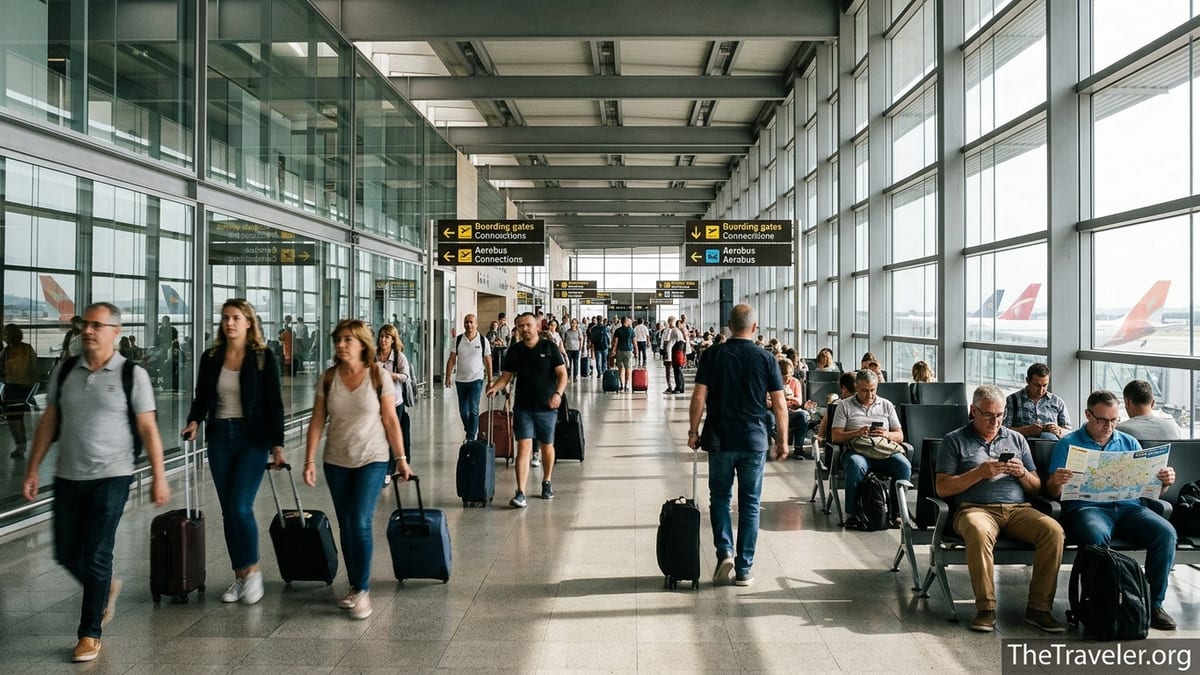
Know Your Layover: Can You Leave the Airport or Not?
The first decision in any Barcelona layover is whether you should stay in the terminal or go into the city. As a rough rule, if you have less than about 5 hours between flights on a single ticket, especially if you must clear passport control and security again, it is usually safer to remain at the airport. It often takes 30 to 60 minutes from landing to reaching the public area, and you should be back at security at least 90 minutes before your onward flight, more if you are flying long haul outside the Schengen area.
For layovers between 5 and 8 hours, leaving the airport becomes realistic, particularly if you are arriving and departing from the same terminal and do not need to reclaim checked bags. From Terminal 1, for example, you can be at Plaça Catalunya in central Barcelona in roughly 35 to 45 minutes using the Aerobus, and in about 45 to 60 minutes if you choose the combination of metro Line L9 Sud plus a connection. That still leaves several hours to stroll the Gothic Quarter, grab a menu del día lunch, and return with a safety buffer.
If you have more than 8 hours, or even an overnight, there is time to do more than just reach the center. Many travelers with a midday arrival and a late evening departure opt to leave their luggage at the airport, ride the R2 Nord train from Terminal 2 into town, and spend the afternoon near the beach in Barceloneta or exploring Sagrada Família and Passeig de Gràcia before returning after dinner. In such cases, building in 2 hours to get back, clear security, and handle any delays is a sensible margin.
Always factor in whether your flights are on one ticket or separate bookings. If they are separate, you may need to collect bags, re-check them, and pass through security again, which can easily add an extra hour at busy times. In peak summer months and around major events such as Mobile World Congress, queues can grow quickly, so plan conservatively.
Getting Oriented: Terminals, Transfers, and Layout
Barcelona El Prat has two main terminals: Terminal 1 (T1) and Terminal 2 (T2, split into 2A, 2B, and 2C). T1 is the newer, larger building used by most full-service airlines and many Schengen flights, while T2 is home to several low-cost carriers and some regional operations. They are not connected airside, so if you need to move between terminals you must exit through arrivals and take the free green shuttle bus that runs every few minutes. The ride typically takes about 10 to 15 minutes, but allow at least 30 minutes door to door including waiting.
For short layovers on a single ticket, airlines generally route you through the same terminal, simplifying things. Intra-Schengen connections in T1 can be straightforward, often involving a short walk and another security check depending on your routing. Non-Schengen transfers, such as a flight from Barcelona to the United States, usually require passport control and can involve a longer walk to the appropriate gates, so it is worth checking your gate area on the airport displays as soon as you land.
Both terminals have multiple levels. In T1, departures are on the upper level and arrivals on the lower level, with a large airside shopping zone once you pass security. T2 is more compact but split across its three modules. If you land at T2B on a low-cost carrier such as Ryanair or easyJet, you will typically walk through a corridor of basic shops and cafes before reaching the public arrivals hall, where you can follow signs for the train, metro, or shuttle bus to T1.
Wayfinding is generally clear, with multilingual signage in Catalan, Spanish, and English. That said, walking times can feel longer than expected in T1 due to the building’s scale. A passenger arriving on a non-Schengen flight at one end of T1 and connecting to a Schengen flight at the opposite end should expect a 15 to 20 minute walk plus time for security and passport checks.
Staying at the Airport: Food, Shopping, Wi-Fi and Rest
If you decide to stay at Barcelona El Prat during your layover, you will find a reasonable range of dining and shopping options, especially in T1. Airside in T1 there are numerous cafes, tapas bars, and international chains where a typical coffee and croissant might cost around 4 to 6 euros, and a sit-down meal such as a paella or grilled fish dish can run from 15 to 25 euros per person. In T2, the offer is more limited but still includes recognizable Spanish brands and a handful of fast-food choices for those who simply want a quick sandwich or burger before boarding.
Shopping is one of T1’s strong points, with dozens of stores including fashion boutiques, electronics shops, duty-free outlets, and specialty Catalan products like cava, vermouth, and local chocolates. It is common for travelers with a couple of spare hours to wander through the main shopping boulevard after security, pick up a compact bottle of cava within duty-free limits, or grab an official FC Barcelona jersey from the club shop as a last-minute souvenir. Prices tend to be similar to city-center malls, though duty-free deals on cosmetics and spirits can be attractive for non-EU travelers.
Wi-Fi at Barcelona El Prat is provided free of charge throughout both terminals. Speeds are generally sufficient for streaming and video calls, though during peak hours you may notice some slowdown. To stay productive, many travelers settle into one of the cafe areas with accessible power sockets, such as near the larger coffee chains in T1’s main departures hall. It is worth carrying a small European plug adapter because some older seating areas have limited or mixed socket types.
For those needing real rest during a longer layover, T1 offers an hourly-room hotel service where you can book a private, sound-insulated room with a bed and shower for a few hours. Price examples change seasonally, but a short stay of a few hours is typically comparable to a mid-range hotel night in the city, trading a longer trip downtown for maximum convenience. Alternatively, some passengers resort to sleeping on benches in quieter corners of the terminals, but this is not particularly comfortable and, like in many major airports, requires vigilance with your belongings.
Luggage, Showers, and Practical Services
Managing luggage well can make a huge difference in how enjoyable your layover feels. Barcelona El Prat has staffed left-luggage facilities in both T1 and T2, usually located in or near the arrivals halls. These services charge per bag rather than per locker, and prices can feel high for short periods, so they make most sense if you have several hours and want to head into the city without dragging suitcases. For example, a traveler leaving two medium cases for most of a day might pay roughly the equivalent cost of a budget hotel room in central Barcelona, but in return keeps their bags in a monitored, airport-adjacent location.
Some visitors prefer to use city-based luggage storage companies concentrated around Plaça Catalunya, Sants train station, or the cruise port. In practice, this can work well for those planning to explore central Barcelona for 6 hours or more. A common pattern is to ride the Aerobus or R2 Nord train into the center, store bags at a partner location, spend the day exploring the Gothic Quarter and waterfront, then collect the luggage and return to the airport in the evening.
Showers are not widely available in public zones of Barcelona El Prat, so if you are aiming to freshen up properly you will usually need to access an airline lounge, pay for entry to an independent lounge that includes showers, or book one of the airport hotel rooms in T1 for a short stay. Many long-haul passengers plan ahead by carrying a small wash kit in their cabin bag, taking advantage of the better-equipped restrooms and family bathrooms on the departures levels for a quick refresh with face wipes and a change of clothes.
Other useful services include pharmacy counters for last-minute medication or travel health items, ATM machines for euro withdrawals, and several car rental desks for those with longer layovers who prefer to rent a vehicle. Keep in mind that returning a rental car and completing the inspection can add 30 to 45 minutes to your pre-departure timing, so it is only recommended if you have a truly long gap between flights.
Heading into Barcelona: Transport Options and Realistic Timings
For many travelers, especially on daytime layovers of more than 5 hours, a quick trip into Barcelona is the highlight. The main choices are the Aerobus, the R2 Nord commuter train, the L9 Sud metro, and standard city buses and taxis. Each has its advantages depending on your arrival terminal, budget, and destination in town.
The Aerobus is the most straightforward for first-time visitors. Separate lines serve T1 and T2, and they run frequently to Plaça Catalunya with intermediate stops such as Plaça Espanya. In early 2026, a one-way adult ticket typically costs just under 7 euros, with a modest discount for returns purchased together. Journey time to Plaça Catalunya is around 35 minutes in normal traffic. Many layover passengers choose this option because it is simple, allows contactless or card payment, and drops you right at the edge of the Gothic Quarter and Eixample.
The R2 Nord suburban train is often the fastest and cheapest option from T2, taking roughly 20 to 25 minutes to reach Sants station or Passeig de Gràcia, depending on the service. A single ticket costs a bit under 5 euros, and the train connects easily to the metro network and regional trains. If your flight lands at T1, you can take the free terminal shuttle to T2 and then walk to the train station, adding about 15 to 20 minutes overall. This option appeals to experienced travelers comfortable with using ticket machines and reading train timetables.
The L9 Sud metro line serves both terminals directly and is fully integrated into the city’s underground network, but it does not go straight to the old center. Instead, you typically ride to stations like Torrassa or Collblanc and connect to other lines for places such as Passeig de Gràcia or Barceloneta. The airport section carries a supplement, so a single trip from the airport to the city usually costs around 5 to 6 euros. Journey times to popular areas land in the 45 to 60 minute range once transfers are included, which is acceptable for longer layovers and particularly convenient if your target area is near the university district or Camp Nou.
Taxis and ride-hailing services such as Uber and Cabify operate regularly from both terminals. A typical daytime fare from T1 to central Barcelona falls somewhere in the 35 to 50 euro range, depending on traffic, destination, and surcharges. For a family of four with luggage, splitting a 45 euro cab can end up costing about the same per person as the Aerobus but with the comfort of door-to-door service. This is often the most time-efficient choice for layover visitors who value convenience over saving a few euros.
Ideas for Different Layover Lengths
What you do at Barcelona El Prat depends heavily on how long you have. With around 2 to 3 hours, the safest plan is to remain airside, especially if you must clear passport control. Many travelers in this situation opt for a leisurely meal at one of the better-reviewed restaurants in T1, a quick stroll through the duty-free area to pick up local olive oil or turrón, and a brief rest near their gate while charging devices and catching up on messages.
For a layover of 4 to 6 hours, more options open up but you still need to watch the clock. One popular strategy is to leave your larger hand luggage in the overhead bins if you are in transit on the same airline and simply explore the terminal. Another is to exit into arrivals, grab a coffee at a landside cafe, and possibly hop on the Aerobus to Plaça Espanya, spend a short time around the Montjuïc fountains and the shopping center built in the former bullring, then return well ahead of departure time.
Layovers of 6 to 10 hours are ideal for a compact Barcelona taster. A typical plan might look like this: arrive at T1, clear formalities, and be on the Aerobus within 45 minutes of landing. Ride to Plaça Catalunya, walk down La Rambla to the Boqueria market for a quick snack and fresh juice, then dive into the Gothic Quarter’s narrow streets, perhaps visiting the cathedral or simply soaking up the atmosphere in Plaça del Rei. After a relaxed tapas lunch and coffee, you stroll back to Plaça Catalunya and catch the Aerobus or R2 train to the airport, aiming to be back 2 hours before boarding.
If you have an overnight layover and do not need a transit visa, staying in the city rather than the airport usually makes sense. Moderately priced hotels and guesthouses are plentiful in areas like Eixample and Poble-sec, and reaching them from the airport by train or Aerobus is straightforward. A traveler landing at 18:00 and departing at 10:00 the next morning could comfortably check into a central hotel, enjoy an evening stroll along Passeig de Gràcia or the waterfront, have dinner at a neighborhood bodega, sleep properly, and take the Aerobus back around 07:30.
Safety, Security, and Smart Layover Habits
Like most major European hubs, Barcelona El Prat is generally safe but requires the usual awareness, especially when you are tired from long flights. There have been recurring reports of petty theft in and around the airport, particularly targeting travelers who fall asleep in public seating with bags unattended. It is wise to keep essential documents and valuables on your person in an interior pocket and to secure larger bags with straps or small locks when dozing.
Inside the city, Barcelona has a reputation for highly skilled pickpockets in busy areas such as La Rambla, metro stations, and major squares. Layover visitors, often jet-lagged and carrying travel backpacks, can be tempting targets. Practical habits such as wearing a cross-body bag on the front, avoiding placing phones and wallets in back pockets, and staying alert in crowded metro carriages significantly reduce risk. Many travelers also prefer to sit inside cafes rather than on exposed terraces when using phones or laptops.
Time management is another crucial aspect of a safe layover. Keep a screenshot of your boarding pass and gate information in case Wi-Fi or mobile data temporarily fail. Set alarms for when you should start making your way back to the airport or toward the gate, and build in extra time for security checks at peak periods like early morning and late afternoon. During major events or summer weekends, queues at security in T1 can stretch to 20 or 30 minutes, so arriving early offers peace of mind.
If you are traveling with children or older relatives, consider the physical demands of going into the city during a layover. Short sightseeing walks and a relaxed meal may be enjoyable, but racing through multiple attractions in the heat can leave everyone more exhausted than when they started. For some families, the best layover choice is a quiet corner of the terminal with easy bathroom access, snacks from the supermarket-style shops, and some downloaded movies or games.
FAQ
Q1. Is my layover in Barcelona long enough to go into the city?
For most travelers, anything under about 5 hours from landing to boarding is too tight to leave the airport, once you factor in passport control, baggage, transport times, and security. Between 5 and 8 hours, a quick visit to the center is usually feasible if everything runs on time and you keep plans simple.
Q2. Which terminal does my airline use at Barcelona El Prat?
Full-service and many European network airlines mostly operate from Terminal 1, while several low-cost and regional carriers use Terminal 2. Your booking confirmation and boarding pass will show the terminal, and airport displays confirm this on the day.
Q3. What is the easiest way to reach central Barcelona during a layover?
The Aerobus from both terminals to Plaça Catalunya is the simplest option for many visitors, with clear signage, frequent departures, and a journey time of roughly 35 minutes in normal traffic.
Q4. Is it safe to sleep in Barcelona airport overnight?
Some passengers do sleep on benches overnight, but it is not especially comfortable and petty theft is a concern. If your budget allows, booking the hourly rooms in T1 or staying at a nearby hotel is safer and more restful.
Q5. Are there showers available at Barcelona El Prat during a layover?
Showers are generally found inside certain airline or independent lounges and in the hourly-room hotel facility in T1, rather than in the public areas. Access typically requires a lounge pass, business-class ticket, or separate payment.
Q6. How much does it cost to store luggage at the airport?
Left-luggage services at T1 and T2 charge per bag, with total costs for several hours often comparable to a budget hotel night in town. For longer layovers, city-center storage services around Plaça Catalunya or Sants can be more economical.
Q7. What ticket should I buy on public transport during a layover?
If you only need a single round trip between the airport and the city, buying individual Aerobus or train tickets is usually simplest. Travelers planning several metro or bus rides may benefit from a short-term travel card that covers multiple trips within a day or several days.
Q8. How early should I be back at the airport before my next flight?
For flights within the Schengen area, aim to be at security at least 90 minutes before departure. For non-Schengen or long-haul flights, 2 to 3 hours is safer, especially in summer or during major events when lines can be longer.
Q9. Can I move between Terminal 1 and Terminal 2 during my layover?
Yes, but you must be in the public area. A free shuttle bus connects T1 and T2 and usually takes about 10 to 15 minutes, though you should allow extra time for waiting and walking to and from stops.
Q10. What are the best quick sightseeing ideas for a 6 to 8 hour layover?
Popular choices include a stroll from Plaça Catalunya down La Rambla into the Gothic Quarter, a visit to the Boqueria market for snacks, or a relaxed walk around Passeig de Gràcia to see modernist architecture before returning to the airport with plenty of time to spare.