


More news on this day
Barclays has opened a new office in Riyadh’s financial district despite heightened government travel warnings for Saudi Arabia and the wider Middle East, underscoring the tension between lucrative Gulf opportunities and rising security concerns for international business travelers.
Get the latest news straight to your inbox!
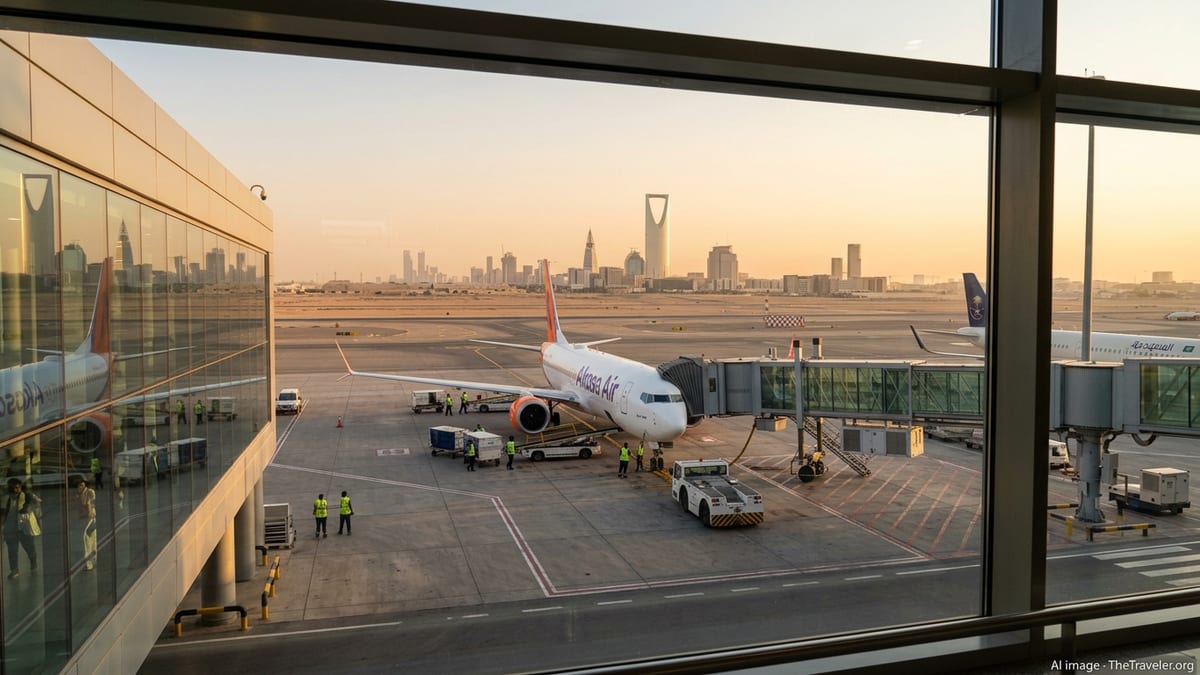
Return to the Saudi market amid elevated risk
Publicly available information indicates that Barclays has established a new office in Riyadh, marking its most significant return to the Saudi market in more than a decade. The operation is focused on investment banking and global markets activity, reflecting growing demand from Saudi corporations, sovereign entities and international investors looking to participate in the kingdom’s economic transformation.
The bank’s new base is reported to be in Riyadh’s King Abdullah Financial District, a flagship business hub that Saudi authorities have promoted as a regional center for finance and professional services. Barclays is positioning the office as a platform to deliver advisory services, capital markets access and risk solutions to clients headquartered in or expanding into Saudi Arabia.
Press statements from the bank highlight Saudi Arabia’s role as one of the fastest growing economies in the G20 and a key destination for capital linked to large-scale infrastructure, energy transition and diversification projects. The Riyadh office is intended to give Barclays an on-the-ground presence in a market where international lenders have sometimes operated at arm’s length through regional hubs in Dubai or other Gulf cities.
At the same time, several rival institutions have been scaling back or adjusting regional operations in response to security concerns and the economic effects of ongoing conflict in parts of the Middle East. This divergence has thrown Barclays’ expansion into sharper relief for risk managers and travel planners at multinational firms.
Government advisories warn of attacks and disruption
The office opening comes against a backdrop of tightened travel advisories from Western governments. The United Kingdom’s Foreign, Commonwealth and Development Office currently advises against all travel to specific areas of Saudi Arabia, including zones near the border with Yemen, and against all but essential travel to wider regions of the country. The official guidance cites the threat of missile and drone attacks, terrorism and the possibility of sudden escalations affecting civilian infrastructure.
Updated UK advice notes a heightened risk of attacks on airports and potential disruption to flights, emphasizing that further incidents are considered “very likely.” Travelers are urged to monitor local and international media, maintain flexible itineraries and be prepared for short-notice changes to security conditions, particularly in the vicinity of military facilities, oil installations and major transport hubs.
The United States has also hardened its stance. Recent advisories categorize Saudi Arabia at the highest warning level, urging travelers not to visit due to risks that include cross-border attacks, terrorism and the potential for ballistic missile and drone strikes. Non-essential U.S. government staff have been instructed to leave the country, and the guidance underlines that security conditions may deteriorate quickly with limited ability for consular services to assist in high-risk areas.
Several European governments have issued parallel notices cautioning against non-essential trips or highlighting specific regions where travel is discouraged. Business-travel risk bulletins published over recent months describe a pattern of airspace alerts, temporary route adjustments by airlines and intermittent disruptions at airports across parts of the Gulf following attacks linked to regional armed groups.
Corporate appetite for Saudi opportunities remains strong
Despite the security backdrop, Saudi Arabia continues to draw significant interest from global banks, asset managers and multinational corporations. The country’s economic reform agenda, associated with ambitious diversification plans, has led to a stream of large-scale projects in sectors such as renewable energy, tourism, logistics and technology. For international lenders like Barclays, a physical presence in Riyadh is seen as a way to compete more directly for mandates tied to government-related borrowing, privatizations and capital-raising by local champions.
Press coverage of the Riyadh launch notes that Barclays’ move contrasts with reports of some global banks reducing staff or deferring expansion plans elsewhere in the Gulf. Analysts quoted in financial media suggest that the bank is betting on the long-term trajectory of the Saudi market, even as near-term security risks complicate business travel and operational planning.
Industry commentary also points out that Saudi regulators have encouraged deeper engagement from foreign financial institutions, approving additional licenses and clarifying rules around investment banking, brokerage and custody services. For firms willing to operate within the country, the regulatory environment is often described as more open than a decade ago, albeit still subject to close scrutiny and evolving requirements.
This combination of regulatory outreach and sizable deal flow has led some financial institutions to accept higher travel and security costs in exchange for better client access. However, insurers, risk consultancies and internal corporate security teams are increasingly influencing decisions about when and how staff travel to the kingdom.
What Barclays’ move means for business and leisure travelers
For travelers, the most immediate implication of Barclays’ Riyadh office is symbolic rather than logistical. The decision signals that a major Western bank believes it can manage operational and security risks well enough to maintain staff in the capital, even as official advisories grow more cautious. Corporate travel managers may interpret this as a sign that carefully controlled visits to key Saudi business centers can still proceed, provided risk assessments and contingency plans are robust.
Travel-industry reports suggest that many multinational companies are not imposing blanket bans on Saudi trips, but are instead adding layers of approval, itinerary review and security briefings. In practice, this can mean requiring senior-level sign-off for visits, mandating the use of vetted ground-transport providers, and insisting that travelers stay in hotels with strong security protocols and clear emergency procedures.
Leisure travel to Saudi Arabia, which has grown since the introduction of tourist visas and e-visa schemes in recent years, may be more directly affected by heightened government warnings. Tour operators in Europe and North America are reviewing itineraries that include regions highlighted by foreign ministries as higher risk. Some have shifted marketing emphasis toward coastal or interior destinations seen as less exposed to cross-border tensions, while leaving final travel decisions to customers informed of the official guidance.
Travelers are being reminded that insurance coverage may be restricted or invalidated if they visit areas that their home governments advise against. Those planning trips that combine business meetings in Riyadh with side visits elsewhere in the country are increasingly urged to check policy wording carefully and confirm that their routes, stopovers and activities are covered.
Heightened due diligence for trips into the kingdom
The juxtaposition of Barclays’ expansion with strict travel advisories highlights how risk management practices are evolving for trips to Saudi Arabia. Publicly available travel-safety briefings now routinely recommend that visitors register with consular services where possible, share real-time itineraries with employers or family, and maintain multiple communication channels in case of network disruptions.
Companies sending staff to Riyadh are putting greater emphasis on pre-trip checks, including verification that medical and evacuation insurance extends to regions under elevated warning levels. Some organizations are also updating crisis-response playbooks that cover shelter-in-place procedures, secure transport options and protocols for rapid departure should conditions change.
On the ground, security consultants advise maintaining a low profile, avoiding photography near sensitive sites such as government buildings and infrastructure, and adhering strictly to local laws and cultural norms. Business travelers are encouraged to schedule meetings within secure districts, limit unnecessary travel after dark and use reputable, pre-booked transport rather than ad hoc options requested in the street.
For now, commercial flights into Riyadh and other major Saudi cities continue to operate, although regional airspace alerts and the possibility of temporary rerouting or delays remain part of the planning landscape. As Barclays settles into its new Riyadh base, travelers weighing trips to the kingdom are likely to continue balancing the pull of new commercial prospects against the reality of a more volatile regional security environment, guided closely by evolving government advice and corporate risk tolerance.