


More news on this day
Singapore has seized the Villa Vie Odyssey, a residential “forever cruise” ship marketed as a multi year around the world home at sea, after the vessel left more than 200 paying residents abruptly disembarked and stranded in Cambodia amid a mounting financial crisis for its operator.
Get the latest news straight to your inbox!
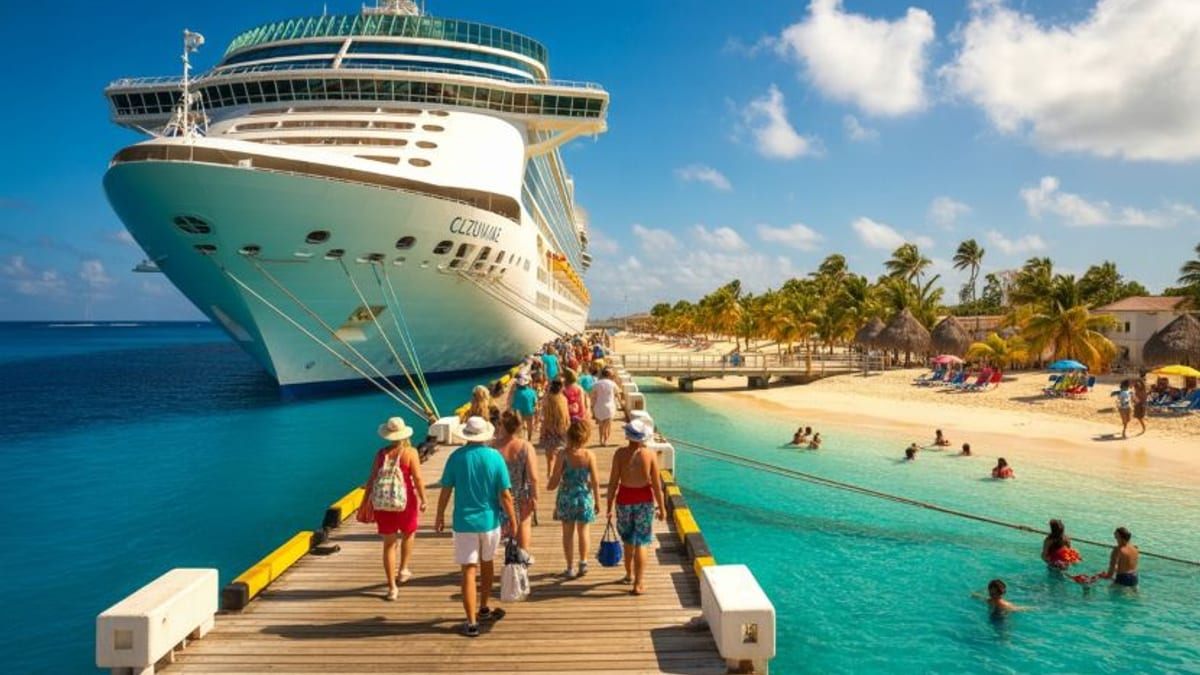
Residential cruise dream unravels across Southeast Asia
The Odyssey, operated by Florida based company Villa Vie Residences, launched in October 2024 with the promise of continuous global travel for residents who bought long term cabins, some reportedly paying up to 350,000 dollars for the experience. The ship was positioned as a floating condominium, where buyers could live, work remotely and circle the globe without a fixed end date to the voyage.
Publicly available coverage shows that the business model relied on selling hundreds of cabins and collecting substantial monthly fees to cover operating costs such as fuel, crew wages and provisions. Internal figures reported in international media suggest that even at full occupancy the ship was projected to run at a loss, leaving little cushion for rising fuel prices or operational setbacks.
By late 2026, the highly marketed concept had deteriorated into a travel crisis. Reports indicate that more than 200 residents and dozens of crew were caught in a spiral of delays, provisioning shortages and uncertainty as Villa Vie struggled to meet bills in multiple ports across the region, including Singapore, Vietnam and Hong Kong.
The journey came to a sudden halt in October 2026, when passengers were told in Cambodia that operations were being suspended and that they had only hours to collect their belongings and leave the ship, ending what had been advertised as a seamless and long term lifestyle at sea.
Ship arrested in Singapore as lender takes control
After disembarking its residents in the Cambodian port city of Sihanoukville, the Odyssey sailed without passengers to Singapore, departing Cambodia on 4 November 2026 according to specialist cruise reporting. Court records cited in multiple outlets show that upon arrival in Singapore the vessel was placed under arrest, a maritime legal process that allows a ship to be detained or seized in connection with a claim.
The documents name Singapore law firm Helmsman LLC as the arresting solicitor, though they do not identify the underlying claimant. Coverage of the case notes that the claim is believed to be linked to unpaid fuel bills, with one supplier in the region reportedly owed around 500,000 dollars, but publicly accessible reports add that the identity of the client behind the legal action has not been formally disclosed.
Media reports state that the ship is now being operated by its lender, which had already stepped in to cover some operating costs when Villa Vie could no longer keep up with payments. Industry analyses suggest the Odyssey could eventually be auctioned in Singapore if its owner is unable to restructure debts and regain control, a process that could take several months under standard commercial practice.
The arrest leaves the once aspirational residential vessel anchored off Singapore without any of the residents who had signed on for a years long life at sea. While technical crew remain responsible for the ship’s safety, those who invested in cabins currently have no access to the vessel and no clear path to recovering either their money or their floating homes.
Stranded residents in Cambodia face uncertain next steps
For former passengers, the legal drama in Singapore is playing out at a distance. When the voyage terminated in Cambodia in late October, residents were given short notice to leave the Odyssey, according to traveler accounts compiled by international news organizations and cruise community forums. Many had organized their finances and long term housing around the assumption that they would be living aboard for years.
Reports from Phnom Penh and Sihanoukville indicate that more than 200 people suddenly needed to find hotels, short term rentals and onward flights, often while still trying to understand what would happen to their substantial upfront payments. Some residents had sold homes or ended leases on land in order to fund cabins on the ship, leaving them with limited immediate options onshore.
Public coverage from Cambodian media describes local travel agents and hotels stepping in to accommodate passengers while they attempt to reorganize their lives and pursue potential claims. However, there is currently no widely reported, coordinated relocation program funded by the cruise operator, and information about refunds or compensation remains sparse and sometimes conflicting across public sources.
Consumer advocates following the case note that residents are now dealing with two parallel challenges: short term logistics in Cambodia, where many remain while they arrange new plans, and longer term legal and financial questions tied to the ship’s arrest in Singapore and any eventual insolvency proceedings involving Villa Vie or its related entities.
Trail of unpaid bills and emergency measures at sea
The seizure in Singapore is the latest point in a months long pattern of financial pressure. Earlier reporting on the ship’s final weeks describes a scramble to raise funds as outstanding debts mounted. Internal documents cited in international coverage outline operating costs in the millions of dollars per month, alongside significant numbers of unsold cabins that limited incoming revenue.
As the situation deteriorated, multiple accounts suggest that residents and individual staff members at times stepped in to keep the ship moving, including arranging direct payments to fuel suppliers when corporate funds were no longer sufficient. One widely reported instance involved a payment of hundreds of thousands of dollars from a resident’s personal bank account to secure fuel and avoid a previous detention.
The Odyssey also reportedly faced disruptions to food supplies. Public accounts from crew and passengers describe a period in which regular provisioning was interrupted because outstanding bills had not been settled with vendors. In some ports, crew members resorted to sourcing groceries locally to maintain basic food service for those on board.
In Hong Kong, court documents referenced by international media show that the ship was temporarily detained until a fuel provider received payment of an outstanding claim in the six figure range. These incidents, taken together, illustrate how the ship was already navigating a patchwork of short term fixes and creditor actions before its final journey from Cambodia to Singapore and the formal arrest that awaited it there.
Wider implications for residential cruising and future travelers
The Odyssey’s arrest in Singapore is being closely watched across the travel industry because of its potential impact on the emerging niche of residential cruises, where passengers buy cabins as long term homes rather than booking traditional voyages. Several companies have been marketing similar concepts, targeting retirees, remote workers and digital nomads with the promise of continuous global travel.
Industry analysts quoted in travel and business media note that the collapse of a high profile project such as Villa Vie Odyssey may lead to increased scrutiny from regulators and a more cautious approach from consumers. Potential residents may now seek clearer protections, including escrow arrangements for large upfront payments, transparent disclosure of operating costs and occupancy assumptions, and contractual guarantees about what happens if a ship changes ownership or is arrested.
The situation also highlights jurisdictional complexity for travelers whose ship moves between countries. In this case, residents boarded a vessel operated by a United States based company, were set ashore in Cambodia and now see the asset they helped fund detained in Singapore. Legal experts quoted in published coverage emphasize that any effort to recover funds could involve proceedings in several countries over an extended period.
For now, publicly available information shows that the Odyssey remains under arrest in Singapore with its former residents scattered, many still in Cambodia and others already back in their home countries. Travel observers say the episode has become a cautionary tale about treating a cruise ship as a primary residence, and it is likely to influence how future “live aboard” offerings are structured, marketed and regulated.