


More news on this day
The Villa Vie Odyssey, a residential “forever cruise” that left more than 200 passengers abruptly stranded in Cambodia in late October, has been arrested in Singapore after court documents and regional media reports revealed a mounting dispute over unpaid fuel bills.
Get the latest news straight to your inbox!
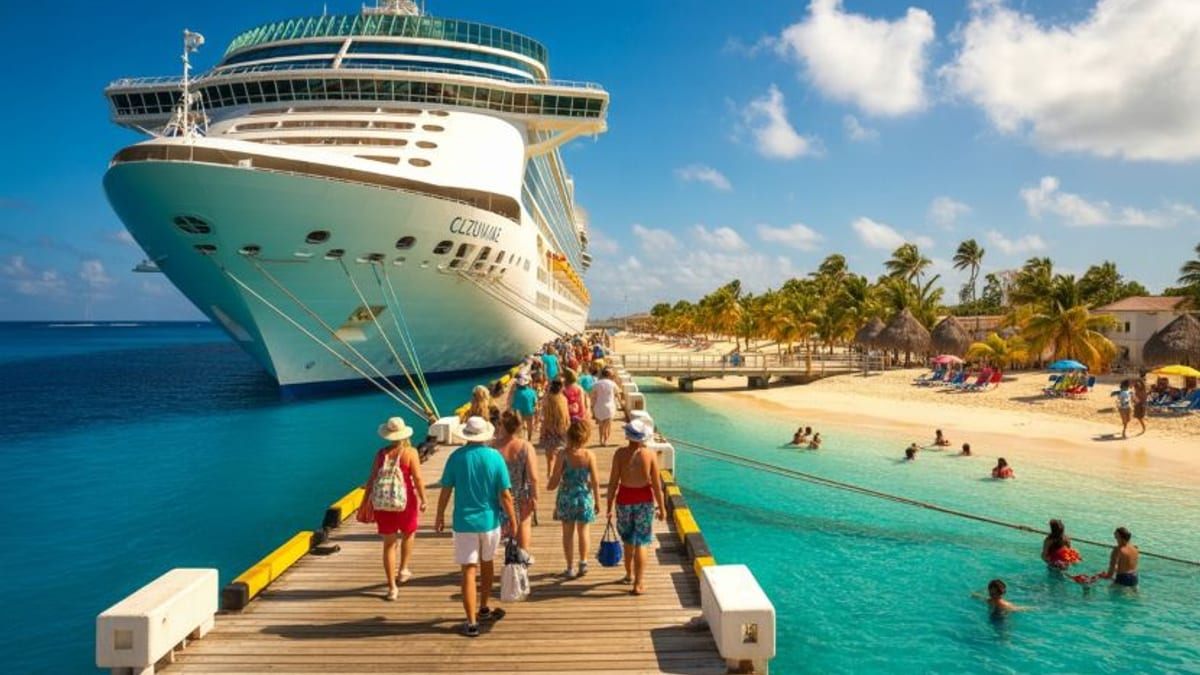
From dream at sea to sudden disembarkation
The Odyssey set out in October 2024 from Northern Ireland as a floating residential community, marketed as a way to live at sea while slowly circling the globe. Prospective residents were offered the chance to buy or rent cabins and stay on board for years, combining long-term accommodation with continuous travel across seven continents.
Publicly available information on the project indicates that the ship, operated under the Villa Vie Residences brand and renamed Villa Vie Odyssey, had the capacity to host several hundred residents and was promoted as a lower-cost alternative to retirement or long-term living on land. Marketing materials described a multi-year itinerary with extended port calls, onboard services and the ability for passengers to treat the ship as a full-time home.
That vision began to unravel in October 2026. Reports from Cambodian and international media indicate that on October 28, while the vessel was alongside in Sihanoukville, residents were told they had only hours to pack their belongings and leave. Around 200 passengers, many of whom had sold homes or given up leases to fund life at sea, suddenly faced finding accommodation and onward travel on land.
Coverage from outlets including Channel NewsAsia, the Washington Post and CBS News describes confusion on the dock as residents, some with large amounts of luggage and personal effects accumulated over two years, were informed that the operator could no longer afford fuel and other operating costs to continue the voyage.
Financial strain and unpaid fuel claims
Documents and reporting that have emerged since the disembarkation paint a picture of a business struggling with rising costs and limited cash. According to investigations published by CBS News and other outlets, the operator had been attempting for months to secure additional funding while also seeking contributions from residents to cover fuel and port-related expenses.
Media reports indicate that earlier in the voyage, while the ship was in Singapore, some passengers helped raise funds for an emergency fuel payment so the Odyssey could depart and continue its itinerary. One CBS News account refers to about 400,000 dollars being paid directly to a fuel supplier from a resident’s personal account to keep the vessel moving, underscoring how precarious operations had become.
Regional coverage from Singapore and Malaysia now indicates that a fuel supplier is claiming roughly 500,000 US dollars in unpaid bills linked to the vessel. Court filings cited in these reports describe efforts by the creditor to recover outstanding sums through the arrest of the ship after it entered Singapore waters, a legal mechanism that allows a maritime claimant to detain a vessel until financial disputes are resolved or security is posted.
Publicly available information also suggests that as financial pressure mounted, the ship’s lender or a related creditor moved to take control of the vessel, directing it to sail to Singapore, a key maritime hub where ship arrests and auctions are routinely handled by specialist courts and maritime services.
Arrival and arrest in Singapore
After leaving Cambodia without passengers in early November, the Odyssey sailed south toward Singapore with a reduced complement of crew. Photographs and vessel-tracking data referenced in Asia-based news coverage show the cruise ship arriving off Singapore and then anchoring off Changi, on the eastern side of the island.
Court records reported by CBS News and local outlets describe the ship as having been formally “arrested” in port, a term used in maritime law for the detention of a vessel as security for a claim. In this case, reports indicate that the action is tied primarily to the alleged unpaid fuel debt, though broader questions about the ship’s ownership structure and other liabilities may also be addressed as proceedings continue.
Media in Singapore and the wider region state that the ship is now at anchor under court control, with the fuel supplier listed as the arresting party. The vessel remains crewed for safety and maintenance, but it is not operating commercial voyages while the matter is before the courts. No timeline has yet been publicly reported for any potential sale of the ship or settlement of claims.
Maritime analysts quoted in regional coverage note that Singapore’s status as a major bunkering and ship-services hub makes it a frequent venue for such arrests, since many vessels call for fuel or repairs and can be detained if creditors file claims through the local legal system.
Impact on stranded passengers and ongoing questions
For the more than 200 passengers ordered off the ship in Sihanoukville, the arrest in Singapore provides little immediate relief. Reports from international broadcasters and newspapers describe residents scrambling to arrange flights home or temporary housing, often at their own expense. Some passengers have used social media and public forums to share details of disrupted retirement plans and financial uncertainty following the sudden end of the voyage.
Coverage in outlets such as Channel NewsAsia and the Associated Press notes that many passengers had structured their lives around the expectation of living on board for years, including selling property or placing belongings in storage. The abrupt disembarkation with only a few hours’ notice left some with limited access to funds, travel insurance questions and unresolved contracts with the cruise operator.
Publicly available information from consumer law specialists suggests that the complex corporate structure behind residential cruise projects can make it challenging for passengers to understand where their money ultimately went and which entity they might pursue for refunds. In the Odyssey’s case, reports indicate that residents had paid substantial sums for cabins and services stretching years into the future, yet it remains unclear how those funds were allocated as the business struggled with fuel costs and debt.
Various media outlets report that some passengers are consulting legal counsel to explore possible claims, including efforts to recover pre-paid fees. At the same time, online forums show others focusing on more immediate concerns such as replacing medication and essentials left behind, arranging new accommodation plans and seeking support from family and friends after their “forever cruise” came to an abrupt halt.
Wider implications for residential cruising
The saga of the Odyssey is prompting renewed scrutiny of the small but growing niche of residential cruising, where passengers pay to live aboard a ship for extended periods or even indefinitely. Industry commentators cited in recent coverage note that these concepts depend on long-term financial stability, steady bookings and manageable operating costs, particularly for fuel and maintenance.
Rising fuel prices in recent years, along with higher costs for staffing and regulatory compliance, have made longer itineraries more expensive to operate. Publicly available commentary from maritime and travel analysts suggests that business models promising multi-year global voyages at relatively low monthly costs may be especially vulnerable if underlying expenses increase faster than anticipated or if new investment falls through.
The Odyssey’s arrest in Singapore highlights how quickly such ventures can unravel once debts accumulate and essential supplies like fuel can no longer be paid for. For travelers considering similar residential-at-sea projects, consumer advocates quoted in news reports recommend careful due diligence on ownership structures, financial backing and refund policies before committing to large, upfront payments.
As the vessel sits at anchor off Singapore under court control, the focus for many in the travel community has shifted from the romance of endless cruising to the practical and legal safeguards needed to protect long-term passengers when ambitious projects run into trouble.