


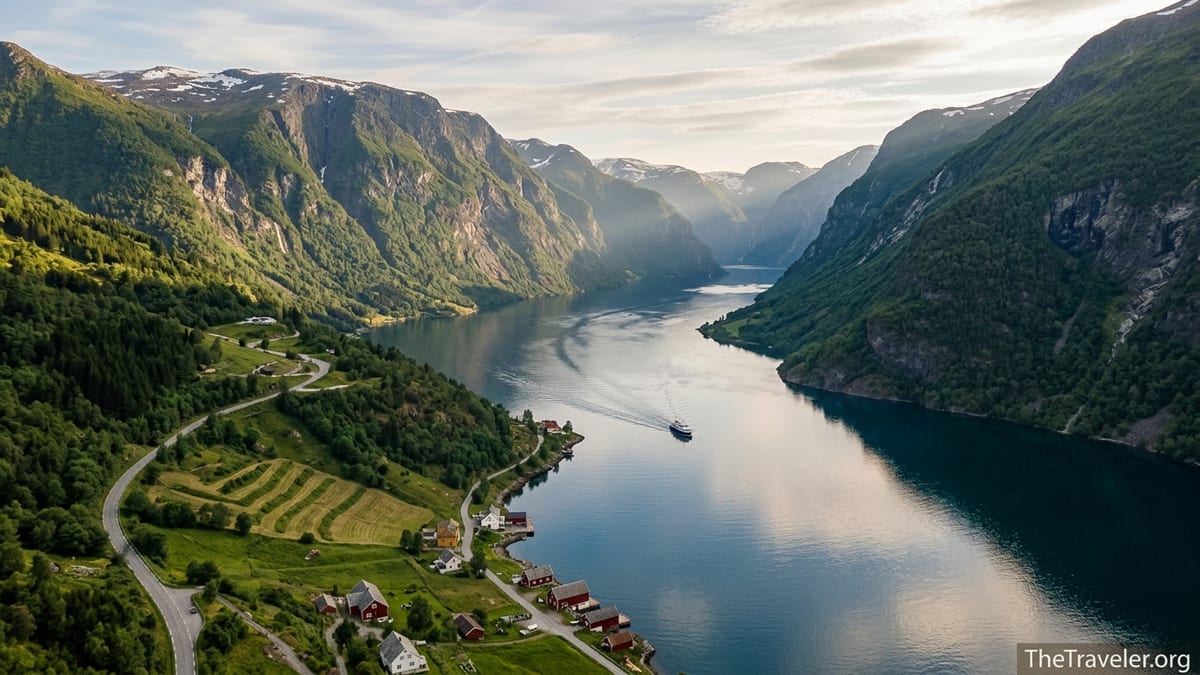
Stand on the deck of a small boat in Norway’s Geirangerfjord on a clear summer evening and you start to understand why this country grips the imagination of travelers. Near-vertical cliffs plunge into glassy water, waterfalls tumble from hanging valleys hundreds of meters above, and scattered farmsteads cling improbably to green ledges. From the iconic fjords of the west coast to the jagged peaks of the Lofoten archipelago and the working ports linked by the Hurtigruten coastal express, Norway’s landscapes are both austere and deeply welcoming. This blend of raw nature and easy access is precisely what makes the country so captivating.
Get the latest updates straight to your inbox!
The Allure of Norway’s Fjord Landscape
Norway’s fjords are the country’s calling card, carved by glaciers that retreated at the end of the last Ice Age and left behind deep, sea-filled valleys walled by mountains. Two of the most famous, Geirangerfjord and Nærøyfjord, are protected as a joint UNESCO World Heritage site known as the West Norwegian Fjords. Here, peaks rise more than a thousand meters straight from the water, and the shore is so steep that roads are sometimes impossible, leaving boats as the most practical way to travel between hamlets.
For a first-time visitor, a classic introduction is a day cruise on Geirangerfjord. Boats depart from the village of Geiranger, tracing a narrow waterway framed by waterfalls like the Seven Sisters and the Suitor. Even in high season, when several cruise ships may call in a single day, it still feels surprisingly wild once you move away from the main harbor. The feeling of gliding past sheer rock faces, with snow still lingering on the summits even in July, is unlike more urban waterfronts in Western Europe.
Nærøyfjord, a slender arm of the longer Sognefjord, is often described as the quintessential Norwegian fjord. Electric and hybrid ferries operate between Flåm and Gudvangen, taking about two hours to traverse a corridor where the water can be just a few hundred meters wide while cliffs rise hundreds of meters overhead. Travelers often combine this cruise with a ride on the famous Flåm Railway, creating a loop that links high mountain plateau, river valley and fjord in a single, memorable day.
What sets these fjords apart is not only their dramatic topography but also how accessible they are by public transport. You can board a morning train from Oslo or Bergen, change to a regional connection, and by afternoon be stepping onto a small ferry that slips quietly between waterfalls. That blend of epic scenery and straightforward logistics is a big part of Norway’s modern appeal.
Mountains That Fall Into the Sea
Norway’s mountains do not just sit inland; in many regions they fall directly into the ocean, creating a jagged meeting of rock and water that is uniquely photogenic. The Lofoten Islands, an archipelago inside the Arctic Circle, may be the most famous example. Here, peaks like Reinebringen climb sharply to about 448 meters above sea level right behind tiny fishing villages such as Reine, creating vertical backdrops that feel almost too perfect to be real.
Reinebringen has become one of Norway’s most photographed short hikes. A stone stairway built by Sherpa trail crews leads hikers steeply from the roadside up to a ridgeline with a panoramic view over emerald bays, red fishermen’s cabins and serrated mountains marching into the distance. Although the elevation is modest, the climb is strenuous and can be slippery in wet weather, so visitors are urged to wear proper hiking shoes and to avoid attempting the trail outside the snow-free season. That combination of challenge and reward encapsulates why Norway’s coastline is so celebrated among outdoors enthusiasts.
Elsewhere in Lofoten, peaks like Festvågtind near Henningsvær or Ryten above Kvalvika Beach showcase another side of this seascape. From these summits you see long white-sand beaches, unexpectedly turquoise water and clusters of wooden racks where cod dries in the Arctic air each spring. Even travelers who never leave the main E10 road feel continuously surrounded by high mountains looming very close to the sea, with the weather changing rapidly from mist and low cloud to crystalline sunshine.
On the mainland, the Lyngen Alps east of Tromsø offer similarly arresting views where glaciers and sharp summits meet deep fjords. Ski touring here in late spring has become a niche draw: visitors skin up snow-covered slopes in bright evening light, then descend toward dark-blue water that still reflects ice along its edges. Norway’s combination of maritime climate and extreme topography makes these coast-hugging mountains feel more like the edge of a continent than the calm interior of Europe.
Coastal Life Along the Hurtigruten Route
Norway’s coastline is not just a scenic backdrop; it is a working lifeline for communities scattered between rocky headlands and sheltered coves. Nowhere is this more tangible than aboard the Hurtigruten coastal express, the traditional passenger and cargo route that runs between Bergen in the south and Kirkenes near the Russian border. The full round trip takes about eleven to twelve days and calls at 34 ports along the way, from bustling cities like Trondheim and Tromsø to tiny settlements that consist of a single pier, a cluster of houses and a lone supermarket.
Travelers who book a cabin on one of these ships experience the coast at a human pace. In winter, you might watch locals load pallets of fresh fish in the early afternoon light at Svolvær, only to wake up the next morning to a completely different landscape of snow-covered islands further north. In summer, when the sun barely dips below the horizon, passengers linger on deck past midnight, passing lighthouses and skerries in soft golden light that never quite fades. The ships double as public transport, so many Norwegians embark for a single overnight leg or even just a dinner cruise between neighboring towns.
Specific sections of the route feel almost purpose-built for photographers. South of Bodø the ships thread past the Lofoten wall, a chain of mountains rising straight from the sea. North of Tromsø the route bends through channels where orcas and humpback whales occasionally feed on winter herring, drawing keen wildlife watchers who stand on open decks in thick insulated suits. While other parts of Europe’s coastline have become dominated by large-scale cruise terminals, Norway’s coastal express retains a more modest, everyday quality that many travelers find grounding.
Ports along the way also anchor cultural experiences that go beyond scenery. In Trondheim visitors can spend a few hours between ship calls exploring the medieval Nidaros Cathedral and the colorful wooden warehouses along the Nidelva River. In the Arctic capital of Tromsø, a cable car up Mount Storsteinen offers a city-and-fjord panorama, while evening excursions chase the northern lights in winter. This interweaving of ordinary life, long maritime tradition and spectacular backdrops gives travelers a sense that they are moving through a living, working coastline rather than a purpose-built resort strip.
Scenic Railways and Road Trips Into the Fjords
Part of what makes Norway feel accessible, even to first-time visitors, is the way its transportation network has been adapted to the terrain. Scenic railways and well-engineered roads thread through fjord country, allowing travelers to move from urban centers to remote landscapes in a matter of hours. One of the standout journeys is the Bergen Line between Oslo and Bergen, which crosses high plateaus, boreal forest and deep valleys. At the tiny mountain station of Myrdal, passengers can connect to the Flåm Railway, a steep branch line that drops from 867 meters down to the fjord-side village of Flåm.
The Flåm Railway is consistently ranked among the world’s most beautiful train rides. Over about 20 kilometers and roughly 50 minutes of travel time, vintage-style carriages pass waterfalls, cliff-hugging farms and a series of 20 tunnels that twist through the mountainside. The change in scenery is dramatic: within an hour you might go from patches of lingering snow on upland moor to green orchards and calm water at the head of Aurlandsfjord. For many visitors, this train-and-fjord combination offers a concentrated experience of Norway’s vertical landscape without requiring a car.
For those who do rent a vehicle, some of Europe’s most memorable road trips snake through Norwegian fjord country. The Atlantic Road between Kristiansund and Molde links tiny islands with bridges that leap over open ocean, while the Geiranger area features hairpin mountain roads that climb to lookouts like Dalsnibba and Flydalsjuvet. On a clear day, standing at these viewpoints feels like looking into a three-dimensional map, with blue water far below, ferry wakes tracing white lines across the fjord, and snowfields glinting on surrounding peaks.
Even more modest drives deliver big impressions. The approach to the village of Åndalsnes, for example, follows Romsdalsfjord and then winds between cliffs that have become a magnet for climbers. Families in rented electric cars share the road with long-haul trucks and local buses, a reminder that these scenic routes also serve practical daily needs. Travelers quickly learn to factor in ferries as part of their road itineraries, since many main roads simply roll onto short crossings that shuttle vehicles across fjord mouths every half hour or so.
Seasons, Light and the Changing Coastal Mood
Norway’s coastal scenery is never static. What travelers experience in July bears little resemblance to what they encounter in January, and this seasonal variety is one of the country’s quiet fascinations. In summer, long days bathe the fjords in soft light well into the evening. In the west, around Geiranger and Nærøyfjord, it may not be true midnight sun, but darkness often feels like a brief twilight. Hikers linger on ridgelines at nine or ten at night, and late dinner cruises glide past waterfalls still fully illuminated.
In the north, above the Arctic Circle, the midnight sun becomes a defining experience. On Lofoten’s beaches, visitors pitch tents in designated camping areas and watch as the sun circles low across the horizon without setting. Photographers chase the so-called blue hour, when the sky never fully darkens and the sea takes on a subdued, reflective quality. Even simple activities like buying groceries or refueling a rental car feel slightly surreal when done in strong daylight close to midnight.
Winter shifts the mood entirely. Along the coast in Tromsø or the Lofoten Islands, daylight may be limited to a few dusky hours, yet the low sun and snowfields create intense color contrasts. Locals wrap up in wool layers and head to waterfront saunas or indoor swimming halls, while visitors board small-group tours that slip between islands searching for the northern lights. On stormy days the sea itself becomes a spectacle, with waves smashing against rocky shores and spray blowing across roads that cling precariously between cliffs and water.
Shoulder seasons in spring and autumn can be particularly rewarding for travelers seeking quieter experiences. In May, snow still crowns the peaks while orchards blossom along some inner fjords. October along the western coast brings autumn foliage to valley slopes and a good balance between lingering daylight and early-season aurora displays further north. Prices for accommodation and car rental often dip compared with the peak of summer, making these periods attractive for those with flexible schedules.
Culture, Sustainability and Traveling Responsibly
Norway’s rise as a dream destination has brought more attention to how tourism interacts with fragile coastal and mountain environments. Places like Geiranger, Flåm and Reine each host many times their local population in visitors during peak months, putting pressure on trails, waste systems and small communities. In response, local authorities and national agencies have worked on visitor management strategies, from limiting cruise ship calls in certain fjords to building durable stone stairways on popular hikes and encouraging travelers to spread out over a longer season.
Travelers increasingly encounter visible signs of this sustainability push. In Flåm and Nærøyfjord, for example, ferries powered by electricity or hybrid systems reduce emissions and noise in narrow, echoing fjord corridors. On Reinebringen and other high-traffic trails, information boards urge hikers to keep to the built path to prevent erosion and to avoid venturing out on steep, loose side ridges for social media photos. Many accommodations, from simple rorbu fishermen’s cabins to smart hotels in Bergen and Tromsø, promote local food, energy-saving measures and recycling, aligning everyday lodging choices with broader environmental goals.
Understanding local culture also enhances the experience. The coastal landscape is shaped by centuries of fishing, small-scale farming and seasonal movement between summer pastures and winter settlements. In Lofoten, visitors still see racks stacked with drying cod each spring, a trade that once sent fish as far as southern Europe. Along the Hurtigruten route, small museums preserve stories of Arctic hunting, merchant shipping and wartime resistance. Taking time to visit these community-run spaces, or simply chatting with shopkeepers and ferry crew, adds context to the scenery rushing past the train window.
For practical responsible travel, visitors can make a tangible difference by traveling outside the busiest weekends, choosing smaller group excursions rather than large buses where possible, and packing layers that make it easy to enjoy the outdoors in all but the most extreme weather. Respecting posted signs about camping zones, parking restrictions and private land helps maintain the delicate balance between open access and local quality of life. Norway’s right to roam tradition gives generous freedom to explore, and using that freedom thoughtfully ensures that fjords, mountains and coastal communities remain welcoming for years to come.
The Takeaway
Norway captivates travelers because its fjords, mountains and coastal settlements form a coherent, living landscape rather than a series of disconnected attractions. In a single journey you can move from a modern capital to a high plateau, descend by historic railway into a deep fjord, then sail past tiny farms and waterfalls that have shaped local life for generations. Along the way, you experience the long northern light of summer or the subtle colors of polar winter, share ferries and trains with residents going about daily routines and feel the weather shift across open water and sharp peaks.
Instead of isolating scenic viewpoints behind ticket barriers and parking lots, Norway largely integrates them into its transport routes and everyday infrastructure. That means a bus stop may gaze out over a world-famous fjord, and an ordinary grocery store might sit a short walk from a trailhead that locals cherish but few guidebooks mention. This closeness between grand nature and ordinary life is at the heart of the country’s appeal. For travelers willing to look beyond the postcard shots, Norway offers not just spectacular panoramas but also a grounded, resilient coastal culture shaped by its dramatic geography.
FAQ
Q1. When is the best time of year to visit Norway’s fjords?
The main fjord season runs from late May to early September, when most boat services and scenic mountain roads are open and hiking paths are usually snow free. July and early August bring the warmest temperatures and the longest days, but also the most visitors. For fewer crowds and often lower prices, late May to mid June and early September can be excellent compromises, with lingering snow on peaks and generally reliable transport connections.
Q2. Do I need a car to experience Norway’s fjords and coastal scenery?
No. Many of the most famous places, such as Flåm, Geiranger, Åndalsnes and the Hurtigruten ports, can be reached by train, bus and boat. Routes like the Bergen Line and Flåm Railway connect cities with fjords in a single day, and local buses link towns with trailheads and viewpoints. Renting a car does give more flexibility for side valleys and lesser-known spots, but it is not essential for a rewarding first visit, especially if you plan to focus on one or two regions.
Q3. How long should I plan for a first trip to Norway’s fjords?
For a focused introduction to the west coast fjords, many travelers find that 7 to 10 days works well. That leaves time to fly into Oslo or Bergen, take a scenic rail and fjord combination like Oslo to Flåm to Bergen, and spend a few days in areas such as Sognefjord or Geirangerfjord. If you want to add the Lofoten Islands or the full Hurtigruten coastal voyage, two weeks or more is advisable so that travel days do not crowd out time on the ground.
Q4. Are Norway’s scenic hikes suitable for beginners?
There is a wide range of difficulty. Short, well-prepared trails like some viewpoints above Geiranger, Flåm or Tromsø can be manageable for active beginners who have sturdy footwear and are prepared for changeable weather. Popular routes such as Reinebringen in Lofoten or longer mountain traverses require better fitness and comfort with steep paths. Local tourist offices and official hiking websites usually grade trails by difficulty and can suggest routes that match your experience and the season.
Q5. What kind of weather should I expect along the Norwegian coast?
The coastal climate is maritime and changeable. Even in July it is common to experience sun, rain and low cloud in a single day, with temperatures along the west coast often ranging from the low teens to around 20 degrees Celsius. Further north, summer days can be pleasantly mild but feel cooler in the wind, especially on boats. In winter, many coastal areas remain just above or below freezing, with frequent storms and rapidly shifting light. Packing layers, including a waterproof shell and warm mid layer, is more important than focusing on a specific temperature.
Q6. Is the Hurtigruten coastal voyage mainly a cruise or a form of public transport?
It is both. The ships follow a fixed schedule between Bergen and Kirkenes, carrying local passengers, cargo and long distance travelers. You can treat a segment like an overnight ferry between two towns, or book a multi day voyage similar to a small ship cruise with cabins, meals and optional excursions. The atmosphere tends to be quieter and more low key than large cruise liners, with many Norwegians on board using the ships for everyday travel along the coast.
Q7. How expensive is it to travel in Norway’s fjord regions?
Norway has a reputation for high prices, and visitors should budget accordingly for accommodation, meals and transport. Simple hotel rooms in popular fjord towns can cost noticeably more than in many other European countries, and restaurant meals reflect local wages and operating costs. That said, many of the most memorable experiences, such as hiking marked trails, enjoying viewpoints and exploring coastal villages, are free or low cost. Self catering in apartments or cabins and using public transport where practical can help manage overall expenses.
Q8. Can I see the northern lights and the fjords on the same trip?
Yes, but timing and location matter. The northern lights are visible in the darker months, typically from late September to early April, and are best seen in northern regions such as Tromsø and the Lofoten Islands. During this period, some fjord cruises and scenic routes still operate, but high mountain roads and certain hiking areas may be closed or snowbound. If aurora viewing is a priority, plan for an autumn or winter trip to the north and expect a more wintry, atmospheric version of Norway’s coastal scenery rather than green summer fjord landscapes.
Q9. How crowded are popular fjord destinations in summer?
Well known hubs like Flåm, Geiranger, Reine and some Hurtigruten ports can feel busy on peak summer days, especially when several tour buses or cruise ships arrive at once. Trails such as Reinebringen may see steady lines of hikers on the stair sections in July and August. To lessen the impact of crowds, consider starting excursions early in the morning or later in the afternoon, exploring secondary viewpoints and villages nearby, and traveling in late spring or early autumn when visitor numbers are usually lower.
Q10. What should I pack for a trip focused on fjords and coastal scenery?
Regardless of season, plan for layered clothing, including a base layer, warm fleece or wool mid layer, and a waterproof and windproof outer shell. Comfortable walking shoes or light hiking boots with good grip are essential for viewpoints, village streets and ship decks. A hat and gloves are useful even in summer on windy boat trips, while sunglasses and sunscreen are important for long days outdoors. A small daypack, refillable water bottle and quick drying clothing make it easier to adapt to sudden showers or temperature changes without cutting short time outside.