


Washington, D.C. is often reduced to a postcard image of the Capitol dome, the White House, and a solemn sweep of marble memorials. Spend even a day off the National Mall, though, and a very different city begins to emerge: one of buzzy food halls, experimental museums, riverfront concerts, indie bookshops, jazz basements, and diverse neighborhoods where global cultures collide over late-night pupusas or Ethiopian coffee. For travelers willing to ride the Metro a few extra stops or wander beyond Pennsylvania Avenue, D.C. offers far more than monuments and government buildings.
Get the latest updates straight to your inbox!
The City Behind the Symbols
The Washington many visitors know best is the federal core: the Capitol, the National Mall, and the White House perimeter. Those are essential, especially for first-timers, but they can also give the false impression that the entire city exists to serve government and school field trips. In reality, the people who live here spend most of their time in places you will never glimpse on a guided tour of the monuments. Ask a local about a favorite D.C. memory and they are just as likely to mention an outdoor film at a neighborhood park, a late show at a tiny music venue on U Street, or a lazy afternoon at a family-run restaurant in Petworth as any official building.
Geographically, the federal landmarks occupy a compact area around the Mall, while the rest of the city sprawls out in a patchwork of historic rowhouse neighborhoods, new waterfront developments, and corridors that feel more like Brooklyn or Barcelona than a traditional “capital city.” District residents from Adams Morgan to Anacostia ride the same Metro lines as visitors, but they are heading to after-work happy hours along the Wharf, pop-up art shows in converted warehouses near Union Market, or evening classes at cultural centers around town.
For travelers, this means that once you have checked off the major monuments, you can shift from “seeing Washington” to simply enjoying it. That might be as simple as choosing dinner in a local neighborhood instead of a chain near your hotel, browsing a weekend farmers market, or timing your trip to coincide with a festival at one of the city’s waterfronts or arts spaces.
Waterfront Energy at The Wharf
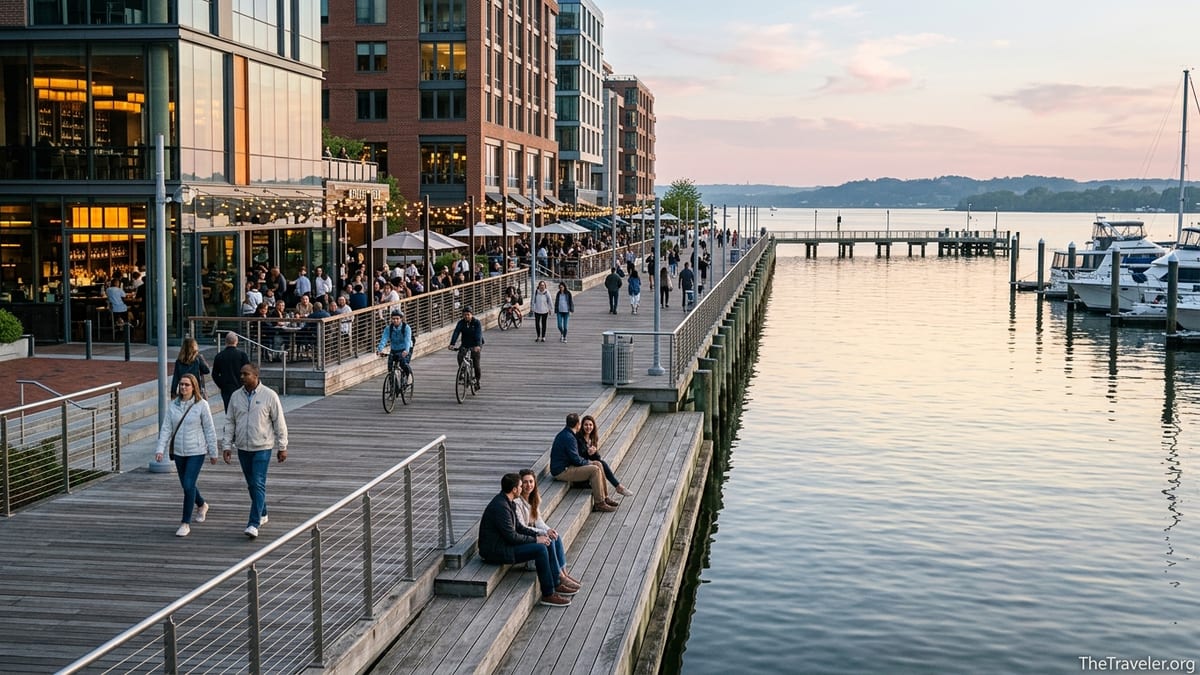
One of the clearest examples of D.C.’s reinvention is The Wharf on the Southwest Waterfront. Built along roughly a mile of the Washington Channel, the development has transformed a once industrial stretch into one of the city’s liveliest districts for dining and entertainment, with more than a dozen restaurants, piers lined with outdoor seating, and regular free events by the water. Visitors who only know D.C. from the steps of the Lincoln Memorial are often surprised to find boardwalk-style promenades, marinas filled with boats, and sunset views back toward the monuments from restaurant patios and public lookout points.
The Wharf works particularly well for travelers because it concentrates a lot of options in a walkable area. On a single evening, you could grab tacos and a margarita at a casual spot like bartaco, settle into a Southeast Asian dinner at a sit-down restaurant where mains typically range from about 25 to 35 dollars, and then wander over to a concert at The Anthem, a major music venue that draws touring bands and comedians. Between venues, you can people-watch along District Pier or stroll past the open-air seafood market where local vendors sell fresh crabs, shrimp, and oysters directly from their stalls.
Getting there is easier than many visitors expect. The Wharf sits a short walk from the L’Enfant Plaza or Waterfront Metro stations, and in warmer months you can even arrive by water taxi from places like Georgetown or Old Town Alexandria, turning transportation into part of the sightseeing. For a different pace, come on a weekday morning for coffee along the promenade when joggers and dog walkers outnumber concertgoers. Seen from here, D.C. looks less like a ceremonial capital and more like a city simply enjoying its river.
Creative Culture at Union Market and Beyond
North of the Capitol, the Union Market district showcases another side of D.C.: a blend of history and contemporary food culture. The main Union Market building, originally opened in 1931 as a wholesale food hub, now houses a modern food hall that has been listed among the country’s most notable markets. Inside, you find more than 40 vendors offering everything from Cuban sandwiches and South Indian dosas to gourmet gelato and small-batch chocolates. A casual meal here typically runs between 15 and 25 dollars per person, depending on what you order, and it is easy to mix and match: share a 17-dollar pressed sandwich from one stall, then split a 15-dollar dosa from another.
The surrounding streets have evolved into a broader neighborhood of restaurants, bars, and creative spaces. New openings continue to arrive, such as art-focused eateries that pair shareable plates with rotating exhibitions from local creators. It is common to see couples arriving for date night, families with strollers in the afternoon, and groups of friends meeting for drinks on rooftops that look out over the rail lines and industrial buildings of Northeast D.C. The atmosphere feels distinctly local, yet welcoming to visitors who venture beyond downtown.
Union Market is also a practical stop for travelers who like to graze instead of committing to a single restaurant reservation. You can start with a coffee and pastry, browse stalls selling spices and olive oils to bring home as gifts, then move on to lunch at a counter serving dumplings or Ethiopian-inspired bowls. On many weekends, pop-up markets appear outside, adding vintage clothing, local crafts, or live DJs into the mix. With its mix of history and reinvention, the district embodies how D.C. has evolved from a nine-to-five government town into a city where food and design play leading roles.
New-Style Museums and Interactive Learning
Washington’s reputation as a museum city is well-earned, but not all of its standout institutions are traditional, glass-case affairs. Planet Word, which opened in 2020 inside the historic Franklin School downtown, is an excellent example of how D.C. is embracing playful, interactive experiences. Billed as a museum where language comes to life, it features voice-activated galleries, immersive rooms that respond when you speak, and spaces where visitors can experiment with advertising slogans, poetry, and public speaking. Reviewers describe design elements on the level of a theme park, with features like a whispering “word tree” and recording booths for trying out your own speeches.
Planet Word is particularly appealing for travelers because general admission is free, with a suggested donation around 15 dollars. Timed-entry passes can usually be reserved online in advance, but same-day walk-ups are often available on weekdays outside of peak seasons. For families, it offers a break from more formal museums: instead of simply reading wall labels, children can trigger exhibits with their voices, play with puns, and explore how music and advertising use words. Adults, meanwhile, discover how language shapes politics, culture, and daily life in ways that connect directly back to the city outside.
Other institutions have also diversified beyond the standard monument experience. The Kennedy Center’s Reach expansion, for instance, added riverside pavilions, classrooms, and outdoor lawns where free performances, film screenings, and community events are staged. On non-event days, locals frequent the terraced landscapes and reflecting pool areas for relaxed picnics with views of the Potomac and the main Kennedy Center building. A traveler might visit the Reach in the late afternoon, enjoy a casual picnic from a nearby market, then head inside the main complex for an evening symphony, comedy show, or ballet performance.
Neighborhoods With Distinct Personalities
To understand why D.C. is more than its monuments, it helps to spend time in at least one or two residential neighborhoods. Take U Street and nearby Shaw, historically central to Black culture and jazz in the city. Today, the corridor blends historic venues with new restaurants and cocktail bars. You can catch a show at a legendary club where icons once performed, then step out to a sidewalk lined with Ethiopian restaurants, ramen shops, and late-night pizza slices. On weekend evenings the sidewalks hum with energy, yet the rowhouse-lined side streets retain a quieter, local feel.
Head northwest and neighborhoods like Adams Morgan and Columbia Heights offer their own flavors. Adams Morgan’s main strip, for instance, is lined with independent bars, small music venues, vintage clothing stores, and global eateries ranging from Ethiopian and Middle Eastern to Salvadoran pupuserias where you can still find filling plates under 20 dollars. On side streets, colorful rowhouses with stoops give the area a residential charm that contrasts sharply with the marble of the Mall. In Columbia Heights, a large urban plaza above the Metro station hosts everything from chess games and buskers to farmers markets and community festivals.
For a different mood, Dupont Circle and Logan Circle showcase D.C.’s café culture and LGBTQ-friendly nightlife. By day, you will see remote workers and students tapping on laptops in independent coffee shops, joggers looping around the tree-shaded circles, and small galleries welcoming walk-in visitors. By night, the same streets fill with people heading to wine bars, neighborhood bistros, and laid-back clubs. Travelers who base themselves in these neighborhoods often report feeling less like tourists and more like temporary residents, picking up groceries at corner markets, chatting with baristas, and learning bus routes instead of relying solely on rideshares.
A Global Food Scene That Tells the City’s Story
Washington’s dining scene mirrors its international population. While you can certainly book a white-tablecloth political steakhouse within walking distance of the White House, many of the most memorable meals happen in modest rowhouse restaurants and unassuming strip malls scattered across the District and its close-in suburbs. Visitors regularly discover that some of the city’s strongest flavors come from Ethiopian cafes, Caribbean takeout counters, Vietnamese noodle shops, and Latin American bakeries where English may not be the default language.
Consider Ethiopian cuisine, which has deep roots in D.C. thanks to one of the largest Ethiopian communities in the United States. In neighborhoods like Shaw, Adams Morgan, and along the U Street corridor, you can sit down to platters of stews and vegetables served on spongy injera bread, often for around 25 to 30 dollars for two people sharing. Many restaurants offer vegetarian and vegan-friendly spreads layered with lentils, split peas, and collard greens, making them especially appealing for groups with dietary restrictions. It is common to end the meal with a traditional coffee ceremony, where beans are roasted, ground, and brewed to order.
Food halls and markets play a major supporting role in showcasing this diversity. At Union Market alone, you might snack on Taiwanese-style buns, then pick up small-batch hot sauce from a local maker and finish with a scoop of gelato. Across the river in emerging areas, breweries pair craft beers with food trucks, and newer developments add chef-driven restaurants that compete with long-established favorites downtown. Prices can be high at the trendiest spots, especially in neighborhoods popular with office workers and visitors, but locals often seek out less publicized places where a couple can still share several dishes and leave for under 80 dollars including drinks and tax.
Outdoor Spaces, Trails, and Everyday Greenery
Monuments might dominate postcards, but much of D.C.’s appeal lies in the green spaces threaded through and around the city. Rock Creek Park, for example, cuts a wooded corridor through Northwest D.C., offering miles of hiking and biking trails that can make you forget you are within city limits. On weekends, portions of Beach Drive within the park are often closed to cars, turning them into popular routes for cyclists, rollerbladers, and families out for a stroll. For travelers staying near Dupont Circle or Woodley Park, trailheads are close enough to combine a morning walk in the woods with an afternoon of museum-hopping.
Along the rivers, new and revitalized parks have changed how locals use the waterfront. At The Wharf, landscaped piers include fire pits, swings, and steps where people gather to watch the sunset or summertime fireworks. Farther south, the Southwest and Navy Yard areas now feature riverfront promenades lined with lawns, playgrounds, and outdoor dining, making them family-friendly alternatives to busier nightlife strips. Baseball fans base entire weekends around catching a Nationals game, exploring the surrounding Yards district, and then lingering on the Anacostia Riverwalk Trail afterward.
Even near the classic sights, you can step sideways into quieter outdoor pockets. Just a few blocks from the White House, Lafayette Square offers shaded benches perfect for a budget-friendly lunch from a nearby food truck. Across the river from Georgetown, a climb up into neighborhood side streets reveals pocket parks and overlooks where locals read or picnic on warm evenings. The more you treat D.C. as a city to wander, rather than a checklist of sights, the more these small green moments begin to define your trip.
The Takeaway
Washington, D.C. will always be the seat of federal power, and its monuments and memorials deserve the attention they receive. Yet the city that nearly 700,000 residents call home is broader, more creative, and more relaxed than its political image suggests. Waterfront districts like The Wharf turn the focus toward sunsets and live music instead of speeches. Neighborhoods from U Street to Adams Morgan add layers of jazz history, immigrant cuisines, and street-level color. Interactive museums and expanded cultural centers invite play as much as reflection. Trails, parks, and river walks knit everything together in a landscape that is as green as it is grand.
For travelers, the most rewarding D.C. itineraries combine both worlds. Spend your mornings absorbing the story told by the Lincoln Memorial or the National Archives, then devote afternoons and evenings to the city that locals enjoy year-round: browsing food halls, lingering in cafés, catching a show, or simply getting lost along a tree-lined street. When you fly home with memories of a picnic by the river, a surprising meal in a small neighborhood restaurant, or an impromptu conversation outside a music venue, you will have discovered why Washington, D.C. offers far more than monuments and government buildings.
FAQ
Q1. How many days should I spend in Washington, D.C. to see more than just the monuments? For most travelers, three to four full days works well: one or two for the Mall and Smithsonian museums, and the rest for neighborhoods, food halls, and waterfront areas like The Wharf and Union Market.
Q2. Is The Wharf worth visiting if I am short on time? Yes. Even a couple of hours at The Wharf can give you a feel for D.C.’s modern side, with waterfront views, restaurants, and public spaces all within a compact, walkable stretch.
Q3. Can I experience D.C.’s food scene on a budget? Absolutely. Focus on places like neighborhood Ethiopian restaurants, fast-casual spots at Union Market, and food trucks near downtown, where full meals often run between 10 and 20 dollars.
Q4. Are D.C.’s newer attractions like Planet Word good for kids? Planet Word and similar interactive museums are designed with families in mind, offering hands-on exhibits and technology-driven galleries that keep children engaged while adults learn alongside them.
Q5. Which neighborhoods are best to stay in if I want a local feel? Areas such as Dupont Circle, Logan Circle, Capitol Hill, and parts of Shaw balance walkable streets, independent restaurants, and easy Metro access to the Mall and museums.
Q6. Do I need a car to explore beyond the monuments? In most cases you do not. The Metro, buses, rideshares, and walkable neighborhoods make it easy to reach districts like The Wharf, U Street, and Union Market without renting a car.
Q7. What is the best way to combine outdoor time with sightseeing? Plan walks or bike rides along the National Mall or riverfront trails in the morning, then head to museums or neighborhoods in the afternoon when the sun is stronger and streets are busier.
Q8. Are there evening activities that are not focused on politics? Yes. You can catch concerts at venues along U Street or at The Anthem, see a performance at the Kennedy Center, join a trivia night in a neighborhood bar, or attend gallery openings and community events.
Q9. Is Washington, D.C. safe to explore at night in these areas? Popular districts like The Wharf, Dupont Circle, and U Street are generally busy into the evening, but you should take normal city precautions, stay in well-lit areas, and follow local advice from your hotel or host.
Q10. How can I plan an itinerary that balances classic sights with local experiences? Start by reserving your mornings for must-see monuments and museums, then intentionally schedule afternoons and evenings in specific neighborhoods, choosing one area per day such as The Wharf, Union Market, or U Street to explore in depth.