


Helsinki Cathedral crowns Senate Square so dramatically that many travelers treat it as a simple photo stop on a walking tour. They climb the stairs, snap a panorama of the harbor and move on. Only later do they learn they missed the quiet crypt, the nuances of worship times, the best angles for photography or even the easiest entrance that avoids all those steps. Before you walk toward that iconic white dome, it pays to understand how the cathedral actually works day to day.
Get the latest updates straight to your inbox!
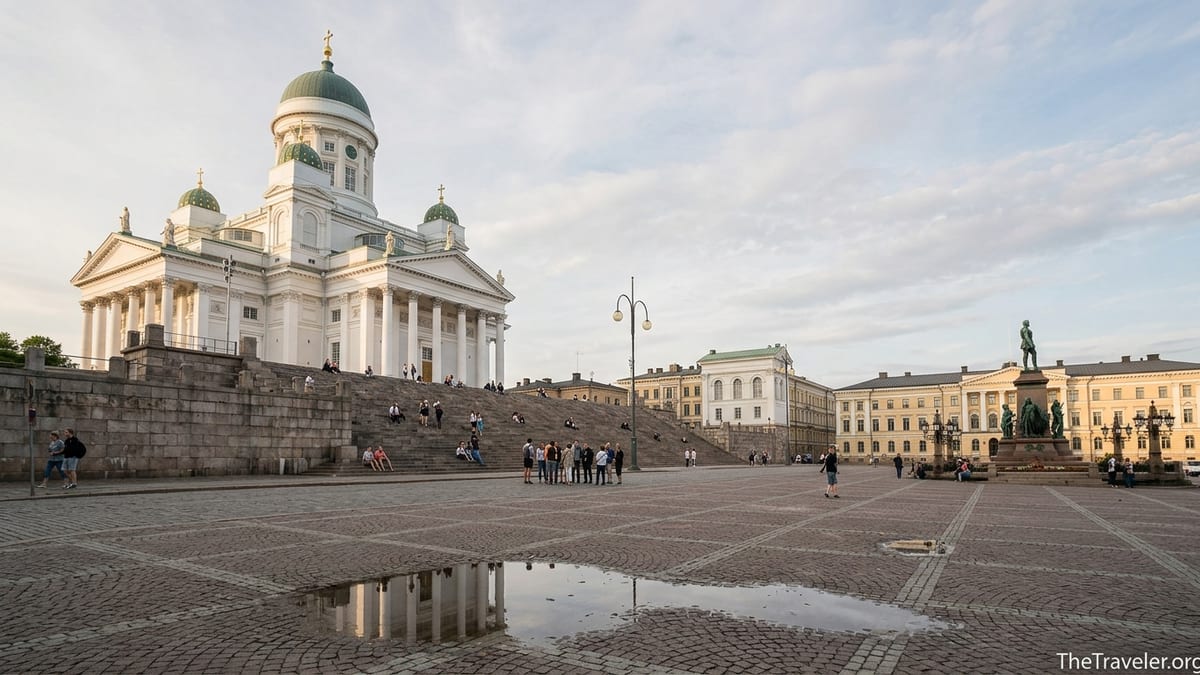
Helsinki Cathedral Is A Living Church, Not Just A Landmark
The single biggest surprise for many visitors is that Helsinki Cathedral is first and foremost a working Lutheran church, not a museum. It hosts regular Sunday communion services in the morning and other worship in multiple languages, along with weddings, funerals and special concerts throughout the year. When a service or private ceremony is in progress, sections of the church may close briefly to tourist crowds, and the atmosphere shifts from sightseeing to quiet participation.
In practice, this means you might arrive on a Saturday afternoon in July to find ushers politely turning selfie-takers away from the central nave because a wedding is about to begin. Ten minutes later, an organ prelude fills the space and the vast white interior becomes intimate and personal for the couple at the altar. Rather than treating this as an inconvenience, many travelers find it adds context to the building’s role in Finnish life. If you want to avoid surprises, check the latest worship and event schedules on the parish’s official channels before planning your visit.
Because services are open to everyone, some travelers choose to experience the cathedral during worship instead of between ceremonies. A Sunday morning high communion service offers a very different feel than a midday tourist rush: locals in understated coats, hymnbooks in Finnish and Swedish, and an organ that reveals the building’s acoustics in ways a quick walk-through never will. If you attend, plan to stay for the full service and follow the congregation’s lead on when to sit, stand and remain silent.
Those Iconic Steps Are Not the Only Way In
Most postcard views of Helsinki Cathedral are taken from Senate Square, with visitors scattered across the huge flight of granite steps leading to the main doors. Climbing them is part of the experience, but it is not the only, or even the most practical, entrance for everyone. The official main entrance to the cathedral is actually on Unioninkatu, the street running behind the church, and there is also elevator access to the crypt from the Kirkkokatu side.
For fit travelers, the stair climb is short but steep, and in winter the steps can be icy despite regular gritting. A common mistake is to attempt the stairs with rolling luggage straight from the railway station, or with elderly relatives who find the last third of the climb unexpectedly demanding. Locals quietly bypass this ordeal by approaching from the upper streets behind the cathedral, where you can enter at a much gentler incline with only a few smaller steps to negotiate.
If you have limited mobility, are using a stroller or visiting in slippery conditions, head first to the side and rear streets and look for the more level entrance instead of committing to the Senate Square staircase. The elevator connection to the crypt, and from there into the church, can make a big difference for anyone who tires easily or uses a wheelchair. Ask staff or volunteers inside the church for the most up-to-date accessible route; they handle these questions daily and are used to helping visitors find the easiest way around the complex.
The Crypt: A Quiet, Atmospheric World Below the Tourists
One of the most overlooked parts of Helsinki Cathedral sits directly beneath the main floor: the vaulted crypt. Accessed from Kirkkokatu or by elevator from the church interior, this brick-lined undercroft feels like a different world compared with the bright white nave above. In summer and during special seasons, it often hosts art exhibitions, cultural events or a small café that offers light refreshments in a space that rarely feels crowded.
Travelers who take only a quick peek upstairs often walk right past the discreet entrances and never realize the crypt is open. That is a missed opportunity. On a busy August afternoon when tour buses unload at Senate Square, the nave can echo with footsteps and camera shutters, but the crypt remains cool and hushed. An early afternoon coffee at a temporary café table under the low arches, with soft lighting and exhibition pieces around you, can be one of the most atmospheric breaks you take in central Helsinki.
Because the crypt’s exhibitions rotate, it is worth checking what is on during your visit. In recent years it has hosted photography shows, historical displays and collaborative art projects that interpret themes like Finnish identity, angels or the city’s changing skyline. Even if you are not an art specialist, wandering the curved corridors gives you a sense of the cathedral as a layered building, with its foundations literally beneath your feet instead of just appearing as a white silhouette above the square.
Planning Your Visit Around Light, Crowds and Weather
Helsinki’s northern latitude shapes your cathedral visit more than many first-time travelers expect. In high summer, the soft but lingering evening light can last well after 9 pm, turning the building’s white façade a faint gold and making the steps a popular place for locals to linger. In midwinter, daylight can feel compressed into a narrow window around late morning and early afternoon, with the cathedral floodlit long before most visitors would normally think of dinner.
If your main goal is photography, timing matters. On a clear summer evening, stand halfway up the Senate Square steps around 8 to 9 pm to capture the cathedral glowing against a still-light sky, with the bronze statue in the square below. In winter, you might prefer a midday visit to take advantage of what little natural light there is, then return after dark to photograph the illuminated domes against the early night. Expect wind off the harbor in colder months; the exposed plateau around the cathedral can feel several degrees cooler than nearby streets.
Crowd patterns also shift with the season. Cruise ship days between late spring and early autumn can bring waves of group tours in the late morning and early afternoon, filling the pews with people listening to guides. If you want a quieter experience, aim to arrive when the doors first open, or later in the day when most groups have moved on to the market square or ferry to Suomenlinna. In shoulder seasons like April or late September, you might find yourself almost alone in the nave on a weekday afternoon, with only the occasional tram bell drifting up from the streets below.
How to Reach the Cathedral Without Overcomplicating Transport
Many visitors overthink how to reach Helsinki Cathedral, but in reality it sits an easy walk from the Central Railway Station and even closer to the harbor. From the station, most people simply follow pedestrian streets past the main department stores toward the waterfront, with the cathedral’s green domes visible in the distance. At a comfortable pace this takes around 10 to 15 minutes, even with short photo stops along the way.
If you prefer to use public transport, several tram lines run near Senate Square and the surrounding streets. Trams that pass along Aleksanterinkatu and Unioninkatu drop you within a short block or two of the cathedral steps, and the Senaatintori stop is specifically positioned for the square. For example, a traveler coming from the hip Kallio neighborhood might take a tram toward the center, change near the station, then ride only one or two stops toward the harbor before disembarking within sight of the church.
Budget-conscious travelers often rely on day or multi-day tickets purchased through the Helsinki regional transport app, which cover trams, buses, metro and even local trains. If you are staying more than one day, it can be cost-effective to buy a 24-hour or 48-hour ticket that includes your ride from the airport and then use the same pass to move around the center. In that scenario, hopping on a tram for two stops to avoid walking uphill to the cathedral in sleet or heavy rain makes complete sense, even if the distance looks short on a map.
Dress, Behavior and Photography: Respecting a Sacred Space
Because Helsinki Cathedral appears on travel posters and postcards worldwide, some visitors forget that inside it is still a consecrated Lutheran church. There is no strict dress code enforced at the door, and locals often visit in everyday clothing, but smart-casual attire is appropriate if you plan to attend a service. In winter that usually means layers and practical boots; in summer, avoiding beachwear and very revealing outfits is a simple way to show respect.
Once inside, keep your voice low and watch for signs or staff guidance about restricted areas, especially during worship or private services. Even outside formal events, the central altar and choir area may be roped off to protect the space and maintain a sense of reverence. If you are unsure whether it is acceptable to walk into a particular chapel or gallery, a quiet question to a volunteer or attendant at the back will usually earn you a friendly explanation in English.
Photography is generally allowed for personal use, but flash and tripods can be disruptive in a space with high white walls and polished surfaces. A common courtesy is to complete your interior shots before a service begins and to avoid walking between the congregation and the altar with a camera in hand. Many travelers find that wide-angle shots from the back of the nave, or close-ups of details such as the pulpit or organ pipes, capture the atmosphere without intruding on anyone’s prayer or reflection. Outside, the steps are a popular place for posed photos, but take care not to block the main doors or crowd the top landing where people are entering and exiting.
What Things Cost Around the Cathedral
Entry to Helsinki Cathedral itself is typically free, although small voluntary donations are encouraged to help maintain the building and support parish work. You may find discreet donation boxes near the back pews or by the exits. Special concerts, organ recitals or ticketed cultural events held in the nave or crypt may charge separate admission, which can range from a modest fee for a lunchtime recital to higher prices for evening performances featuring choirs or orchestras.
Because Senate Square is one of Helsinki’s central tourist hubs, prices in the surrounding cafés and souvenir stalls reflect the location. A coffee at a café directly facing the square will usually cost more than at a neighborhood spot a few blocks away, and souvenir magnets or postcards of the cathedral tend to be priced for visitors rather than locals. If you are traveling on a tight budget, consider photographing the cathedral from multiple angles instead of buying large prints, and step a street or two away from the square for more reasonably priced snacks or meals.
On the other hand, some travelers deliberately choose to sit at an outdoor table in full view of the cathedral, accepting the higher prices as part of the experience. Sipping a hot drink while watching evening light slide across the domes, or observing couples posing for wedding photos on the steps, can justify a slightly higher bill if you frame it as a front-row seat to one of the city’s most recognizable scenes.
Pairing Helsinki Cathedral With Nearby Sights
Another detail many visitors miss is how easily a visit to Helsinki Cathedral can be combined with other major sights in a compact loop. From Senate Square it is only a short walk down to the harbor-front market, where boats depart for the Suomenlinna sea fortress and small stalls sell seasonal berries, fish dishes and handmade crafts. Many travelers start at the cathedral in the morning, descend to the market for lunch, then board a ferry for an afternoon exploring the islands before returning past the cathedral in the evening light.
In the other direction, a gentle walk from the cathedral along the waterfront brings you to Uspenski Cathedral, the red-brick Orthodox church that forms a striking visual counterpoint to the white Lutheran cathedral across the water. Seeing both in the same day gives a tangible sense of Finland’s dual religious and cultural history. Add in a stop at the nearby city museum or the modern Oodi library near the railway station, and you have a full day of architecture and urban life without ever needing to board a taxi.
If you are interested in architecture more than formal sightseeing, simply wandering the grid of streets behind Helsinki Cathedral reveals 19th-century facades, university buildings and quieter courtyards that most day-trippers never notice. From some angles you can look back and see the cathedral’s domes peeking between apartment roofs, a reminder that the building is woven into the everyday city rather than existing only as a backdrop for tourist photos.
The Takeaway
Helsinki Cathedral rewards more than a quick climb and a single snapshot. Understanding that it is a functioning church with layered spaces, subtle access routes and a crypt beneath the crowds changes how you plan your visit. Timing your arrival around worship, light and weather, choosing entrances that suit your mobility and comfort level, and approaching the interior with quiet respect all help you experience the building on its own terms.
When you pair the cathedral with nearby sights, manage your expectations about costs and crowds, and allow a little time to sit, listen and look up at the domes instead of rushing on, the white landmark above Senate Square becomes less of a checklist stop and more of a window into Helsinki itself. Before you set out toward that unmistakable silhouette, keep these often-missed details in mind, and the city’s most photographed church will reveal far more than its postcard side.
FAQ
Q1. Is there an entrance fee to visit Helsinki Cathedral?
Entry to the main cathedral is generally free, although donations are welcome. Special concerts or events in the nave or crypt may charge separate ticketed admission.
Q2. What are the typical opening hours, and can they change?
The cathedral is usually open daily with extended hours in summer, but times can change due to services, weddings or maintenance. Always check the latest schedule close to your visit rather than relying on older guidebooks.
Q3. Do I have to climb the big staircase, or is there an easier way in?
No. While many visitors use the Senate Square steps, there are alternative entrances on the side and rear streets with far fewer stairs, and elevator access via the crypt for those who need it.
Q4. Can I visit the crypt, and what will I find there?
When open, the crypt usually hosts exhibitions, cultural events or a small café in a vaulted brick space beneath the cathedral. Access varies by season, so confirm current opening times before you go.
Q5. Is it appropriate to take photos inside the cathedral?
Personal photography is generally allowed, but using flash, tripods or moving around during services can be disruptive. Take most of your photos before or after worship and keep a respectful distance from the altar area.
Q6. How do I get to Helsinki Cathedral using public transport?
The cathedral is a short walk from the Central Railway Station, and several tram lines stop near Senate Square and the surrounding streets. Using a day ticket on the city’s transport network makes quick tram hops easy and economical.
Q7. What should I wear if I plan to attend a service?
Locals usually dress in neat everyday clothing. Smart-casual attire is ideal; avoid beachwear or very revealing outfits out of respect for the church setting, especially during formal worship.
Q8. When is the best time of day to visit for good photos?
In summer, early morning and evening offer softer light and fewer crowds, while in winter midday provides the strongest natural light. Evening floodlighting makes for atmospheric exterior shots in the darker months.
Q9. Can I combine a visit to the cathedral with other nearby attractions?
Yes. The cathedral pairs naturally with the harbor-front market, ferries to Suomenlinna, Uspenski Cathedral and central museums, all within easy walking distance in central Helsinki.
Q10. Are there facilities for visitors with reduced mobility?
Yes, but access requires a bit of planning. Side and rear entrances, along with elevator access via the crypt, can reduce or avoid stair climbing. Staff and volunteers can advise on the best current routes when you arrive.