


More news on this day
Air travel across Europe faced another day of widespread disruption as airports in Spain, Italy, England, Belgium, Greece, Russia and the Netherlands reported 1,360 flight delays and 92 cancellations, affecting services operated by ITA Airways, KLM, Aegean, Rossiya and several other carriers on routes linking cities such as St. Petersburg, London, Rome, Milan and Athens.
Get the latest news straight to your inbox!
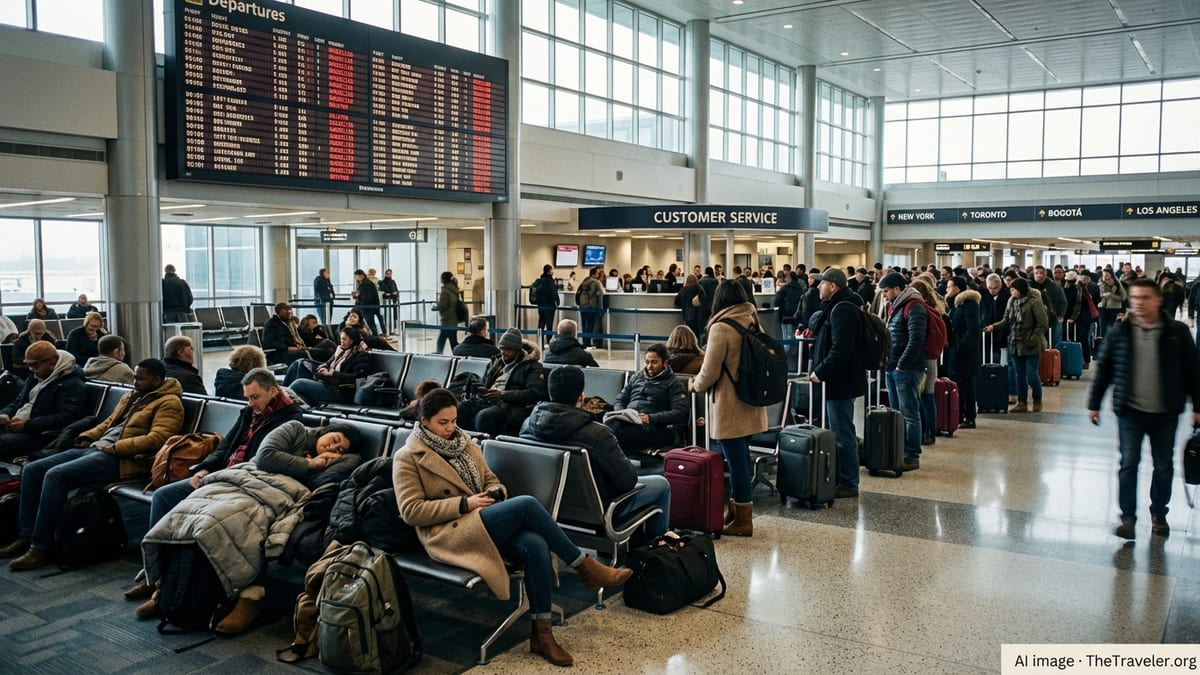
Network Disruption Ripples Across Multiple Countries
Publicly available flight-tracking data and operational summaries show that a cluster of delays and cancellations spread across a broad swathe of European airspace, with particular pressure on hubs in southern and western Europe. Airports in Spain, Italy, England and Belgium saw dense morning and evening peaks stretch well beyond scheduled times as departure queues built up and arriving traffic was held in holding patterns or forced into extended turnarounds.
In Italy, services into Rome Fiumicino and Milan’s main airports were among those most visibly affected, with congestion compounding existing staffing and capacity constraints. Reports indicate that traffic flows into northern Italy created bottlenecks that quickly propagated through surrounding airspace, leaving departures from other European cities waiting for updated slots.
In the United Kingdom, London’s major airports experienced a familiar pattern of rolling delays, particularly on short-haul European routes. Combined with busy holiday and business travel periods, even modest schedule disruptions translated into longer queues at check-in and security, as passengers sought alternative flights or rebooked missed connections.
Further north, operations in the Netherlands and Belgium were also touched by the disruption. Amsterdam and Brussels functioned as key nodes in the network, so relatively small timing issues on inbound sectors generated reactionary delays on outbound services, pushing knock-on effects well beyond the immediate region.
Flag Carriers Among Those Most Affected
Among the airlines caught up in the latest disruption were ITA Airways, KLM, Aegean and Russia-based Rossiya, alongside a mix of European low-cost and long-haul carriers. Schedule data and airline communication channels indicate that most flights operated, but many did so behind time, with block delays ranging from minor hold-ups to several hours.
Italian carrier ITA Airways, which has in recent years been noted in industry reports for comparatively low cancellation rates, nonetheless experienced schedule irregularities on domestic and intra-European routes linking Rome and Milan with destinations in Spain, Greece and northern Europe. These disruptions largely reflected network-wide constraints rather than airline-specific issues, making recovery slower during peak periods.
At Amsterdam’s Schiphol, Dutch flag carrier KLM saw a series of delayed departures and a smaller number of cancellations, affecting both European and long-haul rotations. The interconnected nature of KLM’s hub-and-spoke model meant that delays on a handful of key feeder flights could reverberate through onward services to cities in England, Spain and Italy, as crews and aircraft arrived late from earlier sectors.
In the eastern part of the region, Rossiya and other Russian operators serving St. Petersburg encountered schedule disruption on services linking the city to European gateways. Greece’s Aegean Airlines, which relies heavily on flows through Athens and key seasonal routes into Italy, Spain and northern Europe, also faced delays as tight turnarounds met congested airspace and crowded airport stands.
St. Petersburg, London, Rome, Milan and Athens Under Strain
The day’s figures highlight how a relatively modest number of outright cancellations, when combined with more than a thousand delays, can significantly affect travel plans at major European hubs. London’s primary airports continued to wrestle with limited runway and terminal capacity during peak times, leaving little margin when air-traffic or weather restrictions trimmed available slots.
Rome and Milan, already important convergence points for Italian domestic and international routes, saw extended departure queues, particularly on short-haul flights to Spain, Greece and northern Europe. When aircraft arrived late from earlier sectors, ground handling and turnaround operations at these airports were compressed, raising the risk of further delay for subsequent flights.
In Athens, delays on inbound services from Italy and other European destinations fed into outbound banks to hubs in western and northern Europe. Because many flights are timed to connect with onward services to the Greek islands or to international destinations, any slippage in the main Athens wave increased the risk of missed connections and rebookings throughout the day.
St. Petersburg, meanwhile, functioned as a key point for passengers transferring between Russian domestic routes and international services. Disruption affecting Rossiya and other carriers on cross-border sectors meant that late arrivals could not always be turned around in time to protect the onward schedule, further amplifying the impact of what began as manageable delays in other parts of the European network.
Structural Pressures Behind the Numbers
Industry analyses and recent performance reports suggest that the disruption reflects broader structural pressures on European aviation rather than a single extraordinary event. Air traffic management capacity and staffing remain tight in several key control centers, particularly in parts of southern and western Europe, where even minor technical issues or localized storms can quickly lead to a build-up of airborne holding and ground delays.
Eurocontrol’s recent overviews of European aviation performance have highlighted that en-route capacity constraints and staffing shortfalls are now among the leading drivers of delay minutes. When such factors coincide with busy seasonal peaks or local industrial actions, the network’s ability to absorb additional pressure declines rapidly, increasing the likelihood that modest schedule changes will cascade into widespread disruption.
Airport infrastructure is another recurring constraint. Many of the hubs affected, including London, Amsterdam, Rome and Athens, operate close to their practical limits during peak waves. Runway, taxiway and stand capacity, as well as terminal processing throughput, leave little flexibility when off-schedule traffic arrives in clusters, forcing operators to hold flights at the gate or in departure queues until suitable slots open up.
Airlines have attempted to improve resilience through schedule padding, aircraft swaps and more conservative turn times, but these strategies cannot fully offset systemic bottlenecks. As travel demand in 2026 continues to track at or above pre-pandemic norms on many routes, the balance between efficiency and reliability remains difficult to manage, particularly for hub carriers that rely on tight connectivity.
What Passengers Are Experiencing and What They Can Do
For passengers, the combination of 1,360 delayed flights and 92 cancellations translated into missed connections, extended airport stays and disrupted itineraries spanning leisure, business and family travel. Travellers on affected ITA Airways, KLM, Aegean, Rossiya and other services reported through public channels that they encountered long lines at rebooking desks and struggled to secure same-day alternatives on heavily booked routes.
Consumer rights organizations and travel advisers continue to point to European and UK passenger protection frameworks that may apply when flights are significantly delayed or cancelled. Under the relevant regulations, travellers on eligible routes and airlines can, depending on the cause of disruption, request rerouting, refunds and in some cases financial compensation, as well as assistance such as meals and accommodation when they are stranded for extended periods.
Practical guidance from travel support services emphasizes the importance of monitoring flight status through airline apps and airport information channels, acting quickly to rebook when disruption becomes apparent, and retaining boarding passes and receipts in case a compensation claim is warranted later. Passengers are generally advised to check the specific terms and conditions of their ticket and to review whether their travel insurance offers additional coverage for delay-related costs.
With European air traffic expected to remain dense through the peak spring and summer period, analysts suggest that similar waves of disruption are likely when weather, capacity limits or localized technical issues intersect. Travellers planning itineraries that rely on tight connections, particularly through hubs such as London, Amsterdam, Rome, Milan and Athens, may wish to build in longer buffers or consider earlier departures to reduce their exposure to knock-on delays.