


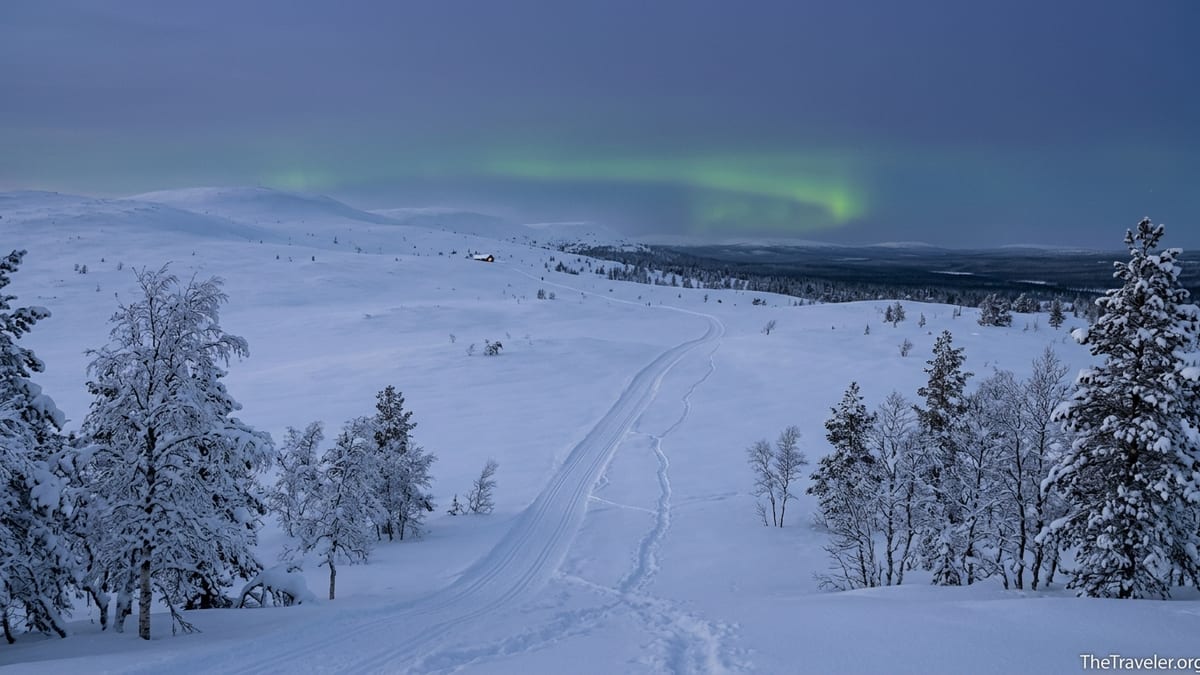
Pallas–Yllästunturi National Park in Finnish Lapland looks deceptively simple: sweeping fells, wooden huts, endless trails and dancing Northern Lights. In reality, this is a huge, sparsely populated wilderness with its own rules, logistics and price quirks. First-time visitors often underestimate distances, misread the seasons or assume that “right to roam” means they can camp and make fires wherever they like. This guide walks through the most common blind spots so you can arrive prepared instead of surprised.
Get the latest updates straight to your inbox!
Understanding the Scale and Layout of the Park
Many first-time visitors imagine Pallas–Yllästunturi as a single compact valley with a ski village at each end. In fact, the national park stretches roughly 100 kilometers across northwestern Lapland, between the Ylläs fells in the south and the Ounas-Pallas fells further north. The main visitor hubs are spread out: Äkäslompolo and Ylläsjärvi near the Ylläs ski area, the Pallas fell area with its historic hotel, and the village of Hetta on the northern edge. It is entirely possible to book accommodation in, say, Äkäslompolo and then realize the trailhead or activity you wanted is a one to two hour drive away in another part of the park.
A classic example is the famous Hetta–Pallas hiking route, often described as “in Pallas–Yllästunturi” without further detail. Travelers sometimes book a cabin near Ylläs, then discover that the Hetta trailhead is more than 150 kilometers away by road. Even within the same sub-region, distances add up quickly. A “nearby” fell may still be a 30-minute drive on narrow, sometimes icy roads. When planning, it helps to treat the park as three broad zones: Ylläs (with ski resorts and dense trail networks), Pallas (more remote fell scenery and the Pallas Hotel area) and Hetta/Ounas (starting point for long treks). Decide which zone matches your priorities and base yourself there rather than trying to “do it all” in a short stay.
The scale also affects how you think about safety and timing. A 12-kilometer fell route on a map can look like a casual half-day walk, but soft snow, boggy ground, or steep climbs can easily turn it into a six-hour effort for moderately fit hikers. In winter, twilight and cold reduce your margin for error; in summer, trail markers can be sparse on open fells when fog rolls in. Giving yourself longer transfer windows between activities and allowing “buffer days” for weather is far more important here than in a compact alpine resort.
Before you lock in bookings, trace the exact places on a map: where your accommodation is, where your key hikes start, where rental shops or guided tours meet, and how long the drives actually take. This small step can mean the difference between a relaxed, concentrated stay and a week spent chasing your own itinerary by car or bus.
Getting There and Getting Around Without Nasty Surprises
The second big surprise for many visitors is that Pallas–Yllästunturi is not like a Central European resort where you step off a train directly onto a gondola. From southern Finland, you typically reach the park by a night train to Kolari or Rovaniemi, or a flight to Kittilä Airport, followed by a bus or rental car. Seasonal bus connections often line up with flights and trains, but they do not run late into the night and timetables change between winter, spring ski season and summer. Arriving on a late Kittilä flight and assuming “there will be a bus” to Äkäslompolo or Pallas can leave you facing an unplanned taxi ride that may cost as much as a low-cost flight.
On-the-ground transport also works differently from many mountain destinations. There is usually a reasonably frequent ski bus circulating between Ylläs villages and the slopes during winter high season, but service thins out in late spring and summer. Hetta and the Pallas area see far fewer buses, especially outside school holidays and peak seasons. Car rental at Kittilä or Rovaniemi is often the most flexible option, yet many visitors underestimate winter driving conditions: studded winter tires are standard, roads can be snow-packed, and reindeer commonly cross the main highways. If you are used to urban driving, a private transfer for arrival and departure days plus local buses and guided tours can be a wiser choice than a rental car you feel nervous using.
Costs are another point travelers miss at the planning stage. A one-way airport shuttle from Kittilä to Äkäslompolo can be relatively affordable if you use a shared, pre-booked service, but an unscheduled taxi for the same route can easily climb into the three-figure euro range, especially at night. Similarly, the Hetta–Pallas hike involves a short lake crossing on the Hetta side by boat in summer or an ice road in winter and spring. That transfer is inexpensive per person but it is not free and usually needs to be arranged with local operators or via the visitor center. Build these small but real costs into your budget.
Finally, many visitors do not realize that mobile coverage, while generally good, can be patchy in some valleys or more remote fell sections. Your bus tickets, cabin door codes and rental confirmations might all be digital. Save them offline or print key details before you leave Rovaniemi, Kittilä or Kolari. That way, you are not stranded at a snowy roadside trying to reload an email over a weak signal while the only daily bus pulls away.
Reading the Seasons Correctly, Not Just the Calendar
Pallas–Yllästunturi has four very distinct travel “seasons” that do not line up neatly with standard European spring, summer, autumn and winter. First-timers often book based on flight prices or holiday dates and then arrive to find that key activities are not yet available or already finished. For example, many people imagine March as early spring skiing. In this part of Lapland, March and early April are actually high season for cross-country and downhill skiing, with deep snow, long blue-sky days and nighttime temperatures that can still drop below minus 15 degrees Celsius.
By contrast, late April and early May can be the awkward “shoulder” when ski lifts close, snow is melting into slush, and hiking trails are still unusable. Visitors hoping for dry summer hikes in May are often disappointed to find lingering snow patches up on the fells and muddy, partly frozen trails in the forests. The reliable hiking season usually begins in earnest around late June, once the ground has thawed and boardwalks across bogs are clear. The famous Hetta–Pallas route, for instance, is often best tackled from mid-summer to early autumn when water levels are manageable and waymarks are visible.
Another mismatch happens with the Northern Lights and the midnight sun. Some travelers book mid-winter trips expecting to see both. In practice, the best chances for Northern Lights are from roughly late August to early April when it gets dark enough at night. The midnight sun period around June offers magical all-night hiking on the fells, but the sky never truly darkens, so auroras are rarely visible then. Autumn, especially September, can be an excellent compromise: cooler nights for auroras, flaming ruska foliage on the hillsides and mostly snow-free trails.
Temperature and daylight also affect packing far more than newcomers anticipate. In February, a clear daytime temperature of minus 20 with a breeze across a fell plateau feels very different from a calm, overcast zero degrees in the forest. Yet indoors, accommodations are typically very well heated. This means you need robust outdoor layers but not bulky indoor clothing. Visitors used to Alpine resorts often arrive with stylish but thin ski wear that works for a few hours on groomed pistes but is inadequate for a six-hour snowshoe tour across open, windy terrain. Thinking in terms of “expedition-style” layers rather than resort fashion will keep you far more comfortable.
Everyman’s Right, Park Rules and Where You Can Actually Camp
Finland’s concept of “everyman’s right” allows people to roam freely in nature, pick berries and mushrooms, and even camp temporarily on most land without asking permission, as long as they do not cause damage or disturbance. Many foreign visitors read about this and assume they can pitch a tent anywhere in Pallas–Yllästunturi. This is one of the most common and consequential misunderstandings. National parks have additional rules to protect fragile ecosystems, and camping is typically restricted to designated sites or certain zones.
In Pallas–Yllästunturi, there are maintained campfire sites, lean-to shelters and basic campgrounds spaced along the main hiking routes like Hetta–Pallas and around the Ylläs region. These often have fire rings, compost toilets and, in many cases, firewood supplied by the park authorities. Wild camping outside these designated areas is either prohibited or strongly discouraged in much of the park. Lighting a fire is only allowed at official fireplaces and only when there are no grass or forest fire warnings in effect. In dry summers, Lapland can and does experience fire bans, catching unprepared backpackers by surprise when they arrive with menus based entirely on cooking over open flames.
Another detail many first-time travelers miss is how huts work. The park has a network of open wilderness huts and reservable huts. Open huts are usually free, shared shelters with wooden bunks and a stove, meant for one-night stays by hikers who arrive under their own power. Reservable huts require booking and a nightly fee, sometimes collected via online systems in advance and sometimes through local visitor centers. It is not acceptable to “reserve” an open hut by arriving early and spreading your gear across all bunks or by assuming you can rely on a hut instead of carrying a tent or emergency shelter. In bad weather, hut capacity is a safety margin for everyone, not a private rental.
The right to pick berries and mushrooms is generous but not unlimited either. You are generally free to snack on blueberries, lingonberries and cloudberries along the trail in season, and to collect reasonable quantities for personal use, but you may not dig up plants, damage trees or forage in restricted conservation sub-areas. Harvesting rare species or stripping a heavily used picnic area bare goes against both the law and local etiquette. When in doubt, the park visitor centers at Kellokas (Ylläs), Pallastunturi and Hetta can explain exactly what is allowed where, in clear English, before you head out.
Costs, Food and Services in a Remote Park
Pallas–Yllästunturi feels wonderfully wild, but that wilderness comes with a remote-region cost structure that surprises many first-time visitors. Groceries, restaurant meals and guided activities are generally more expensive than in southern Finland, partly because of logistics and the short high seasons. A simple pub lunch of salmon soup and bread near Ylläs or Hetta can easily cost in the mid-teens of euros, and a casual dinner with a main course and non-alcoholic drink often reaches the mid-twenties to thirties per person. Alcohol in licensed premises is significantly pricier due to national taxes. For budget-conscious hikers, self-catering is the norm, using well-stocked but not bargain-priced supermarkets in villages like Äkäslompolo or Hetta.
Accommodation pricing also reflects small supply in peak weeks. During the core ski weeks of February and March, and again during the autumn foliage rush in September, simple cabins and apartments in the most convenient locations can book out months ahead and command high nightly rates. Travelers accustomed to walking into a last-minute deal on major hotel platforms are often shocked to find that their affordable-looking listing is actually 25 kilometers down an icy side road with limited bus access. Reading the fine print on location, included linens, and final cleaning fees is essential; in Finland, it is common for self-catering cottages to charge optional extra fees for bed linen and cleaning if you do not bring your own sheets or do the final cleaning yourself.
First-timers also underestimate how closely services track the seasons. In the depths of November, between the autumn hiking and Christmas ski seasons, some restaurants and activity companies close entirely or reduce opening hours. Even in winter, individual days off are common in small family-run businesses. That snowshoe tour you saw advertised may only run on specific weekdays, and a popular smoke sauna might need to be reserved several days in advance. Planning one “special” paid experience for each segment of your trip and booking it early is usually better than trying to decide on the spot.
Finally, cash is rarely necessary. Nearly everything, from small trailhead cafes to ski passes and boat transfers, can typically be paid by card or mobile payment. What catches more people out is not cash but card fees or bank security limits. Inform your bank of your travel dates, make sure your physical card supports chip-and-PIN payments, and have a backup card in case one fails in the cold. A surprising number of trailhead kiosks and saunas are card-only with no cash handling at all.
Picking the Right Activities for Your Fitness and Experience
The marketing photos of Pallas–Yllästunturi show serene cross-country tracks, laughing families on snowshoes and hikers strolling over rounded fells in golden light. The reality on any given day can range from exactly that to strong winds, whiteout fog and trails hidden under fresh snow. First-timers often misjudge which activities match their fitness and outdoor experience, leading to either over-ambitious days or underwhelming ones.
For example, the Hetta–Pallas route is frequently described as a “classic hike suitable for beginners,” which is true in the sense that it follows marked trails and does not require technical climbing. Yet it is still a multi-day, 50-plus kilometer trek over exposed fells with limited exit points, carrying full gear and food. Someone whose longest previous walk is a three-hour forest loop near home may struggle if they attempt the full route in poor weather. A better first-timer option might be a single-day out-and-back from Pallas to one or two nearby fell summits, using a marked circular trail and retreating to a warm lodge in the evening.
In winter, cross-country skiing is the signature activity. Many visitors arrive determined to ski “like the locals” but have never tried Nordic skiing before. Booking a lesson on the first day with a local ski school at Ylläs or Pallas can transform the week, teaching you how to balance, brake and climb hills safely. Without that, some travelers end up frightened after one slip on an icy descent and avoid the tracks for the rest of their stay. Similarly, snowshoeing sounds intuitively easy, but a three-hour guided fell tour through knee-deep powder is physically demanding. People who are comfortable on longer hikes at home will enjoy it; those unused to exercise might prefer a shorter forest loop first.
Summer and autumn bring options like mountain biking on designated trails, canoeing on lakes and rivers, and guided wildlife walks focusing on birds or reindeer herding culture. Here, the main trap is underestimating insects and overestimating solitude. During high mosquito season in early summer, a peaceful lakeside evening paddle can turn unpleasant without proper clothing or repellent. In busy weeks, the most iconic viewpoints near Ylläs can feel surprisingly social at midday. If you truly seek solitude, talk with rangers or local guides about lesser-known routes or consider starting hikes very early or late, using the long daylight hours to your advantage.
Local Culture, Etiquette and Small Things That Matter
Lapland’s outdoor culture is built around quiet respect for nature and other people’s space. This can feel reserved to visitors used to busier mountain resorts where après-ski dominates. In Pallas–Yllästunturi, most social life happens in cabins, saunas and small bars rather than in loud clubs. It is normal for Finns to sit in shared saunas or wilderness huts in relaxed silence, only exchanging a few words. For many locals, the point of being here is exactly that silence. Trying to turn the sauna into a party, playing loud music at a campfire site or shining bright headlamps into hut windows late at night will quickly mark you out as inconsiderate.
Sauna etiquette is another area where first-timers stumble. In mixed-gender or public saunas, swimwear is usually worn; in single-sex saunas, nudity is common and not sexualized. Always shower before entering, sit on a small towel if one is provided, and keep water splashing onto the stove moderate unless everyone present agrees. Jumping outside into snow or a lake is part of the fun, but remember to dry off briefly before returning inside to avoid turning the floor into an ice rink. If you are unsure what is customary in a particular place, asking staff quietly is welcomed.
Reindeer are a constant presence around roads and sometimes even near villages. They are semi-domesticated and belong to herding cooperatives, so treating them as props for selfies is discouraged. Stopping your car sharply on a narrow, icy road to photograph a herd can be dangerous for you and other drivers. If you want to photograph or learn about reindeer more closely, book a visit to a licensed reindeer farm or a guided tour where the animals are accustomed to visitors and herders can explain their work.
Language and communication are rarely major barriers. English is widely spoken in tourism services, and staff in hotels, rental shops and visitor centers are used to international visitors. The more subtle challenge is understanding that directness is valued. If a guide or ranger tells you a plan is not safe that day because of weather, they are not being overly cautious; they are passing on hard-earned local experience. Taking that advice seriously, and being honest about your own skill level when booking tours or renting equipment, will help you avoid mishaps and make the most of your time.
The Takeaway
Pallas–Yllästunturi rewards those who come prepared for its realities rather than just its postcards. The park is large, the seasons have their own rhythm, and Finnish outdoor customs combine generous freedoms with clear responsibilities. The most common mistakes first-timers make are underestimating distances and weather, overestimating the scope of everyman’s right inside a national park, and assuming that services and prices will match those of a compact European resort.
If you choose your base area carefully, align your travel dates with the activities you truly want, book key transport and guides ahead, and learn the basics of Finnish nature etiquette, you will discover why many visitors return again and again. Pallas–Yllästunturi is not about ticking off sights as quickly as possible; it is about settling into the slow rhythm of the fells, the glow of a hut stove after a long day outside, and the quiet thrill of seeing the sky burn green above a frozen lake. Arrive informed, and the wilderness will do the rest.
FAQ
Q1. Do I need a car to visit Pallas–Yllästunturi National Park?
It is possible to visit using trains, flights and seasonal buses, especially if you stay around Ylläs, but a car gives far more flexibility, particularly for reaching trailheads in the Hetta and Pallas areas or traveling outside peak seasons.
Q2. When is the best time to see the Northern Lights in Pallas–Yllästunturi?
The most reliable period is from late autumn to early spring, roughly late August to early April, when nights are dark enough; cloud cover and solar activity still determine your actual chances on any given trip.
Q3. Can I camp anywhere I like inside the national park?
No. Although everyman’s right allows wide freedom in Finland, camping inside Pallas–Yllästunturi is generally limited to designated sites, lean-tos and marked zones to protect sensitive nature.
Q4. How difficult is the Hetta–Pallas hiking route for a beginner?
The route is well marked and not technical, but it is a multi-day trek over exposed fells, so beginners with basic fitness should prepare carefully, carry proper gear and consider starting with shorter day hikes first.
Q5. What kind of clothing should I pack for a winter visit?
Pack layered, windproof and waterproof outerwear, insulated mid-layers, thermal base layers, warm gloves, a hat that covers your ears and proper winter boots; fashion-oriented ski outfits alone are often not warm enough on exposed fells.
Q6. Are there grocery stores inside the park?
There are no supermarkets in the park interior; you will find grocery stores in surrounding villages like Äkäslompolo, Ylläsjärvi, Hetta and other local centers, so plan to stock up before starting longer hikes or hut trips.
Q7. Is Pallas–Yllästunturi suitable for families with children?
Yes, provided you choose activities and routes that match your children’s ages and stamina; short marked trails near visitor centers, easy cross-country loops and family-friendly ski areas around Ylläs work especially well.
Q8. Do I need to book wilderness huts in advance?
Open wilderness huts are usually first-come, first-served and meant for emergency or one-night stays, while reservable huts must be booked and paid for in advance; always check which type you are planning to use.
Q9. Can I rely on mobile navigation on the trails?
Mobile coverage is generally good but not guaranteed everywhere, and batteries drain faster in the cold, so carry offline maps, a paper map and compass and do not depend solely on a smartphone for navigation.
Q10. Are guided tours worth it for a first-time visitor?
For many travelers, a guided tour for at least one key activity, such as a first cross-country ski outing, a snowshoe trip or an aurora hunt, adds safety, local insight and access to places you might not find on your own.