


Oslo Cathedral sits in the middle of the Norwegian capital, and yet many visitors walk in, take a quick photo of the altar, and leave without really understanding what they are seeing. Before you step through its bronze doors, it helps to know that this is not just another old church on a European city break. It is Norway’s national cathedral, an active parish church and a layered gallery of religious art, each detail shaped by three centuries of local history. Preparing for those layers before you arrive can completely change the experience.
Get the latest updates straight to your inbox!
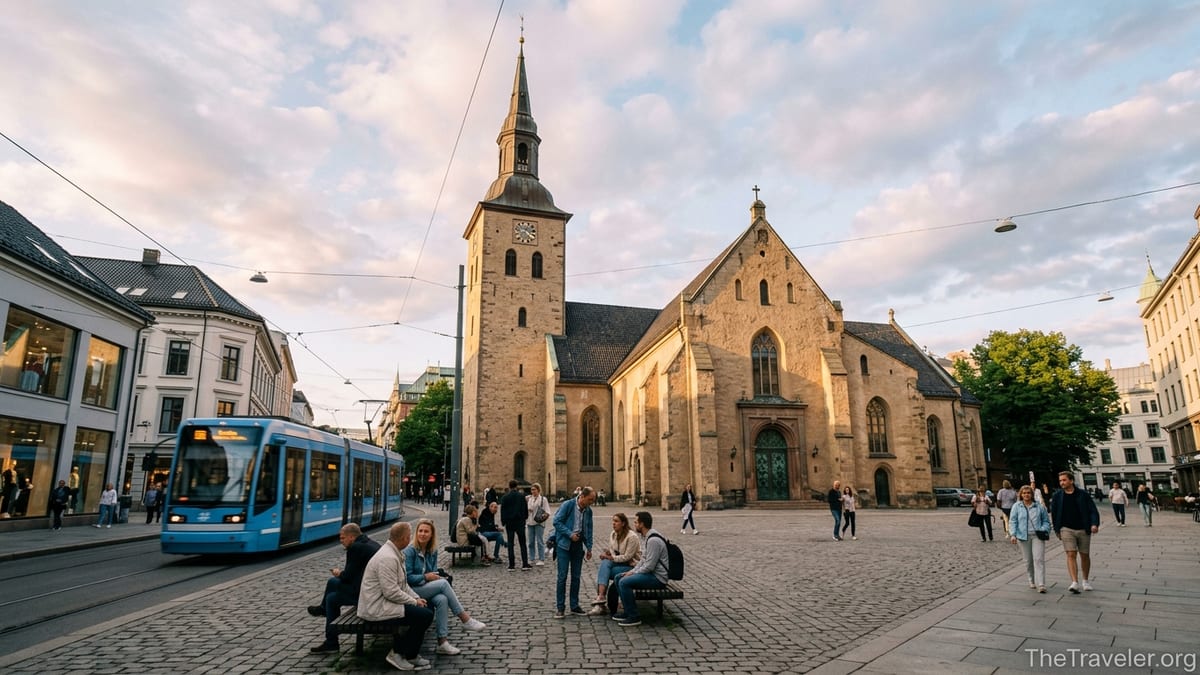
Know Where You Are: Norway’s National Church, Not Just a Photo Stop
Oslo Cathedral, or Oslo Domkirke, is the principal church of the Diocese of Oslo and functions as Norway’s national church. It has hosted royal weddings, funerals and state memorials, including the wedding of Crown Prince Haakon, which Norwegians still remember when they speak about the building. Walking in without that context is like visiting Westminster Abbey or Notre Dame and thinking of them only as pretty backdrops. You are entering a place where modern Norwegian history has been ritually marked.
The current cathedral building dates from the late 1600s and stands at Stortorvet, the main square just off Karl Johans gate, Oslo’s central thoroughfare. The setting matters. Step outside and you are in the thick of the city’s everyday life: trams rattling past, commuters cutting across the square, market stalls when the weather allows. Many travelers miss the small but powerful moment of transition if they rush straight from street to selfie. Slow down for a few seconds in the porch, let the city noise fall away, and then step in.
Inside, the scale surprises people used to the soaring Gothic cathedrals of larger European capitals. Oslo Cathedral is more intimate, more like a large parish church than a monumental basilica. That smaller volume is part of its charm. It makes the painted ceiling, pipe organ and royal box feel closer and more human, and if you arrive outside service times you can usually find a pew and sit quietly without feeling lost in a huge nave.
Understanding that this is both a national symbol and a living local church helps you read the atmosphere. A weekday afternoon may feel like a calm gallery visit. On a Sunday morning, the same space is full of parishioners greeting one another, choir members moving around in robes and staff preparing for the principal service. The cathedral belongs to them first; visitors are welcome guests.
Timing Your Visit: Services, Opening Hours and Crowds
One of the biggest surprises for visitors is that access is not consistent throughout the week. Like most active churches in Norway, Oslo Cathedral prioritizes worship. The main Sunday service usually starts at 11:00, and during that time tourist-style wandering and photography are restricted. If you walk in at 10:50 expecting to explore with a camera, you will probably be shown to a seat or politely asked to return later.
In practice, mid-morning to late afternoon on weekdays is the easiest time to visit if you want to explore freely. Exact opening hours can vary slightly by season and around public holidays such as Easter, Christmas and Norway’s Constitution Day on 17 May, when the cathedral is often involved in official programs. During those days, you may find parts of the building closed or services running at unusual times. Many travelers only check the hours for museums and forget that the cathedral also adjusts its schedule on holidays, so building in some flexibility on those dates is wise.
There is no general admission fee, which surprises many visitors coming from cities where cathedral entry often costs a significant amount. You simply walk in from the square. However, donation boxes are positioned near the entrance and by some side chapels, and a small contribution is appreciated if you spend time inside or attend an organ recital. Occasional concerts or special events may require a ticket, typically priced in a moderate range compared with Oslo’s larger cultural venues.
If you want a quieter experience, consider visiting shortly after opening on a weekday or in the late afternoon outside of commuter rush and after-school hours. Around lunchtime, guided walking tours of central Oslo sometimes pause inside, so you may suddenly find yourself sharing the space with a group listening to a guide in German, Spanish or English. Waiting five or ten minutes usually sees the group move on and the noise level drop again.
Getting There: Navigating Trams, Tickets and the Urban Setting
Many travelers underestimate how central Oslo Cathedral is and overcomplicate the journey. The building stands right by Stortorvet, with tram lines running past the square. If you are staying along the main downtown corridor near Oslo S (the central railway station), Jernbanetorget or Nationaltheatret, you can usually reach the cathedral in less than ten minutes on foot. Following Karl Johans gate toward the Parliament and then continuing a couple of blocks brings you almost to its doors.
For those using public transport, a single-zone ticket on Oslo’s Ruter system covers almost all typical visitor journeys, including trams that stop at or near Stortorvet and Storgata. Recent examples put a standard adult single ticket for Zone 1 at a little over 40 Norwegian kroner, valid for a set period that allows transfers between tram, bus, metro and many local trains within central Oslo. Buying tickets in advance through the official app or at ticket machines at major stops avoids the higher onboard purchase price and the risk of fines for riding without a valid ticket.
Many visitors hop off the tram, glance at the façade and move on toward the opera house or the harbour without ever going inside. Keep in mind how compact Oslo’s center is. It is perfectly realistic to combine a relaxed half-hour or more at the cathedral with a stroll to the Parliament, a coffee at one of the cafés around Youngstorget or a detour to the nearby shopping streets, all within a single morning.
Because the cathedral faces a busy square, safety is generally good but the usual urban awareness applies. During summer evenings when outdoor seating and events animate the area, keep valuables secure and avoid leaving cameras or bags unattended on benches outside. Oslo overall feels safe compared with many capitals, but small thefts can still occur in crowded public spaces, especially around transport hubs.
Reading the Art: Ceiling, Glass and Details Many People Miss
Most visitors look up at the richly painted ceiling for a moment, snap a photograph and walk on, without realizing that they are standing under one of the largest ceiling paintings of its kind in Norway. The vast cycle by artist Hugo Lous Mohr, completed between the 1930s and 1950s, covers about 1500 square meters and weaves together biblical themes with a distinctly Norwegian sense of light and color. Spending even five minutes slowly walking the central aisle and pausing under each vaulted section can turn a blurred impression into a memorable encounter.
The stained glass is another element that rewards attention. The most celebrated windows are by Emanuel Vigeland, the Norwegian artist better known abroad for the extraordinary frescoes in his mausoleum on a hillside outside central Oslo. At the cathedral, his windows in the chancel bring deep reds, blues and greens into the space, particularly atmospheric on bright winter mornings when low sunlight catches the glass. Unlike in some cathedrals where visitors can get very close to the windows, here you experience many of them from the nave, so using a moment of stillness to simply watch how the light moves across the walls can be more rewarding than chasing zoomed-in photos.
Closer to ground level, small details tell stories that guidebooks often skip. The royal box on one side of the nave, with its carved and gilded decoration, signals the cathedral’s role in state and royal ceremonies. Near the entrance, the bronze doors carry reliefs with biblical motifs; running your eyes across them before you leave offers a quiet visual summary of themes echoed inside. Outside, on the corner facing the market square, a small stone figure nicknamed the “Devil of Oslo” is tucked into the masonry, a relic linked to the city’s earlier cathedral buildings. Many people walk past it completely unaware.
Photography is usually permitted for personal use, but flash is discouraged and tripods are generally unwelcome during busy times, both out of respect for worshippers and to keep aisles clear. The most respectful approach is to ask a staff member or volunteer if you are unsure, especially during rehearsals or smaller services that may not be obvious at first glance. A quiet five minutes without the camera, simply looking and listening, often reveals more than trying to capture every surface.
Experiencing Sound and Silence: Organ, Bells and Everyday Worship
Travelers often underestimate how much sound shapes the experience of Oslo Cathedral. The main pipe organ at the west end of the church, with roots in an 18th-century instrument and later rebuilds, gives the space a powerful musical voice. On some weekdays, you may hear an organist practicing while you wander the nave, or catch a short informal recital advertised on a simple printed notice near the entrance. These sessions are usually free or run on a donation basis, and they can be a highlight of a visit if you enjoy sacred music.
The bells and carillon also punctuate the day. After upgrades in recent decades, the cathedral’s bells now ring not only to call to services but also to mark the time and occasionally to play short melodies tied to the liturgical calendar. Standing just outside on Stortorvet as the bells sound can give you an almost cinematic sense of the cathedral’s role in the daily rhythm of the city, even as trams and cyclists move around you.
If you choose to attend a service, remember that the liturgy is in Norwegian, but printed orders of service sometimes include English notes and the structure will be familiar to anyone used to Lutheran or other mainline Protestant worship. Visitors are welcome, and you will not be singled out. Norwegians tend to value privacy and quiet, so people will usually leave you space, offering a nod or smile rather than a long conversation.
Silence is deliberately cultivated in parts of the building outside service times. You may see signs asking for quiet or reminding visitors that the cathedral is a place of prayer. Whispering, turning phone sounds off and avoiding video calls inside are simple ways to respect that. Many travelers find that sitting for a few minutes in silence, even without religious belief, offers a rare pause in an otherwise busy Oslo itinerary.
Practical Etiquette: Dress, Behavior and Photography
Norway is informal in many ways, and you will see locals in jeans and practical outdoor jackets almost everywhere, including churches. There is no strict dress code at Oslo Cathedral, but modest clothing is appreciated: avoid beachwear, sports bras and very revealing outfits. In winter, you will likely keep your outer jacket on, but removing backpacks before sitting in pews protects the wooden fittings from scuffs and makes it easier for others to pass.
Food and drinks are best left outside. The square surrounding the cathedral has benches and is close to cafés where you can finish coffee or snacks before entering. Discreetly carrying a water bottle is fine, especially in summer, but drinking in the pews during quiet times can feel distracting in such a compact space. If you are visiting with children, a short, focused exploration works better than trying to keep them inside for an hour; pointing out a puzzle-like detail such as the “Devil of Oslo” or a particular window can make the visit feel like a discovery rather than a lecture.
When it comes to photography, the unwritten rule is that personal, respectful shooting is acceptable, but anything that looks like commercial or staged work belongs outside or requires explicit permission. That means no setting up light stands, posing models in the aisles or blocking access to chapels for extended periods. If a choir is rehearsing or a small baptism or wedding blessing is taking place in a side chapel, avoid photographing people without asking. Norwegian privacy norms are strong, and locals may feel uncomfortable being the main subject of a stranger’s camera in a sacred space.
Finally, keep voices low, especially near the front of the nave where people often sit to pray. The cathedral is small enough that conversations at the back drift forward easily. If you are traveling with a group, agree to discuss what you have seen once you step back into the square, rather than beside the pulpit or altar.
Making the Most of the Neighborhood Around the Cathedral
Many visitors step out of Oslo Cathedral and head straight back to the harbour or the main shopping street, missing how much there is within a few blocks. Stortorvet square itself has long been a trading and meeting point, and on some days you will find flower stalls or small stands that add color to the space. From the cathedral steps, you can look across to historic buildings and watch the latest generation of Oslo’s trams glide through, a contrast of old stone and modern transport that sums up the city well.
Within a five-minute walk, you can reach several different moods of the city. Turning one way takes you to the Parliament building and the more polished sections of Karl Johans gate, with chain shops and established cafés. Heading the other way brings you toward areas like Youngstorget and Torggata, where independent bars, food spots and newer shops sit alongside older façades. Using the cathedral as a starting point for an unhurried loop through these streets gives you a more grounded sense of how central Oslo fits together.
Because the cathedral is so central, it also works as an anchor point in bad weather. On a day of cold rain or sudden snow, you can duck inside for a quiet fifteen minutes between errands or sightseeing near the central station, the opera house or the city’s main shopping centers. Some travelers combine a visit to the cathedral with a stop at a nearby bakery or coffee bar, turning it into a small ritual: art and architecture, then a cinnamon bun and something warm to drink as you watch people cross the square.
If you are interested in art beyond what you see inside the cathedral itself, you can use your visit as a springboard to explore more of Emanuel Vigeland’s work at his namesake museum on the western side of the city, or other churches that feature Norwegian religious art. Doing so connects Oslo Cathedral to a wider story of how faith, design and national identity have intertwined in Norway across the last century.
The Takeaway
Oslo Cathedral rewards the traveler who arrives informed and unhurried. Understanding that it is a national church and working parish, not only a tourist sight, helps you move through the space with the right mix of curiosity and respect. Checking service times, choosing a quieter hour and giving yourself at least half an hour inside will reveal more than a quick walk up the central aisle and back.
Looking beyond the obvious altar shot opens up other layers: the vast ceiling paintings by Hugo Lous Mohr, the stained glass of Emanuel Vigeland, the carved royal box and the small figure on the exterior nicknamed the “Devil of Oslo.” Listening for the organ, noticing the bells over the square and pausing for a moment of silence can turn a simple stop into one of the most atmospheric experiences of your time in Oslo.
Finally, pairing your visit with a short wander around Stortorvet and the surrounding streets helps you see how the cathedral sits at the heart of everyday life in Norway’s capital. With a bit of advance thought, a free hour here can tell you more about Oslo than many paid attractions, and leave you with memories that last far longer than a single photograph.
FAQ
Q1. Does it cost anything to visit Oslo Cathedral?
Entry to Oslo Cathedral is generally free, although donations are appreciated and certain concerts or special events may require a paid ticket.
Q2. How much time should I plan for a visit?
Most visitors are satisfied with 30 to 45 minutes, which allows time to walk the nave, study the ceiling and windows, and sit quietly for a while.
Q3. When is the best time of day to avoid crowds?
Late morning or midafternoon on weekdays is usually calmest, while Sunday services around 11:00 are the busiest and mainly intended for worshippers.
Q4. Can I take photos inside the cathedral?
Personal photography without flash is typically allowed outside services, but tripods and staged shoots are discouraged, and you should avoid photographing people without consent.
Q5. Is Oslo Cathedral easy to reach by public transport?
Yes, the cathedral stands by Stortorvet in central Oslo, a short walk from major tram stops and within easy walking distance of Oslo Central Station.
Q6. Are there guided tours available?
At times, guided tours in Norwegian and English are offered, and external city walking tours often include a brief stop or explanation inside the cathedral.
Q7. What should I wear when visiting?
There is no strict dress code, but modest, respectful clothing is recommended, similar to what you would wear to other churches or cultural sites.
Q8. Can I attend a church service as a visitor?
Yes, visitors are welcome to attend services, which are held in Norwegian; you may simply sit quietly and follow along as you are able.
Q9. Is the cathedral accessible for people with limited mobility?
The main entrance and nave are relatively level, but some areas involve steps; visitors with specific needs should allow extra time and ask staff for assistance.
Q10. Are there other attractions near Oslo Cathedral?
Yes, the cathedral is surrounded by central squares, shopping streets, cafés and is within walking distance of the Parliament, Karl Johans gate and the harbourfront area.