


Few museums in Europe are riding a bigger wave of attention than MUNCH in Oslo, the striking waterfront home to Edvard Munch’s The Scream and one of the world’s largest single-artist collections. Because it has become a headline attraction, a little planning around tickets, time slots and tours goes a long way toward avoiding queues and seeing the exhibitions you care about most. Here is how to book Munch Museum tickets, tours and exhibition access in the smartest possible way.
Get the latest updates straight to your inbox!
Understanding MUNCH: What You Are Really Booking
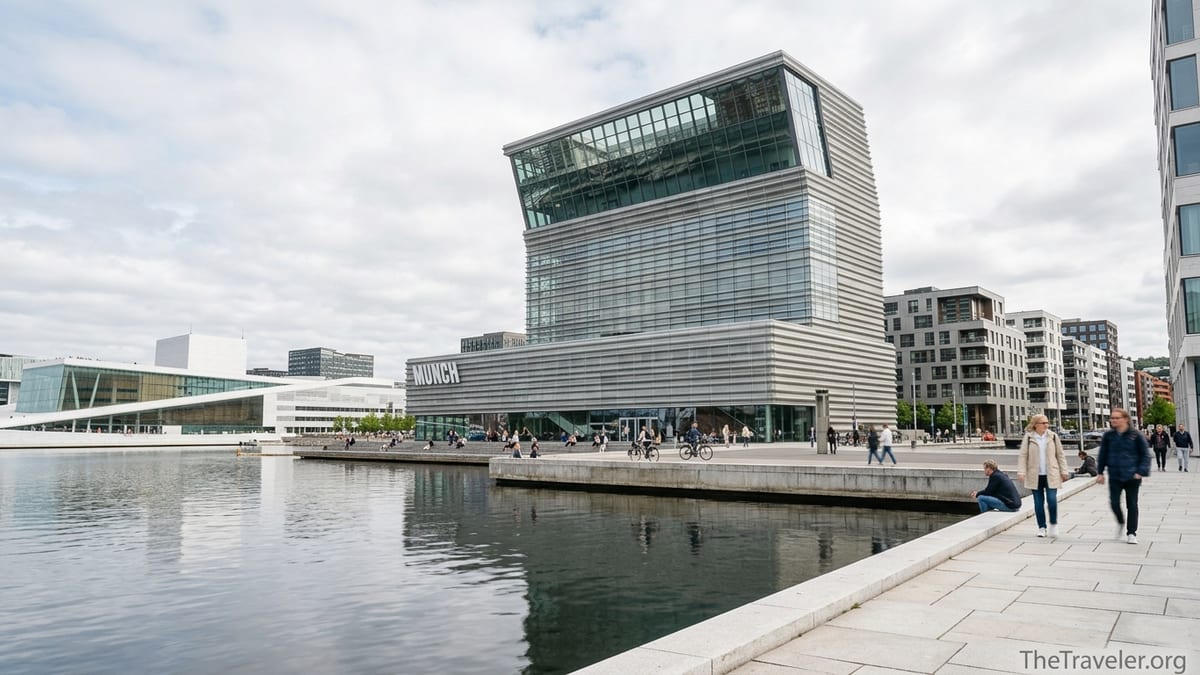
The museum now branded simply as MUNCH stands on the Bjørvika waterfront near the Oslo Opera House, with 13 floors of galleries, a rooftop terrace, bars and restaurants. It is no longer the smaller, older Munchmuseet in Tøyen that many guidebooks still mention, so when you buy tickets online you are reserving a timed entry to this tall, modern tower facing the Oslo Fjord.
Your standard ticket gives access to the building and all open exhibitions that day, from the permanent Munch displays such as “Edvard Munch Infinite” to temporary shows featuring Norwegian and international artists. Unlike some European museums that sell separate tickets for each exhibition, you do not usually pay extra once you are inside, apart from special events or concerts that are ticketed separately.
Most visitors spend between two and four hours at MUNCH, especially if they combine the main Munch floors with the architecture or contemporary art exhibitions, a coffee break at Käffespresso or a drink with views at Kranen bar. Knowing this typical visit time helps you pick a sensible time slot and coordinate other Oslo highlights such as the Opera House or the National Museum on the same day.
Crucially, MUNCH now uses timed entry tickets with a chosen date and arrival window. If you want a specific slot on a busy Saturday in July, or on a Wednesday evening when locals drop in after work, you should plan to book in advance rather than relying on same day sales at the counter.
Buying Official MUNCH Tickets: Timing, Prices and Time Slots
The most straightforward way to secure entry is to buy tickets directly from MUNCH. On the museum’s official ticket page you select your date, then choose a time slot. Standard adult prices in 2026 typically sit in the range of around 180 to 220 Norwegian kroner, with discounted tickets for students and young adults, and free entry for children and teenagers up to 17. Prices can change slightly for special exhibitions, so always check the current rate when booking.
When you book online, you receive a digital ticket with a barcode that can be scanned from your phone or a printout. You are asked to arrive during your selected time window, but once inside you can stay as long as you like until closing time. For example, if you pick a 12:00 to 12:30 slot on a Friday in August, you can comfortably remain in the galleries until the 21:00 closing time if you wish.
Weekends, Norwegian public holidays, and dates during Oslo’s summer high season from late June through August tend to sell out earlier in the day. In practice that means that midday slots might be fully booked while earlier morning entries at 10:00 or later evening slots around 18:00 or 19:00 still have availability. If you love quieter galleries, consider booking the first slot of the day on a Monday or Tuesday, when the museum closes at 18:00 and day trip coach groups are rarer.
Walk up tickets are often available on quieter weekdays, but relying on last minute access is risky if you only have a short stay in Oslo. A visitor arriving on a July Saturday afternoon with no booking might find that only late evening entry remains, which can compress the visit. Booking a time slot as soon as you have your hotel dates locked in is the most reliable approach.
Using the Oslo Pass and Free Entry Opportunities
For many travelers the Oslo Pass is one of the best ways to access MUNCH. This official city card includes free entry to more than 30 attractions, among them the new Munch Museum, the National Museum and sites such as Akershus Fortress and the Holmenkollen ski jump, plus unlimited public transport for 24, 48 or 72 hours. For a visitor who plans to ride trams and ferries and see several museums across a couple of days, the pass can quickly pay for itself compared with buying individual tickets.
With the Oslo Pass you do not pay extra at MUNCH, but you should still check whether you need to reserve a time slot in advance. At busy museums in Scandinavia, city cards often require a free reservation for a particular entry window even though the ticket price is covered. Before your trip, look at the current instructions for Oslo Pass holders and MUNCH to see whether you can simply show up with your pass or should pre-book a slot linked to your pass.
Another way to save money is to plan around free or discounted time bands. Local advice often points out that MUNCH offers free entry on Wednesday evenings for everyone, typically between 18:00 and 21:00 outside the peak summer months of July and August. This policy can change, and free evenings are sometimes paused during special events, so confirm the latest details just before you travel. If your budget is tight and your dates are flexible, aligning your Oslo stay so that you are in the city on a Wednesday can reduce the cost of visiting.
Families should pay attention to age based discounts. Children and teenagers up to 17 usually enter MUNCH free of charge, which means a family of four with two teenagers could potentially save several hundred kroner compared with attractions that charge per person. Combining this with an Oslo Pass for the adults can make a long museum day considerably more affordable.
Guided Tours, Special Exhibitions and Architecture Experiences
While a regular ticket lets you explore at your own pace, MUNCH offers various guided tours that can turn the visit into a deeper experience. These range from classic highlights tours, which focus on Munch’s most famous works such as The Scream, Madonna and The Dance of Life, to architecture focused tours that explain the controversial design of the tower and its relationship with the Oslo waterfront skyline.
Guided tours can usually be booked through the museum’s official booking pages, often at fixed times on weekdays. For instance, there might be an afternoon “Discover Munch” tour led by an art guide Monday to Friday, with a per person supplement on top of the basic entrance. For private groups or travel agencies, MUNCH publishes dedicated travel trade information with set prices for one hour guided visits, which can include time in key exhibitions as well as a brief building orientation.
Special exhibitions sometimes require timed access within your overall visit because of room capacity or sensitive materials. When The Scream or other fragile works on paper are displayed, they may be shown in a cabinet that opens briefly every hour to protect them from light. In practice this means planning your route through the building so you reach that room a few minutes before the cabinet opens, rather than arriving just as it has closed and needing to wait nearly an hour.
Audio guides are another option for travelers who want context without the structure of a group tour. The museum promotes a free smartphone based audio guide that can be downloaded to your device, best used with your own headphones. If you intend to rely on this, check that your phone battery is well charged before you arrive and that you have headphones packed, since buying them on site will add to the day’s cost.
Third Party Tickets, Combos and Cruise Excursions
In addition to direct sales, MUNCH tickets are sold through a variety of resellers and tour platforms that package the museum with other Oslo experiences. On international ticket comparison websites you will see offers such as “Munch Museum skip the line ticket,” “Munch and National Museum combo,” or “Oslo highlights with Munch Museum and fjord cruise.” These packages can be useful, but it is important to understand exactly what they include.
For example, a common half day tour might include a guided walk around the Bjørvika district, including the Oslo Opera House and MUNCH exterior, followed by timed entry to the museum with either a guided visit or free time inside. Another popular combo links MUNCH with a classic Oslo fjord cruise: you spend the morning in the museum and then join a two hour boat trip departing from nearby piers in the afternoon. These can be convenient for cruise passengers who want to maximize a short port call.
Prices for such packages often sit markedly higher than the basic museum ticket. A combo including MUNCH, a walking tour and a fjord cruise could easily cost several times more than booking each component yourself. In exchange you gain a single meeting point, an English speaking guide and coordinated timings that reduce the risk of missing your ship or evening train. Independent travelers comfortable with public transport in Oslo may prefer to book the museum ticket directly and then arrange a separate harbor cruise on site.
When buying MUNCH access from a third party, always verify that the ticket gives real timed entry rather than just a voucher you must exchange at the counter. Check whether skip the line language refers to bypassing the ticket desk only, or if it also covers security and bag checks. For most regular days at MUNCH, security lines are not extremely long, so paying a big supplement only to save a very small amount of time may not be good value.
Strategies to Avoid Crowds and Make the Most of Your Visit
Even with timed entry, MUNCH can feel busy in certain rooms at peak times, especially around the most iconic works. The best way to experience the art without constant jostling is to play with timing. Arriving right at opening time on a Monday or Tuesday, or booking the last entry slots on a Wednesday, Thursday, Friday or Saturday when the museum closes at 21:00, often gives more breathing space.
Another useful tactic is to invert the typical visitor flow. Many people enter, take the first escalators and head straight to the most famous Munch exhibitions on the mid and upper floors. Instead, consider riding the lifts to one of the highest floors first to enjoy the view and architecture, then working your way down. By the time you reach the main Munch galleries, some of the initial rush may have spread out.
If you are very keen to see a particular exhibition that uses timed cabinet openings or controlled entry, note the schedule as you enter. For example, if a display of a rare version of The Scream opens at quarter past each hour, you could visit a nearby room first and then return five or ten minutes before the next opening. This small adjustment can be the difference between a quiet contemplative moment and peering from the back of a crowd.
Finally, be aware of school holidays and cruise ship days. When several large cruise ships dock in Oslo, their organized excursions can converge on MUNCH in late morning or early afternoon. Checking the city’s cruise calendar and aiming for late afternoon on those days can make your museum session more relaxed.
Practicalities: Getting to MUNCH and Combining It with Other Sights
MUNCH sits in the Bjørvika district next to the Oslo Opera House, a short walk from Oslo Central Station. Most visitors staying in central Oslo simply walk from their hotel or arrive by tram, bus or local train. If you hold an Oslo Pass, the public transport to reach the museum is already covered; otherwise you can pay per ride or buy a separate day ticket for the city’s transport network.
The waterfront location makes it very easy to pair MUNCH with other major sights. A realistic and popular itinerary is to book a 10:00 or 11:00 time slot at MUNCH, spend three hours exploring the galleries and rooftop, then walk five minutes to the Opera House to stroll on the sloping roof and perhaps join a guided architecture tour there. Later in the afternoon you can continue on foot into the city center or take a tram to the National Museum for a contrasting view of Norwegian art.
Because the building has 13 floors, elevators can be busy at certain times. If you are able to use stairs and escalators comfortably, you will often move through the museum faster than waiting for lifts. Travelers with limited mobility should allow a little extra time for vertical circulation, and when booking tours it is worth mentioning any mobility needs so staff can advise on meeting points and access routes.
MUNCH has cloakrooms and lockers for bags, which simplifies coming straight from Oslo Central Station with luggage, though very large suitcases may not be accepted. Photography policies can vary between exhibitions, so expect that in some rooms photography is restricted or flash is prohibited to protect the works. Planning your visit with these practicalities in mind avoids last minute surprises when your time slot begins.
The Takeaway
Booking MUNCH in Oslo is not complicated, but choosing the right channel and time slot can significantly improve your experience. For most travelers, purchasing timed entry directly from the museum or using an Oslo Pass for free admission is the best value. Free Wednesday evenings outside high summer are worth targeting if you are traveling on a budget, and families benefit from generous child and youth policies.
Guided tours from the museum itself add context and are ideal for art lovers who want to understand Munch’s life and Norway’s bold new museum architecture. Third party combos work best for cruise passengers and visitors who value a single organized schedule more than shaving down costs. Whatever you choose, confirming details a few weeks before your trip and reserving your time slot as soon as your dates are fixed will help you step past the ticket desk and straight into one of Europe’s most compelling art spaces.
FAQ
Q1. Do I really need to book MUNCH tickets in advance?
Advance booking is strongly recommended, especially in summer, on weekends and during major exhibitions, because entry is managed with time slots that can sell out.
Q2. Is MUNCH included in the Oslo Pass?
Yes, the Oslo Pass currently includes free entry to MUNCH among its attractions, although you may still need to reserve a time slot depending on the museum’s latest rules.
Q3. Are there free entry times at the Munch Museum?
MUNCH often offers free entry on Wednesday evenings outside the peak summer months, typically for several hours, but the exact schedule can change, so always check close to your visit.
Q4. How much time should I plan for a visit to MUNCH?
Most visitors are satisfied with two to four hours, which allows time for the main Munch exhibitions, at least one temporary show, and a short break in the café or on the rooftop.
Q5. Can I see The Scream every day at MUNCH?
The Scream is part of the MUNCH collection, but due to conservation limits only one version is shown at a time, often in a cabinet that opens briefly each hour, and display schedules can vary.
Q6. What is the best time of day to avoid crowds?
Early morning slots on weekdays and late evening visits on days when the museum is open until 21:00 are usually quieter than mid-afternoon and weekend times.
Q7. Are guided tours of MUNCH worth it?
For travelers interested in Munch’s biography or in the building’s architecture, a guided tour can be very rewarding, adding stories and context you would not get from labels alone.
Q8. Is it cheaper to book MUNCH tickets through a tour company?
Third party tours usually cost more than booking directly, but they may bundle guides, transport or a fjord cruise; they are best for those who prefer everything prearranged.
Q9. Can I visit MUNCH with children?
Yes, MUNCH is family friendly, offers free entry for children and teenagers up to 17, and has interactive elements and spacious galleries that work well for families.
Q10. How early should I arrive for my time slot?
Arriving about 10 to 15 minutes before your booked time window is ideal, giving you enough margin for security checks and cloakrooms without spending long in the queue.