


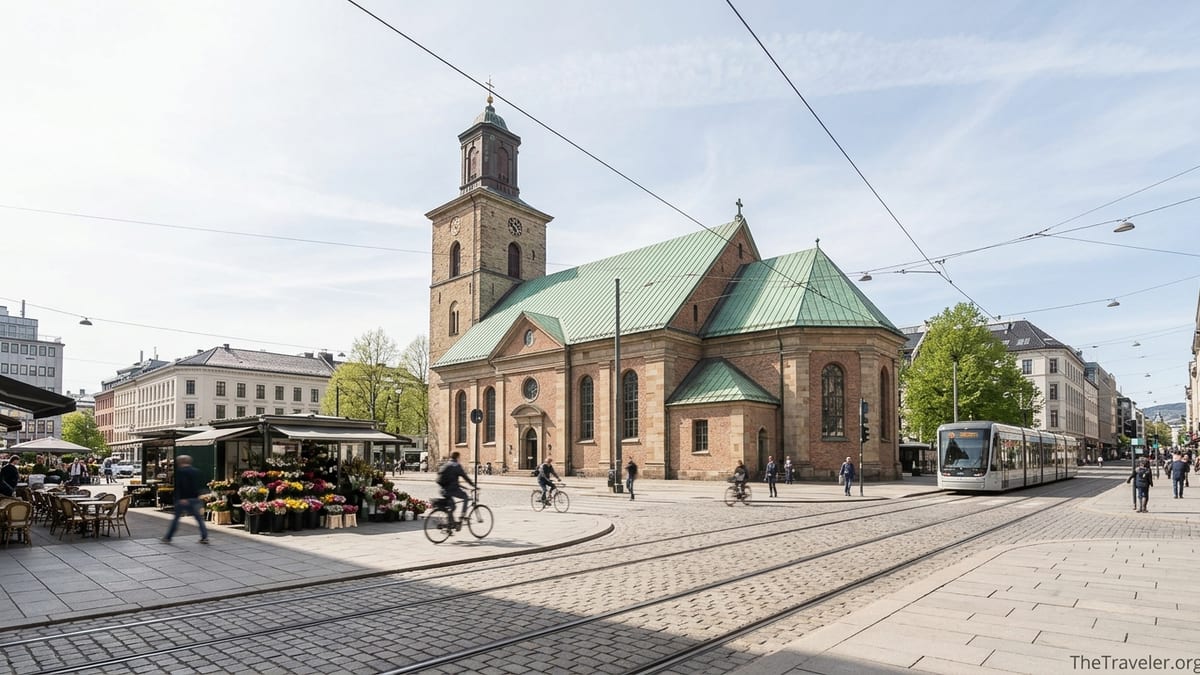
In the heart of downtown Oslo, where trams clatter past cafes and flower stalls on Stortorvet square, Oslo Cathedral offers a quiet counterpoint to the city’s modern rhythm. Officially the main church of the Diocese of Oslo and still an active parish, this Baroque building from the late 17th century is both a national symbol and an everyday place of worship. Planning a visit here is straightforward, but a bit of advance knowledge about opening hours, services, and what to look for inside will make your time at the cathedral far more rewarding.
Get the latest updates straight to your inbox!
Understanding Oslo Cathedral’s Role and History
Oslo Cathedral, originally known as Our Saviour’s Church, was consecrated in 1697 and became the city’s third cathedral after earlier churches were destroyed by fire and urban redevelopment. Today it serves a double role as the main church of the Church of Norway’s Diocese of Oslo and the parish church for the city center, which means it is both a historic monument and a living community church with regular services, weddings, funerals and state occasions.
The building you see now is largely Baroque, with a cruciform ground plan and a tall western tower that has been rebuilt and altered over the centuries. In the 1800s and again in the mid 1900s the cathedral underwent major restorations that removed some Victorian-era changes and brought back earlier Baroque furnishings like the pulpit, baptismal font and altarpiece to their original prominence. The result is an interior that feels richly decorated but not overwhelming, with warm stone and wood, pale walls and ornate carved details concentrated near the altar.
Norway’s royal family and government still use Oslo Cathedral for national services, such as memorials and thanksgiving services after major events. When Crown Prince Haakon and Crown Princess Mette-Marit married here in 2001, television images of the cathedral’s interior were broadcast around the world. For visitors, that living ceremonial function means that while the building is open and welcoming, it is also a working church where services and rehearsals sometimes take precedence over sightseeing.
Knowing this context helps set expectations. Oslo Cathedral is less a museum with ticketed exhibits and more a place where history and everyday city life intersect. You are entering a neighborhood church that happens to be one of the most important religious buildings in Norway.
Location, Opening Hours and When to Visit
The cathedral stands right on Stortorvet square in central Oslo, a short walk from both Oslo Central Station and the main pedestrian street Karl Johans gate. In practical terms, if you can reach the city center by tram, bus or on foot, you can reach the cathedral. Many tram lines stop at “Stortorvet,” and from Oslo Central Station the walk is roughly 7 to 10 minutes at an easy pace through commercial streets and past the Oslo City shopping center.
Typical visiting hours for Oslo Cathedral run from late morning to late afternoon most days. Recent visitor information suggests that the nave is usually open from about 10:00 to 16:00 Monday to Saturday, with more limited tourist access on Sundays when services are held through much of the day. Exact hours can vary with the season, special services or events, and periods of maintenance work, so it is wise to check the latest details on the Oslo church authorities’ information pages or at the city’s official tourist office at Oslo Visitor Centre in Østbanehallen before you set off.
If you plan to visit independently, late morning on a weekday often offers the best balance of access and calm. For example, a traveler arriving on a Wednesday in June might plan to walk over around 11:00, when the doors are usually open and the city’s commuter rush has subsided. You are likely to find the interior relatively quiet then, with a handful of worshippers and other visitors scattered among the pews. By contrast, late Saturday afternoons can be busy with weddings, when sections of the church may be closed or you may be asked politely to wait until the ceremony ends.
Oslo’s winter light also shapes the atmosphere. In December, dusk can come as early as mid afternoon, and the cathedral’s interior takes on a softer, candlelit feel by 15:00 or 16:00. Conversely, in June and July the long evening light means that even a late afternoon visit can feel bright and airy, with sun filtering through the windows and onto the patterned floor and carved woodwork.
Tickets, Costs and Guided Experiences
For most casual visitors, entry to Oslo Cathedral is free. There is usually no turnstile, ticket desk or set admission fee for stepping inside, sitting in a pew, and quietly exploring the nave and side aisles. You may find a donations box near the entrance where visitors can contribute a small amount in cash, and during concerts or special exhibitions there may be ticketed sections or suggested contributions, but a normal daytime visit does not generally require you to pay.
Travelers from cities where cathedrals often charge substantial admission fees are sometimes surprised by this. For instance, a couple who recently toured northern Europe and paid per-person entrance charges at several major churches in other capitals reported that they could simply walk into Oslo Cathedral, spend half an hour exploring the interior and leave a 50-krone cash donation as a gesture of thanks. It is sensible to bring a bit of Norwegian cash or be prepared to make a digital donation if mobile payment options are provided.
Guided tours are not as heavily marketed as in some larger cathedrals, but organized visits do occur. Some walking tours of central Oslo, including those run by international platforms and local guides, stop briefly at the cathedral to explain its history and point out key details like the bronze main doors and the royal gallery. In that case you will not pay the cathedral directly; the visit is rolled into the overall tour price, which might range from roughly 200 to 400 Norwegian kroner per person depending on the operator and group size.
From time to time, the cathedral is also a venue for organ recitals, choir performances and events tied to the Oslo International Church Music Festival. These are usually ticketed, with prices comparable to other classical concerts in the city. Buying tickets in advance from local ticketing services is common practice for such events. If you are a music enthusiast, checking event listings during your travel dates can turn a simple sightseeing stop into an evening of world-class sacred music in a historic setting.
What to See Inside: Art, Architecture and Atmosphere
Despite its relatively modest exterior, the interior of Oslo Cathedral rewards visitors who take their time. The most striking single feature is the vast painted ceiling created by artist Hugo Lous Mohr in the mid 20th century. Covering roughly 1,500 square meters, it is among the largest church ceiling paintings in Norway and stretches over the main nave like a colorful sky. The scenes, painted directly onto plaster, are rich in symbolism and depict biblical motifs in a modern, expressive style. If you stand just inside the main entrance and look upward, you can trace the narrative from the west end toward the chancel.
Near the front of the church, the Baroque altarpiece and pulpit, both completed around 1699, draw the eye with their densely carved acanthus leaves and gilded details. The tall, multi-tiered altarpiece rises behind the communion table, depicting scenes from the life of Christ framed in elaborate woodcarving. To the side, the pulpit echoes that style, forming a sculpted focus for preaching. Visitors who are familiar with more austere Lutheran interiors elsewhere in Scandinavia often comment on how rich and almost southern European in feel these carvings are.
Look also for the royal gallery, a balcony area reserved historically for the monarch and court, and for the stained-glass windows added in the mid 20th century. They are more muted than the kaleidoscopic glass in some Gothic cathedrals, but on a bright day their color still washes softly across the white walls and wooden pews. Near the entrance, modern bronze doors feature reliefs that combine biblical themes with references to Oslo’s history, a reminder that the cathedral has been reinterpreted artistically across centuries.
Beyond the major artworks, much of the building’s charm lies in its quieter details: the worn stone at the threshold where thousands of feet have passed; the way the light falls across the organ pipes at the west end; the small votive candles lit by visitors for private prayers. Take a moment to sit in the center of the nave and simply absorb the space. The difference between the traffic noise outside on Stortorvet and the relative calm inside the church can be striking, especially on a weekday around lunchtime.
Respectful Visiting: Services, Etiquette and Dress
Because Oslo Cathedral is an active parish church, visitors are expected to move with a certain level of respect, especially during services. The church regularly celebrates a principal Sunday service and often holds shorter weekday services or devotions. If you enter while a service, wedding or funeral is underway, staff or volunteers may ask you to remain near the back, sit quietly, or return later for sightseeing.
Photography is generally allowed for personal use when no service is taking place, but flash and tripods are discouraged inside the nave, both to protect artworks and to keep the atmosphere calm. If you want to photograph details like the ceiling paintings or the altarpiece, try to do so discreetly from your seat without blocking aisles. During services or rehearsals, put the camera away entirely. As in many European churches, you should avoid filming people at prayer without their consent.
There is no strict written dress code for entering Oslo Cathedral, and you will see locals stop by in everyday clothes such as jeans, sweaters and practical shoes. That said, modest, tidy clothing is appropriate, especially if you intend to stay for part of a service. Tank tops, sports jerseys or beachwear will stand out in a way that may make both you and others uncomfortable in a sacred space. A typical visitor in summer might wear lightweight trousers or a skirt with a T-shirt and light jacket; in winter, jeans, a wool sweater and warm coat are completely normal.
General church etiquette applies: speak in low voices, avoid phone calls, and silence your devices. Food and drink should stay outside; finishing your takeaway coffee before you go in is a small but important sign of respect. If you are traveling with young children, they are welcome, but it helps to sit near an exit so you can slip out briefly if they become restless during a quiet moment or musical performance.
Getting There, Accessibility and Nearby Amenities
Reaching Oslo Cathedral is straightforward whether you are staying near the waterfront, in the Bjørvika district, or farther out along the metro lines. From Oslo Central Station, follow signs toward the city center and Karl Johans gate; in a few minutes you will pass the large brick Oslo City shopping mall and come out onto Stortorvet square, where the cathedral’s tower and greenish copper roof rise above tram tracks and flower kiosks. If you are using public transport, trams labeled with stops at Stortorvet will drop you almost directly in front of the main entrance.
The square outside is a practical meeting point. Many guided city tours begin or pause here, and there are cafes and bakeries nearby where you can sit before or after your visit. For example, a visitor coming from the harbor area around the Oslo Opera House might walk up through Bjørvika, cross under the railway tracks toward Jernbanetorget, and then continue past shops and street musicians toward Stortorvet, combining the cathedral visit with a broader stroll through central Oslo.
In terms of accessibility, the cathedral makes an effort to accommodate visitors with limited mobility, but the building’s age and layout mean that some areas may be harder to reach. The main entrance faces a small flight of steps from the square, and there is typically a more gently sloped access point or side entrance that staff can direct you to if needed. Inside, the floor is mostly level stone, and main circulation areas between the pews are wide. If you use a wheelchair or have difficulty with steps, letting a staff member or volunteer know when you arrive can help, as they may be able to open a more convenient door or offer guidance on seating.
Public restrooms are not always available inside the cathedral itself for casual visitors, especially outside of services and events. Instead, travelers often rely on nearby facilities in cafes, department stores, or the Oslo Visitor Centre area, where public toilets are signposted. This is worth bearing in mind if you are visiting with children or planning to spend an extended period sketching or photographing inside the church.
Combining Oslo Cathedral with the Rest of the City
One of the advantages of visiting Oslo Cathedral is how easily it fits into a wider day of exploring the city. Because of its central location, you can pair it with museums, shopping streets, and waterfront attractions without needing extra transport. A common pattern for first-time visitors is to start at the Oslo Opera House on the waterfront, walk up to Oslo Central Station, continue on to the cathedral, and then follow Karl Johans gate toward the Royal Palace, taking in the Parliament building and National Theatre along the way.
If you are in Oslo primarily for its museums, the cathedral visit can provide a contrasting glimpse of living history. For instance, after spending a morning at the National Museum or taking the ferry to the Bygdøy peninsula to see the Viking Ship Museum and other maritime collections, you might return to the city center in the late afternoon, step into the cool interior of the cathedral, and see how Norway’s religious and civic history is reflected not just in artifacts behind glass but in a still-used sacred space.
Travelers on a tight budget often appreciate that the cathedral, like many churches in Norway, offers a culturally rich stop that costs very little. A student backpacking through Scandinavia might choose to allocate their money to a paid attraction such as the Munch museum or an Oslofjord ferry, then use free sites like Oslo Cathedral, the Parliament exterior, and city parks to round out the itinerary. In winter, ducking into the cathedral for half an hour can also be a practical way to escape wind and snow while still continuing your sightseeing.
Because the area around Stortorvet is a commercial hub, shops and eateries cluster nearby. This makes it easy to find a coffee or simple lunch before heading on to other sights. Just remember that street noise can be surprisingly loud the moment you step back outside; the contrast with the quieter interior is part of the experience.
The Takeaway
Planning a visit to Oslo Cathedral is less about tickets and strict schedules and more about timing, respect and awareness of its dual role as both landmark and parish church. Located in the very center of the city and typically open to visitors without an entrance fee, it offers a rare chance to step into a Baroque interior still shaped by centuries of worship, ceremonial events and ongoing artistic work.
By checking up-to-date opening hours, allowing flexibility for services and private ceremonies, and observing simple courtesies around dress, noise and photography, you can explore the soaring nave, ceiling paintings and carved Baroque furnishings at your own pace. Whether you stay for a few quiet minutes between tram rides or return in the evening for a concert amid candlelight and organ music, Oslo Cathedral can easily become one of the most memorable spaces you experience in the Norwegian capital.
FAQ
Q1. Do I need a ticket to visit Oslo Cathedral?
In normal circumstances, no. Casual entry to the cathedral during daytime visiting hours is usually free, though donations are appreciated and special concerts or events may be ticketed.
Q2. What are the typical opening hours for visitors?
Hours can vary, but the nave is often open from around 10:00 to 16:00 Monday to Saturday, with more limited sightseeing access on Sundays due to services. Always check current information shortly before your visit.
Q3. Can I visit during a church service?
You may enter quietly during a service, but sightseeing and photography are not appropriate at that time. If a wedding, funeral or main Sunday service is in progress, expect to remain seated respectfully or to return later.
Q4. Is photography allowed inside the cathedral?
Discreet, non-flash photography for personal use is generally accepted when no service is taking place. Flash, tripods and filming people at prayer should be avoided, and during services you should not take photos at all.
Q5. Is there a dress code for visitors?
There is no formal dress code, but modest, tidy clothing is recommended. Everyday outfits like jeans and sweaters are fine, while beachwear or very revealing clothes are best avoided in this sacred space.
Q6. How do I get to Oslo Cathedral on public transport?
The cathedral stands on Stortorvet square in central Oslo. It is roughly a 7 to 10 minute walk from Oslo Central Station, and several tram lines stop at “Stortorvet,” just steps from the main entrance.
Q7. Is Oslo Cathedral accessible for wheelchair users?
Access is improving, but the historic structure means some routes involve steps. There is typically a more gently sloped entrance or side access; staff can often advise or assist, and the main nave aisles are relatively wide and level.
Q8. How long should I plan to spend inside?
Most visitors spend between 20 and 45 minutes exploring the interior, longer if they sit for quiet reflection or attend part of a service or concert. Combining the visit with a stroll along nearby streets makes for an easy half-day in the area.
Q9. Are there guided tours of Oslo Cathedral?
Formal public tours inside the cathedral are not as common as in some larger European cathedrals, but several city walking tours stop at the church and include explanations of its history and art as part of a broader itinerary.
Q10. Can I attend a concert or special event at the cathedral?
Yes. Oslo Cathedral occasionally hosts organ recitals, choral performances and events linked to church music festivals. These are usually ticketed, with information available through local event listings and cultural calendars during your travel dates.