


The Arctic Circle looks deceptively simple on a map: a pale ring slicing across Alaska, Canada, Greenland, Iceland, Scandinavia and Russia. On the ground it is anything but simple. First‑timers arrive in Tromsø, Rovaniemi or Svalbard with images of dancing Northern Lights and huskies in fresh snow, then discover what veteran Arctic travelers already know: the cold feels different here, distances are enormous, daylight swings from endless sun to total darkness, and small mistakes can quickly become expensive or dangerous. Before you book that bucket‑list trip north of 66 degrees, it is worth understanding what regular travelers say they wish they had known in advance.
Get the latest updates straight to your inbox!
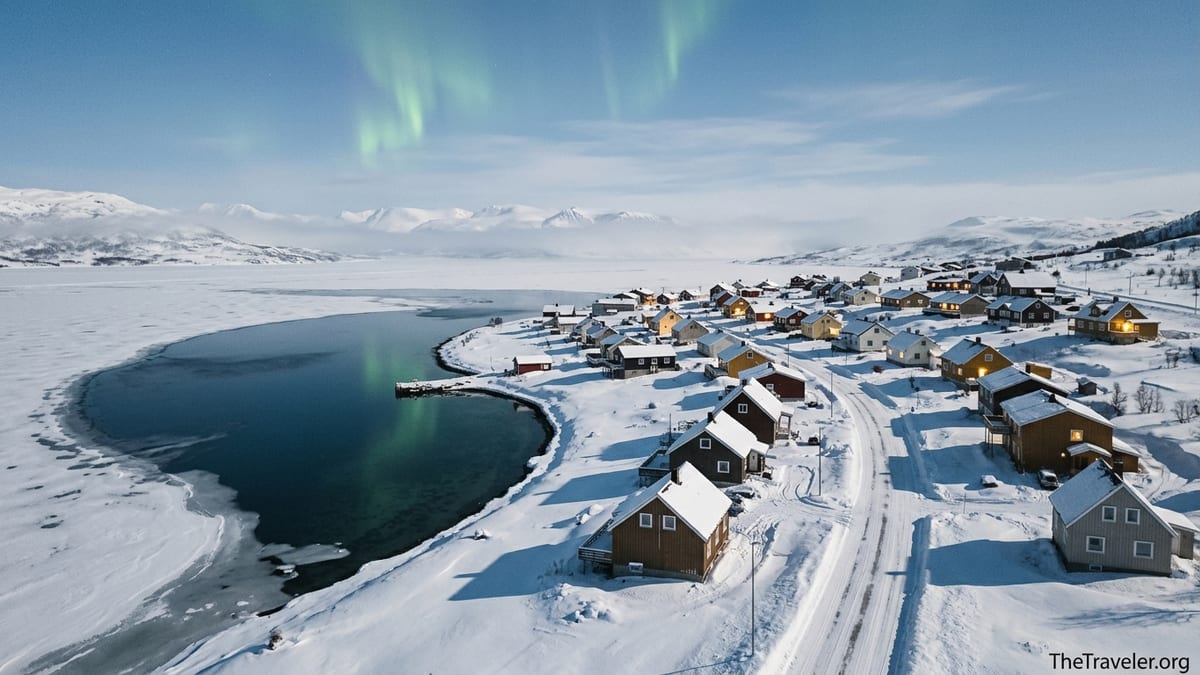
The Arctic Circle Is Not One Destination
One of the biggest surprises for first‑time visitors is that “the Arctic” is not a single experience. Standing inside the Arctic Circle in Rovaniemi in Finnish Lapland feels very different from a winter week in Tromsø in Northern Norway or a shoulder‑season expedition cruise along Greenland’s coast. Tromsø is a full‑service university city with bridges, bars, museums and a busy airport, yet it lies well above the Arctic Circle and has weeks of polar night in mid‑winter. Rovaniemi, on the other hand, markets itself as the home of Santa Claus and is wrapped in thick boreal forest, reindeer farms and family‑friendly attractions. Go farther north to Longyearbyen in Svalbard and you find a frontier mining town turned research and tourism hub where polar bears outnumber residents and leaving the settlement without a rifle or armed guide is heavily regulated.
That variety matters because it shapes everything from cost to comfort. A three‑night city break in Tromsø in February with hotel, restaurant dinners, a guided Northern Lights chase and a snowmobile safari will feel like a high‑end European weekend with Arctic scenery. An expedition cruise along Greenland’s remote east coast or a multi‑day snowmobile crossing on Svalbard is closer to an outdoor expedition, with limited services, mandatory safety briefings and strict environmental rules. Many travelers who booked the most remote option for their first Arctic trip later say they wish they had started with something more accessible, such as Abisko in Swedish Lapland for its clear‑sky aurora reputation, or Northern Norway’s coastal towns served by frequent domestic flights and buses.
It also helps to know that “Arctic Circle tours” are often marketed broadly. A Northern Lights tour from Rovaniemi might stay 50 kilometers south of the actual Arctic Circle line for better skies, while a summer cruise branded “Arctic” might sail only marginally above it. The branding is not necessarily misleading, but travelers expecting permanent ice and polar bears at every turn can feel disoriented when they find supermarkets, paved highways and shopping centers. Clarifying what “Arctic” means in your chosen destination will make your expectations much more realistic.
The Light and Darkness Will Change Your Trip
If there is one thing experienced Arctic visitors wish they had understood better, it is how radically daylight changes over the year. In Tromsø the sun does not rise at all from late November to mid January, a period known as polar night, while the same city enjoys midnight sun from mid May to late July when the sun never fully sets. Rovaniemi and other Lapland towns have slightly shorter polar night but still experience just a few hours of dusky twilight at midday in deep winter. By March, days lengthen rapidly and by April many Arctic regions enjoy long, bright days with snow still on the ground and strong reflections that make sunglasses essential.
These cycles have practical consequences for travelers. First‑timers often book Northern Lights trips in December thinking “the darker the better,” then discover that heavy cloud cover and frequent storms can make aurora sightings harder. Local guides in both Tromsø and Rovaniemi increasingly point winter visitors toward February and early March, when there is still full darkness for lights but slightly more stable weather and more comfortable temperatures compared with January’s deep freeze. In Rovaniemi, operators note that January can bring temperatures near minus 20 degrees Celsius or below, while February often combines better skies with cold that is still brutal but slightly less extreme.
On the flip side, summer visitors sometimes underestimate how energy‑sapping the midnight sun can be. In places like Bodø, Tromsø and northern Finnish Lapland, the sun can sit above the horizon day and night for weeks. Hotel rooms usually have blackout curtains, but many travelers report struggling with sleep and feeling strangely restless. If you are sensitive to light, packing a proper sleep mask and establishing a firm bedtime routine can make the difference between returning home exhausted and feeling refreshed after long hikes in 24‑hour daylight.
The timing of your visit also shapes what you can actually do. Huskies and snowmobiles need reliable snow, which usually means December to late March in Northern Norway and Lapland, sometimes longer in interior regions. Ice hotels and snow villages typically open only once temperatures stay consistently below freezing. Conversely, multi‑day trekking and kayaking near the Arctic coast are safer and more pleasant from late June into August when rivers have thawed and trails are largely snow free. Travelers who arrive at the shoulder seasons in October or early November are sometimes disappointed to find slushy rain, limited snow activities and clouded aurora skies, a combination many say they wish they had researched more carefully.
The Cold Is Harsher Than The Number On The Thermometer
Many visitors with winter experience in places like New York, Chicago or the Alps are surprised by how different minus 10 degrees Celsius feels in the Arctic. A moderate air temperature combined with wind sweeping across a fjord or frozen tundra can produce a windchill that bites through inadequate layers in minutes. In Tromsø or Kirkenes, a snowmobile excursion can mean riding into open plateau landscapes where there is little shelter. In Finnish Lapland, a night spent standing still on a frozen lake to watch the Northern Lights can feel far colder than a brisk daytime walk at the same temperature.
The good news is that most serious operators provide high quality outer layers for major winter activities. A standard snowmobile tour from Rovaniemi, for example, typically includes a thick thermal one‑piece suit, insulated boots, gloves and a balaclava under the helmet, folded into a per‑person price that might run in the range of 130 to 250 euros for a half‑day trip. In Svalbard, snowmobile safaris in late winter often cost the equivalent of several hundred euros for a day but include expedition‑grade clothing and gear. Aurora chases in Tromsø usually provide insulated overalls and hot drinks, because they know many guests underestimate the cold of long midnight waits far from the city lights.
What travelers consistently say they wish they had known is how important it is to sort out their base layers and everyday clothing before arrival. Cotton jeans and fashionable boots that work in European cities become dangerous once they soak through in slush or contact with snow. Wool or high‑quality synthetic base layers, a mid‑layer fleece, windproof and waterproof shell pants, insulated mittens rather than thin gloves, and a hat that covers ears are not luxury extras. In the darker months, simple gear like a headlamp for walking to cabins or bus stops, and hand and toe warmers for aurora nights, can turn an uncomfortable evening into a memorable one.
Visitors are also often surprised by the role sunglasses and sunscreen play even in sub‑zero weather. From late February onward, places like Northern Norway and Swedish Lapland can have strong low sun reflecting fiercely off snow. Locals casually refer to “Easter mountain tan” and wear high‑UV sunglasses whenever they are on open snowfields. Travelers who did not pack eye protection frequently report headaches and sore, watery eyes after their first full day out.
Costs Add Up Faster Than Most Budgets Expect
Another reality check that many Arctic Circle travelers mention afterward is the cost. They budget for flights and a hotel, then are startled by how quickly daily expenses climb once they add tours, winter clothing and food. In Rovaniemi, a single guided Northern Lights excursion with transport, warm gear and snacks can easily sit between roughly 75 and 250 euros depending on group size and duration. A two to four hour snowmobile safari often falls in the 130 to 250 euro range. In Tromsø, extended snowmobile or fjord cruises with meals and transfers can reach 350 to 450 euros per person. On Svalbard, a one day snowmobile trip to a remote radio station or glacier commonly costs the equivalent of several hundred euros plus any required insurance or rental of personal gear.
Those are just the headline experiences. Meals in Arctic cities are often more expensive than travelers expect due to high transport and labor costs. A casual dinner with a main course of Arctic cod or reindeer, a shared starter and a drink in Tromsø or Longyearbyen can easily match or exceed prices in major Western European capitals. Grocery shopping and self catering help, but even supermarket basics tend to be more costly than in the rest of Europe. In remote Greenland towns or Svalbard, where most goods arrive by ship or air, prices rise further and selection shrinks.
There are, however, ways to keep costs under control that experienced visitors wish they had appreciated earlier. One is to prioritize a handful of key activities rather than booking a different tour every day. For many people, a single high quality aurora chase, one dogsledding outing and one snowmobile or reindeer experience create lasting memories without overwhelming the budget. Another is to travel slightly outside peak holiday periods. February and early March remain popular for Northern Lights, but traveling midweek instead of over weekends and avoiding local school holidays can reduce accommodation prices in Lapland and Northern Norway.
Finally, gear rental and borrowing can save substantial money. Many visitors consider purchasing full Arctic wardrobes they might never use again. In reality, ski resorts in Northern Finland and Norway, and even some hotels, rent warm outer layers and boots. Some travelers bring only solid base layers and mid layers and then rely on tour‑provided suits for the coldest activities. Those who learn this only after arriving often mention that they wish somebody had explained it before they spent a large sum on heavy jackets or boots that now sit unused at home.
Wildlife and Wilderness Come With Serious Rules
The Arctic’s wildlife is a huge draw, but also the source of some of the strictest rules that surprise newcomers. In polar bear territory such as Svalbard or parts of Greenland and the Canadian high Arctic, both local authorities and tour operators emphasize that bears are powerful, protected animals and that avoiding encounters is the priority. Safety guidance from Arctic governments and tour associations stresses traveling with trained guides, using deterrents like flare guns rather than seeking close photos, and keeping food secured so that bears are not tempted into camps or settlements. On Svalbard, visitors camping outside designated areas are advised to use perimeter tripwires or other warning systems to detect approaching wildlife at night, and regulations discourage independent travel without experience, firearms training and proper equipment.
Travelers sometimes assume that such warnings are overblown, then change their minds after talking to locals or hearing about recent incidents. Longyearbyen residents describe leaving doors unlocked so that anyone surprised by a bear can duck indoors quickly. Safety leaflets distributed by foreign ministries and polar institutes stress that polar bears can appear near the coastline or on drifting sea ice at any time of year, and that defensive shooting is a last resort that authorities try hard to avoid. Visitors from urban backgrounds often say they wish they had understood in advance that polar bear country is not a place for spontaneous solo hikes, no matter how confident they feel elsewhere.
Even in regions without polar bears, there are environmental rules that can surprise first‑timers. Visitor guidelines from Arctic cruise associations remind guests not to approach nesting birds, seals or walrus haul‑outs, not to leave food or trash that might attract wildlife, and to stick to established paths to prevent erosion on fragile tundra. In reindeer herding regions of Finland, Sweden and Norway, traffic signs warn of animals on the road and drivers are expected to slow down and give them space. Meeting a herd on a snowy highway at night is a real possibility, and collisions are costly for both herders and drivers.
One often overlooked rule concerns drones. Many Arctic national parks, reindeer areas and small towns restrict or ban recreational drone use due to wildlife disturbance and privacy concerns. Travelers who pack drones for epic aurora footage frequently discover on arrival that they cannot legally fly them, or that they need permits and must respect strict altitude and distance limits. Knowing this before you go helps avoid disappointment and potential fines.
Logistics, Remoteness and Medical Reality
For many travelers, the Arctic Circle is the most remote region they have ever visited, even when they are technically still in Europe or North America. Flights to Tromsø, Kiruna or Rovaniemi are relatively frequent in winter, but weather disruptions are common. A snowstorm can close a small regional airport for hours, delaying connecting flights and buses. On Svalbard or in Greenland, where there may be only a handful of flights each week, cancellations can leave visitors stranded or cut trips short. Cruise itineraries routinely change landings and routes to avoid ice or storms, something prospective guests often skim past in the fine print.
Medical facilities are another area where expectations and reality can diverge. Larger Arctic cities such as Tromsø and Fairbanks have hospitals, but remote settlements and cruise ships typically have only basic clinics or onboard medical staff. Serious injuries or illnesses may require evacuation by helicopter or fixed‑wing aircraft, which is both weather dependent and extremely expensive without proper insurance. Governments and travel advisories consistently recommend that visitors heading north of the Arctic Circle carry travel insurance that explicitly covers medical evacuation, adventure activities such as snowmobiling or dogsledding, and interruptions due to weather.
Seasonal road and sea closures also catch many visitors off guard. A scenic coastal road that appears on a summer map may be closed or hazardous in winter due to ice, avalanches or lack of snow clearing. Ferries that link small Norwegian coastal communities, or boats that serve Greenlandic towns, may run on limited schedules in the shoulder seasons. Independent travelers who underestimate these constraints often find that a tight schedule leaves no room for delays, and later say they wish they had built in an extra buffer day at either end of their trip to absorb disruptions.
All of this does not mean the Arctic is inherently unsafe or unmanageable, but it does mean that planning needs to be more conservative than for a typical city break or beach holiday. Booking fully flexible or refundable fares where possible, confirming whether tours include transport from your accommodation, and sharing your itinerary with someone at home become simple but important steps in an environment where small mishaps can snowball faster than they would further south.
The Human Side of the Arctic: Culture, Crowds and Impact
Travelers often arrive in Arctic towns expecting untouched wilderness and instead find a complex mix of Indigenous cultures, modern energy projects, scientific research stations and tourism infrastructure. In Finnish Lapland, Sami communities have herded reindeer for generations and still do today alongside modern jobs. Visitors who take the time to learn basic context about Sami history, attend cultural presentations run by Sami groups themselves and buy locally made crafts often describe these as some of the most meaningful parts of their trip. Others regret that they treated reindeer encounters purely as photo opportunities without understanding the people behind them.
In Norway’s far north and on Svalbard, tourism now sits alongside fishing, mining and research as a major employer. This brings money to the region but also pressure on infrastructure and the environment. Cruise ships disembark thousands of passengers in small ports that were never built for that volume, while popular Instagram spots near cities like Tromsø can feel unexpectedly crowded on clear February nights. Many regular visitors say they wish they had known how busy some “remote” Arctic locations can be in high season, particularly during holiday weeks when both international and local travelers are chasing the same clear skies.
At the same time, locals across the Arctic repeatedly highlight the importance of respecting simple norms: not walking through private yards to reach the riverbank, not photographing people without asking, and taking seriously the “leave no trace” principle in an environment where litter can remain visible for years. Visitor guidelines published by Arctic tourism associations emphasize that picking flowers, disturbing cultural remains or leaving marked trails can have outsized impact here compared with more resilient ecosystems further south.
Travelers who prepare for the human side of the Arctic tend to have richer experiences. Booking at least one locally owned tour, eating at restaurants that showcase regional ingredients like Arctic char, king crab or cloudberries, and visiting small museums or cultural centers help turn a photogenic trip into a deeper encounter. Those who skip this side often say afterward that the Arctic felt like a backdrop rather than a living place, something they might approach differently if they return.
The Takeaway
Visiting the Arctic Circle can be one of the most remarkable journeys a traveler ever takes, but it is not a casual destination. The region’s dramatic shifts in light, uncompromising cold, strict wildlife rules, high costs and real remoteness reward careful preparation. Travelers who arrive with realistic expectations about what their chosen Arctic destination actually offers, who understand that minus 10 degrees on a windy fjord feels nothing like minus 10 in a city park, and who accept that weather, logistics and safety protocols will sometimes override their plans, are the ones who tend to come home exhilarated rather than overwhelmed.
Most of all, past visitors say they wish they had appreciated in advance that the Arctic is not a theme park built for them. It is home to people and animals already under pressure from climate change and global demand for resources. Choosing responsible operators, listening to local advice and building in financial and time buffers are not just practical tips; they are ways of honoring a fragile region while still enjoying its Northern Lights, crisp air and silent snowfields. Go in with open eyes and a little humility, and that thin blue line on the map will become a place you carry with you long after your flight home descends back below the Arctic Circle.
FAQ
Q1. What is the best month to visit the Arctic Circle for Northern Lights?
For most Arctic destinations, February and early March offer a strong balance of long dark nights, slightly more stable weather than midwinter and good snow conditions, though aurora is never guaranteed and can appear anytime from roughly September to early April.
Q2. How cold does it really get in popular Arctic Circle destinations?
In places like Tromsø or Rovaniemi, winter daytime temperatures often sit between about minus 5 and minus 15 degrees Celsius, but windchill on fjords, lakes and open plateaus can make it feel considerably colder, especially when you are standing still on an aurora or dogsled tour.
Q3. Do I need special clothing, or will my usual winter coat be enough?
A regular city winter coat is rarely enough on its own. You will want proper base layers in wool or technical fabric, a warm mid layer, windproof outer layers, insulated boots, thick mittens, a hat that covers your ears and ideally a buff or balaclava. Many tour operators provide heavy outer suits and boots for activities, but they expect you to bring your own inner layers.
Q4. How expensive are typical Arctic Circle activities?
Prices vary by country and season, but as a rough guide many half day snowmobile or husky tours fall somewhere between about 130 and 250 euros per person, while more complex experiences such as fjord cruises, multi hour aurora chases or full day snowmobile expeditions can cost several hundred euros each.
Q5. Is it safe to travel independently in polar bear areas like Svalbard?
Independent travel is strongly discouraged in polar bear regions unless you have serious Arctic experience, training and proper equipment. Authorities and local tourism bodies recommend that most visitors join guided tours, follow all safety briefings and respect rules about carrying firearms or other deterrents outside settlements.
Q6. Will I definitely see the Northern Lights if I visit in winter?
No operator can guarantee Northern Lights. Even in prime locations within the auroral zone, cloud cover, solar activity and timing all play a role. Staying several nights, being flexible with late night departures and choosing guides who are willing to drive to clearer skies will improve your chances but never make them certain.
Q7. Do I need special travel insurance for an Arctic Circle trip?
It is wise to purchase insurance that explicitly covers winter and adventure activities such as snowmobiling, dogsledding or glacier walks, and that includes medical evacuation and trip interruption, since weather and remoteness can make emergency transport and last minute changes extremely costly.
Q8. How do locals cope with the polar night and midnight sun, and how will it affect me?
Locals rely on routines, good indoor lighting and outdoor activity during limited daylight in winter, and blackout curtains and sleep masks during the midnight sun. Travelers often find the darkness surprisingly calming or challenging, and the endless light strangely energizing, so planning for sleep and mood is as important as planning excursions.
Q9. Can I drive myself around the Arctic Circle in winter?
Driving is possible on main winter roads in places like Northern Norway, Sweden and Finland, but you need to be comfortable with snow, ice, limited daylight and the possibility of sudden storms or road closures. Rental cars usually come with winter tires, yet many visitors prefer guided transport or public buses to avoid stress.
Q10. How can I make my Arctic trip more respectful and sustainable?
Choosing local operators that follow environmental guidelines, keeping a respectful distance from wildlife, minimizing waste, avoiding off trail damage and taking time to learn about Indigenous and local cultures are all practical ways to reduce your impact while supporting the communities that call the Arctic home.