


When travelers picture Shenandoah National Park, they usually imagine Skyline Drive overlooks and misty blue ridges. But for many visitors, the real magic lies below the road, where cold mountain streams plunge through narrow gorges. Two of the most celebrated waterfall hikes are Cedar Run and Whiteoak Canyon, neighboring trails on the park’s Central District. Both promise cascades, pools, and serious elevation change, yet they feel very different on the ground. If you only have time or energy for one, which hike is more rewarding right now?
Get the latest updates straight to your inbox!
The Setting: Two Classic Waterfall Gorges Side by Side
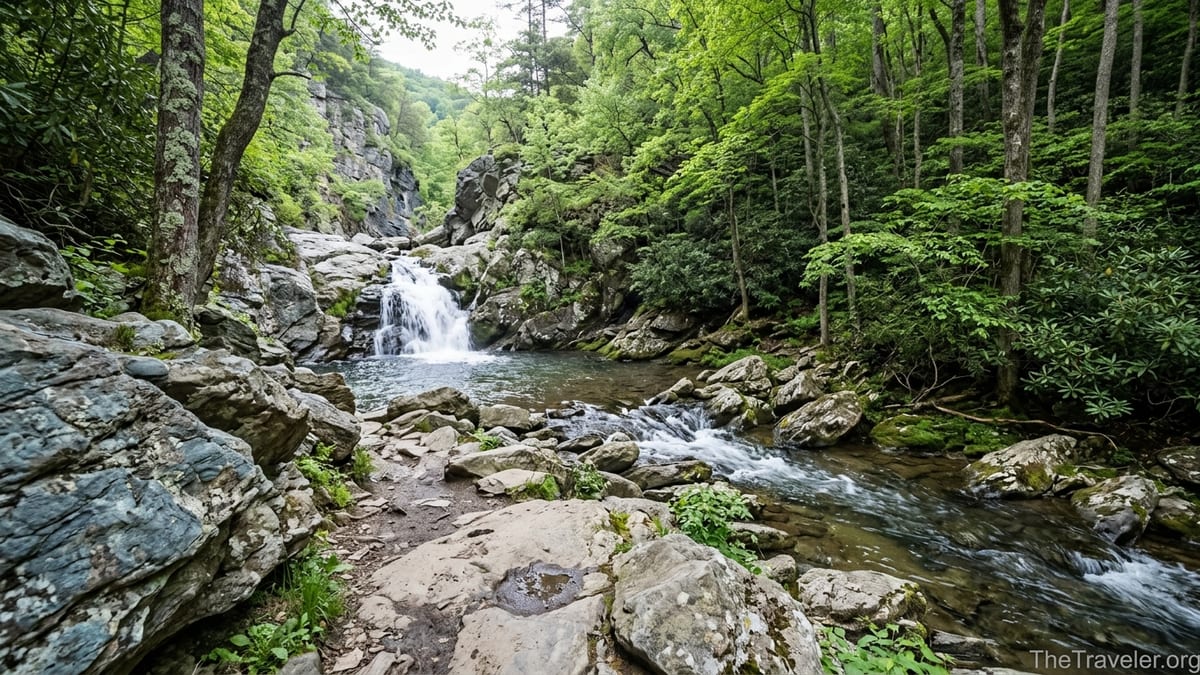
Cedar Run and Whiteoak Canyon sit in the same corner of Shenandoah, just north of the popular Old Rag area and accessed from Skyline Drive or from boundary trailheads in Madison County. From the road, the forest along this stretch looks uniform: hardwoods, rhododendron, and a steep drop from the Blue Ridge crest. Once you start hiking, though, each drainage reveals its own character. Cedar Run feels intimate and rugged, with a narrow stream tumbling over boulders, tight switchbacks, and a wild, almost scrambly vibe. Whiteoak Canyon, by contrast, showcases a broader gorge, sweeping views down the canyon walls, and a series of larger, more dramatic waterfalls.
On park maps, the pair are often presented together as the Cedar Run – Whiteoak Circuit, an 8 to 8.5 mile loop with roughly 2,600 to 2,800 feet of climbing. The National Park Service describes it as very strenuous and recommends a full day to complete it. Many day visitors, however, experience the gorges as separate out-and-back hikes: either dropping from Hawksbill Gap on Skyline Drive down Cedar Run to the main falls and water slide, or hiking from the lower Whiteoak boundary parking to the lower and middle falls of Whiteoak Canyon.
Because they are neighbors, the logistics for both hikes are similar. In summer 2026, Shenandoah’s standard entrance pass for a private vehicle is around 30 dollars, valid for seven consecutive days, and fee payment is now cashless at major access points including the Whiteoak Canyon lower trailhead. For visitors staying in nearby towns like Luray, Madison, or Sperryville, both trails are within a 45 to 60 minute drive, making them realistic centerpieces for a weekend escape.
The Waterfalls: Big Drama or Intimate Cascades?
Most visitors come to this corner of Shenandoah for waterfalls, so the obvious question is which trail delivers more impressive water. Whiteoak Canyon is widely regarded as one of the park’s premier waterfall hikes. The canyon features six named falls along the main trail, with several of them dropping more than 30 feet. One of the most photographed spots is the upper falls, where the stream plunges into a deep pool framed by cliff walls. Many guidebooks and park handouts rank Whiteoak alongside Overall Run and Dark Hollow Falls as a must-see waterfall destination in Virginia.
Cedar Run’s waterfalls are less tall but often feel more interactive. The most famous feature is a natural rock water slide near the main falls, where the creek has polished a smooth chute in the bedrock. On warm summer days, you may see hikers in quick-drying shorts sliding down into the small plunge pool. A bit farther downstream, there is a deeper swimming hole popular with locals and repeat visitors who prefer a colder, more secluded dip than the easier-access pools elsewhere in the park. Numerous smaller cascades, potholes, and miniature falls appear along the way, inviting you to step off the main tread and explore short side paths down to the water.
If you are focused on sheer waterfall spectacle and photography, Whiteoak Canyon usually feels more rewarding. The taller drops and open cliff overlooks make it easier to frame wide shots, and spring snowmelt or heavy rains can turn the gorge into a roaring corridor of whitewater. For travelers who value playing in the water as much as looking at it, Cedar Run’s slide and swimming holes make that trail especially memorable. Some hikers even plan summer itineraries around an early morning start down Cedar Run, a long break at the slide and pool, and a slow, shaded climb back up before afternoon storms build over the ridge.
Trail Experience: Crowds, Difficulty, and Safety
Both trails are strenuous, but they distribute the effort differently. Hikers tackling the full Cedar Run – Whiteoak loop typically log just over 8 miles with close to 2,700 feet of elevation gain, a level of effort comparable to some routes on Old Rag. The steepest sustained grades often come on the Cedar Run side, where you are either dropping quickly from Skyline Drive toward the creek or grinding back up through tight switchbacks and rocky tread. It is not unusual to gain 1,500 feet in under 2 miles. Whiteoak Canyon climbs more gradually from the lower boundary parking, following the stream and passing waterfall after waterfall before finally leveling out near the fire road.
In terms of crowding, Whiteoak Canyon generally sees more visitors, especially on spring weekends and during fall foliage. The lower boundary parking often fills by mid-morning on Saturdays in peak season, and you may find yourself leapfrogging families, photographers, and hiking clubs along the lower segments of trail. Cedar Run, while far from secret, tends to attract a slightly smaller and more experienced crowd. Many of the people you encounter on Cedar Run are loop hikers doing serious mileage, trail runners training for bigger objectives, or locals heading straight for the water slide.
Safety considerations are similar, but the details differ in ways that matter. Whiteoak’s broader trail and more established viewpoints feel a bit more forgiving for newer hikers, though there are still slick rocks and steep drop-offs near some overlooks. Cedar Run is rougher underfoot, with loose rock, frequent wet patches, and sections where the trail edges close to the creek. The combination of steep grade and moisture can be punishing on knees and ankles. Any swimming or sliding requires extra caution: water levels fluctuate quickly after summer thunderstorms, and submerged rocks can be hazardous. The park regularly posts reminders that cliff jumping, alcohol use around waterfalls, and ignoring posted closure signs contribute to many rescues each year.
For relatively fit but less experienced hikers visiting Shenandoah for the first time, an out-and-back on the Whiteoak Canyon lower falls route is usually a more comfortable introduction. Very fit travelers who enjoy technical terrain and are prepared with proper footwear, trekking poles, and a realistic turnaround time will often find Cedar Run more rewarding as a challenge.
Access, Parking, and When to Go
One of the most practical distinctions between Cedar Run and Whiteoak Canyon is how you access them. Whiteoak Canyon can be reached either from Skyline Drive or from the park boundary via a paved approach road off Route 600 near the village of Syria. The lower boundary lot has become a key gateway not only for waterfall hikers but also for backpackers connecting to Old Rag and longer circuits. It has electronic fee machines where you can pay the park entrance if you do not already hold a pass. On a typical May or October Saturday, arriving by 8:00 a.m. often means a stress-free parking experience; by late morning, rangers may be directing traffic or turning vehicles around when the lot is full.
Cedar Run is most commonly accessed from Hawksbill Gap on Skyline Drive at roughly mile 45.6. This parking area also serves hikers heading for Hawksbill, the park’s highest summit, which can make it busy on clear days. The lot is not huge, and overspill parking along the road must follow strict safety rules. Because Skyline Drive itself is a fee area, you will need a park entrance pass or America the Beautiful pass before you arrive at the gap. In practice, this means many visitors either buy their pass online in advance or stop at a drive-in entrance station such as Thornton Gap earlier in the day.
Seasonally, both hikes are at their best in spring and early summer when water is plentiful. In April and May, snowmelt and frequent rains feed the creeks, wildflowers line the lower trail sections, and temperatures at the lower elevations are still comfortable. By late July and August, flows can drop noticeably unless there has been recent rain, and midday heat in the canyons can become oppressive. During those months, early starts before 8:00 a.m. or late-afternoon hikes are more pleasant, especially if you plan to use the swimming holes on Cedar Run. Winter visits are possible for experienced hikers with traction devices, but patches of ice near the waterfalls can be treacherous.
Because Shenandoah has shifted to cashless payments at key points, including some trailhead machines, travelers should plan for a credit card or mobile payment app rather than relying on paying with cash at the gate. For frequent hikers or photographers planning multiple waterfall days, a park-specific annual pass or the nationwide America the Beautiful pass can quickly pay for itself over a season.
Who Will Love Cedar Run Most?
Cedar Run tends to reward travelers who crave a rugged, immersive mountain stream experience. The trail drops quickly from the ridge into a tight gorge, often within earshot of the rushing creek for much of the route. You will pick your way over roots and rocks, cross small side streams, and occasionally step onto slick bedrock slabs to get a better view of a cascade. In early season, when the water is running strong, the white noise of the creek becomes a kind of soundtrack, muffling other hikers and traffic noise from Skyline Drive above.
The natural water slide is especially appealing to adventurous groups comfortable with cold water and a bit of risk. On a typical July weekend, you may see a small cluster of regulars who hike in with camp chairs, packable towels, and quick-dry trail shoes, spending hours cycling between sunning on the rocks and plunging into the pool. Because the approach from Skyline is steep, fewer families with small children end up at the slide, which makes the atmosphere somewhat quieter and more adult-oriented than at some of Shenandoah’s roadside waterfall spots.
Cedar Run is also attractive to fitness-focused hikers using Shenandoah as a training ground. Local trail runners sometimes use the loop from Hawksbill Gap down Cedar Run, across the fire road, and back via Whiteoak as a conditioning route for big objectives like the Grand Canyon’s Rim-to-Rim or ultramarathons. For a visiting hiker who wants to test their legs without technical rock scrambling, Cedar Run’s unrelenting grade can feel like a satisfying benchmark: if you are comfortable grinding back up that hill at the end of the day, most other Shenandoah waterfall hikes will feel manageable.
The tradeoff is that Cedar Run rarely feels gentle. There are few wide, flat sections for chatting or snapping casual photos; most of the time you are watching your footing, stepping over rocks, or climbing a sustained grade. Travelers looking for a mellow stroll or worried about knee issues may find that the very qualities that make Cedar Run exhilarating for some make it punishing for others.
Who Will Prefer Whiteoak Canyon?
Whiteoak Canyon is better suited to visitors who want big waterfalls, varied viewpoints, and a slightly more forgiving trail. The classic route from the lower boundary lot follows a moderately graded path alongside the river, passing smaller cascades before reaching the lower falls, where the water pours into a sizable basin. Many first-time visitors choose this segment because it offers a strong payoff in under 5 miles round trip, with plenty of places to stop, snack, and photograph along the way.
As you continue past the lower falls, the trail grows steeper but rewards you with increasingly dramatic vantage points: narrow ledges where you can look down into the gorge, cliff-top overlooks framing the river far below, and side paths that lead to rocky platforms near the water’s edge. Photographers appreciate the way the canyon opens up in these upper sections, allowing for wide-angle shots that capture multiple cascades, autumn foliage, or winter ice formations. On a cloudy spring day, long-exposure images that blur the water into a white ribbon are relatively easy to capture without harsh shadows.
Families and mixed-ability groups often find Whiteoak Canyon more flexible. Members who want a shorter outing can turn around at the lower falls, while stronger hikers continue up toward the middle or upper falls. Because there are multiple logical turnaround points with substantial scenery, you can calibrate the “reward” to match your group’s energy without feeling that you missed the main attraction. There are still steep and rocky sections that demand care, but the overall tread is a bit kinder than Cedar Run’s steeper, more direct path.
For visitors who value a sense of scale over intimacy, Whiteoak’s tall drops, broad pools, and sweeping views down the gorge tend to feel more impressive. The tradeoff is crowd density: on a sunny Saturday in May, you might share a viewpoint with a dozen other hikers, while on Cedar Run at the same hour you could find longer stretches of solitude between groups.
Combining Both: The Cedar Run – Whiteoak Canyon Loop
Travelers with strong fitness and a full day to spare do not actually need to choose between Cedar Run and Whiteoak Canyon. The classic loop that combines both trails starts at Hawksbill Gap on Skyline Drive. Many guides recommend hiking it clockwise: dropping down the steeper Cedar Run first, enjoying the slide and falls when legs are fresher, then ascending Whiteoak Canyon and returning to the car via the fire road and horse trail. This direction puts the most technical descent at the beginning of the day and reserves the smoother fire road segment for tired ankles late in the afternoon.
The loop’s numbers tell part of the story: around 8 to 8.5 miles, 2,600 to 2,800 feet of climbing, and an average outing time of 6 to 8 hours for typical hikers who stop for breaks and photos. In practical terms, that means beginning no later than mid-morning, carrying at least 2 to 3 liters of water per person in summer, and packing plenty of snacks or a real lunch. There are no services on the loop itself once you leave the car, and cell coverage is spotty. Trail runners and very fast hikers may finish in under 5 hours, but visitors new to steep Appalachian terrain should allow more margin.
For many repeat Shenandoah travelers, this loop has become a “best of both worlds” itinerary. They will schedule it as the main objective of a three-day weekend, book a cabin or motel in Luray or Madison for two nights, and dedicate the middle day entirely to the hike. The day before or after might be reserved for shorter, easier outings like Dark Hollow Falls or Hawksbill summit. In that context, the loop feels deeply rewarding because it becomes the centerpiece of a trip rather than something squeezed into a half day.
However, this combination route is not ideal for everyone. If your group includes people uncertain on steep descents, anyone recovering from an ankle or knee injury, or hikers who are unused to long days carrying water and food, it may be wiser to hike only the Whiteoak lower falls segment or another gentler waterfall trail on this visit. The loop is also a poor choice in icy winter conditions or when heavy rain has swollen the creeks, as crossings and wet rocks become significantly more hazardous.
The Takeaway
Ultimately, whether Cedar Run or Whiteoak Canyon is more rewarding depends less on scenery and more on who you are as a traveler. Whiteoak Canyon offers larger, more photogenic waterfalls, a flexible out-and-back structure with multiple sensible turnaround points, and a trail that, while still strenuous, feels a bit more forgiving underfoot. It is often the better choice for first-time Shenandoah visitors, families, and photographers who want big drama in a relatively contained day.
Cedar Run, by contrast, rewards those who enjoy rugged, intimate gorge hiking and are comfortable with steep grades, rough tread, and getting wet. Its natural water slide and swimming holes make it one of the park’s most memorable summer experiences, and its unrelenting climb from creek to ridge can be deeply satisfying for fit hikers seeking a challenge. Travelers who take trail conditions and weather seriously, pack proper footwear and layers, and build their day around the hike often come away calling Cedar Run their favorite Shenandoah outing.
If you only have one day and want the most universally rewarding experience, Whiteoak Canyon edges ahead. If you have a full weekend, consider dedicating one serious day to the Cedar Run – Whiteoak loop, pairing it with an easier hike elsewhere in the park. With realistic expectations, conservative timing, and respect for fast-changing mountain weather, either trail can deliver the kind of waterfall-filled day that keeps travelers coming back to Shenandoah year after year.
FAQ
Q1. Which hike is better for first-time visitors to Shenandoah, Cedar Run or Whiteoak Canyon?
Whiteoak Canyon is usually better for first-timers because the main out-and-back route from the lower boundary lot offers impressive waterfalls on a moderately graded trail with multiple good turnaround points. Cedar Run is steeper, rockier, and generally feels more demanding, so it suits visitors who already know they enjoy strenuous mountain hikes.
Q2. How difficult are Cedar Run and Whiteoak Canyon compared with other Shenandoah hikes?
Both hikes are considered strenuous by Shenandoah standards. The combined Cedar Run – Whiteoak loop, at roughly 8 to 8.5 miles and more than 2,600 feet of elevation gain, is comparable in overall effort to some routes around Old Rag, though without the extended rock scrambling. Shorter out-and-backs, like Whiteoak to the lower falls only, feel more moderate but still require solid fitness and careful footing.
Q3. Are there good swimming spots on either trail?
Yes, Cedar Run is especially known for a natural rock water slide and a nearby swimming hole that attract summer visitors comfortable with cold mountain water. Whiteoak Canyon also has pools, but they are less oriented toward sliding and more toward wading or a quick dip. In either case, you should check water levels, avoid jumping from cliffs, and follow park safety guidance around streams and waterfalls.
Q4. Which trail is less crowded if I want a quieter experience?
Whiteoak Canyon typically sees heavier use, particularly near the lower falls on weekends and holidays. Cedar Run, while popular, tends to draw smaller numbers and a more experienced crowd, especially away from peak summer afternoons. Starting early in the morning, hiking on a weekday, or visiting outside peak foliage season will improve your chances of finding quieter stretches on either trail.
Q5. Do I need special permits or reservations to hike Cedar Run or Whiteoak Canyon?
As of mid-2026, you do not need a special day-use permit for Cedar Run or Whiteoak Canyon, but you do need a valid Shenandoah National Park entrance pass. Popular nearby hikes like Old Rag sometimes have separate ticketing systems, which can cause confusion, so travelers should carefully check current park information for any changes before their visit.
Q6. What gear should I bring for these waterfall hikes?
Sturdy hiking shoes with good traction, at least 2 liters of water per person in warm weather, snacks or lunch, and a light rain jacket are advisable on both trails. Trekking poles can make Cedar Run’s steep grades and rocky steps more manageable. If you plan to enjoy the water, quick-drying clothing, a small pack towel, and secure water shoes or sandals with toe protection are helpful, but avoid flimsy flip-flops, which are unsafe on slick rocks.
Q7. When is the best time of year to hike Cedar Run or Whiteoak Canyon for waterfalls?
Spring and early summer, roughly April through June, usually offer the best combination of strong water flow and comfortable temperatures. After extended dry spells in late summer, some cascades can shrink noticeably, though recent rain can temporarily restore them. Fall adds brilliant foliage but sometimes lower flows, while winter visits can be beautiful yet risky due to ice near the falls.
Q8. Can families with children hike these trails safely?
Many families with school-age children successfully hike at least the lower portions of Whiteoak Canyon, especially to the lower falls and back. Adults should keep children close near overlooks and slippery rocks and be prepared for a sustained uphill return. Cedar Run’s steeper, rockier terrain makes it less suitable for very young kids or anyone who is unsure on uneven ground. As always, turn around if anyone in the group is too tired or uncomfortable.
Q9. How should I choose between an out-and-back and the full Cedar Run – Whiteoak loop?
Choose an out-and-back if you prefer a shorter day, are hiking with a mixed-ability group, or are unsure about your endurance. For example, Whiteoak Canyon to the lower or middle falls gives a big scenery payoff without committing to the full circuit. Opt for the loop only if everyone in your group is fit, accustomed to several hours of continuous hiking, and prepared with enough water, food, and daylight to complete an 8-plus mile, very strenuous route.
Q10. If I only have one day in this part of Shenandoah, which hike is more rewarding overall?
If you have to pick just one, Whiteoak Canyon is generally the more broadly rewarding choice because of its larger waterfalls, flexible distance options, and slightly gentler trail. Travelers who know they prefer rugged, less crowded routes and want to swim or use the natural slide may ultimately find Cedar Run more memorable, but for a single day that must work for most visitors, Whiteoak usually wins out.