


More news on this day
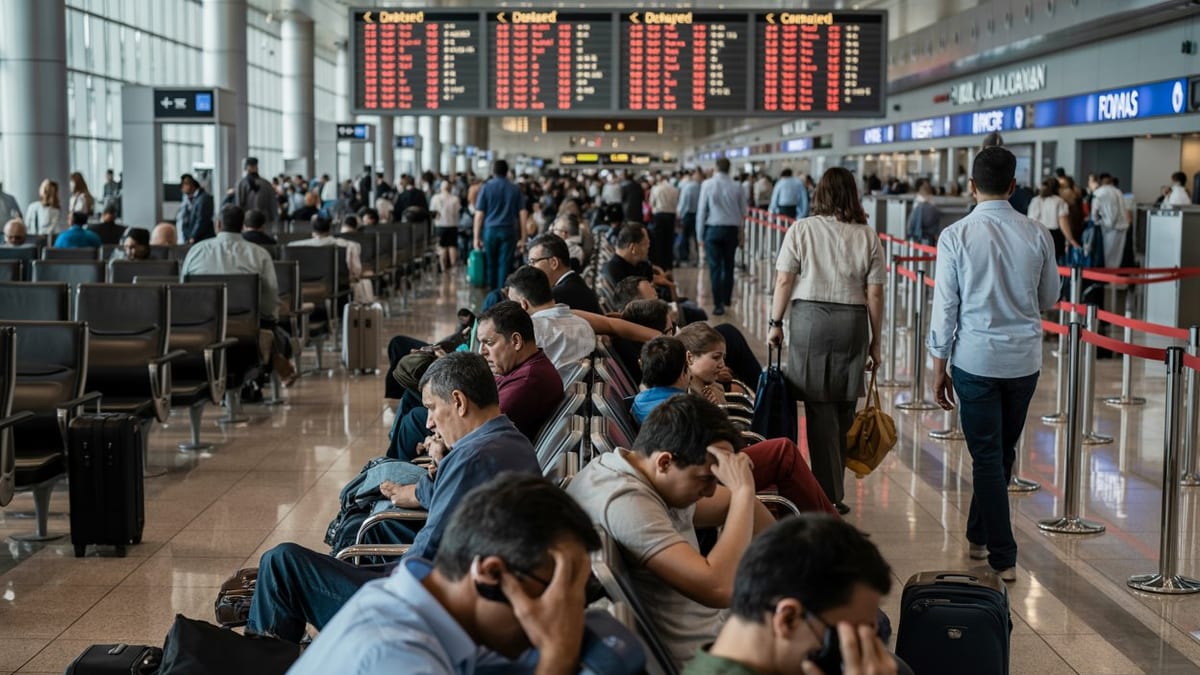
Travelers at Israel’s Ben Gurion International Airport faced hours of uncertainty today as 122 flights were delayed and at least 15 canceled, snarling domestic and international routes and stranding passengers across terminals.
Get the latest news straight to your inbox!
Wide Ripple Effect Across Major Airlines and Routes
Live departure and arrival boards at Ben Gurion showed a dense line of late-running flights through the morning and into the afternoon, affecting services operated by El Al, Arkia, Israir, Lufthansa, United Airlines and several European and Gulf carriers. According to publicly available flight-status data, the wave of disruption hit both departures and arrivals, impacting connections across Europe, North America and the Middle East.
Long haul routes to and from New York, London and Paris were among those experiencing extended delays, with knock-on impacts for onward connections at major hubs. Regional routes to Dubai and Rome also appeared on delay lists, alongside busy short-haul services that link Tel Aviv with nearby leisure destinations and domestic gateways.
Airport timetable trackers and third-party flight boards indicated that at least 122 services were running behind schedule, with more than a dozen outright cancellations. The imbalance between scheduled operations and the reduced number of flights that actually departed on time quickly translated into crowded gate areas, longer queues at service desks and a mounting challenge for airlines trying to rebook disrupted passengers.
While Ben Gurion remained technically open, the heavy concentration of affected flights in a relatively short time frame created a visible sense of congestion. Screens in both Terminal 3 and the domestic-focused Terminal 1 were dominated by delay notices, with some flights repeatedly pushed back in 30 to 60 minute increments.
Domestic, Regional and Long Haul Passengers All Caught Up
The disruption did not spare any particular segment of Ben Gurion’s traffic mix. El Al’s long haul services to New York and key European capitals faced schedule slippages, while its medium-haul and leisure routes also showed extended departure times. Arkia and Israir, which focus heavily on domestic and short-haul regional flying, saw delays on services linking Tel Aviv with Eilat and nearby Mediterranean resorts.
European network carriers such as Lufthansa, along with transatlantic operators including United Airlines, were also affected. Delayed arrivals into Tel Aviv risked missing return departure slots, forcing last-minute re-timings and compressing ground-handling windows. For passengers traveling onward via Frankfurt, London, New York or other major hubs, even modest delays out of Tel Aviv threatened to unravel carefully sequenced itineraries.
Budget and leisure-focused airlines, which typically operate tight turnarounds, were particularly exposed when early-morning disruptions cascaded throughout the day. Once the first wave of flights slipped behind schedule, aircraft and crews scheduled for later rotations became unavailable on time, amplifying delays across domestic, European and Gulf-bound routes.
Families returning from vacations, business travelers connecting to conferences and diaspora passengers heading to or from Israel for family visits all found themselves competing for limited rebooking options. With capacity already constrained by the region’s broader security climate and a trimmed flight schedule compared with pre-crisis years, spare seats on alternative departures were in short supply.
Operational and Security Pressures Behind the Disruptions
Ben Gurion has been operating under a mix of security-related restrictions and capacity limits in recent months, a situation that has already prompted several airlines to thin their schedules or temporarily suspend certain routes. Recent decisions by carriers such as Wizz Air to pause operations to Tel Aviv highlight the sensitivity of flight planning in and out of Israel, where airspace conditions can shift quickly in response to regional developments.
Publicly available airport and airline data suggest that even when Ben Gurion is nominally open, reduced runway slots, security checks, airspace reroutings and crew duty-time constraints can interact to create sudden bottlenecks. When a critical mass of services reaches the point where departure times must be pushed back, the system can tip rapidly from manageable delay levels into widespread disruption.
For carriers such as El Al, Arkia and Israir, which rely heavily on Ben Gurion as a central hub and, in some cases, as their primary base of operations, any loss of punctuality can quickly ripple through their networks. International airlines that maintain only a limited number of weekly rotations to Tel Aviv face a different challenge: if a flight is canceled or heavily delayed, the next available option for affected passengers may be several days away.
Aviation analysts tracking the situation note that this latest episode fits a pattern of intermittent but sharp disruptions at Ben Gurion, where geopolitical uncertainty and operational constraints periodically collide with peak travel demand. The result is a travel environment where even routine schedule adjustments can rapidly escalate into large-scale cascading delays.
Stranded Travelers Face Rebooking, Compensation and Care Hurdles
For travelers caught in the current disruption, the immediate concern is securing an alternative way to their destination. Airline policy pages and customer advisories indicate that most carriers are offering free rebooking on the next available flight within a defined window, subject to seat availability. Some airlines have also activated flexible change policies that allow passengers to reroute via alternative hubs or postpone trips entirely.
Passengers attempting to change plans, however, faced crowded customer-service counters and long phone and chat wait times as demand surged. With multiple carriers experiencing parallel disruptions, the supply of last-minute seats on flights to New York, London, Paris, Dubai and Rome was quickly absorbed, leaving some travelers with overnight waits or multi-stop routings that substantially lengthened their journeys.
Consumer-protection rules vary depending on the carrier’s home jurisdiction and the origin and destination of each flight, which complicates the question of financial compensation. In some cases, travelers may be entitled to meal vouchers, hotel stays or partial refunds; in others, airlines may classify the disruption as outside their control and limit support to rebooking assistance. Passengers are being advised by travel experts to retain boarding passes, receipts and written communications from airlines as they pursue claims after their trips.
Travel insurers are also likely to see a rise in claims related to missed connections, prepaid accommodation and nonrefundable tours. Policies differ widely, but many plans include specific language for delays and cancellations tied to security incidents or airspace restrictions, making documentation and clear timelines especially important for those seeking reimbursement.
What Travelers With Upcoming Flights to Tel Aviv Should Do
The latest disruption at Ben Gurion serves as a fresh warning for anyone with imminent travel plans to or from Israel. Published advice from airlines and travel associations emphasizes the importance of monitoring flight status closely, enrolling in carrier alerts, and checking both departure and arrival airport boards on the day of travel.
Passengers booked on El Al, Arkia, Israir, Lufthansa, United Airlines and other carriers serving Tel Aviv are encouraged to review the latest schedule notices and any travel waivers or flexible change policies that may be in place. In some cases, airlines will allow voluntary changes ahead of a forecast disruption, which can be easier than scrambling for options after a delay or cancellation has already occurred.
Travel planners recommend building additional buffer time into itineraries that involve connections through New York, London, Paris, Dubai, Rome or other major hubs, especially when journeys rely on separate tickets or involve nonrefundable arrangements on arrival. For high-stakes travel involving events, cruises or tours with fixed departure times, some advisers suggest considering alternative routings or even temporary date changes while the operational situation at Ben Gurion remains volatile.
With the airport continuing to operate under an environment of heightened caution, observers expect periodic bouts of disruption to remain a feature of travel to and from Israel in the near term. For now, passengers at Ben Gurion are left watching the boards, hoping their flight number eventually flips from delayed to boarding.