


More news on this day
As the summer travel season ramps up, fresh performance data is drawing a sharp line between airlines that reliably run on time and those where delays and cancellations remain a routine risk for passengers.
Get the latest news straight to your inbox!
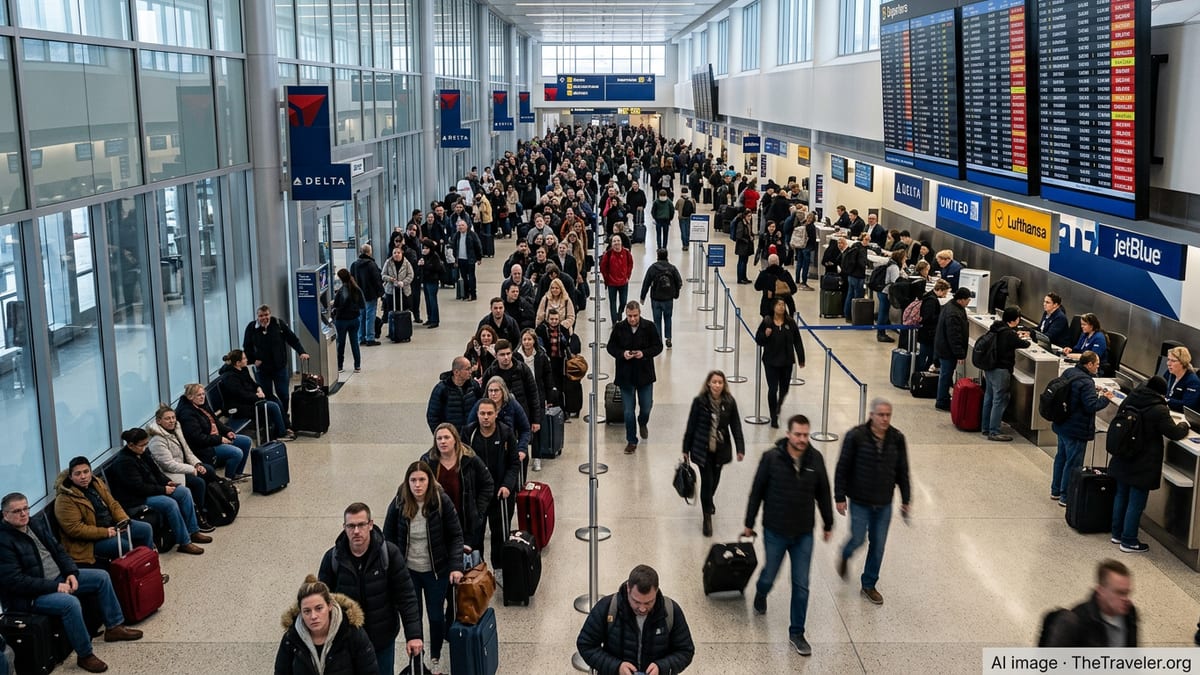
Why on-time performance matters more than ever
Recent travel seasons have highlighted how fragile airline operations can be when demand is high and weather or technology problems hit. Industry reports tracking on-time performance show that even as schedules normalize after the pandemic, punctuality remains uneven across regions and carriers, leaving travelers to navigate significant differences in reliability.
Analysts typically define an on-time flight as one that departs or arrives within 15 minutes of its scheduled time. While that grace period may sound generous, a small average delay can quickly snowball into missed connections and disrupted itineraries. For airlines, maintaining strong on-time statistics has become both a competitive selling point and a key measure of operational health.
Publicly available government data in the United States and performance dashboards from aviation analytics firms globally indicate that overall punctuality has improved compared with the most disruptive pandemic years, but not all carriers have recovered at the same pace. Some have continued to invest in staffing, spare aircraft and schedule buffers, while others have leaned on aggressive timetables that leave less room for disruption.
The result is a widening gap between the most and least reliable airlines. For travelers choosing between similar routes and fares, that gap can be as important as seat comfort or onboard service when deciding which carrier to book.
North America: Reliability leaders and laggards
In North America, several large carriers continue to distinguish themselves with comparatively strong on-time records. Aviation analytics based on 2024 and early 2025 data consistently place Delta Air Lines near the top of the region for punctuality, with more than four out of five flights arriving on time in many reporting periods. United Airlines and Alaska Airlines also tend to post solid on-time rates, often in the upper 70 to low 80 percent range, according to recent performance reviews.
Separate rankings that combine delays, cancellations and diversions into an overall reliability score likewise put Delta, United and Southwest among the better performers for U.S. travelers. One widely cited analysis of early 2024 operations found Delta leading the pack on on-time arrivals, with United and Southwest following closely, suggesting that the largest full-service and hybrid carriers can still deliver relatively consistent operations even across complex national networks.
At the other end of the spectrum, ultra-low-cost carriers have struggled to keep pace. Multiple consumer-focused studies of 2024 flight data identify Frontier Airlines as one of the weakest performers among major U.S. airlines, with the lowest share of on-time arrivals and one of the highest cancellation rates. Spirit Airlines, another budget operator, has shown slightly better punctuality than its lowest-cost rival but still trails the largest network carriers in most recent tallies.
Government statistics from the U.S. Department of Transportation indicate that across the 10 biggest domestic airlines, cancellations edged higher in 2024 compared with 2023, even as overall schedules expanded. That trend reinforces the importance of carrier choice: while the average cancellation rate remains relatively low, the distribution is uneven, and some airlines cancel a much larger share of flights than others.
Europe and beyond: Mixed recovery and regional standouts
Across Europe, punctuality has improved from its worst post-pandemic levels but remains under pressure. A recent performance review compiled for the region’s air navigation and airport stakeholders reported that only a little more than 70 percent of flights arrived on time in 2024, one of the lowest averages seen in two decades. Congestion in key airspace corridors, staffing constraints and weather-related disruptions continue to weigh on schedules.
Despite these headwinds, certain carriers have built reputations as punctuality leaders. Cirium’s widely watched annual on-time performance reports for 2023 and 2024 highlighted Iberia and its low-cost subsidiary Iberia Express among Europe’s most on-time airlines, with on-time arrival rates in the mid-80 percent range in some years. Other European network carriers, including those based in Scandinavia and Central Europe, have also posted above-average performance relative to the regional mean.
Globally, recent rankings of 2024 operations named Aeromexico as the world’s most on-time airline, with nearly 87 percent of flights arriving on schedule. In the Asia-Pacific region, Japanese and Singaporean carriers continue to stand out for reliability, with Japan Airlines, All Nippon Airways and Singapore Airlines all appearing near the top of recent punctuality lists. These results suggest that while Europe as a whole continues to wrestle with delays, individual airlines in Latin America and Asia have managed to maintain very strong operational discipline.
Performance dashboards that blend on-time arrival rates with passenger satisfaction scores show that some low-cost carriers outside North America also lag their full-service competitors. In several cases, budget operators post on-time figures in the low 70 percent range, a level that can translate into frequent disruption for travelers who rely on tight connections or short trips.
Complaints, cancellations and what passengers actually experience
Headline punctuality statistics tell only part of the story. Consumer complaint data paints a more granular picture of how delays and cancellations translate into day-to-day frustration. An analysis by a national consumer advocacy group of 2024 U.S. operations found that Frontier generated the highest rate of passenger complaints per 100,000 travelers among the major airlines it reviewed. The same report noted that Frontier also had the poorest records for cancellations, on-time arrivals and involuntary bumping.
Other carriers with weaker on-time performance, including some hybrid and low-cost airlines, also attracted outsized complaint volumes compared with their market share. By contrast, airlines that consistently rank near the top for punctuality, such as Delta and Alaska, tended to generate fewer complaints per passenger, although no large carrier is free from operational issues during peak travel disruptions.
The relationship between delays and cancellations is complex. Airlines with aggressive schedules may avoid canceling flights but suffer from chronic late arrivals, while others may cancel more frequently to reset operations and prevent further knock-on disruption. For travelers, both outcomes can hurt, but cancellations often prove more disruptive, particularly when seats on alternative departures are scarce.
Experts who study airline reliability point out that complaint rates can also reflect how carriers communicate with passengers and process refunds and reimbursements. Transparent messaging, proactive rebooking and clear information about rights can mitigate some of the frustration associated with delays, even when on-time performance is not industry-leading.
How travelers can use reliability data when booking
For travelers, the widening performance gap between airlines makes it increasingly important to look beyond price alone when choosing flights. On-time and cancellation statistics published by government agencies and aviation analytics firms can help identify which carriers have the strongest recent track records on specific routes or in particular regions.
When comparing options, passengers may want to weigh the fare savings of ultra-low-cost carriers against the higher risk of disruption suggested by recent data. A cheaper ticket on an airline with frequent delays and cancellations can quickly lose its appeal if it results in missed connections, extra hotel nights or lost vacation time. In contrast, a modestly higher fare on a more reliable carrier can function as a form of insurance against major schedule shocks.
Travel advisers often recommend avoiding the last flight of the day on airlines with weaker punctuality statistics, since late-evening departures are more vulnerable to cascading delays. Selecting early-morning departures on carriers with stronger on-time performance can reduce that risk. In congested regions such as parts of Europe and the northeastern United States, pairing a punctual airline with a historically reliable airport can further improve the odds of an on-time trip.
Ultimately, no carrier is immune to thunderstorms, air-traffic restrictions or system outages. Yet the latest performance data shows that some airlines consistently manage these challenges better than others. For travelers planning trips in 2026 and beyond, factoring an airline’s delay and cancellation record into the booking decision has become as essential as checking the route, price and cabin product.