


Korčula’s coastline is a patchwork of sandy shallows, pine backed pebble coves and hidden inlets that reward anyone willing to follow a dusty lane or a rough concrete path down to the sea. This guide focuses on where most visitors actually want to swim: the easy going sandy beaches around Lumbarda for small children, and the postcard perfect coves of Pupnatska Luka, Žitna and Bačva for clear water, snorkeling and quieter afternoons, with straightforward details on parking, access and what to expect on the ground in 2026.
Get the latest updates straight to your inbox!
How Korčula’s Beaches Work: Sand vs Pebbles, Access and Seasonality
Unlike some Croatian islands that are almost entirely rocky, Korčula offers a rare mix: genuine sandy beaches clustered around the village of Lumbarda plus a long run of pebble coves on the south coast between Žrnovo, Pupnat and Čara. For most families, that means using Lumbarda as the go to spot for bucket and spade days, then planning one or two excursions by car, scooter or taxi to classic coves like Pupnatska Luka or Žitna for that deep turquoise, pebble bottomed water Croatia is famous for.
Beach access is relatively straightforward if you have your own wheels. Lumbarda’s sandy bays are reached on a simple 10 to 15 minute drive from Korčula Town along a two lane road that local buses also use. South coast coves such as Pupnatska Luka and Bačva involve steeper, narrower access roads that can feel intimidating in peak season, especially if you are used to wider roads. In practice, careful driving in first or second gear and patience when passing oncoming cars is enough for most drivers.
Facilities and pricing are typical for the Dalmatian coast. Expect to pay roughly 10 to 15 euros per day for a pair of sunbeds and an umbrella on popular sandy beaches like Vela Pržina, and a little less on pebble coves where simple beach bars operate a few rows of loungers. Parking near the beaches is usually in informal gravel lots; in 2026 these are still often free or charge a modest flat fee of a few euros for the day, but you should always carry small cash and be prepared for attendants on the busiest August days.
Seasonality matters. From late June through early September, sandy beaches around Lumbarda are busy by mid morning with families from all over the island, while the classic coves can see their small car parks fill by 10 or 11 a.m. Outside high summer, particularly in May, early June and late September, you may find these same beaches half empty with only one beach bar open and plenty of room to park. Planning your beach days around arrival time and shade can make the difference between a relaxed swim and circling for parking in the midday heat.
Lumbarda’s Sandy Trio: Vela Pržina, Bilin Žal and Family Friendly Prvi Žal
If you want sand on Korčula, you go to Lumbarda. This low key village wrapped in vineyards at the eastern end of the island has the only true sandy beaches on Korčula, and they are a major reason many families choose to stay here rather than in Korčula Town. The two headline names are Vela Pržina and Bilin Žal, with a third, Prvi Žal, right in the village itself that works well for a quick swim or for families staying in Lumbarda without a car.
Vela Pržina sits in a broad south facing bay a few minutes’ drive beyond Lumbarda village. The beach is a wide arc of soft, pale sand backed by low dunes, vines and a couple of low key beach bars selling grilled fish, simple pasta, ice cream and cold drinks. The sea here stays shallow for several metres, which makes it ideal for toddlers with inflatables and slightly older children practicing their first strokes. In the height of summer you will see rows of rented sunbeds and umbrellas, but there is almost always some free space at either end for those happy to sit on their own towels.
Bilin Žal lies on the opposite, north facing side of the peninsula, only about a 10 minute walk from Lumbarda’s centre if you do not want to move the car. The beach is smaller and feels more sheltered, with a mix of sand and fine gravel, and views across the channel towards the Pelješac peninsula. Because the bay is tucked in, the water here can be slightly cooler and flatter, which appeals to parents of younger children who want calm, predictable shallows for paddling. Parking directly beside Bilin Žal is limited to a small strip of spaces along the lane, so in July and August you are often better off walking from accommodation or the larger village parking areas.
Prvi Žal, right on Lumbarda’s promenade, is a compact, family friendly strand where locals gather in late afternoon. It is a mix of small pebbles and sand with concrete terraces at one end, and its big advantage is convenience: you can grab a coffee or a cold drink in the beach bar, rent a kayak or jet ski for an hour, then stroll back to an apartment in minutes. For parents juggling naps, nappy changes and older children who want to be in the water all day, this set up is far easier than loading everything into a car. For visitors staying in Korčula Town, Prvi Žal also works as a straightforward introduction to the Lumbarda area without committing to full day logistics.
Pupnatska Luka: Korčula’s Classic Pebble Cove
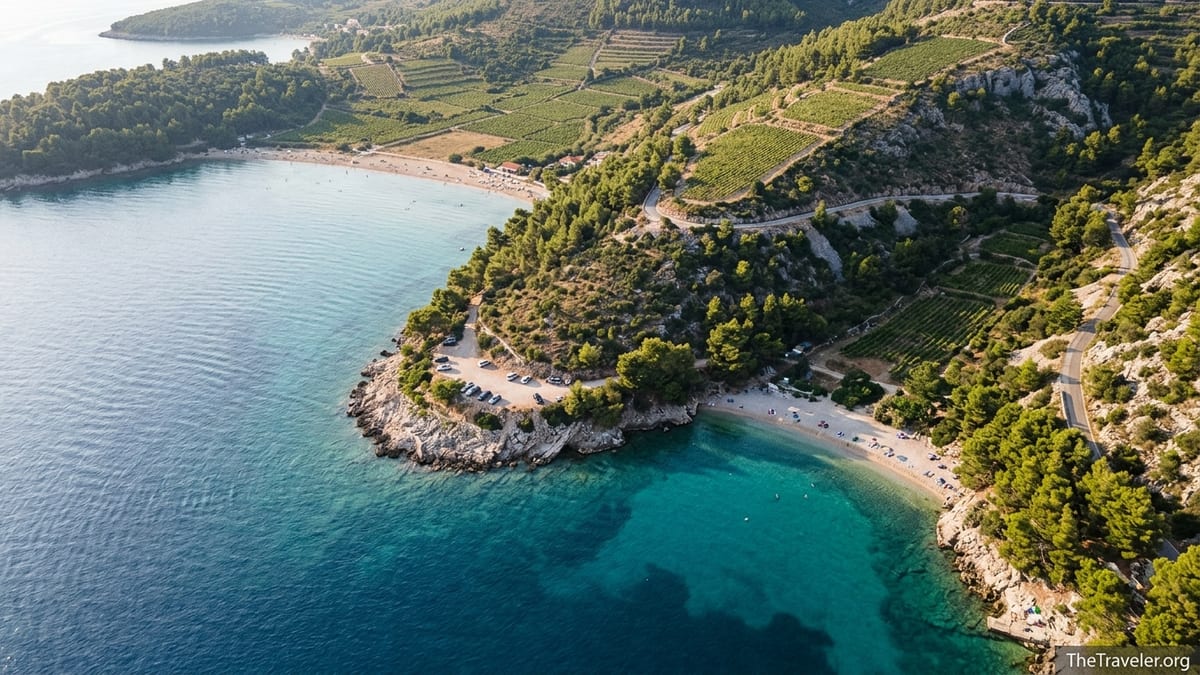
Pupnatska Luka, around a 20 minute drive west of Korčula Town, is the cove that appears most often in brochures and social media shots of the island. The beach is a long crescent of smooth, light pebbles in a deep bay framed by pine clad slopes and low cliffs. The water here is exceptionally clear, with distinct bands of turquoise and deep blue as the seabed drops away, and visibility is often excellent for snorkeling along the rocky edges of the bay where schools of small fish shelter.
Reaching Pupnatska Luka requires leaving the main Korčula to Vela Luka road near the village of Pupnat and following a steep, twisting lane down to sea level. The tarmac is in usable condition but narrow, so in peak season you should expect to pull into passing places to let vehicles come up. At the bottom there is a reasonably sized gravel parking area just behind the beach. On busy days in late July and August, drivers report that this fills late morning, after which attendants may direct new arrivals to park higher up the road and walk the last stretch downhill, so an early start pays off.
Facilities at Pupnatska Luka are straightforward but sufficient for a full day. Typically you will find at least one restaurant terrace serving grilled fish, salads and local wine, plus one or two beach kiosks selling snacks, coffee and simple cocktails. Sunbeds and umbrellas are available to rent on the main part of the beach, leaving the far ends relatively open for people happy to sit on pebbles with their own shade. There are basic showers and toilets, but you should not expect the level of infrastructure you might find on larger mainland resorts, so bringing your own water and snacks is still a good idea for families.
For children, the key difference from Lumbarda’s sandy beaches is depth. Pupnatska Luka shelves more steeply, and the pebbles can be slippery underfoot, so water shoes are helpful and very small children will need closer supervision. That said, many families appreciate the cleaner feeling of pebble beaches, the ease of shaking sand out of bags and towels, and the opportunity to snorkel in clear water just a few metres from shore. For older kids and teens, jumping from low rocks at the edge of the bay under parental supervision is a highlight.
Žitna and Bačva: Smaller Coves With a Wilder Feel
Continuing west along the south coast, Žitna and Bačva offer a more intimate version of the Pupnatska Luka experience. Both are smaller coves framed by steep, wooded slopes, and both retain a slightly wilder, less organised feel, particularly outside the very busiest weeks of summer. They reward visitors who enjoy a bit of adventure and do not mind more modest facilities in exchange for quieter water and beautiful settings.
Žitna sits below the hillside village of Zavalatica, roughly halfway between Korčula Town and Vela Luka. The access road drops from the village through vineyards to a small parking area near the sea; from there, a short walk brings you to the beach itself. The strand is mainly pebbles and coarse sand, with rocky shoulders on either side that provide good snorkeling territory. One simple beach bar operates in season, renting a few sunbeds and serving drinks and light meals such as salads, fries and grilled fish plates. The bay faces south, so it enjoys long hours of sun, with the water warming pleasantly by midday.
Bačva, closer to Žrnovo and Korčula Town, feels more tucked away. The access road is narrow, and drivers often comment that the final descent is not for the nervous, but at the bottom you are rewarded with a secluded shingle beach and remarkably clear water. A single rustic beach hut serves as both bar and snack point, with plastic chairs scattered under pines and low umbrellas providing pockets of shade. There are no extensive rows of loungers here; most visitors spread towels on the pebbles or sit on flat rocks at the water’s edge, which keeps the atmosphere more low key and relaxed.
Neither Žitna nor Bačva is ideal for very young children who need long stretches of shallow sand, but both can work for school age kids comfortable in the water and for couples seeking a quieter alternative to Lumbarda. Because parking is limited and the bays are small, they never feel as densely packed as larger sandy beaches, yet on peak August afternoons every usable patch of shade can still be occupied. If you can, plan to arrive by mid morning or after 4 p.m., when the sun softens and some day trippers start to leave.
For travelers staying without a car, both coves can sometimes be reached by local taxi or prearranged transfers, but you should factor in the cost of return trips. In practical terms, renting a scooter for a day is often the simplest solution for couples or solo travelers, since scooters are easier to park on tight roadside verges and in improvised parking spaces above smaller bays.
Planning a Family Beach Day: Parking, Access and Shade
For families, a successful beach day on Korčula tends to come down to three things: how stressful the drive is, how far you have to carry gear from the car to the sand, and how much natural shade is available in the early afternoon. Lumbarda’s beaches score highly on all three. Roads are straightforward, parking areas are generally close to the water, and there are both man made umbrellas and some natural shade from trees or buildings at different times of day. As a result, many parents with very young children choose to base themselves in Lumbarda or plan to visit its beaches multiple times during a stay on the island.
On the south coast coves, planning becomes more important. At Pupnatska Luka, the gravel parking lot is directly behind the beach but can involve a short, uneven walk that may be awkward for strollers. Bačva and some smaller coves sometimes require leaving the car a little further up the slope and walking down a concrete or dirt path. Families with small children or mobility issues may want to scout the access on arrival, or ask a taxi driver about the steepness of the final approach before committing to a particular bay.
Shade is another critical detail. On sandy beaches like Vela Pržina you can usually rent an umbrella and two loungers, though in peak weeks numbers are limited and front row spots near the water go quickly. Budget around 10 to 15 euros for a set for the day, and consider bringing a lightweight beach tent or pop up shelter if you prefer a guaranteed shaded play space for toddlers on busy days. At less developed coves such as Bačva, natural shade from pines at the back of the beach can provide relief, but these spots are typically taken early by regulars, so arriving before late morning can make a big difference.
If you are staying in Korčula Town without a car, a pragmatic approach is to mix easy public transport days with one or two taxi or rental car excursions. The local bus to Lumbarda drops you within walking distance of the main sandy beaches, and water taxis from Korčula’s harbour offer a pleasant way to reach Lumbarda without navigating parking at all. For a trip to Pupnatska Luka or Žitna, families often book a return taxi in advance, agreeing on a pickup time in the early evening to avoid trying to arrange transport while tired children are clamouring to leave.
Beyond the Big Names: Pebble Strands and Concrete Swims Near Town
While this guide focuses on headline beaches, many visitors to Korčula end up spending a surprising amount of time at the low key swimming spots just outside Korčula Town. A string of small pebble strands and concrete platforms runs along both sides of the Old Town, providing easy swimming access without any need for a car or a bus. These spots are not destination beaches in the way Lumbarda or Pupnatska Luka are, but they are ideal for a quick dip between sightseeing or for evenings when you do not want to haul everyone to another village.
On the eastern side of the peninsula, Banje beach offers straightforward access and views back to the Old Town walls. The shore is a mix of pebbles and concrete, with ladders going straight into waist deep water, and it is a common spot for both locals and visitors to cool off in late afternoon. The water here is generally calm, though you should keep an eye out for passing small boats and occasional ferries further offshore. There are a few beach bars and cafes within a short walk, which makes this convenient if you are travelling with older children and teens who like to come and go between sea and snacks.
To the west, towards the hotels and larger resorts, the shoreline alternates between short, narrow pebble strips and flat, paved sunbathing terraces. These areas lack the romance of pine fringed coves but they are extremely practical. You can rent a lounger directly below many accommodations, and older kids can safely swim while parents watch from nearby cafe terraces. For travellers with very limited time on the island, or those visiting outside high season when some remote beach bars are closed, these in town options can be a useful complement to one or two bigger day trips.
There are also numerous tiny unnamed coves and unofficial swimming points scattered along the island roads. Local advice from hosts, taxi drivers or shopkeepers often turns up a favourite spot where you can park on a lay by and walk down a dirt path for a swim away from the main crowds. On a short stay, it is worth prioritising the proven names covered in this guide, but if you have several days and access to a car or scooter, leaving one afternoon unscheduled to follow local tips can lead to your own personal cove.
The Takeaway
Korčula’s beaches work best when you match them to how you travel. Families with toddlers and young children will find life easiest in Lumbarda, where Vela Pržina, Bilin Žal and Prvi Žal offer straightforward access, shallow sandy water and enough facilities to spend full days without stress. Couples, older families and strong swimmers can add in classic pebble coves like Pupnatska Luka, Žitna and Bačva for postcard scenery and clearer, deeper water, accepting steeper access roads and more limited shade in return.
Logistics on the island are manageable as long as you take parking and timing seriously in July and August, when even larger car parks can fill before midday at the most popular beaches. Renting a car or scooter gives you the most flexibility, but even without one you can reach sandy shores by bus or water taxi and book taxis for one or two special excursions further along the coast. Water shoes, a simple beach tent and plenty of drinking water are often more valuable than elaborate gear.
Whether you base yourself in Korčula Town and treat beach days as excursions, or stay in a vineyard lined lane in Lumbarda with sand only a short walk away, the island’s mix of sand, pebble and rocky swims gives you options for every mood. Plan ahead for access and shade, be ready to adjust around weather and crowds, and you will quickly understand why many visitors return to the same coves year after year, claiming a familiar patch of pebbles or sand as their own corner of the Adriatic.
FAQ
Q1. Which beach on Korčula is best for small children who need sand and shallow water?
Vela Pržina in Lumbarda is usually the best choice for very young children, thanks to its soft sand, long shallow entry and family oriented facilities.
Q2. How do I get to Pupnatska Luka from Korčula Town without a car?
Without a car you can arrange a taxi from Korčula Town, agreeing a return pickup time, or sometimes join organised beach transfers offered by local agencies in high season.
Q3. Is parking at Pupnatska Luka and other south coast coves free?
As of 2026, main parking areas are often free or charge a small flat day fee, but in peak season attendants may manage access, so bring cash and arrive earlier in the morning.
Q4. Are Žitna and Bačva suitable for non swimmers and very young kids?
Both coves have beautiful clear water but shelve more steeply over pebbles, so they are better for confident swimmers and school age children than toddlers or non swimmers.
Q5. Can I reach Lumbarda’s sandy beaches by public transport from Korčula Town?
Yes, local buses run regularly between Korčula Town and Lumbarda, and in season there are also water taxis that drop passengers within walking distance of the main sandy beaches.
Q6. Do I need water shoes for Korčula’s beaches?
Water shoes are highly recommended for pebble coves like Pupnatska Luka, Žitna and Bačva, and even on sandy beaches they can protect feet from occasional rocks and hot sand.
Q7. Are there beach showers and toilets at the main beaches?
Most popular beaches, such as Vela Pržina and Pupnatska Luka, have basic showers and toilets in season, but smaller coves may offer only a simple bar and no formal facilities.
Q8. When are Korčula’s beaches most crowded?
From mid July through late August, particularly between 10 a.m. and 4 p.m. on sunny days, sandy beaches and well known coves are at their busiest, so early starts help a lot.
Q9. Is it realistic to visit multiple beaches in one day?
Yes, but with children it is usually more comfortable to focus on one main beach per day; couples often combine a morning at a south coast cove with an evening swim near town.
Q10. Are there lifeguards on Korčula’s beaches?
Lifeguard presence is limited and not guaranteed at all beaches, so you should always supervise children closely and treat swimming as at your own risk, especially outside peak season.