


Korčula is one of the most rewarding islands on Croatia’s Dalmatian coast, compact enough to explore in a few days but rich in vineyards, beaches and historic stone towns. This guide breaks down practical 1, 2 and 3-day itineraries that connect Korčula Old Town, the sandy coves of Lumbarda, wine tastings, nearby islets like Badija and the western port of Vela Luka, along with realistic timings, price examples and current ferry logistics to help you plan with confidence.
Get the latest updates straight to your inbox!
Understanding Korčula: Layout, Seasons and Getting There
Korčula runs roughly east to west, with Korčula Town and nearby Lumbarda on the eastern tip and Vela Luka at the western end. A single main road links the island, so even without a car you can move around using local buses, taxis and water taxis. Korčula Town is the most convenient base for short stays, with frequent catamarans, restaurants and access to island-hopping boats. Lumbarda is better if your focus is beaches and wine, while Vela Luka works well for travelers arriving from Split or the central Dalmatian islands.
The most popular way to reach Korčula is by high-speed catamaran from Dubrovnik or Split in the summer season. As of summer 2026, several companies operate Dubrovnik to Korčula Town routes in around 2 to 2.5 hours, with typical one-way fares in the range of 25 to 40 euros per adult in July and August, depending on the carrier and how early you book. Some catamarans continue onward to Hvar and Split, which makes Korčula an easy stop on a broader Dalmatian island-hopping trip.
From the mainland, there is also a very frequent ferry between Orebić on the Pelješac Peninsula and the port just outside Korčula Town, a crossing of around 15 minutes that runs many times per day in high season. Travelers driving down the Croatian coast often use this route, as car ferries from Orebić typically cost noticeably less than car spaces on the long-distance catamarans, and you can often just roll up in shoulder season without advance reservations.
Season matters for planning. July and August bring the most ferries, warmest sea temperatures and the liveliest nightlife, but also higher accommodation prices and crowded Old Town streets in the evening. May, June, September and early October usually offer a sweet spot: catamarans and water taxis already running, vineyards open for tastings, sea warm enough for swimming for many visitors, but more availability and slightly better rates. In winter, connections reduce significantly and some smaller wine bars and tours pause operations, so a short visit then requires extra schedule checking.
One Perfect Day on Korčula: Old Town, Lumbarda and Sunset
If you only have one full day on Korčula, base yourself in or very near Korčula Town and aim to combine heritage, beach time and a taste of the island’s wine. Many visitors arrive on a morning catamaran from Dubrovnik, step off at the pier directly below the fortified walls, and start with a late breakfast in the alleys just inland from the sea. Allow at least two to three hours to walk the compact Old Town, visit the cathedral square, climb one of the towers for a view over the Pelješac Channel and, if you are interested, tour the small Marco Polo-themed exhibits that play up the island’s claim as his birthplace.
By late morning or just after lunch, head toward Lumbarda, around 7 kilometers from Korčula Town. Without a car, the simplest choices are the local bus, which runs several times per day in summer, or a taxi from the town gate, which in 2025 and 2026 has typically cost in the ballpark of 15 to 25 euros one way for the car, depending on time of day and exact drop-off. Many travelers choose to rent bicycles or e-bikes from shops around the bus station or harbor; the ride to Lumbarda takes roughly 30 to 40 minutes by standard bike, mostly on paved roads through olive groves and vineyards.
Lumbarda is the heartland of Korčula’s indigenous white grape, Grk, which grows particularly well in its sandy vineyards. A classic one-day Korčula experience is to book an afternoon tasting at one or two small family wineries here and pair it with a swim on the beaches of Vela Pržina or Bilin Žal. Typical tastings at winery terraces cost from around 10 to 20 euros per person for a flight of several wines and a small plate of cheese, olives or local cured meats. Many wineries strongly prefer or require reservations in high season, so it is wise to email or message them a few days ahead instead of just turning up in late July.
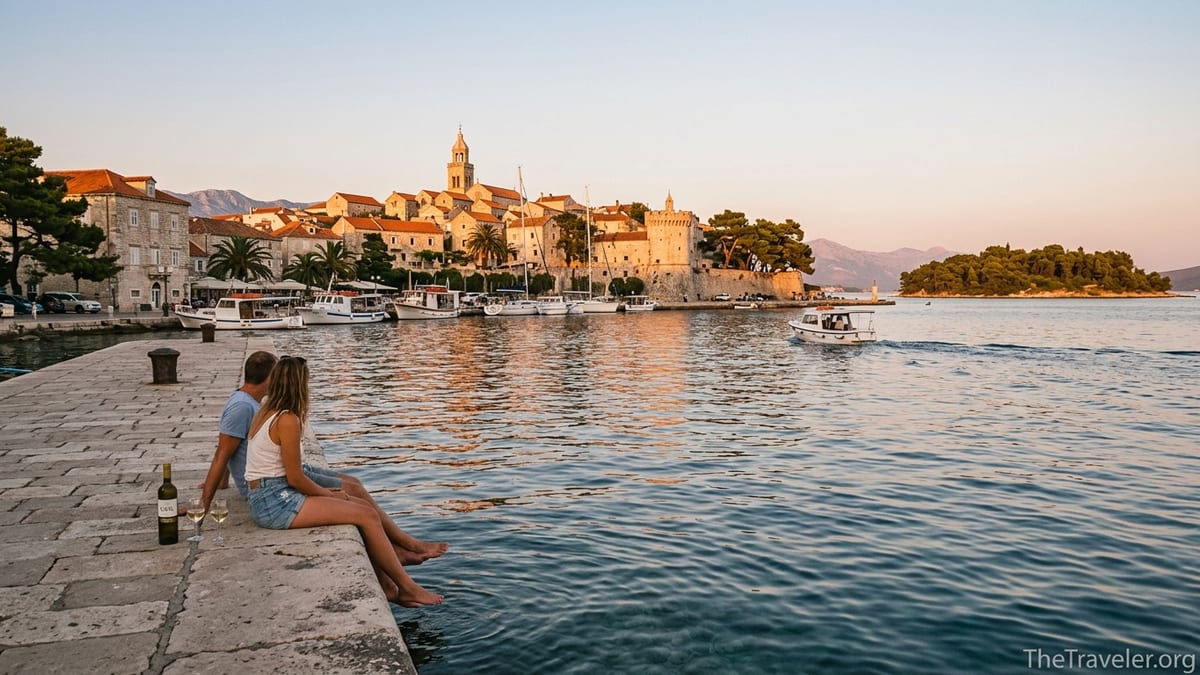
Return to Korčula Town for the evening to catch sunset over the Pelješac Peninsula. The best views are from the seafront promenade that runs along the northern walls, from one of the rooftop or tower bars that sit directly above the water, or from the small breakwater pier near the catamaran dock. A common pattern is to book a late dinner at one of the stone-terrace restaurants just outside the main gate, where mains like grilled Adriatic fish or handmade pasta with truffle sauce typically run around 18 to 30 euros. If your catamaran back to Dubrovnik or Split is early the next morning, staying within easy walking distance of the harbor keeps departure stress low.
Two Days on Korčula: Beaches, Badija Island and Wine Country
With 48 hours you can add dedicated beach time and a short island-hopping excursion. On your first day, follow the one-day plan focused on Korčula Town and Lumbarda, but move slower: linger longer at the cathedral, stop for coffee on Plokata square, and schedule an evening wine tasting rather than a rushed afternoon one. Many visitors book a guided “wine and village” tour that includes transport from Korčula Town to Lumbarda, tastings at two vineyards and a light dinner of local produce; prices for small-group tours often sit between 60 and 90 euros per person, depending on duration and inclusions.
On your second day, make use of Korčula’s water taxi network to explore the islets directly offshore. In high summer, several operators run hop-on hop-off boats from the town harbor to Vrnik, Badija, Lumbarda and sometimes other small stops. A full-day ticket on these boats has recently been around 20 euros per adult on the spot, while single rides to a single island can be approximately 10 euros. Schedules are typically posted on boards at the harbor in the morning and updated during the season, so it is a good idea to check the latest departure and return times the day before you go.
Badija is one of the most popular day-trip stops, known for its Franciscan monastery, pine forests and tame deer that visitors sometimes encounter along the walking paths. You can circle the island on foot in roughly an hour, stopping at pebble coves for swims in clear, shallow water. There is usually at least one seasonal beach bar offering basic lunches like grilled fish, salads and sandwiches in the 10 to 20 euro range, plus cold drinks and coffee. Vrnik, by contrast, is quieter and more focused on stone quarries and a handful of pebble beaches, with one or two small restaurants that serve seafood lunches to both day-trippers and yachting crews.
Time your island-hopping so that you return to Korčula Town in the late afternoon. After a shower and rest, consider walking up to the small hill above town or simply strolling the western waterfront, where the light softens nicely for photography. If sunset is a priority, ask your host or hotel which side of the peninsula currently gives the best view, as it can vary slightly with the time of year and local building shadows. On your final night, you might splurge on a tasting menu in one of the fine-dining spots in the Old Town, where multi-course dinners with paired local wines can start around 90 to 120 euros per person in peak season.
Three-Day Korčula Route: Adding Vela Luka and Inland Villages
A three-day stay lets you see both ends of the island and its rural heart. Keep the first two days similar to the previous itinerary, then devote your third day to Vela Luka and one or two of the wine-growing villages in the interior, such as Čara or Smokvica, where the Pošip grape is widely grown. The drive from Korčula Town to Vela Luka along the main island road takes around 45 minutes to an hour, depending on traffic and how many photo stops you make along the ridgeline. Without a car, the regular island bus service is the simplest option, typically costing under 10 euros each way and running several times a day in high season.
Vela Luka has a different feel from Korčula Town: less medieval and fortified, more of a 19th-century waterfront town with a promenade lined by palm trees and low stone houses. Many visitors come here to continue by ferry to Split or Hvar, but it is worth at least a half-day visit for its relaxed harbor cafés and easy access to nearby bays. Small taxi boats operate from the seafront to secluded swimming spots on the surrounding inlets, and you can often arrange short transfers directly with skippers posted along the quay, with simple return trips priced in the region of 10 to 15 euros per person.
If you are interested in archaeology and views, check whether guided visits to Vela Spila, a prehistoric cave site above Vela Luka, are running during your stay, as timetables and accessibility can vary by season. Reaching the cave involves an uphill walk or short taxi ride from the town center, and you are rewarded with a panoramic outlook over the bay. Back in town, budget a leisurely lunch at one of the konobas tucked along the backstreets, where classic dishes like octopus salad or slow-cooked pašticada usually fall in the 12 to 20 euro range.
On your way to or from Vela Luka, consider stopping in one of the central villages like Smokvica or Čara for a tasting of Pošip, another signature white wine of Korčula. Unlike Lumbarda’s sandy vineyards, these areas are more rocky and inland, giving slightly different expressions of the grape. Many wineries around Smokvica offer reservations-based tastings in courtyard settings, often charging a similar 10 to 20 euros for flights with snacks. Because buses may not align perfectly with tasting times, hiring a driver for a half day can be worthwhile; a private transfer that loops Korčula Town, Smokvica and Vela Luka will typically cost more than regular buses but gives you door-to-door convenience and no need to self-drive after tasting.
Beaches, Sunsets and Swimming Spots Around Korčula
Korčula’s coastline alternates between pebbly coves, rocky platforms and, in a few places, genuine sandy beaches. Lumbarda’s Vela Pržina is one of the island’s best-known sandy stretches, popular with families because of its shallow water and beach bar facilities. Nearby Bilin Žal offers a smaller, more sheltered feel, while the shoreline between Korčula Town and Lumbarda holds a scatter of smaller bays you can reach by bike or on foot. In high summer, sunbed and umbrella rentals on the more organized beaches typically run in the range of 15 to 25 euros for a pair and a day, while undeveloped coves are free but have little shade.
Around Korčula Town itself, several swimming spots hide just outside the Old Town walls, reached by stone steps from the promenade. These are not traditional beaches, but rather rocky platforms and small concrete terraces used by locals for quick dips before work or in the early evening. If you prefer a more traditional beach, hop on a water taxi toward the islets or follow the coastal road out to places like Luka Banje or the bays near Žrnovska Banja, where you will find pebbly entries and calmer water away from the harbor traffic.
Sunsets are a highlight on Korčula, especially on clear summer evenings when the sky fades over the mountains of Pelješac across the channel. The northern seafront of Korčula Town offers the classic view, but for a quieter experience you can walk 15 to 20 minutes west along the shore toward the area sometimes called St. Nicholas, where low walls and benches overlook the water with fewer crowds. Some travelers also book short sunset cruises, simple boat trips of one to two hours that circle the nearby islets with a glass of local wine included, often priced around 40 to 60 euros per person in a small group.
Wherever you watch, bring a light layer, as sea breezes can cool the temperature quickly even in July. Many visitors underestimate how bright the reflected light from the water is around golden hour, so sunglasses and a hat remain useful well into the evening. Photography enthusiasts should consider arriving at their chosen vantage point at least 30 minutes before official sunset time to capture the warm side light on the Old Town walls and bell towers before the sun fully dips behind Pelješac.
Wine Tasting on Korčula: Grk, Pošip and Practical Tips
Korčula has one of the strongest wine identities of any Croatian island, anchored by two key white varieties: Grk in the sandy soils of Lumbarda and Pošip in the central villages of Smokvica and Čara. Grk is relatively rare and mostly found here, which is why you will see it highlighted on many restaurant lists at prices that can be noticeably higher than generic house white. A bottle of good Grk from a well-known Lumbarda producer might cost around 20 to 30 euros in a winery tasting room and significantly more on fine-dining menus, reflecting small production volumes and strong local demand.
Pošip, by contrast, is now widely known across Croatia, but tasting it on Korčula gives you a sense of its origin. Wineries in Smokvica often present several styles, from crisp stainless-steel-aged versions suitable as aperitifs or with shellfish to richer, barrel-influenced bottlings matched to grilled white fish or chicken dishes. In Korčula Town, many bars and enotecas offer by-the-glass flights where you can compare Grk and Pošip side by side, typically paying around 5 to 9 euros per glass in a casual setting.
In practical terms, most wineries run on a reservation-first basis, especially from late June through early September. Some publish online forms or phone numbers, while others rely more on email or direct messages through social platforms. Advance booking is particularly important if you do not have a car and need to coordinate with taxis or tour operators. It is common for tastings to last about an hour, which means you can realistically visit two or at most three wineries in one afternoon without feeling rushed, especially if beaches or island-hopping are also on your schedule.
For those who prefer not to plan every detail, organized wine tours departing from Korčula Town can simplify logistics. These often include transport, two or three tastings and light food, and they are usually run by small local companies that know the producers personally. Whether you self-organize or join a tour, expect a relaxed, informal atmosphere: many tasting terraces are extensions of family homes, children and pets wander in and out, and conversations can range from grape varieties to stories of historic harvests and local traditions.
Ferries, Buses and Getting Around Without Stress
Because ferry timetables and operators change slightly each season, especially in Croatia’s busy Adriatic network, it is important to confirm current schedules close to your travel dates. In summer 2026 there are multiple daily catamarans linking Dubrovnik, Korčula Town and Split, some routing via islands such as Mljet, Hvar or Brač. Typical sailing times are about two hours to Dubrovnik and between two and three hours to Hvar or Split, depending on the route. Ticket prices fluctuate with demand, but booking at least a few weeks in advance in July and August gives you the best chance of your preferred departure time.
For travelers coming by car, the short Orebić to Korčula car ferry remains the workhorse connection. The crossing itself is only about 15 minutes, but you should build in extra time for loading and unloading and, in the busiest weeks, for queuing. On Saturdays in late July, when villa changeovers are common, lines of cars can build up at the Orebić terminal, so arriving more than one sailing ahead of your ideal crossing time reduces the risk of delay. Foot passengers usually face less congestion and can often simply buy tickets and walk onto the next boat.
On the island, buses connect Korčula Town with Lumbarda, the central villages and Vela Luka. Schedules vary by month, but in high season you can usually count on several departures in each direction daily. Fares are modest by European standards, often under 5 euros for short hops and under 10 euros for the full length of the island. Taxis fill in the gaps, particularly in the evenings when buses thin out; most taxi drivers wait near the main bus station and at the entrance to Korčula Old Town, and you can ask your accommodation host for approximate prices to common destinations such as Lumbarda beaches or Čara.
If you enjoy independence, renting a scooter, small car or e-bike can be an efficient way to cover ground, though parking inside the Old Town is extremely limited and usually restricted to residents. Many visitors choose to park on the mainland side in Orebić if they have a car but plan to stay only within Korčula Town and its immediate surroundings, using water taxis and buses for day trips. This approach can save you ferry fees and the hassle of navigating narrow island streets while still giving you access to the full spread of beaches, villages and vineyards.
The Takeaway
Korčula rewards both quick stopovers and slower stays, thanks to its compact size, reliable summer ferries and a rare combination of preserved medieval streets, working vineyards and easily reached islands. In one day you can walk the Old Town, swim on a sandy Lumbarda beach and sip Grk as the sun sets over Pelješac. With two days you add Badija or Vrnik to the mix, hopping between monasteries, coves and waterfront bars. A third day lets you see Vela Luka, taste Pošip inland and understand how each corner of the island has its own character.
Whatever your timeframe, success on Korčula comes down to a few simple habits: checking current ferry schedules, reserving key wine tastings ahead of time in peak season, and balancing structured activities with unscheduled hours for wandering alleys or lingering on the rocks by the sea. Build your route around where you are sleeping, how comfortable you are with boats and buses, and how much beach versus wine or history you want each day, and you will find it surprisingly easy to assemble a memorable itinerary that fits neatly into a broader Dalmatian journey.
FAQ
Q1. Is Korčula better as a day trip or for a multi-day stay?
For many travelers Korčula works best as a two or three-night stay, which allows time for Old Town, Lumbarda wine tastings and at least one island-hopping or Vela Luka excursion without rushing.
Q2. Do I need a car to follow these 1, 2 and 3-day itineraries?
No, you can complete all the suggested routes using a mix of catamarans, local buses, taxis, bicycles and water taxis, although a car or scooter offers more flexibility for inland villages.
Q3. How far is Lumbarda from Korčula Town and what is the easiest way to get there?
Lumbarda lies about 7 kilometers from Korčula Town, and you can reach it in roughly 10 to 15 minutes by taxi, 15 to 20 minutes by car or scooter, or around 30 to 40 minutes by bicycle.
Q4. Can I visit Badija and Vrnik in the same day?
Yes, hop-on hop-off water taxis and regular boat services in summer make it straightforward to visit both islands in a single day, combining short walks, swims and a relaxed lunch stop.
Q5. How much should I budget for wine tastings in Lumbarda?
Most small wineries charge in the approximate range of 10 to 20 euros per person for a tasting flight, often including several wines and a light snack of local cheese or olives.
Q6. When is the best time of year to follow this Korčula itinerary?
Late May, June, September and early October are ideal for this itinerary, with running ferries, open wineries and generally pleasant weather but fewer peak-season crowds than July and August.
Q7. Are the beaches on Korčula sandy or pebbly?
Most beaches around Korčula are pebbly or rocky, but Lumbarda has genuine sandy spots such as Vela Pržina, while the nearby islets offer a mix of pebbles and smooth rock platforms.
Q8. How far in advance should I book ferries to or from Korčula?
In July and August it is wise to book popular catamaran routes at least a couple of weeks ahead, while in shoulder season a few days of advance planning is often sufficient for most sailings.
Q9. Is Vela Luka worth visiting if I am staying in Korčula Town?
Yes, Vela Luka offers a different atmosphere, with a broader bay, easy access to nearby coves and a more laid-back waterfront, making it a good half or full-day outing from Korčula Town.
Q10. Can I swim directly from Korčula Old Town?
Yes, several stone platforms and small access points along the promenade just outside the Old Town walls allow for quick dips, although they lack the sandy entry of more traditional beaches.