


On an island where most coves are pebbled and rocky, Lumbarda is the soft landing spot. This small village at the eastern tip of Korčula combines rare sandy beaches, rows of Grk vineyards and a quietly sociable mood that appeals to families, couples and anyone who prefers mornings in the sea and evenings with a glass of local wine. Just 6 kilometres from Korčula Town, Lumbarda is close enough for easy daytrips yet peaceful enough to feel like a different world.
Get the latest updates straight to your inbox!
Why Lumbarda Belongs on Your Korčula Itinerary
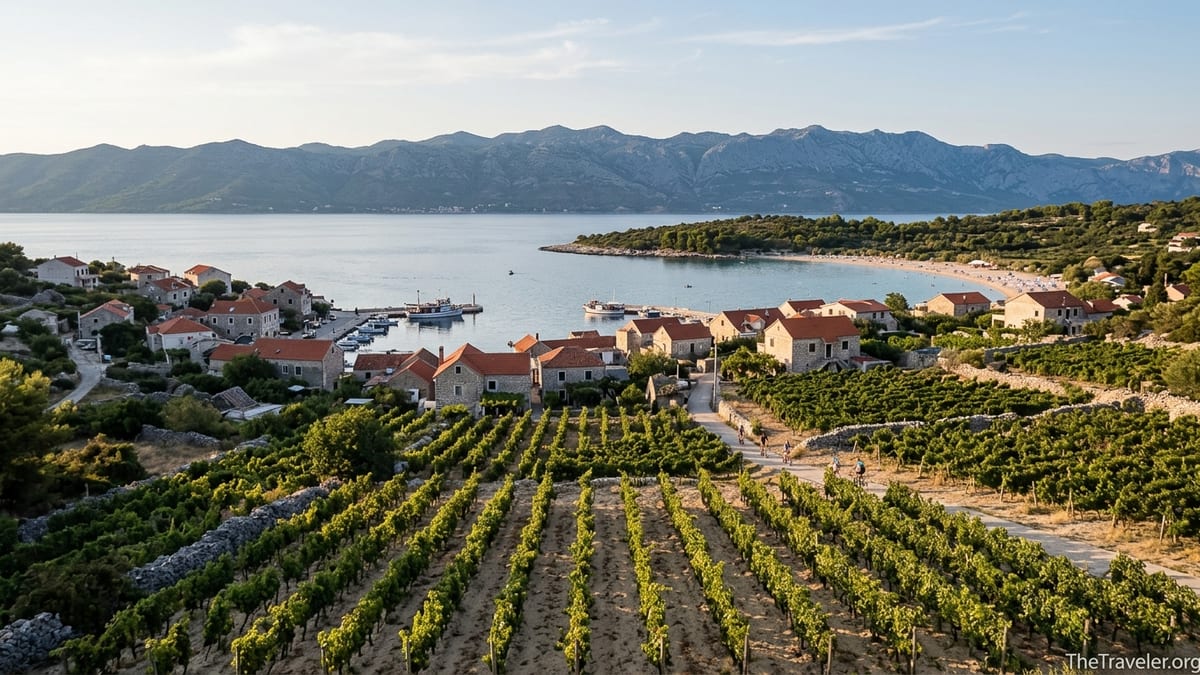
Lumbarda is a fishing and farming village spread around a sheltered bay on Korčula’s eastern end, surrounded by sandy vineyards and low hills. It has become known as the island’s softer, family friendly side, in contrast to the stone lanes and buzzing bars of Korčula Town. The scale is intimate: a small waterfront with a handful of cafés, boats bobbing in the harbour, children jumping off jetties in the late afternoon light.
The village’s biggest draw is that it offers some of the only true sandy beaches on Korčula. Pržina and Bilin Žal are shallow, warm and easy underfoot, a rarity on the Dalmatian coast where smooth white pebbles dominate. For parents with toddlers, or anyone who prefers to wade instead of clamber over rocks, this alone is a convincing reason to base in or at least visit Lumbarda.
At the same time, Lumbarda is the heartland of Grk, an indigenous white grape grown almost exclusively here in sandy soils. A cluster of small family wineries set among vineyards provide relaxed tastings at tables under pine trees or on stone terraces. Add in simple seafood konobas, apartments within walking distance of both beach and vines, and regular buses to Korčula Town, and Lumbarda starts to look less like a side trip and more like an ideal base for a few days or a full week.
Practically, Lumbarda works well whether you are travelling car free or driving. The main island road runs directly here from Korčula Town and the local bus takes around 10 to 15 minutes. Taxi boats and small rental craft add a nautical option when the sea is calm. Once you arrive, most daily needs and activities are within walking or cycling distance, so you can leave the car parked and slow your pace.
Sandy Beaches: Pržina, Bilin Žal and Beyond
Vela Pržina is the headline act. Tucked into a bay on the south side of the Lumbarda peninsula, it is the island’s largest sandy beach, with wide shallows that stay warm well into September. The sand here is firm and pale, and the entrance into the water is gradual, which means small children can splash close to shore while adults stand knee deep several metres out. A beach bar and a simple restaurant serve cold drinks, coffee and grilled dishes, while sunbeds and umbrellas are usually available to rent for a modest daily fee. In high season it gets busy from late morning, so arrive by 9 or 10 am if you want front row space by the sea.
On the north side, facing towards the Pelješac Peninsula, Bilin Žal offers a slightly different feel. The shoreline mixes sand and fine pebbles, the sea is often calmer than on the south coast, and the light across the channel towards Orebić is beautiful in the late afternoon. A small beach bar behind the shore keeps things simple with drinks, ice cream and a few snacks, and a couple of restaurants within a short walk serve local dishes and Grk by the glass. Families often split their days between Pržina’s lively south facing bay and Bilin Žal’s quieter, more contemplative north facing views.
Closer to the village centre, smaller coves and concrete jetties line the waterfront. These spots, such as the little bay near the main church and the inlets around Tatinja, are good for a quick morning swim before breakfast or an evening dip when the main beaches are still warm but less crowded. Here you will mostly be sharing the water with locals swimming laps, teenagers practicing dives and a few guests from nearby apartments.
If you have a rental boat or book a taxi boat, you can easily extend your beach options. Skippers in Lumbarda frequently run passengers out to the tiny islets of the Škoji archipelago between Lumbarda and Korčula Town, where you will find small pebble coves, pine shaded edges and clear turquoise shallows ideal for snorkelling. For a pure beach holiday, many travellers combine a Lumbarda base with at least one day visiting a more rugged bay elsewhere on the island, such as Pupnatska Luka or Proizd near Vela Luka, which contrasts nicely with Lumbarda’s soft sand.
Grk Wine and Vineyard Experiences
Lumbarda is the only place in the world where the indigenous white grape Grk is grown in any quantity. The vines are typically planted in sandy soils between the village and the sea, and their grapes produce a dry, aromatic wine often described as saline and herbal, with a subtle bitterness on the finish. Production is small, and bottles rarely travel far from the island, which means tasting Grk in Lumbarda is not just a pleasant outing but a genuinely local experience you are unlikely to duplicate elsewhere.
Several family run wineries ring the village, many within walking distance of each other. Milina Bire, set among vineyards above the village, is one of the best known, combining a rustic stone tasting room with views over the vines. Popić Winery, closer to the centre, is often praised for its relaxed atmosphere and friendly explanations for visitors new to Croatian wine. Lovrić, on the slopes above the road, has long been associated with Grk and offers both their signature white and small runs of red Plavac Mali. At many of these wineries you can expect informal tasting flights, often accompanied by plates of local cheese, pršut and marinated anchovies.
It is wise to reserve, especially in July and August, as most wineries are small family operations with limited seating. In shoulder seasons such as May, June and late September, some wineries still welcome walk ins in the late afternoon, but calling ahead or asking your accommodation host to check is a good idea. Typical tasting prices vary, but you might expect to pay the local equivalent of a modest restaurant starter for several samples and a shared plate of snacks, with full bottles of Grk priced significantly lower than in city wine shops.
Many visitors pair winery visits with a bike ride or a relaxed walk through the vineyards. Paths lead from Lumbarda’s centre up through the sandy plots to Bire and on towards Bilin Žal, creating a natural loop that starts and finishes near the sea. If you prefer not to plan it yourself, local agencies and guides in Korčula Town and Lumbarda organise half day wine tours by minivan or open top bus, combining a stop in the old town with a circuit of two or three wineries around Lumbarda and the island interior.
Where to Eat: From Beach Bars to Village Konobas
Dining in Lumbarda is relaxed and unfussy, with a focus on fresh seafood, grilled meats and simple pasta dishes that suit long summer evenings. On the waterfront you will find konobas set right by the sea, where dinner might start with octopus salad or marinated anchovies followed by grilled fish served whole with blitva and potatoes. Portions are generally generous, and sharing a large fish between two or more people is common, with the kitchen staff helping you choose a catch by weight.
Up near the vineyards, some wineries and farmsteads serve light food alongside their Grk. Think boards of local cheese and cured meats, olives, homemade bread and sometimes simple hot dishes such as peka or slow cooked lamb when ordered in advance. This makes vineyard tastings a natural early evening plan: cycle up for a late afternoon drink, order a few plates to share as the sun dips, then coast back down to the village as the air cools.
At the beaches, especially Pržina and Bilin Žal, expect more casual options. Beach bars here handle the daily needs of swimmers: espresso, cold beer, soft drinks, ice cream, simple sandwiches and occasionally burgers, salads or seafood. Most accept card payments, but it is still sensible to carry some cash for smaller places or for renting sunbeds. Families often build their day around these facilities, arriving mid morning, renting a pair of loungers, having a light lunch at the beach bar and then staying until the early evening breeze arrives.
For variety, it is worth heading into Korčula Town at least once or twice during your stay. A short bus or taxi ride delivers you to a wider choice of restaurants ranging from traditional konobas inside the old walls to more contemporary bistros and wine bars spilling onto stone terraces. Many travellers choose to dine in town after a day on Lumbarda’s beaches, then return by late bus or taxi to the quieter village setting.
Staying in Lumbarda: Family Apartments and Seaside Rooms
Accommodation in Lumbarda leans towards small scale, often family run apartments and guesthouses rather than large hotels. This suits the village’s mood, and for many travellers it is part of the appeal. You will find stone houses divided into simple studios with balconies, modern apartments just behind the beach with kitchenettes and terraces, and a few boutique style villas with shared pools tucked into the hills behind the vineyards.
For families, apartments near Vela Pržina or within walking distance of Bilin Žal are particularly practical. Children can nap at home while parents take turns returning to the sand, and packing for the beach becomes a five minute job instead of a half day excursion. Many of these rentals come with washing machines, shaded outdoor dining spaces and small gardens, making them good value for week long stays. Booking early for July and August is important, as repeat visitors often return to the same places year after year.
Couples may prefer rooms and apartments on the harbourfront, where evening life revolves around the small promenade. Here you can sit on your balcony looking over the moored boats, stroll down for a late swim off the jetty or enjoy a nightcap in the café next door. These spots also work well for travellers relying on buses, since you are close to the main bus stop and any organised tours or transfers will likely pick up from the waterfront.
Groups of friends sometimes look for larger villas set among the vineyards or on the fringes of the village. These bring extra privacy and often include features such as private pools, outdoor grills and multiple bedrooms. The trade off is that you may be a longer walk from the beaches or need a rental car to move around comfortably, but for trips focused on long lazy meals and evening drinks among friends, they can be ideal.
Getting Around: Buses, Bikes, Boats and Cars
Reaching Lumbarda is straightforward. Most visitors arrive first in Korčula Town by catamaran from Split, Dubrovnik or other Dalmatian ports, or by car ferry from the Pelješac Peninsula. From there, a local bus connects the old town and Lumbarda in around 10 to 15 minutes, stopping at the main road above the village and continuing towards the beaches. Tickets are inexpensive and can be bought at kiosks, online for some services, or directly from the driver in local currency.
Once in Lumbarda, many people opt to explore largely without a car. The distances between the harbour, village centre, main beaches and most vineyards are short enough to walk, though in high summer the uphill sections can feel hot in the midday sun. Bicycles and e bikes are therefore extremely popular, and several rental shops and agencies in both Korčula Town and Lumbarda offer them by the day or week. A typical day might involve cycling from your apartment to Bilin Žal for a morning swim, riding up to a winery in the afternoon and gliding back down to the harbour for dinner.
Boat trips add another dimension. Taxi boats run regularly between Korčula Town and the islets off its coast, and some can also be arranged to drop you in Lumbarda or pick you up after a day on the beaches. In Lumbarda itself, small motorboats without a skipper are often available to rent to those with basic boating confidence, usually after a short safety briefing and with clear limits on where you may go. Using one of these, you can spend a day hopping between nearby islets and coves, anchoring off quiet spots for swims and picnics.
If you have a car, parking exists but can be tight in peak season, especially near Pržina. Arriving early in the day helps, as does choosing accommodation with its own parking space. Many travellers with cars still choose to leave them parked most of the time, using bikes and buses for shorter daily movements to avoid the more crowded beach car parks and narrow village streets.
Is Lumbarda the Best Base on Korčula?
Whether Lumbarda is the best base depends on the kind of trip you want, but it is a very strong choice for certain travellers. If your ideal holiday centres on easy beach days, safe shallow water for children and evenings spent in relaxed village restaurants, it is hard to beat. Here you can wake to birds over the vineyards, stroll down for coffee by the harbour, choose between two sandy beaches by mid morning and end the day tasting Grk at a winery within walking distance of home.
For visitors focused on history, nightlife or restaurant variety, Korčula Town may still be the better base. The walled old town offers more options for dining, bars and cultural events, and late evening life there is livelier than in Lumbarda, where most places quieten by midnight. It is also more practical if you plan day trips by boat to nearby islands, as many organised tours and water taxis depart from the old town harbour.
On the other hand, Lumbarda works very well as a base for those who like a mix of both. The short bus ride connects you easily to the old town for dinners and sightseeing, while your days can be spent in the softer surroundings of the village. Some travellers even split their stay, beginning with a couple of nights in Korčula Town to explore its lanes and museums, then moving to Lumbarda for a slower beach oriented finale.
Budget and season also matter. In peak summer, Lumbarda can feel full but still calmer than the old town, with prices for apartments often slightly lower than comparable properties inside the walls. In May, June and late September, the village feels particularly appealing, as the sea is usually warm enough for swimming, many wineries are open, and the beaches and roads are much quieter.
The Takeaway
Lumbarda blends three ingredients that are not often found together on Croatia’s islands: sandy beaches, a truly local wine culture and a gentle, family friendly pace. Within a few kilometres you can swim in warm shallows at Vela Pržina, cycle through sandy vineyards, taste Grk at its source and eat fresh seafood at a waterfront table while children play nearby on the jetty.
Its proximity to Korčula Town makes it flexible. You are close enough to dip into the old town’s restaurants, water taxis and historical sights whenever you like, yet far enough to feel the evenings stretch quietly, with crickets in the vineyards and the hum of conversation on apartment terraces. For many travellers, that balance makes Lumbarda not just a place to visit on a day trip, but a base that shapes the whole tone of their stay on Korčula.
If you value soft sand underfoot, easygoing days built around the tides and a glass of distinctively local wine in hand, then Lumbarda deserves serious consideration as your island home, whether for a long weekend in shoulder season or a full family holiday at the height of summer.
FAQ
Q1. How do I get from Korčula Town to Lumbarda?
Local buses run regularly between Korčula Town and Lumbarda, taking around 10 to 15 minutes, and you can also use taxis or arrange a taxi boat when the sea is calm.
Q2. Are the beaches in Lumbarda really sandy?
Yes, Vela Pržina and Bilin Žal are genuine sandy or sand mixed beaches, with shallow, mostly sandy seabeds that are much softer underfoot than typical Dalmatian pebble coves.
Q3. Is Lumbarda a good base for families with young children?
Lumbarda is particularly well suited to families thanks to its shallow sandy beaches, small scale village feel, apartment style accommodation and easy access to shops, cafés and the bus to Korčula Town.
Q4. Do I need a car if I stay in Lumbarda?
You can comfortably stay without a car, using buses, bikes and occasional taxis or boats for most needs, though having a car helps if you plan to explore more distant bays and villages around the island.
Q5. How do I visit Grk wineries in Lumbarda?
Many wineries are within walking or cycling distance of the village, and you can book tasting slots directly or through your accommodation, or join organised wine tours that include transport.
Q6. When is the best time of year to stay in Lumbarda?
June and September often offer the best balance of warm sea, open restaurants and wineries, and fewer crowds, while July and August bring the liveliest beach atmosphere and hottest weather.
Q7. Are there supermarkets and ATMs in Lumbarda?
The village has small grocery stores, bakeries and at least one ATM, enough for daily needs, though for larger supermarkets and wider shopping options you may want to visit Korčula Town.
Q8. Can I rent bikes or boats in Lumbarda?
Yes, several local agencies and shops rent bicycles, e bikes and small motorboats, often on a daily basis, and your accommodation host can usually point you to the closest and most reliable options.
Q9. Is Lumbarda noisy at night?
Even in peak season, nightlife in Lumbarda is generally low key, focused on waterfront bars and restaurants that tend to quieten around midnight, making it peaceful for most guests.
Q10. Is Lumbarda or Korčula Town the better base?
Lumbarda suits travellers who prioritise beaches, relaxation and vineyards, while Korčula Town is better for those seeking more restaurants, nightlife and direct access to boat excursions.