


Bryce Canyon National Park is one of those rare places where every overlook feels like a new discovery. Rows of flaming orange hoodoos, silent amphitheaters and a dome of stars after dark make this compact park in southern Utah ideal for travelers who want big scenery without complicated logistics. The key to a standout visit is choosing the right tour, lodge and outdoor experiences for your time, budget and travel style. This guide brings together the latest on where to stay, which guided trips are worth booking and how to make the most of Bryce’s trails and night skies.
Get the latest updates straight to your inbox!
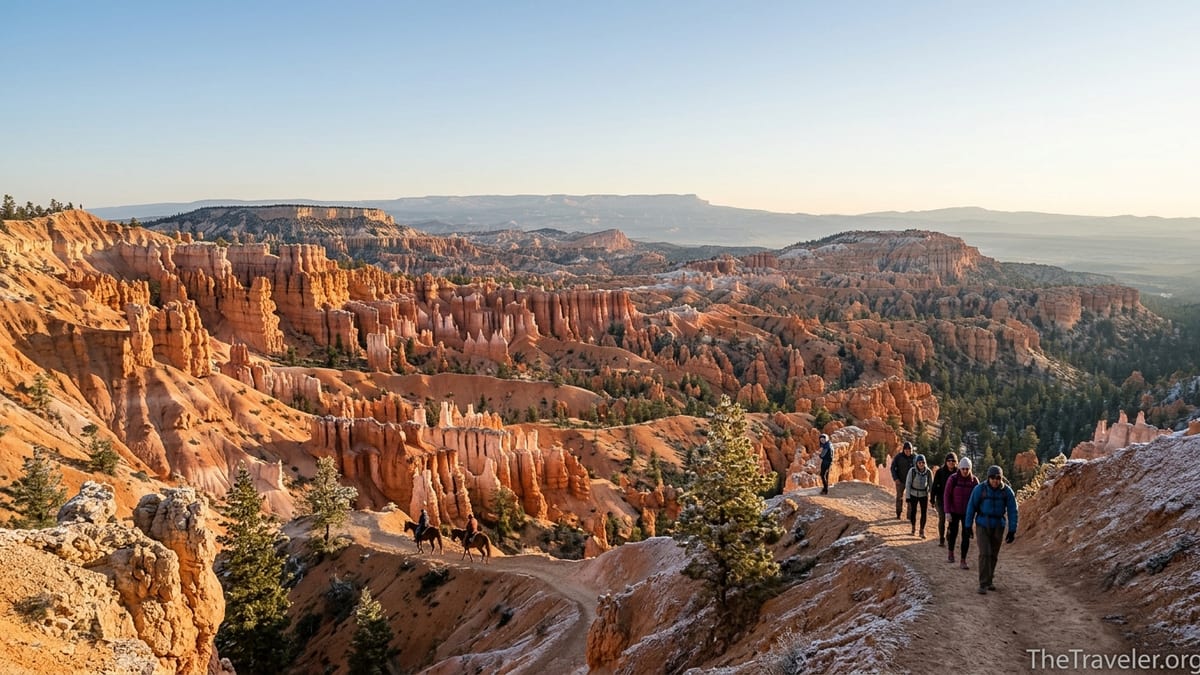
How to Plan Your Time in Bryce Canyon
Bryce Canyon sits at over 8,000 feet in elevation in southwestern Utah, which shapes everything from how you hike to which tours run at different times of year. Most first-time visitors underestimate both the altitude and the driving required to reach this relatively remote park, so it helps to think in full days rather than quick stops. If you are coming from Las Vegas or Salt Lake City, expect a four to five hour drive before you even see the hoodoos.
The heart of most visits is the Bryce Amphitheater area, a stretch of viewpoints from Sunrise Point to Bryce Point, all linked by short walks and the Rim Trail. With one full day you can ride the free park shuttle in season, walk between a few overlooks and hike a classic loop like Navajo Loop plus Queen’s Garden. With two or three days you can add a guided experience such as horseback riding into the canyon, a dedicated sunrise or sunset photo outing and an evening of stargazing.
Weather and services also vary sharply by season. From roughly late April to October, shuttles run and most tours operate. In winter, the park is open but services are reduced, roads can be icy and some trails close after snowstorms. Shoulder seasons in May and September often deliver sunny days, crisp nights and fewer crowds, which pairs especially well with lodge stays and night-sky tours.
Because Bryce Canyon is compact, booking a lodge or hotel within a 15 to 20 minute drive of the entrance can transform your trip. Staying near the rim means you can step outside for sunrise over the hoodoos, catch an afternoon nap and return for a late-night look at the Milky Way without long drives in the dark.
Best Lodges and Places to Stay Near the Rim
The most coveted address at Bryce Canyon remains The Lodge at Bryce Canyon, the only lodge within park boundaries and a short walk from Sunrise and Sunset Points. This historic property operates seasonally, with its main lodge rooms and suites typically open from early March through late November, while the rustic cabins usually run from late April into mid-October. Rooms are simple rather than luxurious, and travelers consistently report that you are paying primarily for the location and the ability to step out your door and be at the rim in minutes.
The lodge complex includes Western Cabins with vaulted ceilings and gas-log fireplaces, motel-style rooms in low-slung Sunrise and Sunset buildings, and a small number of lodge rooms upstairs in the main building. There is no television or in-room Wi-Fi, which many guests see as part of the unplugged charm. Dinner reservations are recommended at the on-site restaurant in peak months, and it is common for guests to book a year ahead for popular times such as June weekends or early October foliage season.
Just outside the park in Bryce Canyon City, large hotels such as Best Western Plus Bryce Canyon Grand Hotel and Best Western Plus Ruby’s Inn offer a more conventional experience with larger rooms, pools and reliable Wi-Fi. Recent traveler reports in spring 2026 mention rates around the low to mid 200 dollars per night at simpler properties like Bryce Canyon Pines Lodge, with the big chain hotels often pricing higher during holidays and school breaks. These options work well if you want predictable comfort, easier parking and quick access to restaurants and convenience stores.
For travelers looking for a more atmospheric stay while still being close to the park, glamping-style resorts have become popular. Under Canvas Bryce Canyon, located roughly a 15 minute drive from the entrance, runs seasonally from early May through late September and offers large canvas tents outfitted with proper beds, wood-burning stoves and private decks looking out over John’s Valley. This style of stay commands a premium price, but many guests find the combination of dark skies, campfire-style ambiance and hotel-level bedding memorable, especially for couples or special occasions.
Top Bryce Canyon Tours to Book Ahead
Because Bryce Canyon is relatively small, you can see a lot on your own. Still, a few guided tours stand out enough to justify booking, particularly for visitors who prefer not to navigate unfamiliar trails or mountain driving. The highest demand is for horseback rides into the Bryce Amphitheater, guided off-road and overlook excursions just outside the park and organized stargazing experiences that take advantage of the park’s International Dark Sky status.
Inside the park, horseback and mule rides are operated under concession by Canyon Trail Rides. The company typically offers two and three hour rides from roughly April through the end of October, depending on weather. Shorter rides follow a dedicated horse trail and portions of the Peekaboo Loop, giving you a perspective far below the rim that hikers often miss. Because horse and mule numbers are limited each day, departures in peak summer can sell out weeks ahead, so it is wise to reserve as soon as you have firm dates.
Outside the park, outfitters based in nearby towns such as Tropic, Panguitch and Kanab offer a menu of guided hikes, photography tours and combination trips. One example is a small-group UTV and stargazing tour from an adventure company near Bryce that drives you to a remote overlook with sweeping views back toward the national park. Guests typically arrive in the late afternoon, travel out by side-by-side vehicle across easy dirt tracks, watch the sunset and stay to view the Milky Way with the help of a guide and provided star charts or telescopes.
If you want a deeper dive into the region beyond the park, you can also book day tours that combine Bryce Canyon viewpoints with nearby attractions such as Kodachrome Basin State Park or the slot canyons and rock formations of Grand Staircase-Escalante National Monument. These often depart from Bryce Canyon City or towns along Scenic Byway 12 and include transport, a picnic-style lunch and interpretive guiding, which is particularly helpful for travelers uncomfortable with backcountry navigation or variable desert weather.
Unforgettable Hiking, Horseriding and Rim Walks
Most visitors should plan at least one half-day to experience a classic Bryce hike that drops below the rim, plus some easier rim walking where the main concern is taking too many photos. The signature combo is the Navajo Loop and Queen’s Garden Trail, often linked into a three mile loop starting and ending at Sunrise or Sunset Point. Expect steep switchbacks that feel more demanding at 8,000 feet than the distance suggests, and pack layers since the shaded canyon floor can feel much cooler than the sunny rim.
For a quieter experience that still delivers hoodoos at close range, consider Fairyland Loop, an approximately eight mile circuit that dips in and out of shallow canyons and tends to see fewer crowds than the trails around the main amphitheater. Hikers often start early to avoid midday sun, bringing at least two liters of water per person and snacks, especially in July and August when temperatures rise. Another option for those short on time or mobility is to walk only a portion of the Rim Trail, for instance between Sunrise and Bryce Points, then ride the shuttle back.
Horseback riding adds a different dimension to the landscape. When you join a Canyon Trail Rides trip, you typically check in at the corral near The Lodge at Bryce Canyon, located along the lodge loop road. Riders are matched with horses or mules based on size and experience, fitted with helmets if desired and briefed on basic commands and trail etiquette. Even confident riders should be prepared for narrow sections and drop-offs, which can feel intimidating to some but are managed carefully by guides who space riders out and keep the pace controlled.
Families with younger children, travelers with knee issues or those uncomfortable with heights sometimes choose gentler horse tours outside the park where trails undulate through forest and open red-rock country that resembles Bryce without the steep walls. Ranch-style operations near Boulder Mountain and in John’s Valley, for example, offer half-day rides across meadows and pinyon-juniper hills, often combined with simple cowboy lunches or time to help brush and saddle the horses.
Stargazing, Sunrises and Seasonal Events
Bryce Canyon is celebrated as one of the finest stargazing destinations in the United States, thanks to its high elevation, dry air and distance from major cities. On a moonless summer night, it is common to see thousands of stars, the cloudy band of the Milky Way arcing overhead and even satellites tracking silently across the sky. The park has earned International Dark Sky Park status and typically hosts ranger-led astronomy talks and telescope viewing sessions several nights a week in peak season, often near the visitor center or at designated viewpoints.
Independent stargazers usually time their outings around the lunar cycle, choosing nights near the new moon when the sky is darkest. A simple but effective plan is to park at the visitor center or one of the major overlooks before full dark, walk a short distance along the rim and allow your eyes to adjust. Dress more warmly than you expect, particularly in shoulder seasons when night temperatures can drop close to freezing, and bring a headlamp with a red-light setting to preserve night vision.
Sunrise and sunset also bookend the Bryce experience. Sunrise Point and Sunset Point are aptly named and easily reached from both the lodge and shuttle stops. In June and July, the first light can arrive before 6 am, so guests often stay at the lodge or in Bryce Canyon City specifically to make pre-dawn starts easier. During winter, sunrise is later, but deep orange and pink light on snow-dusted hoodoos reward those who brave the cold.
Throughout the year, local businesses and park partners sometimes organize special events that enhance a visit. A February winter festival hosted in nearby Bryce Canyon City, for example, has in recent years featured guided snowshoe walks, geology talks with park rangers and family activities such as ice skating and cross-country skiing. Summer can bring photography workshops and night-sky festivals that combine lectures, telescope sessions and astrophotography instruction, all of which tend to fill quickly and are worth booking as soon as dates are announced.
Using the Shuttle and Practical Logistics
From roughly early April through mid-October, Bryce Canyon operates a seasonal shuttle that connects Bryce Canyon City hotels, the visitor center and major viewpoints in the Bryce Amphitheater area. In 2026, shuttle hours run from 8 am into the early evening or later depending on the month, with more extended hours during the busiest summer period. The shuttle is free with your park entrance fee, which for most vehicles is currently in the mid 30 dollar range for a seven day pass.
The easiest place to leave your car is at the large shuttle station parking lot in Bryce Canyon City or at the additional lot across from the visitor center. Buses tend to arrive about every 15 minutes, though wait times can stretch a bit during mid-day peaks. Because parking at Sunrise and Sunset Points is limited, many visitors choose to hop on the shuttle instead of circling for a space, particularly if they are heading out on a horseback ride or timed tour that requires prompt arrival.
Entrance fees can be paid at the booth when you drive in or with America the Beautiful annual passes, which are good value if you plan to combine Bryce with other Utah parks such as Zion, Capitol Reef, Arches or Canyonlands. In summer, it is common for rangers or signs to encourage drivers to leave their vehicles outside the most congested sections and ride the shuttle to reduce traffic at the rim.
Regardless of season, altitude and weather merit respect. Even in June, mornings can start around freezing, then climb quickly under intense sun. Pack layers, a brimmed hat, sunglasses and sunscreen, and keep more water on hand than you think you need. Afternoon thunderstorms sometimes build in July and August, so check the forecast before committing to long exposed hikes or rim-side photography sessions.
Outdoor Experiences Beyond the Park Boundary
One of the best-kept secrets of a Bryce trip is how much there is to do just beyond the park’s boundaries. Scenic Byway 12, which runs west to east through nearby towns such as Tropic, Cannonville and Escalante, provides access to state parks, slot canyons and higher-elevation forests that can round out an itinerary. Many travelers pair a day or two inside Bryce with half-day side trips that feel far less crowded but equally dramatic.
Kodachrome Basin State Park, roughly 30 to 40 minutes from Bryce Canyon, offers shorter hiking trails among tall sandstone chimneys and multi-hued cliffs. Trails like Angel’s Palace and Panorama typically take one to two hours and are popular with families seeking gentler walks. Guided horseback rides sometimes operate in this area as well, providing a more relaxed alternative to the steeper routes inside Bryce.
To the east, Grand Staircase-Escalante National Monument opens up a vast backcountry of slickrock, washes and slot canyons. Outfitters based in nearby towns offer day tours to non-technical slots such as Peek-a-Boo and Spooky Gulch, or to panoramic overlooks that look back toward Bryce’s rim from a distance. These guided excursions usually include high-clearance vehicle transport along rough roads, which many visitors with rental cars prefer not to tackle on their own.
For glamping and cabin stays that still connect easily with Bryce, small properties along John’s Valley Road and near Panguitch Lake provide a quieter, more rural feel. Guests might spend a full day hiking in Bryce, then return to a tent or tiny home with campfires, starry skies and little to no road noise. This style of base works particularly well for travelers combining Bryce with Zion, Cedar Breaks or the North Rim of the Grand Canyon on a broader loop.
The Takeaway
Bryce Canyon National Park rewards travelers who slow down. Booking one of the limited rooms at The Lodge at Bryce Canyon or a nearby hotel in Bryce Canyon City, reserving a horseback ride into the amphitheater and planning at least one night of intentional stargazing can turn a quick look at the hoodoos into a full, immersive experience. Shoulder season visits in late spring or early fall often bring more comfortable temperatures, clearer views and easier parking, but with the right planning you can create a memorable trip in any month.
Think carefully about your priorities. If sunrise and sunset are most important, staying as close to the rim as budget allows will pay dividends. If you value comfort and amenities, larger hotels and glamping sites just beyond the gate may suit you better. And if you want to understand the geology, ecology and dark skies of Bryce in depth, guided tours with knowledgeable local operators can add nuance that guidebooks alone rarely provide.
However you choose to structure your days, keep an eye on seasonal shuttle schedules, be realistic about altitude and weather, and allow room in your plan for serendipity. Some of the most memorable Bryce moments happen when a passing cloud opens a shaft of light on the hoodoos, or when you step outside your room late at night and realize just how many stars are overhead. With a bit of advance planning and the right mix of tours, lodges and outdoor experiences, Bryce Canyon can feel both spectacular and surprisingly accessible.
FAQ
Q1. How many days do I need in Bryce Canyon National Park?
Most travelers are satisfied with one to two full days, which allows time for the main viewpoints, a below-the-rim hike and one guided experience such as horseback riding or stargazing. If you also want to explore nearby state parks or Grand Staircase-Escalante, plan on three days or more.
Q2. When is the best time of year to visit Bryce Canyon?
Late May through June and September into early October usually offer a good balance of pleasant temperatures, open facilities and manageable crowds. July and August are busiest and can bring afternoon thunderstorms, while winter is quieter but often snowy and cold with some services reduced.
Q3. Should I stay at The Lodge at Bryce Canyon or outside the park?
Stay at the lodge if being steps from the rim for sunrise, sunset and night sky viewing is your top priority and you are comfortable with simple, rustic rooms. Choose hotels or glamping options just outside the park if you prefer more modern amenities, potentially lower prices and easier parking.
Q4. Do I need a guided tour to see Bryce Canyon properly?
No, you can see the main overlooks and hike popular trails on your own using park maps and shuttle buses. Guided tours become most valuable if you want horseback riding into the amphitheater, expert-led stargazing, off-road access to remote overlooks or guided hikes in nearby slot canyons.
Q5. How far in advance should I book horseback riding tours?
In peak season from roughly June through September, it is wise to reserve horseback or mule rides several weeks in advance, especially for morning departures and weekends. In shoulder seasons, you may find more last-minute availability but should still book as soon as your travel dates are firm.
Q6. Is the Bryce Canyon shuttle worth using if I have a car?
Yes, during the main season the shuttle helps you avoid parking congestion at popular viewpoints and trailheads. Leaving your car at the shuttle station or visitor center and riding the bus is especially helpful if you have timed tour reservations or plan to move frequently between overlooks.
Q7. What should I pack for hiking at Bryce’s elevation?
Bring layered clothing for quickly changing temperatures, sturdy walking shoes or light hiking boots, sun protection, more water than you think you need and simple snacks. At over 8,000 feet, even short hikes feel harder, so plan conservative distances and allow time to rest and enjoy the views.
Q8. Are Bryce Canyon’s trails suitable for young children?
Many families with school-age children enjoy short sections of the Rim Trail near Sunrise and Sunset Points and part of the Navajo or Queen’s Garden Trails. Steeper switchbacks and exposure can be challenging for very young kids, so choose routes carefully, keep children close near drop-offs and be prepared to turn around if anyone is tired or uncomfortable.
Q9. Can I visit Bryce Canyon as a day trip from Zion or another park?
It is possible to visit Bryce as a long day trip from Zion or from towns such as Kanab or Page, but you will spend several hours driving. For a more relaxed experience with time for sunrise, sunset or stargazing, staying at least one night near Bryce is recommended.
Q10. Do I need special permits for stargazing or night photography?
No permit is required for casual stargazing or non-commercial night photography from viewpoints and along open trails. If you are running a workshop, using large lighting setups or filming commercially, you may need additional permissions, so check current park rules before you go.