


The Queen’s Garden Trail in Bryce Canyon National Park is one of the most rewarding short hikes in the American Southwest. Dropping from the rim at Sunrise Point into a maze of glowing hoodoos, arches, and fins, it gives you classic Bryce views in just a few miles. This guide walks you through the best route options, smart trail tips, and real-world advice so you can experience Queen’s Garden at its best, whether you want a gentle out and back or a full half-day adventure linking nearby trails.
Get the latest updates straight to your inbox!
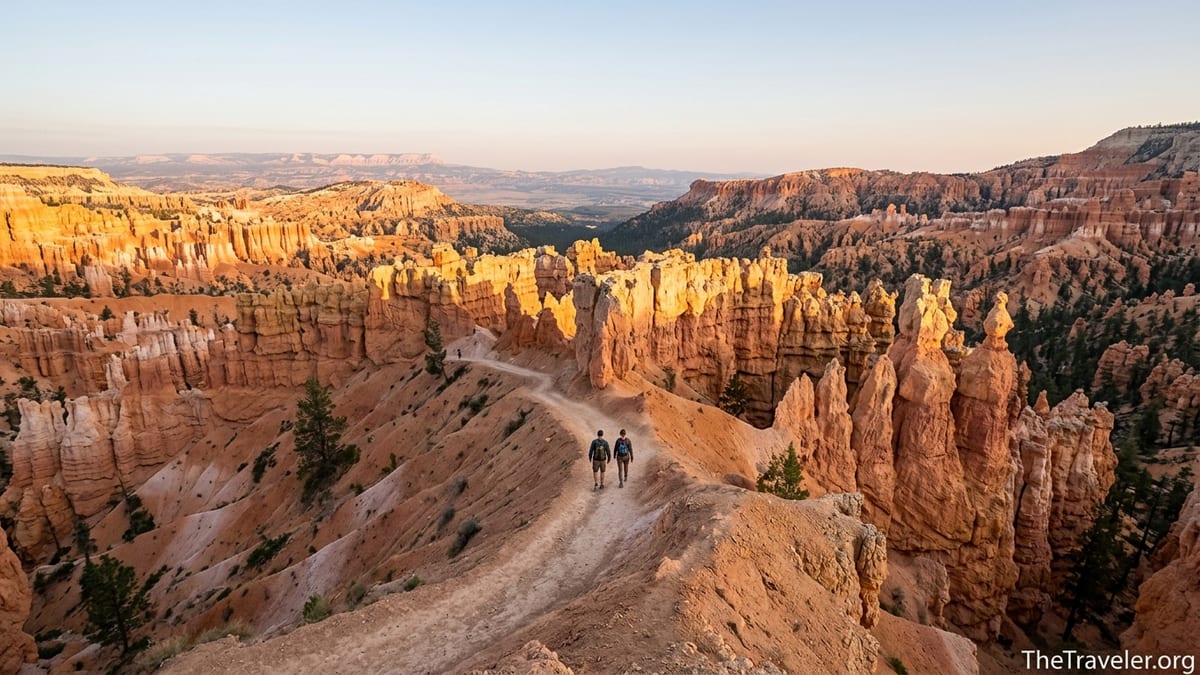
Getting Oriented: Where the Queen’s Garden Trail Starts and What to Expect
The Queen’s Garden Trail begins at Sunrise Point, near the heart of Bryce Canyon’s main amphitheater. From the parking area at Sunrise Point, you step onto the rim at about 8,000 feet in elevation and almost immediately look down into a forest of red and orange hoodoos. The trail quickly leaves the rim, winding down a ridgeline into the amphitheater so you are soon walking among the formations that, from above, look like miniature sandcastles.
According to the National Park Service, the official Queen’s Garden out and back is about 1.8 miles round trip with roughly 400 to 450 feet of elevation change and is considered a moderate hike because of the steep grades and high elevation. It usually takes most visitors between 1 and 2 hours, depending on how often they stop to take photos or catch their breath. Although it is the least difficult trail that descends into the Bryce Amphitheater, it still feels strenuous if you are not used to hiking at altitude, especially on the return climb to the rim.
Near the bottom of the trail, a short spur leads to the namesake Queen’s Garden area, where a distinctive hoodoo is said to resemble Queen Victoria on her throne. This is a common turnaround point for families with children or anyone looking for a short taste of hiking below the rim. The trail surface is mostly packed dirt and sand with some rocky sections and a few narrow passages through windows carved into the rock.
Facilities are nearby but not on the trail itself. Seasonal water and restrooms are available at the general store and restrooms near Sunrise Point and at the main visitor center a short drive away. Most hikers top off water at the visitor center or general store before walking to Sunrise Point, then return to those facilities after their hike.
Best Route Options: From Easy Out and Back to Iconic Combination Loops
The simplest way to experience Queen’s Garden is to hike it as an out and back from Sunrise Point. If you walk from the rim down to the Queen Victoria hoodoo and then retrace your steps, you will cover about 1.8 miles and experience some of the most iconic scenery in the park in under two hours. This option works well if you are arriving midday on a road trip and want a quick but memorable hike without committing to several hours on the trail.
If you have a bit more time and energy, consider linking Queen’s Garden with the Navajo Loop to form the popular Queen’s Garden / Navajo Combination Loop. This classic route is about 2.9 miles long with roughly 600 feet of elevation change. Most guidebooks and the National Park Service recommend hiking it clockwise: descend Queen’s Garden from Sunrise Point, traverse the connecting section at the bottom, then climb out via the Two Bridges side of the Navajo Loop to Sunset Point before walking the half-mile rim trail back to your car at Sunrise Point.
This combination loop packs in many of Bryce’s most famous features in a single half-day outing. Early in the hike you wander beneath windows cut into the rock, then continue through the Queen’s Garden hoodoos. As you approach the Navajo side, you pass tall Douglas firs and finally climb a series of tight switchbacks beneath towering walls to reach Sunset Point. Many visitors who only have one day at Bryce Canyon choose this loop as their primary hike, often starting around sunrise, taking two to three hours including photo stops.
For strong hikers wanting a longer outing, Queen’s Garden can also be extended as part of the Figure 8 Combination Loop, which combines Queen’s Garden, Navajo, and the Peekaboo Loop into roughly 6.4 miles. This is a solid half-day to full-day objective and is best for those comfortable with several hours of hiking and substantial elevation change. Because this route involves descending and climbing multiple times, it can feel more strenuous than the mileage suggests, especially in summer heat or at mid-day.
When to Hike: Weather, Seasons, and Time-of-Day Strategy
Bryce Canyon sits at a higher elevation than many nearby parks, and its weather shapes how you should plan your Queen’s Garden hike. Summer daytime highs at the rim often sit in the high 60s to 80s Fahrenheit, with cooler temperatures below the rim, but afternoon thunderstorms in July and August are common. Spring and fall can bring crisp mornings, pleasant days, and occasionally sudden storms or light snow. Winter transforms Queen’s Garden into a snow-dusted wonderland, but ice and packed snow on the switchbacks can make footing treacherous.
The National Park Service notes that from October through May, nighttime temperatures often drop below freezing, and snow or ice can linger on shaded portions of the trail well into spring. That means a mid-March visit might require microspikes and warm layers, while a June visit will call for sun protection and extra water. It is wise to ask rangers at the Bryce Canyon Visitor Center about current conditions when you arrive, especially between late fall and early spring when icy sections can prompt temporary trail advisories or partial closures.
Within a single day, sunrise to mid-morning is generally the best time to hike Queen’s Garden. The hoodoos on the amphitheater’s east-facing slopes light up in soft gold and pink tones just after sunrise, and temperatures remain comfortable while you climb back to the rim. For example, in July, many visitors aim to be at Sunrise Point around 6:00 to 7:00 in the morning, finishing the loop before the midday sun and any afternoon storms. Late afternoon and early evening can also be beautiful, but you will want to keep an eye on the time so you do not have to climb out in the dark.
Keep in mind that heavy rains can trigger temporary issues on connecting trails. During periods of intense monsoon storms, sections of the Navajo Loop have occasionally closed due to mudslides or rockfall, which changes how you can combine Queen’s Garden with other routes. In practice, that might mean hiking Queen’s Garden as an out and back and then exploring a short section of the Rim Trail if a loop is not possible on your visit.
Access, Parking, and Using the Bryce Canyon Shuttle
Because the Queen’s Garden Trail starts at Sunrise Point in the busy Bryce Amphitheater area, parking and access planning can save you time and stress. During peak season, the Sunrise Point and Sunset Point lots often fill by mid-morning. The park strongly encourages visitors to park at the main visitor center or in designated lots in Bryce Canyon City and ride the free seasonal park shuttle to the amphitheater stops. The shuttle typically serves all major viewpoints, including Sunrise and Sunset Points, allowing you to step off directly at the trailheads.
For example, many travelers driving in from nearby towns like Panguitch or Tropic will park at the large shuttle lot in Bryce Canyon City by mid-morning, board the shuttle with just a daypack, and ride to Sunrise Point to start their Queen’s Garden hike. After finishing the Queen’s Garden / Navajo Loop at Sunset Point, they can stroll along the rim back to Sunrise Point or catch the shuttle from Sunset Point back to the visitor center and then to their car. This approach avoids circling crowded lots and makes it easier to hike one-way combinations.
If you choose to drive to Sunrise Point yourself, arriving early is key. During busy spring break weeks and holidays, some visitors report arriving around 8:00 in the morning to find the amphitheater lots already getting full. In those situations, parking at the visitor center and riding the shuttle is often faster than competing for a spot close to the rim. Oversized vehicles such as larger motorhomes and long trailers face additional restrictions in the amphitheater parking areas when the shuttle is running, so it is especially important for RV travelers to plan ahead and use designated shuttle parking areas instead of trying to squeeze into small lots.
Regardless of how you arrive, build a short stop at the visitor center into your plan. There you can check current trail conditions, see which sections of Navajo or other connecting trails are open, and refill water bottles before heading toward Sunrise Point. In peak season, the visitor center also posts wait times and shuttle information so you can decide whether to drive or ride on that particular day.
Trail Experience: Scenery, Terrain, and Realistic Time Plans
As soon as you leave Sunrise Point and start down Queen’s Garden, the scenery changes from a distant panorama to intimate views between spires. You will pass through narrow doorways carved into fins of orange and cream rock, walk along a ridgeline with drop-offs on both sides, and gaze up at hoodoos that shift in color through the morning, from cool pinks to bright oranges. At several points, short side paths lead to rock windows that naturally draw photographers and families to stop and take pictures.
The footing is generally good but variable. The compacted sandy trail can become dusty and slightly slippery in dry conditions, particularly on the steeper descending switchbacks. After heavy rain, lower sections may be slightly muddy, especially where Queen’s Garden connects toward the horse trail junction or the Navajo side. People wearing everyday sneakers can complete the hike in dry summer weather, but light hiking shoes or trail runners with grippy soles give better confidence on the steeper grades and when descending loose dirt.
A realistic time plan for the standard out and back is around 90 minutes for most visitors who stop often for photos. Families with school-aged children might budget two hours so kids can explore side nooks and pose for pictures at the Queen Victoria hoodoo. For the full Queen’s Garden / Navajo Loop, two to three hours is common, and you will want to add a little extra if members of your group are adjusting to altitude or do not hike regularly. Many people pair the hike with a short drive afterward to viewpoints farther south along the park road, such as Inspiration Point and Bryce Point, to round out a full day in the park.
If you are visiting in shoulder seasons, expect slower going through any icy or packed snow sections. In February or March, for instance, some hikers carry microspike traction that slips over boots, allowing them to navigate shaded switchbacks comfortably while others in basic sneakers turn around or cling nervously to the wall. Allow extra time in winter to move cautiously, and consider focusing on sunlit sections of the amphitheater later in the morning when ice can soften slightly.
Safety, Gear, and Acclimating to Bryce’s High Elevation
Queen’s Garden might be short, but its combination of elevation, sun exposure, and steep grades means it deserves the same preparation you would bring to a longer mountain hike. The rim sits around 8,000 feet above sea level, significantly higher than many travelers are used to. At this altitude, you may feel out of breath sooner than normal, and the sun’s intensity can surprise visitors who were comfortable at lower desert parks like Zion or Arches.
Plan to carry at least one to one and a half liters of water per person for the Queen’s Garden / Navajo Loop in warm weather, and more if you are hiking in the heat of summer. A simple daypack with space for water, a light fleece or wind layer, sunscreen, and snacks is usually enough. Many visitors pick up inexpensive 1-liter squeeze bottles at gas stations in nearby towns, while others prefer soft flasks or a 2-liter hydration reservoir. Whatever system you choose, make sure it is easy to access so you actually drink as you hike.
Clothing should be built around layers. A typical July morning at Sunrise Point might start in the low 50s Fahrenheit, with temperatures climbing into the 70s or 80s by late morning. A lightweight long-sleeve sun shirt, a breathable T-shirt, and a light insulated layer or fleece you can stash in your pack work well for most summer days. From late fall through early spring, add a beanie, gloves, and a warmer jacket, especially if you plan to be out near sunrise when the wind on the rim can feel biting.
Footwear is also important. Low hiking shoes or trail runners with good grip handle the descent and climb more securely than smooth-soled street shoes. Families sometimes outfit kids in basic running shoes, which can be fine in dry conditions for the out and back, but for winter or shoulder season visits, consider waterproof boots and optional microspikes for icy mornings. Trekking poles are not essential on this short trail but can make the climb out more comfortable for those with knee issues or anyone who prefers extra stability on loose dirt.
Photography, Crowds, and Minimizing Your Impact
Queen’s Garden is one of the most photographed trails in Bryce Canyon, and for good reason. The ridgeline descent gives you sweeping amphitheater views, the sculpted rock windows frame dynamic compositions, and the Queen Victoria hoodoo creates a natural focal point for photos. Serious photographers often carry a DSLR or mirrorless camera with a wide-angle lens in the 16 to 24 millimeter range to capture the density of hoodoos, while casual shooters rely on smartphones and are still rewarded with striking images thanks to the soft early morning light.
To avoid large crowds in your photos and on the trail, time your hike for early morning or later in the day. On busy holiday weekends, the first shuttle of the day toward Sunrise Point often carries a mix of photographers, families, and hikers aiming to be below the rim as soon as light hits the formations. If you prefer quieter scenes, even shifting your start time 30 minutes earlier can make a noticeable difference. Another tactic is to linger slightly behind big groups; many bus tours move in tight clusters, so allowing one large group to pass before you step onto the trail can create a bubble of space.
As with any popular national park trail, minimizing your impact is crucial. Stay on the designated path, even when social media photos might tempt you to walk out onto fragile soil between hoodoos. Do not climb on the formations or carve into the rock. Bryce’s soft sandstone erodes easily, and a single shortcut can leave an ugly scar. Pack out all trash, including snack wrappers and tissues, and avoid feeding wildlife. Ravens and chipmunks along Queen’s Garden quickly learn where tourists drop crumbs, which can alter their behavior and create health problems for the animals.
Sound also travels easily in the amphitheater’s natural bowl. Keeping voices low and avoiding portable speakers preserves the sense of wildness for everyone hiking below the rim. Many visitors describe one of their favorite moments on Queen’s Garden as the quiet pause halfway down the trail, when the chatter from the rim fades and the wind and birds become the only sounds echoing between the hoodoos.
The Takeaway
The Queen’s Garden Trail is an ideal introduction to hiking below the rim at Bryce Canyon National Park. It is short enough for families and casual hikers yet dramatic enough to satisfy seasoned travelers who have explored other Southwestern parks. By understanding the route options, seasonal weather, and elevation challenges, you can choose a version of the hike that fits your group, from a one-hour out and back to a full half-day loop linking Queen’s Garden with Navajo and beyond.
If you arrive prepared with layers, sufficient water, and realistic expectations about the climb back to the rim, Queen’s Garden rewards you with intimate views of Bryce’s hoodoos that you simply cannot get from roadside overlooks. Combine an early start with smart use of the shuttle and a quick check of trail conditions at the visitor center, and you will spend more time walking between glowing spires and less time circling parking lots or worrying about weather. For many visitors, a single morning on Queen’s Garden becomes the highlight of their Bryce Canyon visit and a benchmark for all future hikes in the region.
FAQ
Q1. How long does it take to hike the Queen’s Garden Trail?
Most visitors complete the standard Queen’s Garden out and back in about 1 to 1.5 hours, or 2 to 3 hours if they continue on the full Queen’s Garden / Navajo Loop.
Q2. Is the Queen’s Garden Trail suitable for children and beginners?
Yes, many families hike Queen’s Garden safely. The trail is steep in places, so beginners should take their time, stay away from drop-offs, and turn around whenever they feel they have gone far enough.
Q3. What is the best time of day to hike the Queen’s Garden Trail?
Early morning, around sunrise to mid-morning, offers cooler temperatures, softer light on the hoodoos, and fewer crowds compared with midday or afternoon.
Q4. Do I need special gear or hiking boots for Queen’s Garden?
Sturdy walking shoes or light hiking shoes with good grip are recommended. In winter or early spring, traction devices and warmer layers may be necessary due to ice and snow.
Q5. Can I hike Queen’s Garden if I am not used to high elevation?
Yes, but expect to feel more winded than usual. Walk slowly, drink water regularly, and rest on the climb back to the rim, especially if you have just arrived from low altitude.
Q6. Is the Queen’s Garden / Navajo Loop always open?
Not always. Sections of connecting trails, especially parts of the Navajo Loop, may close temporarily because of rockfall, mudslides, or icy conditions, so check current status at the visitor center.
Q7. Do I have to use the shuttle to reach the Queen’s Garden Trailhead?
No, you can drive to Sunrise Point, but parking is limited and often fills by mid-morning in peak season. Many visitors find it easier to park at the visitor center or in Bryce Canyon City and ride the free shuttle.
Q8. Are there restrooms and water available near the trail?
Yes, restrooms and seasonal water fill stations are available near Sunrise Point and at the main visitor center, but there are no facilities on the trail itself, so start with full bottles.
Q9. Can I hike Queen’s Garden in winter?
Yes, Queen’s Garden can be beautiful in winter, but expect snow and ice on the trail. Wear warm layers, consider traction devices, and check conditions for any safety advisories.
Q10. Is Queen’s Garden a good hike if I only have half a day at Bryce Canyon?
Yes, Queen’s Garden on its own or combined with the Navajo Loop is one of the best ways to experience Bryce Canyon’s signature hoodoos in just a few hours.