


More news on this day
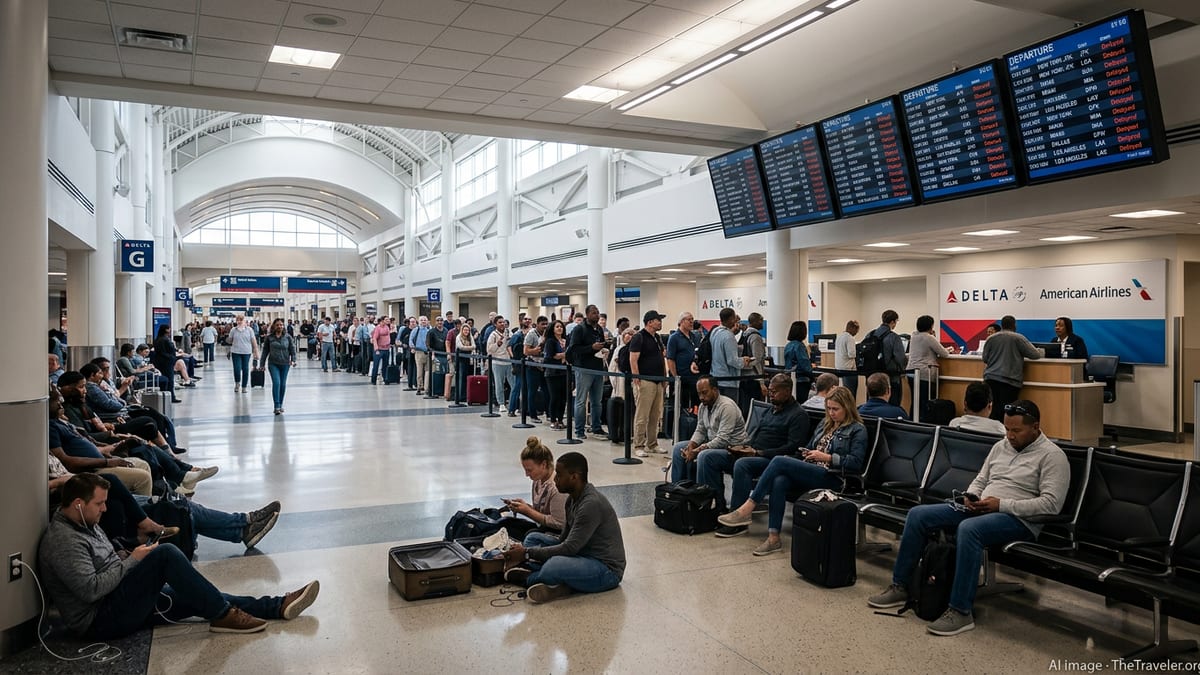
Hundreds of passengers at San Francisco International Airport are facing hours-long waits and missed connections after a fresh wave of six cancellations and more than 200 delays disrupted departures on major routes to Narita, Dubai, Xiamen, Tokyo, Los Angeles and New York, affecting services operated by United Airlines, American Airlines, Southwest, SkyWest and Delta Air Lines.
Get the latest news straight to your inbox!
Disruptions Ripple Across Domestic and International Routes
Publicly available flight-tracking data for Friday shows San Francisco International Airport again coping with significant schedule disruptions, with around 6 cancellations and 205 delayed departures and arrivals across multiple carriers. The disruption is concentrated among the airport’s largest operators, including United Airlines, American Airlines, Southwest, SkyWest and Delta Air Lines, which together handle the bulk of traffic at the hub.
Delays are hitting both domestic shuttles and long haul services. Routes to and from Tokyo’s Narita airport, including codeshare services marketed by United and operated by All Nippon Airways, have recorded extended departure holds on several days this week, while additional long haul flights toward Asia and the Middle East, including connections to Xiamen and Dubai, are also showing late operations. On the domestic side, shuttle corridors to Los Angeles and New York remain especially vulnerable, with creeping delays building across the day as aircraft and crews fall out of position.
Operational data for recent days indicates that some Los Angeles to San Francisco flights have arrived more than an hour behind schedule, while transcontinental services from New York have also experienced late-night arrivals following delayed departures from the East Coast. These patterns mirror the broader picture at San Francisco, where even modest ground holds and air traffic constraints can quickly cascade across a network that relies on tight connection times.
While the raw numbers of cancellations remain relatively modest compared with major nationwide disruptions, the volume of delayed departures means many passengers are spending far longer in terminals than planned and are missing onward connections to international destinations.
Weather, Airspace Constraints and Runway Work Among Likely Factors
Industry reporting over the past week has highlighted a combination of causes behind the elevated disruption levels at San Francisco. Federal aviation data shows that the airport has recently been subject to ground delay programs, where arriving traffic is metered and slowed because of airspace or runway capacity constraints. These traffic management initiatives can lead to average delays of close to an hour when in effect, even on clear-weather days.
Separate coverage and traveler accounts have also pointed to ongoing runway work and infrastructure projects that periodically limit usable capacity. When multiple runways are closed or partially available, San Francisco’s tightly choreographed arrival and departure streams become more prone to bottlenecks, particularly during peak morning and late-afternoon banks of flights. The result is that what might otherwise be manageable delays at a smaller airport can translate into systemwide knock-on effects at a large international hub.
Compounding the local factors, parts of the national airspace system have been affected this week by thunderstorms and convective weather in key regions, including around major East Coast hubs. Carriers such as United have issued travel waivers for certain routes, allowing customers to rebook without fees when flying to or from affected airports. Although these waivers primarily target weather-sensitive areas, the resulting aircraft and crew imbalances can contribute to late operations at West Coast gateways such as San Francisco when planes arriving from disrupted regions are behind schedule.
Analysts note that, taken together, construction-related capacity limits, intermittent ground delays and adverse weather along long haul routings can combine into a complex web of operational challenges. These challenges are especially acute on heavily trafficked days when airlines are running near full schedules and have limited spare aircraft to plug gaps.
Major Carriers Juggle Hub Operations and Passenger Rebooking
United Airlines, which operates its largest West Coast hub at San Francisco, is bearing a significant share of the disruption burden. Publicly accessible schedule data shows repeated delays in recent days on key United domestic trunk routes linking San Francisco with Los Angeles, Phoenix and New York, as well as on select transpacific services and codeshare flights to Tokyo’s Narita airport. With United also handling a large portion of international traffic to Asia from San Francisco, even a small number of late departures or cancellations can leave long haul travelers facing missed interline connections.
American Airlines and Delta Air Lines, both of which operate competitive transcontinental services to New York and other East Coast cities, are also contending with knock-on impacts from weather and congestion farther east. Flight status records for June show some American-operated New York to San Francisco services arriving significantly behind schedule, while Delta’s evening arrivals from John F. Kennedy International Airport have also shown extended block times on days of heavy congestion.
Southwest, which focuses largely on domestic operations, has seen certain point-to-point services between San Francisco and Los Angeles as well as other West Coast cities removed from daily schedules or placed into irregular operation, according to flight listing platforms. SkyWest, operating regional flights on behalf of larger network carriers, is similarly exposed when partner airlines adjust their schedules or when air traffic initiatives reduce arrival slots, leading to delays on shorter feeder routes into San Francisco.
For all five airlines, managing the rolling consequences of a high-delay day involves a combination of rebooking passengers, adjusting aircraft routings and, in some cases, proactively canceling individual rotations to restore schedule integrity. These measures can help stabilize operations over subsequent days, but they leave the affected travelers facing last-minute itinerary changes.
Passengers Face Long Lines, Tight Connections and Limited Alternatives
For travelers at San Francisco International Airport, the operational statistics translate into crowded departure halls, lengthy customer service lines and a scramble for available seats on later flights. With multiple long haul routes to Asia and the Middle East operating near capacity in early summer, rebooking options for passengers delayed on flights to Narita, Xiamen or Dubai can be constrained, particularly for those connecting from other North American cities.
On popular domestic corridors, such as the San Francisco to Los Angeles and San Francisco to New York routes, frequent daily frequencies normally provide a buffer for rebooking. However, when delays become widespread and flights depart full, passengers who miss an early connection can find themselves pushed to much later departures. In some cases, travelers may opt to reroute through alternative West Coast airports, shifting to services from nearby hubs where seat availability is slightly better.
Social media posts and informal traveler reports from the Bay Area over recent days have described airport concourses filled with waiting passengers, improvised overnight stays and families attempting to piece together new itineraries after missed connections. Some travelers report being held on arriving aircraft for extended periods while waiting for a gate to become available, further eroding already tight connection windows.
Consumer advocates note that passengers experiencing long delays or cancellations may be eligible for assistance such as meal vouchers, hotel accommodations or rebooking on later flights, depending on carrier policies and the root cause of the disruption. Accessing that support, however, often requires joining customer service queues at a time when staff resources are stretched by the sheer volume of affected customers.
Ongoing Monitoring Recommended for Upcoming Summer Travel
With the busy summer travel period ramping up, operational experts suggest that San Francisco is likely to remain under pressure whenever runway capacity is reduced or when strong weather systems affect major partner hubs across the country. Historical data for the airport indicates that peak-season days commonly bring elevated delay levels even under normal conditions, especially on popular long haul and transcontinental routes.
Travelers scheduled to fly through San Francisco in the coming days are advised by airline communications and independent travel advisories to monitor flight status closely, check in early and build additional buffer time into itineraries that involve tight international connections. Where possible, selecting earlier departures during the day can improve the chances of securing alternative options if initial flights are heavily delayed or canceled.
Industry observers note that it is too early to characterize the latest cluster of disruptions as an extended crisis, given that the total number of outright cancellations remains limited. Nonetheless, the scale of the delays highlights the sensitivity of a complex hub to incremental shocks, whether from construction, air traffic control initiatives or weather patterns thousands of miles away.
As airlines continue to adjust aircraft rotations and as air traffic managers balance capacity with safety constraints, conditions at San Francisco International Airport may improve or worsen quickly over the course of a single day. For now, the combination of six cancellations and more than 200 delays serves as a reminder of how quickly a modern global gateway can become congested, and how dependent long haul travelers remain on the smooth functioning of a tightly interlinked aviation network.