


Bears Ears National Monument in southeastern Utah is one of the most culturally significant and visually striking landscapes in the American Southwest. Co-managed by federal agencies and a coalition of tribal nations, it protects more than a million acres of mesas, buttes, canyons and cliff dwellings that hold deep meaning for Indigenous communities. For visitors, the best way to experience Bears Ears is on foot and in the company of knowledgeable guides who can help decode its stories. This guide explores standout hiking routes, Navajo and other Indigenous-led tours, river trips and practical tips so you can explore Bears Ears in a way that is both memorable and respectful.
Get the latest updates straight to your inbox!
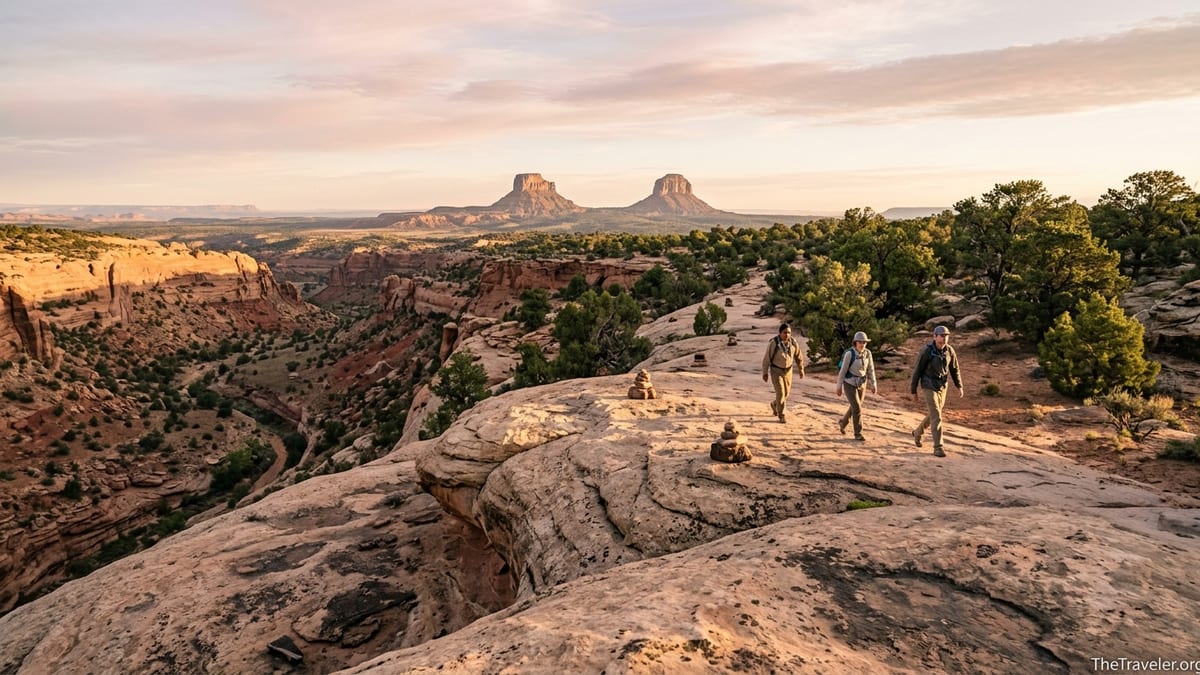
Understanding Bears Ears: A Living Cultural Landscape
Bears Ears National Monument spans roughly 1.36 million acres of public land in San Juan County, Utah, stretching from the twin buttes of the Bears Ears themselves down across Cedar Mesa, Comb Ridge and the canyons that drain into the San Juan River. The area is co-managed by the Bureau of Land Management, the U.S. Forest Service and a tribal commission that represents the Navajo Nation, Hopi Tribe, Ute Mountain Ute Tribe, Ute Indian Tribe and Pueblo of Zuni. For these nations, this landscape is not a backdrop for adventure but a living cultural homeland where ceremonies, origin stories and family histories are rooted.
As you plan hikes or tours, it helps to shift perspective from a typical “national park road trip” mindset toward visiting a living cultural landscape. Instead of trying to “see it all,” most travelers pick a hub town such as Bluff, Blanding or Monticello and then choose a couple of quality experiences: a half or full day on the trail, an Indigenous-guided tour that centers Native perspectives and perhaps a river day on the San Juan. That slower approach aligns better with the monument’s management plan, which emphasizes protection of archaeological sites and sacred places over mass tourism.
Bears Ears has far fewer facilities and signs than more famous Utah parks like Zion or Arches. There are no large visitor centers inside the monument, and trailheads may be marked only by small kiosks or car pullouts. Cell coverage is patchy once you leave U.S. Highway 191 or State Route 95. For most visitors this is part of the appeal, but it also means serious preparation: carrying paper maps or downloaded navigation, extra water and food, and having a realistic understanding of your hiking ability before venturing into the backcountry.
For cultural context, many travelers begin at small museums and visitor centers in nearby towns. The Edge of the Cedars State Park Museum in Blanding, for example, offers exhibits on Ancestral Puebloan life and a preserved kiva you can climb into. Community organizations periodically host talks by tribal representatives and archaeologists, giving you a grounding in why Bears Ears became such a focal point of conservation and tribal rights debates in the first place.
Signature Hikes on Cedar Mesa and Around Bears Ears
Cedar Mesa and its surrounding canyons host some of the most accessible hiking routes in Bears Ears, ranging from short walks to full-day explorations. One of the best-known introductions is the House on Fire hike in upper Mule Canyon, off State Route 95 west of Blanding. The out-and-back route is generally around 3 miles round trip on a sandy, mostly level canyon floor. The reward is a sandstone alcove with an ancient dwelling whose rock streaks glow like flames in morning light. Parking is typically at a signed pullout, and visitors pay a modest per-person day use fee at a self-service kiosk maintained by the Bureau of Land Management.
Nearby Butler Wash offers several spur trails along the base of Comb Ridge, where shallow canyons hide cliff dwellings, towers and rock art. The Butler Wash Ruins overlook, a short walk from a highway-side parking area, is one of the most family-friendly stops. A metal walkway leads to a fenced viewpoint that looks across to a complex of stone structures tucked into the cliff. For more solitude, hikers drive graded dirt roads north or south along Butler Wash to unsigned pullouts where social trails wind toward lesser-known sites. Conditions can shift quickly after rain, so a high-clearance vehicle is recommended beyond the main road.
For a taste of the mesa top, the Cave Towers hike on the eastern edge of Cedar Mesa provides a compact but impressive outing. The path, generally less than a mile round trip, follows the rim to a series of ancient towers that sit close to a canyon edge. As with many routes in the monument, there are few formal safety barriers, so visitors need to keep a close eye on footing and children near drop-offs. On clear days, views stretch toward Elk Ridge and even the distant Rocky Mountains. A small parking area and information sign typically mark the start, and a day use permit is often required.
More experienced hikers and backpackers might explore deeper canyons such as Grand Gulch, Sheiks Canyon or Green House Canyon, all of which contain numerous ruins and rock art panels. These trips often involve route finding, stream crossings or boulder obstacles. Many sections require overnight permits that can sell out on peak spring and autumn weekends. Because resource damage from off-trail travel has become a pressing concern, managers increasingly encourage visitors to use established paths, camp on durable surfaces and limit group size. Checking current regulations with the BLM office in Monticello or online before heading out is essential.
Indigenous-Led Tours and Cultural Experiences
One of the most meaningful ways to experience Bears Ears is through tours led by Indigenous guides whose families have longstanding ties to the region. In the town of Blanding, Ancient Wayves River and Hiking Adventures operates Navajo-owned guided trips that focus on both natural scenery and cultural context. Their offerings often include half-day hikes to viewpoints in Bears Ears, full-day cultural tours in canyon country and river trips on the San Juan. Group sizes are typically kept small, and itineraries may include discussions of Navajo history, traditional ecological knowledge and contemporary issues facing tribal communities.
Travelers who prefer a packaged itinerary sometimes join multi-day small-group trips that include a Bears Ears component. For example, some national outdoor retailers and adventure travel companies run weeklong hiking tours across several Utah parks, with a day set aside for a Navajo-guided hike in or near Bears Ears. These trips generally bundle lodging in Bluff or Monticello, transportation in high-clearance vans, most meals and guiding fees into one per-person cost, which can range from around 2,500 to 4,000 U.S. dollars depending on season and accommodations. While more expensive than self-guided travel, they remove the logistics of navigation, permits and weather calls from individual visitors.
If you want a shorter cultural experience, look for Indigenous-led evening programs, storytelling circles or craft demonstrations occasionally held at lodges and campgrounds in Bluff and Monument Valley. Some Navajo hosts also offer Airbnb-style experiences near the monument that might involve a home-cooked meal, star viewing and conversation about traditional stories connected to the Bears Ears buttes and surrounding mesas. These low-key encounters can be just as impactful as a full-day hike, especially for travelers who are less mobile but still want to connect with the landscape’s living cultures.
Regardless of which operator you choose, it is worth asking direct questions before booking. You might inquire whether the company is Native-owned or employs tribal members as lead guides, how they consult with tribal communities about where they go and what stories they share, and how they handle sensitive archaeological sites. Reputable Indigenous-led operators are usually transparent about which areas they avoid out of respect, why photography might be discouraged at certain moments and how your tour fees support local communities. This transparency is a positive sign that your visit aligns with the spirit as well as the letter of Bears Ears protections.
Scenic Drives, River Trips and Soft-Adventure Options
Not every visitor to Bears Ears is up for long desert hikes, and the good news is that many of the monument’s highlights can be experienced from scenic drives and shorter walks. From Bluff, some outfitters based along the San Juan River corridor offer vehicle-based excursions that enter parts of Bears Ears on graded dirt roads, stopping at overlooks above Comb Ridge, roadside rock art panels or short interpretive trails. These tours are popular with families, photographers and travelers who want to avoid steep climbs or high-altitude exertion while still learning from local guides.
River trips on the San Juan provide another memorable way to experience the region. Depending on water levels and permits, outfitters run day or overnight rafting trips between access points near Bluff and Clay Hills. Along the way, guides point out petroglyph panels, small ruins and geological formations, while also explaining current debates over river management, climate change and cultural site protection. In high season, day trips often cost in the range of 150 to 250 U.S. dollars per adult, including gear, lunch and shuttle service back to town. Overnight journeys with camping, all meals and additional guiding can be significantly more, but they allow for more time at side canyons and quiet beaches.
For independent travelers with a sturdy vehicle, driving the Trail of the Ancients Scenic Byway creates a broad loop through the Bears Ears region. The route connects Blanding, Bluff, Natural Bridges National Monument and Valley of the Gods, with side roads leading toward Cedar Mesa trailheads and viewpoints. While much of the byway is paved, some detours involve gravel or clay surfaces that can become difficult after rain. It is important not to rely solely on rental car navigation systems, which may understate road difficulty. Stopping at regional visitor centers for updated road conditions and printed maps is a wiser practice.
Those seeking a gentler introduction to canyon environments might pair a day at Natural Bridges National Monument or Hovenweep National Monument, both administered by the National Park Service, with a shorter foray into Bears Ears proper. Natural Bridges offers paved viewpoints and well-marked trails to stone spans over desert streams, while Hovenweep protects compact clusters of towers and dwellings along a relatively accessible rim trail. Neither site is inside Bears Ears’ modern boundaries, but both connect historically and culturally to the same ancestral cultures, offering valuable context before you venture into less developed areas of the monument.
Travel Logistics, Permits and Responsible Visiting
Planning a trip to Bears Ears involves more self-sufficiency than visits to busier Utah parks. The main access towns are Blanding, Bluff and Monticello, each with a small selection of motels, locally owned inns, campgrounds and gas stations. Rates vary with season, but mid-range hotel rooms often fall in the range of 120 to 200 U.S. dollars per night in peak spring and autumn months. Camping exists both in developed campgrounds along the San Juan River and in dispersed sites on BLM land, though new management plans continue to refine where overnight use is allowed. Checking for the latest rules on designated campsites, fire restrictions and human waste disposal is essential before free camping on public lands.
Many of the most visited canyons on Cedar Mesa require day use permits, usually purchased at self-serve kiosks or ranger stations. Fees are typically modest on a per person, per day basis, and some sites have daily visitor quotas to reduce crowding and protect fragile soils and archaeological features. More complex trips, such as backpacking in Grand Gulch or accessing particularly sensitive ruin sites like Moon House, involve advance permits that can book out weeks or months ahead in popular seasons. Winter trips see far fewer visitors, but snow and icy roads on the mesa tops can complicate access.
Regulations also cover what visitors may bring or do once inside the monument. For example, public recreational drone use is generally prohibited within Bears Ears, except by special scientific permit. Collecting artifacts, climbing on walls, touching rock art or entering closed dwellings is illegal and also deeply disrespectful to descendant communities. Visitors are encouraged to follow the “Visit with Respect” guidelines promoted throughout the region: stay on marked trails where they exist, avoid walking on archaeological features or cryptobiotic soil, keep a respectful distance from dwellings and rock art, and use zoom lenses instead of approaching fragile sites.
Given the remoteness of much of Bears Ears, pragmatic safety steps matter. Summer temperatures can exceed 100 degrees Fahrenheit in lower canyons, while nights on the mesa tops can still be cool in spring and autumn. Carrying at least four liters of water per person for a full day hike is common advice, along with salty snacks and sun protection. Flash flooding is possible in narrow canyons after storms; local outfitters and BLM updates can help you choose routes that match the forecast. Vehicle preparation is equally important: a full fuel tank, a good spare tire, recovery gear if venturing onto more rugged roads and the expectation that roadside assistance may be hours away.
Cultural Etiquette and Deeper Learning
For many Indigenous people, Bears Ears is not simply a place to visit in a recreational sense; it is homeland, church and archive all at once. Approaching the monument with that understanding shifts travel choices in subtle but important ways. Travelers can start by learning a few basics about the tribes connected to the area, including the Navajo concept of walking in beauty and the Hopi and Pueblo stories that trace ancestral migrations through these canyons. Listening to podcasts, watching short films produced by tribal organizations or reading statements from the Bears Ears Inter-Tribal Coalition before you go can deepen your sense of where you are walking.
Once on the ground, cultural etiquette often begins with restraint. If a guide or sign asks that you not photograph a particular dwelling or ceremony, honoring that request is part of being a good guest. If you encounter a ruin that appears unmarked and especially intact, it may be better not to post its exact location on social media, which can unintentionally draw heavy traffic to a fragile site with no infrastructure. Leaving offerings or rearranging rocks is discouraged; what might feel like a respectful gesture to one visitor can conflict with long-standing cultural practices.
Supporting Native-led initiatives is another tangible way to travel more thoughtfully. That might mean choosing a Navajo-owned guiding company in Blanding, purchasing crafts from local artisans instead of mass-produced souvenirs, or attending a public lecture or film screening featuring tribal perspectives if your travel dates align. Some travelers schedule their visit during cultural festivals in nearby communities, where public events are explicitly open to outsiders and etiquette is clearly communicated.
Finally, remember that Bears Ears is at the heart of ongoing political and legal discussions over land management, oil and gas leasing, and tribal co-governance. While you may not wish to engage deeply in policy debates during vacation, you can at least stay broadly informed and sensitive to regional tensions. Casual conversations with locals at cafes or campgrounds may reveal a range of views about the monument. Listening more than lecturing, and recognizing that community members live with the consequences of land-use decisions long after visitors leave, helps keep those interactions respectful.
The Takeaway
Bears Ears National Monument rewards travelers who are curious, patient and willing to look beyond the typical postcard checklist. Instead of a drive-by photo of the twin buttes, the region invites you into sandstone canyons where ancient dwellings still perch on ledges, onto mesa tops where you can trace the outlines of distant mountain ranges, and into conversations with guides and community members who carry generations of knowledge about this landscape. Well-chosen hikes, whether a short stroll to House on Fire or a deeper foray into Grand Gulch, can be powerful experiences when paired with context and respect.
For many visitors, the highlight of a Bears Ears trip is an Indigenous-led tour that reframes the land not just as scenery but as a living relative, full of ongoing stories. Others remember the quiet moments: sitting beside the San Juan River at dusk, watching swallows trace loops over the water; walking back to the car at Cave Towers as the last light leaves the mesas; or looking up at the night sky from a dispersed campsite where the Milky Way spills across the horizon. These are the kinds of memories that linger long after you have washed the desert dust from your boots.
With careful preparation, a willingness to follow evolving regulations and a mindset centered on “visiting with respect,” it is possible to explore Bears Ears in a way that honors both its deep cultural significance and its fragile desert ecosystems. As land managers and tribal nations continue working out long-term stewardship plans, visitors have an important role to play as thoughtful, low-impact guests. Done well, your trip supports local communities, protects irreplaceable heritage and offers a richer connection to one of the most remarkable cultural landscapes in North America.
FAQ
Q1. Do I need a permit to hike in Bears Ears National Monument?
Many popular canyons on Cedar Mesa, such as Mule Canyon and parts of Grand Gulch, require day use or backpacking permits, usually obtained at self-service kiosks or ranger stations. Some sensitive sites, like Moon House, use advance reservations and daily quotas, so it is important to check the latest permit details with the local Bureau of Land Management office before your trip.
Q2. When is the best time of year to visit Bears Ears?
Spring and autumn are generally considered the best seasons, with mild daytime temperatures and cool nights. March through May and late September through October often offer comfortable hiking conditions, although sudden storms and cold snaps are still possible. Summer can be very hot in lower canyons, while winter may bring snow and ice to mesa tops and higher elevations.
Q3. Can I visit Bears Ears without a four-wheel-drive vehicle?
Yes, many key viewpoints and trailheads are accessible via paved highways and well-graded gravel roads suitable for standard passenger cars in dry conditions. However, to reach deeper into Cedar Mesa or along rougher spur roads, a high-clearance vehicle is often recommended. After heavy rain or snow, even normally easy roads can become muddy and difficult, so it is wise to check current conditions locally.
Q4. Are there Indigenous-led tours in Bears Ears?
Yes, several Indigenous-led operators, including Navajo-owned guiding companies based in Blanding and Bluff, offer hiking, cultural and river tours in and around Bears Ears. These tours typically emphasize Native history, contemporary perspectives and respectful behavior at cultural sites, and can be booked as half-day, full-day or multi-day experiences depending on the operator.
Q5. Is camping allowed inside Bears Ears National Monument?
Camping is allowed in many parts of Bears Ears, but rules vary by area and are being refined under new management plans. There are developed campgrounds near the San Juan River and along some access roads, as well as designated dispersed sites on public lands. Before free camping, visitors should confirm where overnight use is permitted, follow fire restrictions and practice strict Leave No Trace principles.
Q6. How should I behave around archaeological sites and rock art?
Visitors are asked to follow “Visit with Respect” guidelines: stay on established paths, never touch rock art or walls, avoid entering fragile structures, and keep food and drinks away from sites. Do not remove artifacts or rearrange stones, and consider avoiding posting precise location information for less-known ruins on social media to help reduce crowding and damage.
Q7. Are drones allowed in Bears Ears National Monument?
Recreational drone use is generally prohibited within Bears Ears to protect wildlife, cultural sites and visitor experience. Scientific or management-related drone flights may be authorized on a case-by-case basis through a formal permit process, but visitors should assume that flying drones is not allowed during a typical trip.
Q8. What kind of physical condition do I need for hiking in Bears Ears?
There are routes suitable for a range of abilities, from short, mostly level walks to demanding multi-day canyon trips. Even moderate hikes can feel more strenuous at altitude and in hot, dry conditions, so honest self-assessment is important. If you are unsure, consider starting with shorter outings or joining a guided tour that can tailor the route to the group’s abilities.
Q9. How can I support local communities when visiting?
You can support local communities by booking Indigenous-led tours, staying in locally owned lodgings, buying crafts directly from Native artisans and eating at regional cafes and restaurants. Taking time to learn about tribal perspectives, attending public cultural events when available and treating residents and workers with respect all contribute to more mutually beneficial tourism.
Q10. Is Bears Ears safe to visit for solo travelers?
Many solo travelers visit Bears Ears safely, provided they take precautions typical of remote desert travel: sharing itineraries with someone at home, carrying extra water and supplies, checking weather and road conditions and staying within their skill level. For more remote hikes, some solo visitors choose to join a guided group or partner with other experienced hikers to reduce risk and enhance safety.