


In the last few winters, something interesting has happened at the snowy edge of Europe. Instead of asking which Alpine resort has the best après-ski, more and more travelers are asking a different question: what is it like to ski under the northern lights in Lapland? From Finland’s Levi and Ylläs to Sweden’s Riksgränsen and Norway’s Tromsø region, the Arctic north has become a genuine bucket list goal for winter travelers who want a deeper, more atmospheric kind of snow holiday.
Get the latest updates straight to your inbox!
The Rise of Lapland as a Winter Dream Destination
Lapland was once a niche choice, known mainly to northern Europeans and dedicated aurora chasers. Today it is firmly on the global winter-travel map. Finland’s official tourism figures recorded roughly 1.4 million registered overnight stays in Lapland in 2022, with strong growth continuing into the 2023 and 2024 winter seasons as international visitors flock to the Arctic north. Resorts like Levi, Ylläs, Ruka and Saariselkä are now mentioned in the same breath as major Alpine names when travelers compare ideas for a once-in-a-lifetime snow trip.
Several trends fuel this rise. One is the broader “coolcation” movement, where travelers intentionally seek colder destinations as summers get hotter elsewhere. Industry briefing papers presented at Nordic tourism fairs in 2025 point to Finnish Lapland as a standout beneficiary of this shift, with winter bookings outpacing other regions. Skiers who once defaulted to the Alps are experimenting with the Arctic for its different light, landscapes and slower, nature-focused atmosphere.
Accessibility has improved as well. Seasonal direct flights now connect key Lapland airports such as Kittilä and Rovaniemi with cities across Europe. In the 2024 and 2025 winter seasons, airlines including Finnair, EasyJet, Discover Airlines, Lufthansa, Eurowings and Air France have scheduled or charter routes from hubs like London, Paris, Milan, Frankfurt, Amsterdam and Zurich into Lapland’s snowbound airfields. For many travelers, reaching the Arctic is no longer an expedition but a straightforward four-hour flight from Central Europe.
On the ground, resorts have matured from modest local hills into complete holiday villages. Levi, for instance, has grown into Finland’s most visited ski resort, with a compact center of hotels, apartments, restaurants and rental shops that would feel familiar to anyone who has skied in Austria or France, but with the added twist of reindeer wandering nearby and husky sleds parked beside the gondola station.
Snow, Light and the Magic of Skiing in the Arctic Circle
What sets Lapland apart is not extreme vertical drop but the atmosphere. The ski areas sit just north or close to the Arctic Circle, which means long, dark midwinter days tinted blue and pink, and by late winter an almost endless golden-hour glow that photographers love. In Levi, Ylläs and Saariselkä, the sun may barely rise above the horizon in December, yet floodlit pistes keep skiing open for hours, and the surrounding fells glow softly under dry, powdery snow.
Reliable winter conditions are a major part of the attraction. The climate in Finnish Lapland is cold and continental, which usually delivers a long season from roughly November to late April, and sometimes beyond at higher or more northerly areas. Resorts such as Levi and Ylläs combine natural snowfall with extensive snowmaking, so travelers booking key dates like Christmas, New Year or February school holidays have a good chance of finding proper winter, even when low-altitude European resorts are struggling with rain.
The quality of the snow itself is another pleasant surprise. Because temperatures frequently sit well below freezing, snow in Lapland often stays dry and squeaky underfoot rather than heavy and slushy. Skiers from the UK or southern Europe are often struck by how the pistes remain in good condition throughout the day, especially in January and February. At Ylläs, the highest fell in Finland with lifts, tree-lined runs drop from the rounded summit through sparse birch and pine forests, offering views across a white wilderness with almost no sign of roads or towns.
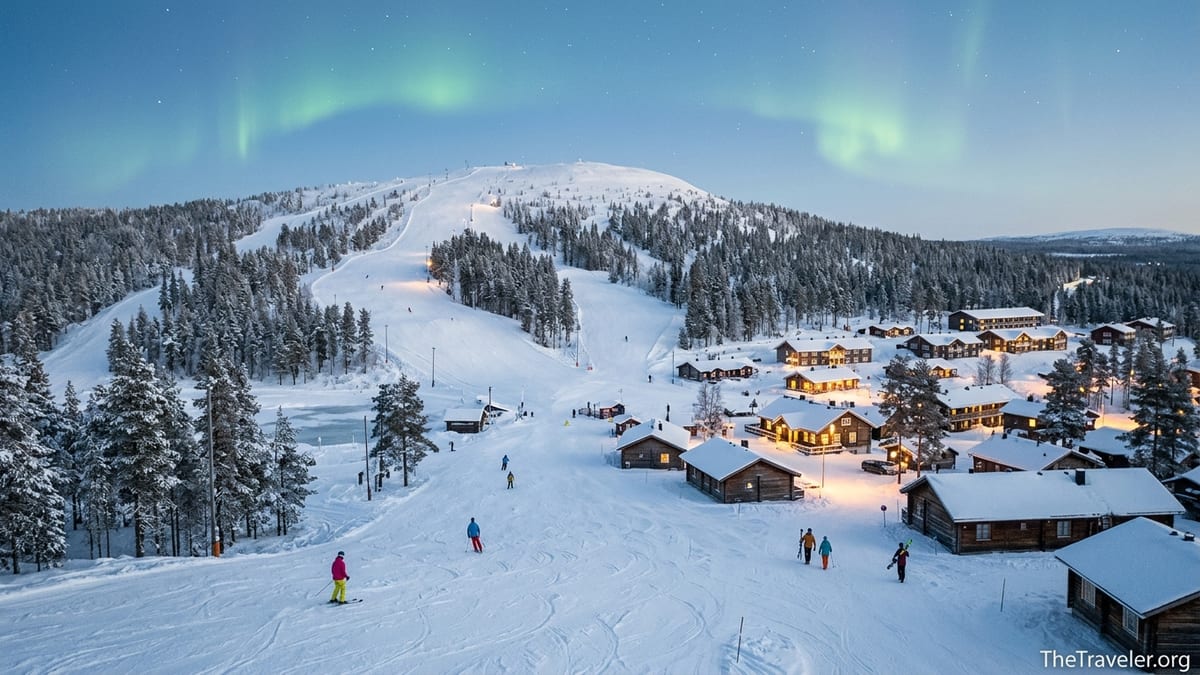
Then there is the possibility of skiing under the northern lights. No destination can guarantee auroras, but Lapland’s latitude gives visitors a reasonable chance over a week-long trip in mid-winter when skies are clear. Travelers regularly step out of their cabins in Levi’s surrounding neighborhoods or in the quieter village of Äkäslompolo near Ylläs to find green and sometimes purple arcs flickering overhead. Booking a late-evening snowshoe or cross-country tour away from light pollution is often enough to turn an ordinary evening of skiing into a lifelong memory.
More Than Slopes: Northern Lights, Huskies and Sámi Culture
Lapland has become a bucket list destination not only because of its slopes but because a ski trip here naturally expands into a broader Arctic experience. Resorts market complete winter packages where downhill skiing might only occupy half of your days, with the rest devoted to husky sledding, reindeer sleigh rides, snowmobiling, ice fishing or visits to glass igloos and snow hotels.
Levi is a good example of this all-round appeal. A traveler might spend a morning exploring its 40-plus pistes, then head out in the afternoon for a two-hour husky safari through forest trails. Typical prices in recent seasons have hovered around 150 to 200 euros per adult for a half-day husky tour including transfers, warm clothing and hot drinks. Families with children often opt for shorter reindeer sleigh rides that focus on meeting herders and learning how reindeer still underpin local livelihoods in many parts of Lapland.
Farther north, around Inari and Saariselkä, the cultural experience becomes even more central. This region is a heartland for the Sámi, the Indigenous people of the European Arctic. Here, ski visitors can weave museum visits, handicraft shopping and Sámi-led cultural experiences into their trip. An evening in Inari might include a guided northern lights walk where your host shares stories about auroras in Sámi tradition, followed by a dinner of local fish, game or vegetarian dishes built around foraged berries and herbs.
Even within more developed resort centers, the Arctic setting nudges visitors towards simpler pleasures. Instead of rowdy late-night clubbing, evenings often revolve around long dinners in log-built restaurants, time in a lakeside or cabin sauna, and quiet walks to dark viewpoints to check the sky. Many travelers who arrive aiming to ski every possible lift quickly find themselves slowing down, layering in a rest day for a snowshoe loop through Pallas–Yllästunturi National Park or a visit to a nearby frozen waterfall.
Surprisingly Accessible & Family-Friendly, Even for Beginners
Despite its edge-of-the-map image, Lapland skiing is notably welcoming to first-timers and families. In many Finnish resorts, English is widely spoken, signage is clear, and lift queues are generally shorter than in peak-season Alpine hot spots. Slopes are typically uncrowded outside Christmas and local school holidays, which makes learning less stressful for nervous beginners and children.
Levi, often recommended as a first Lapland base, offers a mix of gentle green and blue runs around the front-side lifts, with dedicated beginner areas near the village that remain open into the evening under lights. The local ski school offers group and private lessons in downhill skiing, snowboarding, telemark skiing and cross-country, and it is common for families from the UK, Netherlands or Germany to book a week-long package where children attend morning ski school while parents explore the broader network.
Lapland’s resorts also shine for cross-country enthusiasts. Levi alone maintains around 230 kilometers of cross-country tracks, many of them lit in the darker months, while Ylläs links into an even larger network in the Pallas–Yllästunturi area. For travelers who imagine a “ski holiday” as gliding quietly through forests rather than riding chairlifts all day, Lapland delivers outstanding conditions. It is entirely possible for a mixed-ability group to split between downhill and cross-country for part of the day and meet up later for a shared husky tour or sauna session.
Logistics are easier than many imagine. Airports such as Kittilä for Levi and Ylläs, Rovaniemi for more southerly resorts, and Ivalo for Saariselkä and Inari offer regular winter flights and straightforward shuttle transfers. Typical shared transfers from Kittilä to Levi take around 15 to 20 minutes, while Kittilä to Ylläs is roughly 45 minutes by bus or pre-booked shuttle. First-time visitors often report that after the initial leap of booking tickets to “Lapland,” the actual on-the-ground experience feels well organized and intuitive.
How Lapland Skiing Compares on Price and Comfort
Arctic magic might suggest luxury price tags, yet ski trips to Lapland can be more flexible than many travelers expect. Day ski passes in major Finnish resorts are often a little lower than in top-tier Alpine destinations. Recent public price lists for Levi, for example, show a four-day adult lift pass in high season in the region of 190 to 200 euros, with discounted rates for children and various family combinations. While not cheap, this can compare favorably with headline prices in well-known French or Swiss resorts, especially once crowds and accommodation value are factored in.
Accommodation spans everything from simple self-catering cabins on the outskirts of resort villages to premium glass igloo suites and boutique spa hotels. In Levi and Rovaniemi, glass-roofed cabins and igloos designed for aurora viewing frequently sell for 300 to 600 euros per night in peak winter, and more for the most exclusive options. Many visitors treat one night in such an igloo or a stay in an ice or snow hotel as a bucket list splurge, then move to a more modest apartment or log cabin for the rest of the week to balance the budget.
Food and everyday costs are higher than in southern Europe, but often comparable to other Nordic countries. A casual restaurant meal in Levi’s center might run 20 to 30 euros per main dish, while more upscale venues including tasting-menu restaurants in Levi, Rovaniemi or Inari reach much higher. Savvy travelers offset these prices by using the surprisingly well-stocked local supermarkets for breakfast and some dinners, especially when staying in self-catering chalets with their own saunas and fireplaces.
Value also lies in what is included. Many tour operators selling Lapland packages from the UK, Germany and the Netherlands bundle airport transfers, lift passes, equipment rental and several excursions such as a husky sled ride or reindeer visit. For families used to build-it-yourself Alpine trips, this packaged approach can make budgeting simpler. Advanced skiers who want maximum vertical for every euro may still prefer the Alps, but travelers prioritizing atmosphere, variety of activities and smoother logistics often find Lapland compares well in overall experience per dollar or euro spent.
Where to Go: Key Lapland Ski Areas and How They Differ
One of the most common questions among would-be visitors is where in Lapland to ski first. The answer depends on priorities, but a few resort personalities stand out. Levi, close to Kittilä Airport, is the all-rounder: Finland’s largest and busiest ski resort, with a modern village, varied pistes and plenty of non-skiing activities. It even hosts early-season FIS World Cup slalom races on its well-prepared black run, drawing international teams for training camps and giving the resort a lively start to winter.
Ylläs, about an hour from Kittilä, is often described as more “authentic” and spread out, with its twin base villages of Äkäslompolo and Ylläsjärvi and access to Pallas–Yllästunturi National Park. The ski area has Finland’s greatest vertical drop and a spacious feel, with long, flowing blue and red runs that are ideal for intermediate skiers who enjoy covering distance. Cross-country fans frequently praise Ylläs for its extensive trail system and quieter, more nature-immersed atmosphere compared with Levi’s busier center.
Saariselkä and nearby villages like Ivalo and Inari appeal to travelers chasing a sense of remoteness. Located significantly farther north, they offer a smaller downhill area but excellent terrain for cross-country, snowshoeing and winter hiking. Many Finns and repeat visitors say Saariselkä is their favorite for its balance of cozy village, good services and wild surroundings. From here, it is easy to join multi-day husky or snowmobile safaris that venture deep into the tundra-like landscapes of northern Lapland.
Beyond Finland, Swedish and Norwegian Lapland also offer notable ski experiences. In Sweden, Riksgränsen and Björkliden near the Norwegian border are legendary for spring skiing under the midnight sun, while Norway’s Tromsø region and Lyngen Alps draw ski tourers who climb under their own power for descents down pristine couloirs above fjords. These destinations are more niche and often suited to experienced skiers or ski tourers, but they illustrate the range of Arctic skiing now available under the broad Lapland umbrella.
Arctic Responsibility: Overtourism, Reindeer and the Fragile North
As Lapland’s star has risen, so have concerns about its environmental and cultural footprint. Media investigations using satellite imagery and local data have noted that a growing share of new buildings in Finnish Lapland over recent years are tourism-related cabins, resorts and glass igloo complexes. Researchers and conservation advocates warn that unchecked development, combined with forestry and extractive industries, can fragment some of Europe’s last remaining wild areas, putting pressure on wildlife corridors and traditional Sámi reindeer-grazing lands.
For travelers, this means visiting Lapland thoughtfully is part of making it a truly positive bucket list experience. Choosing locally owned accommodations, booking Sámi-led cultural experiences rather than staged imitations, and opting for smaller-group tours all help ensure more of your spending supports communities who live in the region year-round. Many operators now highlight low-impact activities such as cross-country skiing, snowshoeing and aurora walks, which have lighter footprints than extensive snowmobiling.
Climate change is another important consideration. Although Lapland currently offers more reliable midwinter snow than many lower-altitude resorts, warming trends are already affecting the length and character of the season. Resorts respond with snowmaking, but the long-term picture is uncertain. Visitors can minimize their impact by staying longer instead of taking multiple short trips, choosing train-and-ferry combinations via Helsinki or Stockholm where practical, and supporting lodgings that invest in renewable energy and careful waste management.
Respecting life in the Arctic also extends beyond environmental issues. Winter roads can be icy and dark, and locals often caution inexperienced drivers against renting cars without proper preparation. Reindeer on the road, limited daylight in midwinter and extreme cold snaps require caution. For many visitors, using resort buses, airport shuttles and guided tours is both safer and more relaxing, allowing them to focus on what they came for: snow, silence and the glow of the northern sky.
The Takeaway
Skiing in Lapland has become a bucket list experience because it wraps good, reliable snow into something larger and more memorable. Instead of measuring your week purely by vertical meters skied, you measure it in aurora sightings, husky tracks in the forest and evenings spent in a log sauna listening to snow slide from the roof. In a world where many classic resorts feel increasingly crowded and standardized, Lapland offers a different rhythm and a deeper sense of place.
Whether you are a family looking for a magical first ski trip, a couple ticking the northern lights off your shared wish list, or an experienced skier curious about trading towering peaks for Arctic fells and frozen lakes, Lapland gives you reasons to go beyond the ordinary. The combination of accessible infrastructure, varied ski terrain, rich winter activities and living Sámi and Arctic culture is rare. Visit with curiosity and respect, and you will understand why so many travelers now place skiing in Lapland near the very top of their winter travel dreams.
FAQ
Q1. When is the best time to ski in Lapland?
The core ski season in Lapland typically runs from late November to late April, with the most reliable snow and good daylight for visitors from roughly mid-December through March. December is magical and dark with strong Christmas atmosphere, January and February are cold with long nights and great aurora chances, while March and early April bring more daylight and sunnier, slightly milder conditions that many families prefer.
Q2. Is Lapland suitable for beginner skiers and children?
Yes. Resorts like Levi, Ylläs, Ruka and Saariselkä are very beginner-friendly, with gentle nursery slopes, well-regarded ski schools and plenty of English-speaking instructors. Many families book packages where children attend morning ski school and spend afternoons on short sled rides, husky visits or playing in the snow, making Lapland a manageable and memorable first-ski destination.
Q3. How expensive is a ski trip to Lapland compared with the Alps?
Overall costs are similar to or slightly higher than mid-range Alpine resorts, but there is wide variation depending on choices. Lift passes are often a bit cheaper than in the most famous French or Swiss resorts, with a four-day adult pass in a major Finnish resort commonly around 190 to 200 euros. Accommodation and food can be pricey, especially for glass igloos and fine-dining restaurants, but self-catering cabins and supermarket shopping help keep budgets under control.
Q4. Can I see the northern lights while on a ski trip in Lapland?
There is a reasonable chance, particularly between late September and late March when nights are long and skies can be clear. No operator can guarantee auroras, but spending several nights in northern resorts such as Levi, Ylläs, Saariselkä or Inari gives you multiple opportunities. Booking at least one dedicated aurora excursion or walking away from village lights on clear evenings improves your odds compared with simply glancing out a hotel window.
Q5. Do I need a car to get around Lapland ski resorts?
Not necessarily. Most visitors use airport shuttles and resort buses, which link major airports such as Kittilä, Rovaniemi and Ivalo to nearby villages and ski areas. Within resorts, ski buses are common and many accommodations sit within walking distance of lifts and services. Renting a car is useful if you want to combine several resorts or explore national parks independently, but winter driving in the Arctic requires experience and care.
Q6. How cold does it get when skiing in Lapland?
Temperatures in midwinter can drop well below freezing, often to minus 10 to minus 20 degrees Celsius and sometimes lower, especially farther north or in exposed areas. Good clothing is essential: layered thermal base layers, insulating mid-layers, windproof outerwear, proper gloves or mittens, a balaclava or face mask and warm socks. Resorts and activity operators usually provide extra outerwear for excursions like husky sledding or snowmobiling.
Q7. Which Lapland resort is best for a first-time visit?
Levi is often recommended for first-timers because it combines a modern, compact village, varied pistes, strong ski-school options and a wide choice of activities and accommodations. Ylläs suits travelers who prefer a quieter, more nature-focused atmosphere and excellent cross-country skiing, while Saariselkä and Inari appeal to those who prioritize remoteness, Sámi culture and aurora viewing over large downhill ski areas.
Q8. Are there options for non-skiers in Lapland?
Yes, and this is one of Lapland’s biggest strengths. Non-skiers can fill days with husky and reindeer safaris, snowmobile tours, snowshoeing, ice fishing, spa visits, aurora hunts, museum trips and time in saunas. Many visitors who arrive mainly for skiing find that non-ski activities become the highlight of their week, making Lapland a good compromise destination for mixed-ability or multi-generational groups.
Q9. How far in advance should I book a Lapland ski holiday?
For peak times such as Christmas, New Year and February school holidays, booking six to twelve months in advance is wise, especially if you want specific accommodation types like glass igloos or larger family cabins near the slopes. Outside these peak weeks, you may find more flexibility, but flights and the most popular excursions can still sell out weeks or months ahead, so earlier planning generally gives better prices and choice.
Q10. Is skiing in Lapland environmentally responsible?
Like all ski tourism, travel to Lapland has an environmental footprint, particularly from flights and resort infrastructure. However, many operators and lodgings are investing in renewable energy, energy-efficient buildings and low-impact activities. Travelers who stay longer instead of taking multiple short trips, favor trains where possible, choose locally owned businesses and prioritize activities like cross-country skiing, snowshoeing and aurora walks can help reduce their impact while still enjoying the Arctic experience.