


Straddling the border of Lapland and North Ostrobothnia in northeastern Finland, Oulanka National Park is a dream for hikers who love wild rivers, suspension bridges and deep boreal forest. Whether you want an easy half-day walk to thundering rapids or a multi-day trek on Finland’s most famous trail, Oulanka offers well-marked routes, atmospheric wilderness huts and a growing range of guided tours that make its remote landscapes surprisingly accessible.
Get the latest updates straight to your inbox!
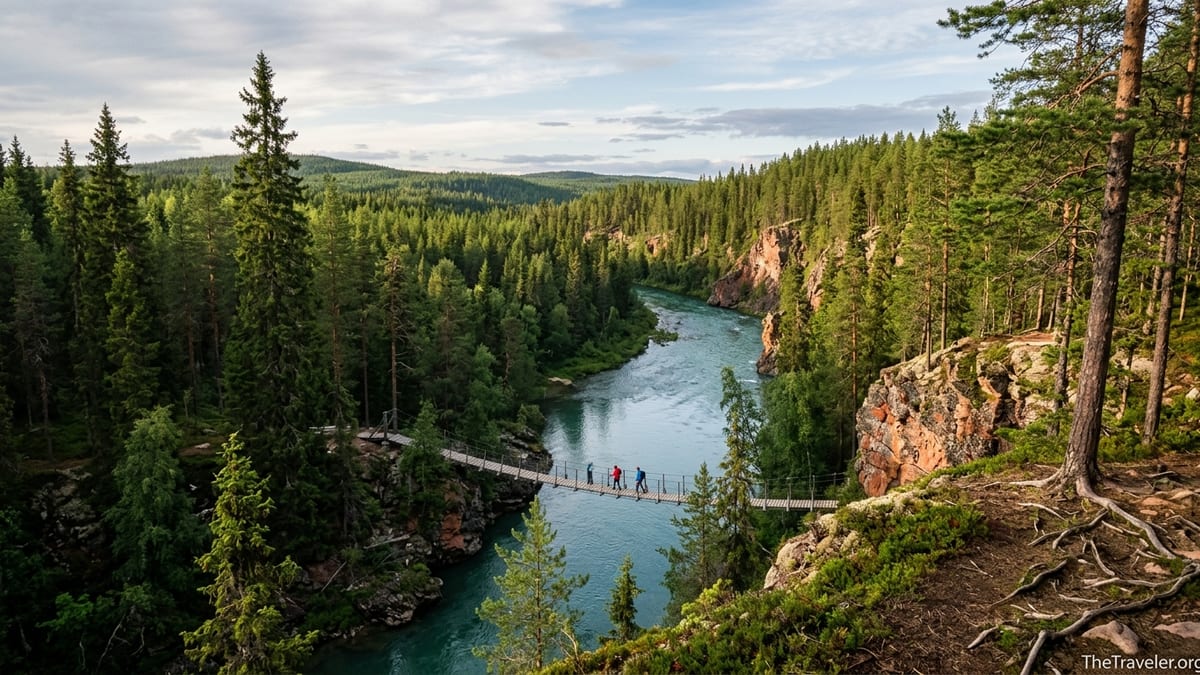
Why Oulanka National Park Belongs on Your Hiking Bucket List
Oulanka National Park lies near Kuusamo and the ski resort of Ruka, close to the Arctic Circle. The park is best known for its dramatic river valleys, waterfalls such as Kiutaköngäs and Jyrävä, and the legendary Karhunkierros or Bear Trail, a long-distance route that attracts hikers from across Europe. Trails wind through old-growth spruce and pine forests, over sandy eskers and across hanging bridges that span the churning Oulanka and Kitka rivers.
Despite its wild feel, Oulanka is well managed and relatively user friendly. Waymarked trails, free wilderness huts on longer routes, campfire sites with firewood, and information boards make independent hiking straightforward for those with basic backcountry experience. In summer, daylight lasts long into the night, giving you ample time to cover ground. In shoulder seasons and winter, guided options allow less experienced hikers to venture safely onto snow-covered routes or frozen rivers.
Access has also improved in recent years. Many visitors fly into Kuusamo Airport and transfer by bus or taxi to Ruka or straight to Oulanka Visitor Centre, where staff can advise on current trail conditions, closures and wildlife issues. Between late May and late September, the seasonal Karhunkierros Express bus connects key trailheads such as Ruka, Basecamp Oulanka and the Oulanka Visitor Centre, making it easier to hike point to point without a car.
For hikers seeking more than just a walk, local operators based around Ruka and Juuma offer guided Bear Trail sections, white-water rafting below Oulanka’s famous falls, and even snowshoe trips on the Little Bear Trail in midwinter. This mix of well-developed infrastructure and genuine wilderness character is what makes Oulanka stand out among Finland’s national parks.
Signature Hiking Routes: From Little Bear to Full Karhunkierros
The undisputed star of Oulanka is the Karhunkierros (Bear Trail), Finland’s most famous long-distance hiking route. The full trail runs for roughly 80 to 82 kilometres depending on the exact variant, mostly inside the national park, between the village of Hautajärvi in the north and Ruka in the south. Fit hikers typically complete it in four to six days, overnighting in basic wilderness huts and at designated tent sites along the way.
If you are not ready for a multi-day trek, Oulanka’s shorter day trails still give you a taste of the same scenery. The Pieni Karhunkierros or Little Bear Trail is a 12 kilometre loop near the village of Juuma, widely regarded as one of the best day hikes in Finland. The circuit crosses several suspension bridges over the Kitka River, passes roaring rapids like Myllykoski and Aallokkokoski, and offers close-up views of the Jyrävä waterfall. It is signposted, moderately demanding, and usually takes four to six hours at a relaxed pace with photo stops.
Other notable routes provide quieter alternatives. The Kiutaköngäs Day-trip Trail is about 8 kilometres return from the Oulanka Visitor Centre, following the Oulanka River to the park’s most famous red rock canyon and falls. The Oulanka Canyon Day-trip Trail, around 6 kilometres, crosses a suspension bridge to viewpoints above a deep river gorge. For those curious about the area’s ecology and history, the 5 kilometre Hiidenlampi Cultural Trail and the 5 kilometre Rytisuo Nature Trail combine easy walking with information boards about bogs, forests and traditional land use.
On longer itineraries, many hikers combine sections of the full Bear Trail with these shorter loops. For example, you might spend two days on the northern part of Karhunkierros from Hautajärvi to Oulanka Visitor Centre, then add a separate day to walk the Little Bear Trail from Juuma. Operators in Ruka and Kuusamo can pre-arrange shuttle transfers between trailheads so that you are not restricted to simple out-and-back routes.
Planning the Famous Bear Trail: Stages, Huts and Logistics
Walking the entire Karhunkierros is an achievable adventure for reasonably fit hikers who are comfortable carrying a pack. The route is typically divided into four to six stages between wilderness huts and lean-to shelters. A classic five-day itinerary might run Hautajärvi to Taivalköngäs, Taivalköngäs to Oulanka Visitor Centre, Visitor Centre to Jussinkämppä, Jussinkämppä to Porontimajoki, and finally Porontimajoki to Ruka. Daily distances are usually between 12 and 20 kilometres, with frequent short climbs and descents along riverbanks and over eskers.
Basic wilderness huts and open shelters are spaced at roughly 10 to 15 kilometre intervals. These are free to use on a first-come, first-served basis and usually include wooden bunks, a stove and a nearby dry toilet, but no electricity, running water or bedding. Many huts have outdoor fireplaces and firewood supplied. In peak summer, huts can fill early, so carrying a tent or lightweight tarp gives you more flexibility and avoids relying on indoor space.
Resupplying on the trail is limited but not impossible. A few commercial services sit close to the route, such as Basecamp Oulanka near Juuma and the Oulanka Visitor Centre cafe, where you can buy hot meals, snacks and sometimes basic groceries. Some multi-day guided packages include meal boxes cached at huts or delivered to overnight spots, removing the need to carry all your food from day one. Water is generally available from streams and rivers, although many hikers still prefer to treat or filter it.
Transport logistics require some planning. Many hikers start at Hautajärvi and walk south to Ruka, taking advantage of slightly more downhill sections. In summer, the Karhunkierros Express and local buses link Ruka, Juuma, Basecamp Oulanka, Oulanka Visitor Centre and Hautajärvi on most days, so you can park at one end and return after finishing the trek. Outside the main season, or if you want a more flexible schedule, private transfers or taxis from Kuusamo and Ruka are common, especially for small groups.
Top Guided Hiking Tours in Oulanka
While experienced hikers can easily follow Oulanka’s well-marked routes independently, guided hikes add local insight, simplify logistics and are particularly valuable in winter or shoulder seasons when conditions can be tricky. Several small Finnish operators based around Ruka and Kuusamo run both day hikes and multi-day packages on Karhunkierros and its side trails.
One popular option is a guided day hike on the Little Bear Trail, often offered as a five hour excursion that includes transfers from Ruka or Kuusamo, a local guide, snacks and sometimes a campfire lunch. Prices vary by operator and group size but typically sit in the range of 80 to 140 euros per adult, with discounts for children. Small-group departures of four to eight people are common, giving you a chance to learn about Oulanka’s geology, brown bears and lynx, and the cultural history of the Kuusamo region while tackling the ladders and bridges with someone who knows the route intimately.
For those dreaming of the full Karhunkierros but unsure about navigation, a number of companies offer four to six day guided Bear Trail treks. These usually include all meals, hut reservations where applicable, luggage transfers between overnight stops and use of shared camping gear, making them appealing to international visitors who do not want to carry heavy loads or figure out bus timetables in Finnish. Package prices often start from roughly 900 to 1200 euros per person for four or five days, depending on the level of comfort and inclusions.
Specialist guides also run themed hikes. Birdwatching-oriented walks in late May and June focus on the park’s rich birdlife as migratory species return to northern bogs and forests. Autumn photography hikes in September and early October time their departures to coincide with brilliant ruska foliage, seeking out reflections on the calm sections of the Oulanka River and soft evening light on the red canyon walls. In winter, operators based at Ruka and Juuma offer snowshoe tours following parts of Karhunkierros or the Little Bear Trail under snow, with hot berry juice served by open fires.
When choosing a guided tour, look for licensed local companies with small groups, clear safety information, and a policy of leaving no trace. Ask specifically about group size maximums, what gear is included, and how they handle rapidly changing weather conditions. For winter and early-season trips, confirm whether snowshoes, spikes or trekking poles are provided and whether the guide carries a satellite communicator or similar emergency device.
Beyond Hiking: Rafting, Canoeing and Winter Adventures
Oulanka’s rivers are as much a draw as its forests, and a range of water-based tours lets you experience the park’s landscapes from a different angle. In summer, white-water rafting on the Kitka and Oulanka rivers is a highlight for many visitors. Several Kuusamo and Ruka outfitters run half-day rafting trips starting near the park boundary and descending through a string of class II to IV rapids, often passing under the same suspension bridges that hikers cross on the Little Bear Trail.
Typical rafting packages include full gear, a professional guide, pre-trip safety briefing and return transport to your accommodation. Expect prices in the region of 70 to 110 euros per person for a two to three hour run, depending on rapid difficulty and group size. Family-friendly scenic floats on calmer sections of the river are also available, suitable for children and nervous first-timers. Many companies operate from late May or early June until water levels drop in late summer.
For a quieter pace, guided canoe or packraft trips on gentler stretches of the Oulanka River highlight birdlife, beaver activity and the park’s intricate network of side channels. Day tours sometimes combine a short hike to a put-in point with a downstream paddle and a campfire lunch. More adventurous visitors can join overnight paddling expeditions with riverside camping and basic huts, linking sections of Karhunkierros on foot and by water.
In winter, Oulanka transforms into a snowbound wonderland. While most summer hiking trails are no longer maintained for regular walking, several operators offer snowshoeing itineraries that follow parts of the Little Bear Trail or the river valleys. A typical private snowshoe tour on Pieni Karhunkierros includes equipment, guiding and hot drinks, and runs around three to five hours. At Ruka and nearby resorts you can also combine Oulanka hikes with cross-country skiing days, husky sledding or northern lights excursions, creating a varied Lapland-style holiday centred on the national park rather than on a ski hill.
When to Visit, What to Expect and How to Get There
The main hiking season in Oulanka runs from roughly late May to early October. June brings long days, mosquitoes and fresh green foliage, while July and August are busiest on popular trails like the Little Bear Trail. Many Finnish families take their holidays in July, so expect fuller huts and more traffic on suspension bridges. September is a favourite among seasoned hikers thanks to cooler temperatures, fewer insects and intense autumn colours along the rivers.
Spring and late autumn can be challenging, with snow patches, ice on wooden boardwalks and high, cold water levels. In early May, some sections of Karhunkierros can still hold deep snow, so only confident hikers with appropriate gear should attempt them, ideally after checking the latest conditions with Oulanka Visitor Centre or local guides. Winter, typically from December into March, is the season for snowshoe tours, skiing and winter-focused packages based in Ruka or small wilderness lodges near the park.
Getting to Oulanka usually involves travelling via Kuusamo or Ruka. Kuusamo Airport has regular domestic flights from Helsinki, and from there you can take a transfer, pre-booked shuttle, or taxi to Ruka or directly to accommodation near the park. Long-distance buses connect Kuusamo with other northern towns like Rovaniemi, Oulu and Kemijärvi, though schedules can be sparse and slow compared with flying. Once in the area, the seasonal Karhunkierros Express and local buses stop at key park access points in summer, while in other seasons many visitors rely on rental cars or pre-arranged transfers.
Arriving without a car is entirely possible if you are prepared to plan around bus timetables and potentially use taxis for the last stretch to trailheads. For example, you might fly into Kuusamo, catch a bus to Ruka, then join a guided day hike that includes transport to and from Juuma or the Oulanka Visitor Centre. Multi-day guided Bear Trail treks typically include all transfers from Kuusamo or Ruka as part of the package, which is particularly useful if you are travelling with a lot of luggage or unfamiliar with rural Finnish transport.
Practical Tips, Safety and Booking Advice
Oulanka’s trails are well signposted, but conditions can change quickly. Wooden duckboards over bogs become slippery in rain, roots and rocks can be treacherous when wet or icy, and river levels rise after heavy precipitation. Before starting any hike, especially a multi-day Bear Trail trek, check the latest trail updates with Oulanka Visitor Centre staff or your accommodation host. They can advise about temporary bridge closures, maintenance work or sections that may be waterlogged.
Pack for variable weather. Even in July, temperatures can fall close to freezing at night, and rain showers roll in with little warning. A reliable waterproof jacket, quick-drying layers, a warm hat and gloves, and sturdy hiking boots with good traction are essential. Trekking poles help on steep, rooty descents and when crossing rocks near rapids. Mosquitoes and blackflies can be intense in early summer, so insect repellent and possibly a head net are valuable additions.
Book guided tours and accommodation well in advance during peak times. July and early August see the highest demand for Little Bear Trail day trips, rafting, and multi-day Bear Trail packages. Remote wilderness lodges around Juuma and Basecamp Oulanka, as well as cabins at Ruka, can sell out months ahead for prime weekends and school holiday periods. If your dates are fixed, aim to reserve tours at least eight to ten weeks before arrival; if you are flexible, consider travelling in early June or mid-September for more availability and quieter trails.
Respect local rules and the fragility of Oulanka’s ecosystems. Camp only at signed sites, use existing fire rings, and observe any fire bans during dry spells. Take all rubbish out with you, including food scraps, and give nesting birds and other wildlife plenty of space. On guided tours, pay attention to your leader’s instructions regarding safety on suspension bridges, near canyon edges and during rafting or canoeing segments. Good preparation and a cautious attitude will reward you with a safe, memorable experience in one of Finland’s most beautiful national parks.
FAQ
Q1. How difficult are the main hiking routes in Oulanka National Park?
The Little Bear Trail is moderately demanding with some steep stairs and bridges, suitable for reasonably fit beginners. The full Bear Trail is more challenging due to its length, daily elevation changes and the need to carry a pack, but it is still considered manageable for hikers with basic experience who prepare properly.
Q2. How many days do I need to hike the full Karhunkierros Bear Trail?
Most hikers take four to six days to complete the roughly 80 kilometre route between Hautajärvi and Ruka, depending on fitness, pack weight and how much time they want for photography and rest stops.
Q3. Do I need to book wilderness huts in advance?
The basic open wilderness huts along Karhunkierros are generally free and cannot be reserved, operating on a first-come, first-served basis. Because they can fill in peak season, you should carry a tent or be prepared to use nearby designated camping spots.
Q4. Can I hike in Oulanka without a car?
Yes, it is possible. Many visitors fly to Kuusamo, take a bus or transfer to Ruka, and then use seasonal buses or guided tours that include trailhead transport. Outside summer, or for more flexible itineraries, arranging private transfers is often the easiest solution.
Q5. When is the best time of year for hiking in Oulanka?
Late June to early September offers the most reliable conditions for hiking, with snow-free trails and long days. September is especially beautiful for autumn colours and fewer insects, while early season in May can still involve snow and wet sections on the trails.
Q6. Are guided tours necessary for the Little Bear Trail?
A guided tour is not strictly necessary, as the Little Bear Trail is clearly marked and popular. However, many travellers choose guides for added safety, local knowledge, easy transport to and from Juuma, and the convenience of snacks or meals included.
Q7. What should I pack for a summer day hike in Oulanka?
For a summer day hike bring sturdy hiking shoes, layered clothing, a waterproof jacket, insect repellent, snacks, at least one litre of water, a small first aid kit and a map or offline trail app. Trekking poles and a light hat or buff can also be very useful.
Q8. Is white-water rafting in Oulanka suitable for beginners?
Yes, several operators run rafting trips on sections of the Kitka and Oulanka rivers that are designed for beginners, with full safety gear and professional guides. They also offer more demanding routes for experienced paddlers, so you can choose according to your comfort level.
Q9. Can I visit Oulanka National Park in winter?
Yes. In winter the park is popular for guided snowshoe hikes, photography outings and combined packages based in Ruka or nearby lodges. Many summer trails are not maintained for regular hiking, so joining an organised winter tour is often the safest and most practical option.
Q10. Are there entrance fees to Oulanka National Park?
There is no general entrance fee to Oulanka National Park, and hiking the trails is free. You will, however, need to budget for transport, accommodation, optional guided tours and any gear rentals you may require.