


Pallas–Yllästunturi National Park in Finnish Lapland is one of Northern Europe’s most rewarding hiking destinations, with rolling fells, ancient forests and some of the cleanest air measured anywhere on earth. Whether you dream of tackling the legendary Hetta–Pallas trek, joining a small‑group guided hike under the midnight sun or snowshoeing beneath the northern lights, this vast protected area offers routes and outdoor experiences for every level. This guide focuses on the best real‑world hiking routes, guided tours and bookable experiences to help you plan a memorable trip in any season.
Get the latest updates straight to your inbox!
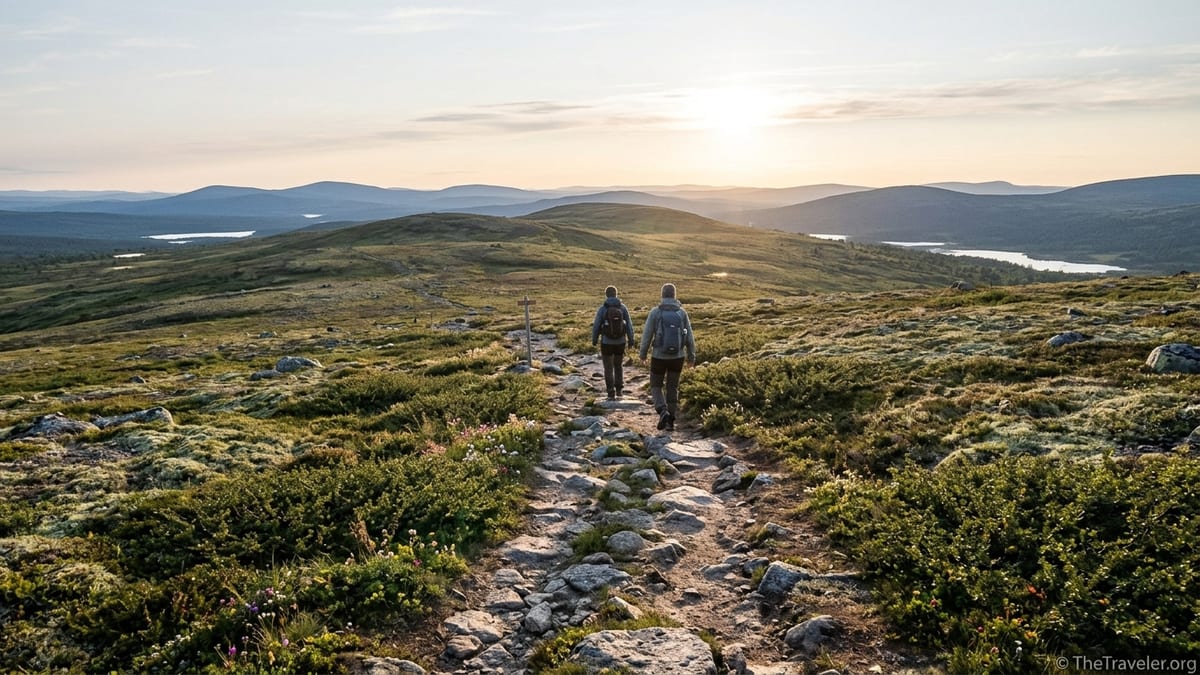
Understanding Pallas–Yllästunturi: Where and When to Hike
Pallas–Yllästunturi National Park stretches across western Lapland between the villages of Hetta in the north and Ylläsjärvi and Äkäslompolo in the south. Visitor centers in Hetta, Pallastunturi and Ylläs (Kellokas Nature Centre) act as gateways to more than 500 kilometers of marked summer trails and a similar network of winter ski tracks and snowshoe routes. Most independent hikers base themselves in Hetta, Pallas or the Ylläs villages, all of which have accommodation, grocery stores and local tour operators offering guided outings.
The main summer hiking season typically runs from mid June to late September, once snow has melted from the fells and wooden duckboards have dried. July and early August are the warmest and busiest weeks, while early September brings cooler air and the famous ruska autumn colors when birch forests blaze yellow and red. In June, expect lingering snow patches on high ridges and very long daylight, with the sun barely dipping below the horizon for several weeks.
Winter in Pallas–Yllästunturi usually lasts from late November into April, when the landscape transforms into a white wilderness ideal for cross‑country skiing, winter hiking, snowshoeing and husky safaris. Many guided winter experiences, such as evening snowshoe tours to see the northern lights, operate from December through March. Shoulder seasons in May and October can be quiet and muddy, with melting or forming snow, so guided tours and some services may be limited.
Weather in Lapland can change quickly in any month. Even in July, temperatures on the fells can drop close to freezing with wind and rain, while sunny days can feel pleasantly mild. Guided tours typically provide or advise on suitable clothing, but independent hikers should always pack layers, waterproofs and an extra warm layer no matter the season.
Classic Long-Distance Route: The Hetta–Pallas Trail
The signature hike of Pallas–Yllästunturi is the Hetta–Pallas trail, often described by Finnish hikers as one of the country’s most beautiful multi‑day routes. Running roughly 50 to 55 kilometers between Hetta and Pallastunturi, it crosses two fell chains, Ounas and Pallas, on a well‑marked path that was first laid out in the 1930s. Many visitors complete the trek in three to four days, staying overnight in basic wilderness huts or designated tent sites along the way.
Most people begin in Hetta, taking a short boat transfer across the lake from the village jetty to the official trailhead. Local companies and guesthouses in Hetta and Pallas offer boat crossings in summer and can arrange car shuttles between the start and end points, so you do not need to hike back the same way. For example, some operators based around Hetta Huskies and other local businesses run transfers for independent hikers who book in advance, allowing you to leave a vehicle at one end and pick it up after the trek.
The route itself offers a mix of gentle forest sections, open fell ridges and sweeping views. A typical three‑day itinerary might walk from Hetta to Sioskuru hut on day one, continue over the Ounas fells to Hannukuru or Pahakuru on day two, and then finish via the Pallas fells to Pallastunturi Visitor Centre on day three. Elevation changes are manageable for reasonably fit walkers, but the path can be rocky and boggy in places, and the weather on exposed fells can be harsh, so sturdy footwear and proper rain gear are essential.
Guided versions of the Hetta–Pallas trek are available through specialist Finnish outfitters, often as four‑day packages with a wilderness guide, hut accommodation and most meals included. Prices for these kinds of small‑group treks typically start in the mid hundreds of euros per person, depending on group size and inclusions. They suit hikers who want the reassurance of local expertise, navigation support in changeable weather and insight into the nature and history of the fells without having to plan every detail themselves.
Top Day Hikes Around Pallas and Ylläs
While the Hetta–Pallas route draws long‑distance trekkers, most visitors experience the park on shorter day hikes that still showcase classic fell scenery. Around Pallastunturi, one of the most popular options is the Taivaskero Circle Trail, an approximately eight‑kilometer loop that climbs to the highest peak in the park. The ascent is steady but not technical, and on clear days you are rewarded with wide views across the Pallas fells and surrounding wilderness. Many visitors treat this as a half‑day excursion, starting and ending at the Pallastunturi Visitor Centre.
Nearby, shorter marked routes such as Pyhäkero’s day hike offer easier options for families or travelers easing into fell walking. These trails usually start from accessible parking areas or visitor centers and follow clear paths with waymarkers and rest spots. Open day huts and shelters along the routes make it easy to take breaks, prepare a simple picnic or warm up on cooler days.
In the southern part of the park, the Ylläs area around Äkäslompolo and Ylläsjärvi offers a network of well‑signposted trails of varying length. Classic local favorites include the Kesänkijärvi Circle Trail and the Varkaankuru and Pirunkuru routes, which combine lakeside paths, gentle forest walking and steeper sections on fell slopes. Many of these can be completed in two to four hours, making them ideal for travelers staying in cabins or hotels near the villages who want a rewarding hike before returning to a sauna session in the evening.
Active travelers can also explore the Aakenustunturi fell area south of Ylläs, where a 17‑kilometer nature trail showcases the region’s geology and wartime history alongside open fell scenery. This slightly more remote route suits experienced day hikers seeking a full‑day outing without committing to a multi‑day trek. Local tourist information offices in Ylläs and Hetta provide up‑to‑date maps and advice on trail conditions, seasonal closures and recommended routes for different fitness levels.
Best Guided Hiking Tours to Book
For many visitors, booking a guided hike is the simplest way to experience the best of Pallas–Yllästunturi without worrying about navigation, logistics or local conditions. In the Ylläs area, the regional tourism organization promotes full‑day guided hikes into the national park that last around six hours and include a small‑group guide, nature interpretation and a light outdoor lunch. Depending on group size and exact itinerary, prices commonly fall in the range of about 75 to 130 euros per person, reflecting the costs of a qualified local guide, transportation to the trailhead and food.
Independent guiding companies based in and around Ylläs, such as Ylläs Experiences and other small Lapland outfitters, run regular summer hikes to nearby fells, lakes and nature trails. Some offer “Arctic hiking weeks” or multi‑day programs that combine day hikes in Pallas–Yllästunturi with excursions to other Lapland highlights such as Kilpisjärvi or, in some cases, Norway’s Lyngen region. These packages typically include guiding, most meals, transfers between hiking areas and often accommodation in local guesthouses or cabins.
In Hetta and the northern end of the park, local companies and guesthouses offer guided versions of the Hetta–Pallas trek as well as shorter introductory walks starting near the village and nature center. Joining a guide on your first day can be especially useful if you are unfamiliar with Arctic conditions, want advice on equipment and safety, or simply prefer to focus on the scenery while someone else navigates. Experienced guides can also help you choose the best route for the day’s weather, avoiding exposed ridges in high winds or choosing more sheltered forest paths when cloud cover blocks views.
When comparing guided hikes, pay attention to maximum group size, what equipment is included and the pace described. Many quality operators keep group sizes small, often under 10 people, to allow for flexible pacing and individual attention. Some provide trekking poles, rain ponchos or backpacks, while others expect you to bring your own. If you are traveling with children or have limited hiking experience, look for tours labeled as easy or family‑friendly and confirm expected daily distance and elevation gain before booking.
Year-Round Outdoor Experiences Beyond Hiking
Pallas–Yllästunturi is not only about summer trekking. In winter, the region turns into one of Finland’s premier cross‑country skiing destinations, with hundreds of kilometers of groomed tracks suitable for both classic and skate skiing. Many hotels and rental shops in Ylläs, Pallas and Hetta offer ski hire and lessons, while local guides lead ski tours ranging from gentle family‑friendly outings to challenging full‑day adventures across open fells. Evening ski excursions under the stars are sometimes timed to coincide with favorable northern lights forecasts.
Snowshoeing and winter walking are popular alternatives for travelers who prefer a slower pace or have limited skiing experience. Several operators in Ylläs and Hetta run guided snowshoe tours that last two to three hours, often scheduled in the afternoon or evening. Typical programs include an introduction to snowshoeing technique, an easy walk through snowy forest or onto a nearby fell slope and a break by an open fire with hot drinks. Prices for small‑group snowshoe tours commonly start in the moderate double digits per person, with winter clothing rental sometimes available at an additional charge.
The region is also known for its husky and reindeer experiences. Kennels near Hetta and Ylläs offer half‑day and multi‑day husky safaris that skim the edges of Pallas–Yllästunturi, allowing guests to mush their own team of dogs under the supervision of an English‑speaking guide. Multi‑day packages for experienced adventurers can include several days of sledding combined with evenings in wilderness cabins, saunas and chances to watch for aurora displays. Reindeer farm visits and short sleigh rides near Ylläs and Hetta provide gentler introductions to Sámi culture and traditional reindeer herding.
During summer and early autumn, mountain biking, fat biking and packrafting are increasingly common ways to explore areas around the park where these activities are permitted. Rental shops in Ylläs villages often provide trail‑ready bikes, helmets and route advice, and some operators design guided outings that combine a bike approach to a fell with a short hike to a viewpoint. Always check local regulations and stay on designated routes, as parts of the national park are sensitive habitats where cycling is restricted.
Family-Friendly and Accessible Routes
Despite its wild reputation, Pallas–Yllästunturi includes several routes suitable for children, older travelers and visitors with limited mobility. Around Ylläs, short nature trails start directly from the Kellokas Nature Centre and nearby parking areas, following wide, mostly level paths through forest and wetland landscapes. Many have wooden duckboards, benches and information boards in multiple languages explaining local flora, fauna and Sámi culture.
The national park and regional tourism organizations have invested in accessible trail descriptions that detail surface type, gradients and facilities along certain paths. In practice, this means that some short routes near visitor centers are manageable with all‑terrain wheelchairs or sturdy strollers, particularly in dry summer conditions. Families can combine a one‑ or two‑kilometer walk with time in visitor center exhibitions and a picnic by a lake, creating an easy half‑day outing without venturing deep into the backcountry.
For families with older children or teens, moderate‑length fell hikes such as sections of the Kesänkijärvi Circle Trail or gentle climbs toward Ylläs or Pallas summits can be rewarding goals. Taking a gondola lift from Ylläsjärvi during the snowless season, where operating, allows you to gain elevation quickly and then walk along the open summit area on relatively easy terrain. Many families choose to hike one way and ride the lift the other, adjusting the effort according to weather and energy levels.
In winter, designated winter walking routes and snowshoe tracks near the Ylläs villages and Pallastunturi provide safe, marked options away from faster cross‑country skiers. Local guides who specialize in family activities can organize relaxed outings that mix short walks with sledding, campfire snacks and basic snow skills, making Arctic conditions more accessible and less intimidating for first‑time visitors.
Planning, Safety and Practical Tips
Successful hiking in Pallas–Yllästunturi starts with realistic planning. Before setting out independently, pick up official maps from visitor centers or local shops, or download up‑to‑date digital maps that show current summer trails, huts and restricted areas. Trail markings are generally clear, but fog, snow or heavy rain can reduce visibility. If you are not comfortable navigating by map and compass or GPS in low visibility, consider booking a guide for more ambitious routes.
Huts and shelters in the park range from open day huts and simple lean‑tos to reservable cabins managed by Finnish forestry authorities. If you intend to use wilderness huts on the Hetta–Pallas route or similar long hikes, read the latest guidance on hut etiquette, booking procedures where applicable and firewood use. Carry a lightweight stove for cooking, as campfires may be restricted during dry periods. On day hikes, pack enough water or a method to treat surface water from streams and lakes, and always bring extra snacks in case your route takes longer than expected.
Wildlife in Pallas–Yllästunturi is generally shy, and encounters with large animals such as bears are rare. More common are reindeer grazing on fells and birds of prey circling overhead. The real nuisance in mid‑summer can be insects, particularly mosquitoes, which become active once snow has melted and temperatures rise. Light long‑sleeved clothing and insect repellent will make July and early August hiking more comfortable, while earlier in June and later in September insect numbers are usually lower.
If you book guided tours, read the inclusions carefully. Many winter experiences include warm overalls, boots and mittens, which are valuable if you are not traveling with a full Arctic wardrobe. For summer hikes, guides typically expect participants to bring their own hiking boots and waterproof jackets, though some may offer rental options. Confirm cancellation policies and minimum participant numbers, as small operators may need a minimum group size to run certain tours, particularly shoulder‑season departures.
The Takeaway
Pallas–Yllästunturi National Park offers a rare blend of accessible infrastructure and genuine wilderness, making it one of Finland’s most satisfying regions for hikers and outdoor travelers. From the classic three‑ to four‑day Hetta–Pallas trek and family‑friendly circuits around Ylläs to winter snowshoeing and husky safaris, there is a route or guided experience for almost every interest and ability level.
By combining well‑chosen day hikes with a carefully planned guided tour or two, you can experience the park’s highlights without overcommitting or getting bogged down in logistics. Base yourself in Hetta, Pallas or the Ylläs villages, tap into local guiding expertise, and allow enough time to adapt to Lapland’s shifting light and weather. With sensible preparation and respect for the fragile Arctic environment, your days on the fells of Pallas–Yllästunturi are likely to be among the most memorable of any Nordic journey.
FAQ
Q1. How many days do I need to hike the Hetta–Pallas trail?
Most hikers complete the Hetta–Pallas route in three to four days, depending on fitness, weather and how many stops they make at wilderness huts along the way.
Q2. Do I need a guide for hiking in Pallas–Yllästunturi?
A guide is not mandatory for marked trails, but many visitors choose guided hikes or treks, especially for the Hetta–Pallas route or winter outings, for safety, navigation and local insight.
Q3. What is the best time of year to visit for hiking?
The main hiking season runs from mid June to late September, with July and August offering the warmest conditions and early September known for beautiful autumn colors.
Q4. Are there easy trails suitable for children and beginners?
Yes, short nature trails near visitor centers such as Kellokas in Ylläs and routes around Kesänkijärvi and Pyhäkero provide relatively easy, well‑marked options for families and beginners.
Q5. Can I see the northern lights in Pallas–Yllästunturi?
Yes, northern lights are often visible from roughly late August to early April when skies are dark and clear, and many winter tours are timed around aurora forecasts.
Q6. What kind of accommodation is available along the trails?
Accommodation ranges from basic wilderness huts and lean‑tos inside the park to guesthouses, cabins and hotels in gateway villages such as Hetta, Pallastunturi and the Ylläs area.
Q7. Are guided tours expensive?
Prices vary, but typical small‑group day hikes might cost in the range of 75 to 130 euros per person, while multi‑day guided treks and husky safaris are priced higher due to logistics and inclusions.
Q8. Do I need special equipment for summer hiking?
For summer, sturdy hiking boots, layered clothing, a waterproof jacket, map or GPS and basic safety gear are usually sufficient; trekking poles and insect repellent are also helpful.
Q9. Is public transport available to the park?
Long‑distance buses connect Pallas–Yllästunturi gateway villages with other Lapland towns, but schedules can be limited, so many travelers also use rental cars or pre‑arranged transfers.
Q10. Are there restrictions on camping and fires?
Camping is generally allowed at designated sites and near certain huts, while open fires are restricted to marked fireplaces and may be banned during high fire‑risk periods; always follow current local regulations.