


For many travelers, watching the Northern Lights ripple across a dark winter sky is a once-in-a-lifetime goal. With the current solar cycle near its peak, aurora displays are more frequent and intense than they have been in years, and tour operators across the Arctic are expanding their offerings. From budget bus trips out of Reykjavik to small-group aurora chases in Tromso or lodge stays near Fairbanks, there has never been a better time to plan a Northern Lights trip. This guide highlights the main destinations, typical tour prices as of 2025 and 2026, and the most practical travel information for visitors coming from North America.
Get the latest updates straight to your inbox!
Understanding Northern Lights Seasons and Conditions
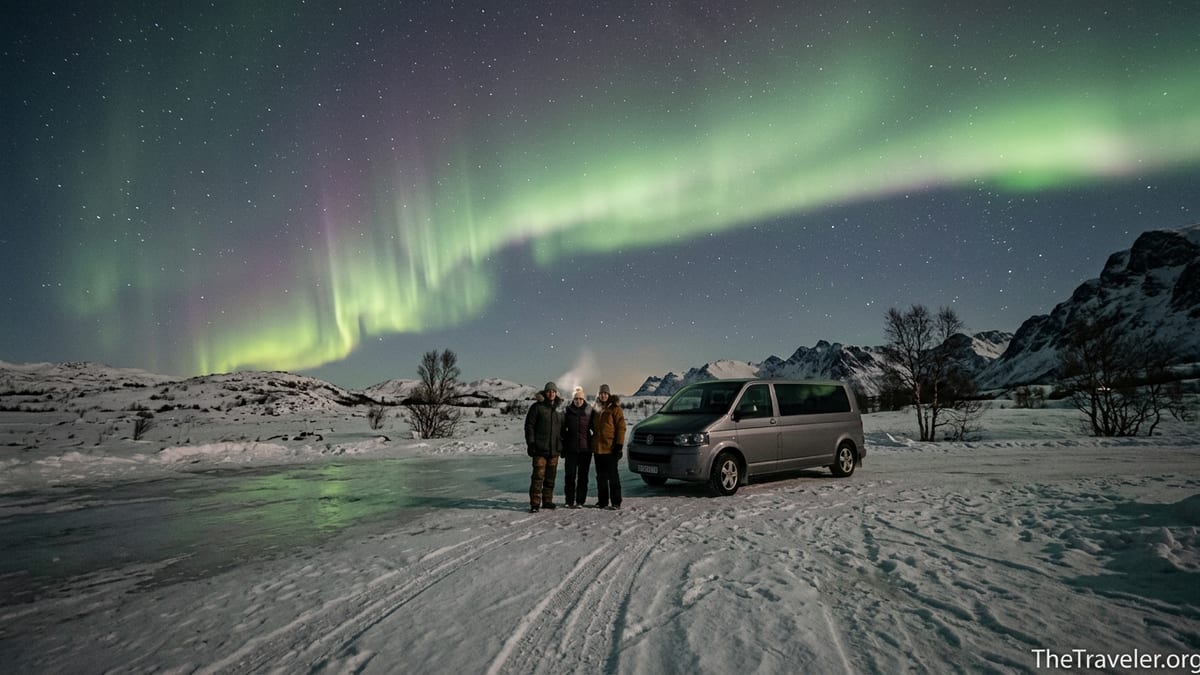
The Northern Lights, or aurora borealis, are visible in the high latitudes roughly between late August and early April, when nights are dark enough for the sky to act as a backdrop. In practice, most tour operators in the Arctic circle run Northern Lights excursions from early September through late March, with the most popular months being October, February and March. Travelers from the United States often target long weekends or spring breaks during this window, but it is important to build in at least three or four nights in an aurora destination to increase the odds of a clear, dark sky.
Within that season, two factors matter most: cloud cover and solar activity. Operators in places like Tromso and Iceland rely heavily on cloud forecasts and will sometimes drive two or three hours in one direction if that is where clear skies are predicted. Tours typically leave in the early evening and stay out until after midnight, adjusting the route in real time as conditions change. Because no company can control the weather, even the best-reviewed operators emphasize that you are paying for expertise, transport and safety rather than a guaranteed light show.
The current solar cycle, known as Solar Cycle 25, is near its peak, leading to more frequent and stronger auroral storms than in many previous years. Travel advisories and aurora-focused guides updated in 2025 and early 2026 note that the 2025–2026 and 2026–2027 winters are considered excellent viewing years compared with the quieter period earlier in the decade. That does not mean lights will appear every night, but it does mean that statistically your chances are better across a multi-night stay.
For visitors planning from North America, it is also worth remembering that deep winter at high latitudes brings very short days and long, cold nights. In Tromso, for example, the polar night runs from late November to mid January, when the sun does not rise above the horizon. In Fairbanks, daylight is limited to just a few hours around the winter solstice. This can be ideal for maximizing aurora viewing windows but requires preparation in terms of clothing, daylight activities and expectations about the overall trip.
Top Northern Lights Destinations for North American Travelers
Several destinations stand out as practical choices for travelers from the United States and Canada, combining good aurora visibility with reasonable access and tourism infrastructure. In North America itself, Fairbanks in Alaska’s interior is one of the most popular hubs. It lies directly under the auroral oval and is connected by frequent flights from Anchorage and major U.S. cities, making it more accessible than remote Arctic communities while still offering strong chances of sightings on clear nights.
Across the Atlantic, Iceland remains a leading choice, particularly for East Coast travelers who can reach Reykjavik in about five to six hours of flight time from cities like New York or Boston. Most Northern Lights tours in Iceland depart from the capital region, though some itineraries include time in more remote areas such as the Snaefellsnes Peninsula or the north around Akureyri. Because Iceland has a dense network of tour operators and a wide range of winter activities beyond aurora viewing, it suits travelers seeking a balanced trip with both daytime sightseeing and nighttime aurora hunts.
Norway, and especially the city of Tromso, has become a specialist destination for Northern Lights tourism. Situated well above the Arctic Circle and surrounded by fjords and mountains, Tromso is marketed as a compact Arctic city with strong infrastructure, numerous guides and relatively stable coastal weather. Recent guides and municipal documents for the 2025–2026 and 2026–2027 seasons show that local authorities are actively managing tour traffic and safety, another sign that this is a mature, high-demand destination.
Other noteworthy locations include Finnish Lapland around Rovaniemi and Levi, the Yukon and Northwest Territories in Canada, and various Arctic cruise or rail-based itineraries that incorporate aurora viewing as part of longer trips. These often appeal to travelers who prefer quieter, more remote stays or who want to combine the Northern Lights with specialized experiences such as dogsledding, ice hotel stays or winter wildlife viewing.
What Northern Lights Tours Cost in 2025 and 2026
Northern Lights tours span a wide price range, from simple bus excursions under 50 dollars per person to multi-day packages costing several thousand dollars. In Iceland, updated pricing over the 2025–2026 season shows that budget Northern Lights bus tours from Reykjavik typically start around the equivalent of 40 to 60 U.S. dollars per adult for a three to four hour outing. These larger-group coaches offer basic transport to darker areas outside the city, with a guide providing commentary and simple hot drinks on board.
Mid-range options in Iceland include small-group minibus tours that usually cost in the region of 90 to 150 U.S. dollars per person. These use smaller vehicles, often carry photography-focused guides and may travel farther from the capital to chase clear skies. At the upper end, super jeep or luxury private tours can cost several hundred dollars per person, especially if they include hotel pickup from countryside lodges, professional photography sessions or bundled activities such as glacier visits earlier in the day.
In Tromso, recent 2025 and 2026 price guides and tour roundups report that standard Northern Lights bus or large-van chases often range between about 1,100 and 1,800 Norwegian kroner per adult, roughly 100 to 170 U.S. dollars. Small-group minivan tours, which many repeat visitors prefer, tend to fall in the mid-range of that band, and can rise above 2,000 kroner for particularly long chases or operators that include full thermal clothing, hot meals and professional photo packages. Premium or private tours can exceed 3,000 kroner per person, especially when offering gourmet dinners, extremely small groups or custom itineraries.
In Alaska, single-night aurora viewing tours from Fairbanks commonly cost somewhere around 125 to 250 U.S. dollars per person, depending on group size and whether the experience is lodge-based, cabin-based or run as a mobile “chase” on local roads. Package deals that bundle three or more nights of accommodation with aurora viewing, local sightseeing and transfers often begin just under 1,000 U.S. dollars per person and can rise well above that for more luxurious properties or longer stays. Travelers should remember that winter airfare to Alaska or across the Atlantic often represents a substantial portion of the total budget, especially from smaller U.S. cities.
Comparing Tour Styles: Bus, Small Group, Lodge and Self-Drive
The style of Northern Lights tour has a major impact on both price and experience. Large coach or bus tours are generally the least expensive option in most destinations. In Tromso, for example, budget guides describe big-bus Northern Lights chases carrying 40 to 50 passengers for around 110 to 145 U.S. dollars per person, sometimes less on special offers. Similar large-bus tours from Reykjavik fall into a comparable price band in local currency. These trips are efficient, give access to a guide and driver who know the area, and offer a relatively low per-person cost, but they can feel crowded and less flexible once parked.
Small-group minibus tours cost more per person but provide a more intimate experience. A typical configuration would be eight to 16 guests in a van, guided by a specialist who can stop more frequently, adjust routes quickly if clouds move in, and help individual travelers with photography. Tour reviewers in Tromso and Iceland often highlight that small-group operators stay out longer on marginal nights, carry extra thermal clothing, provide tripods and are more willing to move long distances to find clear skies.
Lodge-based experiences place travelers in a remote property directly under darker skies, which reduces or eliminates nightly driving. Around Fairbanks, for instance, several operators offer packages where guests stay at cabins or lodges outside the city and simply step outside or onto viewing decks when the aurora appears. These can be particularly appealing in very cold weather because guests can wait indoors and are alerted by staff when activity picks up. While per-night costs can be higher than a basic hotel in town plus a bus tour, many travelers value the comfort and convenience.
Finally, some visitors choose to self-drive, especially in Norway, Iceland and parts of Canada, renting a car and using real-time cloud cover and aurora apps to find dark skies on their own. This can save money if spread across several nights, but requires winter driving skills, careful planning and appropriate insurance. Local travel advisories and municipal guidelines in northern Norway stress road safety, warning against stopping unsafely on highways or ignoring rapidly changing weather in pursuit of a better photo. For first-time winter drivers, organized tours are generally the safer option.
Key Booking Strategies, Refund Policies and Practical Tips
Because Northern Lights sightings are never guaranteed, understanding booking policies and local practices is crucial. Many budget bus operators in Iceland and Norway offer a “try again” policy rather than a cash refund: if the lights are not visible at all on your tour night, you may be able to rejoin another tour free of charge within a limited time window. Smaller, higher-end operators vary more. Some will rebook guests on a space-available basis, while others emphasize from the outset that fees cover the service, transport and guiding, not the outcome.
In Alaska, some lodge-based tour companies publish clear conditions such as partial refunds if no usable photo of the guest under the aurora can be captured, or discounted second nights when an initial outing produces only faint displays. Multi-day packaged vacations usually include aurora viewing on two or more nights and may build in enough flexibility that even if one night is clouded out, another still has good odds. When comparing offers, travelers should read terms related to weather cancellations, minimum participant numbers and last-minute schedule changes.
From a scheduling perspective, it is wise to book an aurora tour early in your stay rather than saving it for the last night. Visitors to Tromso and Fairbanks frequently report that early attempts were clouded out but a second or third night produced spectacular displays. Booking two reasonably priced outings instead of a single very expensive night can also be a sensible strategy during a weeklong trip, spreading the risk across different weather patterns.
On the practical side, appropriate clothing is essential. Temperatures on winter nights in places like interior Alaska or northern Finland can drop far below freezing, and even coastal destinations like Iceland and Tromso experience biting windchill. Many tour operators provide thermal suits, boots and mittens, but it is still important to layer wool or synthetic base layers, warm mid layers and insulated outerwear. Trip reports from recent seasons repeatedly mention that the magic of the lights is easier to appreciate when you are not uncomfortably cold.
Getting There and Getting Around: Travel Logistics
For travelers from the United States, reaching Northern Lights destinations usually involves at least one connection. Fairbanks is reached by flights through Anchorage, Seattle or other West Coast hubs, with winter schedules that may be slightly reduced compared with summer. Once in Fairbanks, many aurora lodges and tour companies offer shuttle services from major hotels, and some packages bundle all local transport so that guests do not have to rent a car in winter conditions.
Reykjavik’s Keflavik International Airport is the main gateway for Iceland. Several North American airlines operate direct winter flights from cities such as New York, Boston, Washington, Seattle and Toronto. Because most Northern Lights tours depart in the evening, many visitors schedule daytime activities in or around Reykjavik, then join a bus or minibus that picks up at central locations. Those who want to explore farther afield may rent a car with winter tires, but should be prepared for rapidly changing road and weather conditions, especially outside the capital region.
Tromso is reached via domestic flights from Oslo and other Norwegian cities. U.S. travelers often connect through major European hubs such as London, Frankfurt or Amsterdam, then on to Oslo and Tromso. Once in the city, it is possible to experience at least a limited aurora display from waterfront areas or hills on very strong nights, but most visitors rely on organized tours to escape light pollution. Public buses and taxis can be used for self-guided attempts to reach darker areas, but first-time visitors usually find that a guided chase maximizes both safety and aurora odds.
For more remote destinations, including the Yukon or Northwest Territories in Canada and parts of Finnish Lapland, itineraries often involve a combination of long-haul flights, regional flights and transfers to lodges or resorts. These trips can be especially rewarding for travelers who prefer quiet, wilderness-focused experiences, but require more advanced planning, higher budgets and flexibility around flight schedules that might only operate several times per week in winter.
The Takeaway
Planning a Northern Lights trip is partly science and partly art. The science comes in understanding aurora seasons, solar activity, local climates and the geography of the auroral oval. The art lies in choosing a destination and style of tour that fits your budget, risk tolerance and travel personality, then building in enough time to let the Arctic weather cooperate. For many North American travelers, destinations such as Fairbanks, Reykjavik and Tromso offer the best mix of access, infrastructure and aurora reliability.
From a cost perspective, travelers planning for the 2025 and 2026 winters should expect to pay from under 100 U.S. dollars for a basic large-bus tour to several hundred dollars for a premium or private experience, with multi-day packages running into the low thousands depending on accommodation and inclusions. The current period of strong solar activity makes the next few seasons an attractive window for booking, but no tour can remove the element of chance that defines every aurora hunt.
For the best overall experience, build a trip that you will enjoy even if the lights remain elusive. Combine aurora hunts with daytime activities such as dogsledding near Tromso, hot spring visits outside Fairbanks or glacier walks and geothermal sightseeing in Iceland. Focus on safe operators, realistic expectations and warm clothing rather than chasing a single perfect photograph. When the sky does erupt in color, you will be ready to appreciate it fully.
FAQ
Q1. What is the best month to see the Northern Lights?
In most aurora destinations, the best viewing window runs from late September to late March, when nights are long and dark. Many experienced travelers favor October, February and March because these months balance strong aurora activity with somewhat more manageable weather and slightly longer daylight hours than the deep winter period.
Q2. How many nights should I stay to have a good chance of seeing the aurora?
While it is possible to see the Northern Lights on a single night, planning at least three to four nights in an aurora destination significantly improves your chances. This gives you multiple opportunities to work around clouds and allows you to book two different tours if needed, increasing the probability that at least one night will offer clear skies and active aurora.
Q3. Which is better for North Americans, Alaska or northern Europe?
Alaska, especially Fairbanks, is often the simplest choice for West Coast travelers because flight times are shorter and there is no time zone shift across the Atlantic. Northern Europe, including Iceland and Norway, can be more appealing for East Coast travelers or those wanting to combine aurora hunting with broader European travel. Both regions offer strong aurora odds when conditions are right, so the decision usually comes down to flight cost, total vacation time and personal interests.
Q4. Are Northern Lights tours suitable for children?
Many operators accept children, but long, late-night outings in cold conditions can be challenging for younger kids. Families might prefer lodge-based experiences where children can sleep indoors until the aurora appears, or shorter early evening tours on nights with favorable forecasts. It is important to check minimum age policies, what clothing is provided and whether child-sized thermal suits or booster seats are available.
Q5. Do I need special camera equipment to photograph the aurora?
You can enjoy the Northern Lights without taking photos, but capturing them well is easier with a camera that allows manual control of exposure and focus, plus a sturdy tripod. Many modern smartphones perform better than in the past in low light, especially when using night modes, but a dedicated camera still tends to produce the best results. Some tour operators provide tripods and basic photography coaching as part of the experience.
Q6. How cold does it get on a Northern Lights tour?
Temperatures vary by destination, but winter nights in aurora regions are consistently cold. In Fairbanks, it is common for temperatures to fall well below freezing, and in parts of interior Alaska and Canada they can reach levels that require serious cold-weather gear. Coastal areas like Tromso and Reykjavik are often milder but still feel very cold due to wind. Dressing in layers and using high-quality winter boots, gloves and headwear is essential.
Q7. Are refunds offered if I do not see the Northern Lights?
Policies differ widely. Many budget bus tours in Iceland and Norway offer a free or discounted second attempt if no aurora appears, while others specify that there are no refunds because weather and solar activity are outside their control. Some Alaskan lodge operators offer partial refunds or credits if no usable photo of guests under the aurora can be taken during their stay. It is important to read terms carefully before booking.
Q8. Is it safe to rent a car and chase the lights myself?
Self-driving is possible in many aurora destinations, but it demands winter driving experience, familiarity with local road rules and careful attention to changing conditions. Ice, snow, darkness and the temptation to stop suddenly for photos can all create hazards. Local authorities in northern Norway and other regions have issued safety guidelines urging visitors to avoid unsafe roadside stops. For most first-time winter drivers, a guided tour is safer.
Q9. How far in advance should I book a Northern Lights tour?
For peak months such as December, February and March, it is wise to book at least several weeks to a few months in advance, especially in popular destinations like Tromso and Reykjavik. Last-minute spots can appear, particularly on large buses, but small-group and lodge-based tours often sell out early for prime dates. Flights and accommodation should also be secured early to avoid sharp price increases.
Q10. Can I see the Northern Lights from a city without taking a tour?
On very strong aurora nights, it is sometimes possible to see the lights from within or near cities such as Tromso, Fairbanks or Reykjavik, especially from parks or waterfront areas with fewer streetlights. However, light pollution significantly reduces visibility, and most clear sightings still come from darker locations outside urban centers. Organized tours or self-drives to rural viewing spots usually provide a much better experience than relying on city skies alone.