


Planning a trip to see the aurora borealis has never been easier. Real-time space weather apps, rental cars, and budget flights to the Arctic make it tempting to skip organized excursions and chase the Northern Lights on your own. Yet for most travelers, especially those visiting once in a lifetime, dedicated Northern Lights tours remain the most reliable, comfortable, and rewarding way to experience this elusive phenomenon.
Get the latest updates straight to your inbox!
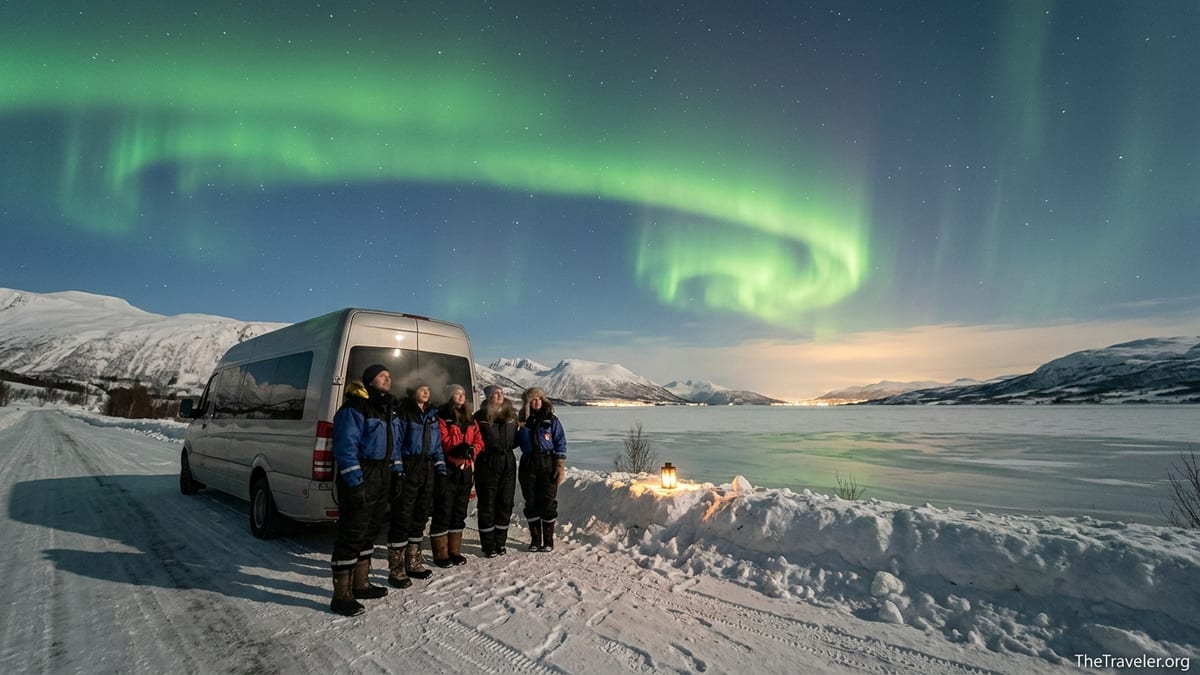
Why Tours Still Beat Going It Alone
Seeing the Northern Lights is not like visiting a monument that stays put. The aurora is driven by solar activity, weather, and local geography, which means conditions can change by the hour. Tour operators spend their entire winter season reading satellite data, cloud maps, and local forecasts, then adjusting their plans in real time. A first-time visitor landing in Tromsø or Rovaniemi for three or four nights simply does not have that depth of experience or local network to make the same calls under pressure.
In northern Norway, for example, Tromsø-based companies run nightly “chase” tours that can travel several hours in any direction to outrun cloud cover. Established operators often decide an hour before departure whether to head toward the Lyngen Alps, inland toward Finnish borderlands, or along the coast where offshore winds might clear the sky. Travelers who rely only on a generic cloud app and a rental car may end up staying in town under thick overcast while tours quietly slip into clearer skies a hundred kilometers away.
Comfort is another factor. A dedicated Northern Lights trip in midwinter often means hours outside in sub-zero temperatures. Reputable tours provide insulated overalls, boots, heated buses or vans, and hot drinks, so guests can step out for the aurora and warm up between displays. On your own, you shoulder the cost and logistics of gear rental, driving icy roads, and finding safe pull-out points in the dark. For many visitors, especially families and older travelers, the promise of expert navigation and a warm vehicle is worth the additional ticket price.
Most importantly, tours turn a hard-to-read atmospheric event into an understandable story. Guides explain what the different auroral shapes mean, how solar storms work, and why colors vary from pale green to deep purple. Instead of staring at a green band and wondering whether this is “good,” you learn how rare it is to see fast-moving curtains or a full corona overhead. That context often transforms a pretty night sky into one of the most meaningful travel memories you take home.
Real-World Examples of Northern Lights Tours in Action
On a typical winter evening in Tromsø, a large bus tour with a company like Destination Tromsø’s Aurora Bus heads out with 30 to 40 guests on what they call a “chase by bus.” Tickets usually cost in the range of 1,300 to 1,800 Norwegian kroner per adult, depending on the season and inclusions, which often cover thermal suits, hot drinks, and professional photos. If the forecast looks poor in one direction, they simply drive until they find a clearer sky, sometimes crossing into Finnish Lapland in search of a better window. Some of these tours even offer a substantial discount on a second tour if you do not see the lights the first night, effectively doubling your chances within the same trip.
Smaller, premium operators in Tromsø, Finnish Lapland, and Swedish Lapland run minivan or SUV tours limited to 8 to 12 people. Companies advertise features such as brand-new four-wheel-drive vans for the 2025 and 2026 seasons, unlimited mileage, and 24/7 aurora tracking based on both public data and proprietary tools. These trips often cost more per person than bus tours, but the trade-off is tailored route planning, more flexible stops, and easier access to remote lay-bys away from crowds.
Escorted multi-day itineraries take things further. A “follow the Northern Lights” package combining Norway and Finland might bundle coastal sailing, glass igloo nights in Finnish Lapland, reindeer or husky excursions, and multiple guided aurora hunts into a single 10 to 17 day trip. Prices for these trips commonly run into several thousand US dollars per person, but they remove the stress of stitching together separate bookings in harsh winter conditions. For travelers with limited time off and a strong desire to return home with at least one strong aurora memory, that level of curation can be worth the premium.
Even at the ultra-luxury end, where guests stay in high-end glass villas or designer cabins with saunas and outdoor hot tubs, operators typically encourage booking at least one or two guided hunts. Travelers who assume they will see the lights every night from their bed are often surprised by cloud cover or low solar activity. Local guides can turn what might have been a cloudy disappointment into a highlight of the trip by driving beyond the local weather system and finding a gap in the sky.
The Advantages of Local Knowledge and Mobility
Local knowledge is the quiet advantage that rarely shows in glossy brochures, but it is one of the main reasons Northern Lights tours remain the best bet. In northern Scandinavia, a 30 minute drive can mean the difference between a stubborn coastal cloud deck and inland skies that clear suddenly. Guides know which valleys trap fog and which roads have open vistas to the north. They know the lay-bys that are safely ploughed in January and the small beaches or frozen lakes that offer reflections when the aurora is strong.
Mobility matters just as much as expertise. A large coach can stay on main roads but cover long distances in comfort, making it ideal for broad chases when the regional forecast is mixed. Smaller vans and SUVs can follow narrower side roads and pivot quickly if the sky changes. This layered approach, with different operators using different vehicles, gives visitors a spectrum of options that are difficult to replicate in a single rental car without local driving experience on black ice or in blowing snow.
The same principle applies at sea. Coastal voyages along Norway’s fjords, including those run by companies such as Hurtigruten, act as moving observatories. Sailing under the auroral oval keeps you in the right latitude band, while the ship’s bridge team can alter course slightly to find clearer skies. Announcements to cabins when the aurora appears mean you do not have to stand shivering on deck for hours; you can read in the lounge or sleep, then rush outside when the call comes. On some itineraries, if the lights are not seen on an 11 night or longer voyage during the main aurora season, guests are offered a shorter return coastal trip at no additional cruise cost, reducing the risk of returning home empty-handed.
Land-based tour providers are also refining their guarantees and rebooking policies. Some small-group operators in Tromsø now explicitly offer a discount on a second chase if you do not see the lights on the first attempt, or allow flexible rescheduling within your travel window if conditions look particularly poor. While the aurora can never be promised, these policies align the interests of guides and guests and give travelers more confidence when committing to higher-priced experiences.
What Tours Offer That Apps and Rental Cars Cannot
Aurora apps and space weather dashboards are helpful, but they are only part of the story. A free phone app might show a high “Kp” index and bright colors, yet heavy low cloud could make it impossible to see anything from the ground. Experienced guides interpret this data alongside local satellite cloud imagery and on-the-ground observations from other drivers. They may decide to drive two hours inland toward Sweden where they know typical wind patterns will open a gap, something that a static forecast map does not explain to a newcomer.
Guided tours also handle practical details that independent travelers often underestimate. In Arctic winter darkness, simply identifying a safe place to stop for photos requires familiarity with road shoulders, snowbanks, and local traffic. Professional drivers are trained to pull off only where visibility is good and there is room for guests to get out without stepping into passing lanes. Many carry additional safety gear in the vehicle, from shovels and traction mats to reflective vests and emergency blankets.
Photography is another area where tours shine. Many operators now include a professional or semi-professional photographer as a guide, offering tripod use, camera settings advice, and post-tour image sharing. Guests who arrive with only a smartphone can still come away with a portrait under the aurora taken with a modern mirrorless camera on a tripod. For travelers who might never again return to the Arctic, having properly exposed images is a significant benefit compared with trial-and-error attempts alone on a freezing roadside.
Finally, tours provide cultural and environmental context. A local Sami guide in northern Finland might explain traditional beliefs around the “fox fires,” while a Norwegian coastal historian on a ship describes how the aurora guided winter fishermen. This storytelling layer turns a simple night out into a deeper understanding of life above the Arctic Circle, something that is difficult to replicate when you are focused on driving, navigation, and weather decisions by yourself.
Tour Types: From Budget Chases to Glass Igloos and Cruises
Northern Lights tours today span a wide range of formats and price points. At the budget-friendly end, evening bus chases from cities like Tromsø, Rovaniemi, and Reykjavik typically last 6 to 8 hours and include basic transport, guiding, and hot drinks. Prices frequently fall somewhere around the equivalent of 120 to 200 US dollars per adult. These tours are ideal for travelers who want to maximize their chances within a short city stay without investing heavily in specialized accommodation.
Mid-range options blend daytime Arctic activities with evening aurora hunts. A long weekend package in Finnish Lapland might include snowshoeing, a reindeer visit, and one or two guided Northern Lights chases by minivan. Some itineraries combine a night in a standard cabin with a night in an aurora-focused lodge or glass-roofed room. For many visitors, this split allows them to experience the special atmosphere of a glass igloo without paying premium rates for multiple nights when the sky might be cloudy.
Premium aurora cabins and glass igloos have become icons of Lapland. Glass igloo properties in areas such as Rovaniemi, Levi, and Ranua commonly charge around 250 to 300 euros per night in low season, with peak season prices often rising to 700 to 900 euros or more, especially around Christmas and New Year. Some specific igloo hotels publish winter rates around 350 to 400 euros per night in late winter, including breakfast and access to lakeside saunas. These stays are designed to let you fall asleep under the stars, but most resorts still recommend booking a guided tour on at least one night to hedge against weather and improve your odds.
At sea, Northern Lights cruises along the Norwegian coast or into the North Atlantic offer a different style of touring. A 12 day coastal voyage might start around the equivalent of a few thousand euros per person, including full board and multiple opportunities to see the aurora from different latitudes. Some cruise companies now market formal Northern Lights promises, where a free or discounted future voyage is offered if the lights are not seen on a qualifying itinerary within the core season. For travelers who like the idea of unpacking once, enjoying comfortable cabins and daily shore excursions, and letting the crew handle positioning under the auroral oval, this can be a compelling alternative to purely land-based trips.
Safety, Comfort, and Accessibility for Different Travelers
Safety is a major reason many travelers, particularly families and older guests, choose organized Northern Lights tours. Driving on dark, icy roads in regions you do not know can be stressful and, for those unused to winter conditions, risky. Professional guides are accustomed to long nights behind the wheel in sub-zero temperatures and are familiar with local hazards, from sudden snowdrifts to reindeer on the road. Vehicles are typically equipped with winter tires, emergency equipment, and communication systems far beyond what most rental cars provide.
Comfort also plays a significant role. Standard bus or minivan tours provide heated seats and frequent warm-up breaks, while some small-group operators add campfires, hot soup, or thermal shelters at remote viewing sites. This infrastructure matters if you are standing still in temperatures that can drop well below minus 15 degrees Celsius. Travelers with limited mobility often find that tours can adapt by choosing locations with short, flat walks from the vehicle to the viewing area, something that can be difficult to judge when planning independently from maps alone.
For seniors and travelers who prefer not to self-drive, fully escorted small-group Northern Lights itineraries are particularly appealing. These tours usually include baggage handling, airport transfers, and slower-paced days between aurora hunts. Some focus specifically on accessible experiences, avoiding steep hikes and long snowshoe trails. By bundling everything, from winter clothing rental to evening briefings about the next night’s chase, these trips make the Arctic accessible to people who might otherwise feel excluded by the climate and logistics.
Families benefit from the predictability of tours as well. Parents can focus on their children’s experience instead of road conditions and navigation. Kid-friendly operators may time departures slightly earlier, provide extra warm layers in child sizes, and plan shorter chases that still have a good chance of success. For many families, a night around a campfire watching green arcs brighten overhead, guided by someone who knows when to encourage patience and when to pack up, becomes the defining memory of their Arctic holiday.
How to Choose the Right Northern Lights Tour
Choosing the right Northern Lights tour starts with being honest about your travel style, budget, and risk tolerance. If you have only two or three nights in a destination like Tromsø or Rovaniemi, booking at least one dedicated Northern Lights chase early in your stay is wise. This leaves room to rebook if weather intervenes. Travelers with a week or more can mix one or two guided chases with free evenings, using what they learn from guides to make more informed decisions on their own.
Group size is a key differentiator. Large buses keep costs per person lower and offer a sociable atmosphere, but you may share the experience with dozens of others. Small-group minivans or SUVs cost more but provide greater flexibility, more personalized coaching on camera settings, and quieter viewing spots. Reading recent traveler reviews is helpful to see how operators handle marginal weather, whether they are willing to drive long distances when necessary, and how clearly they communicate expectations about the chances of seeing the lights.
Check exactly what is included in the price. Strong operators usually provide thermal suits or overalls, hot drinks, and sometimes a simple meal or snacks. Some include tripods of various heights and professional photographs after the tour. Others may charge extra for winter clothing rental or photo packages. Comparing these details alongside the base ticket price gives a truer sense of value than headline cost alone.
Finally, look at safety credentials and legal compliance, especially for small independent guides. In Arctic destinations, authorities increasingly require proper transport licenses, insurance, and safety training for operators using vans and cars. Reputable guides are transparent about their permits and vehicle standards. This may not seem as exciting as aurora photos in marketing material, but it is crucial if something goes wrong on a deserted winter road in the middle of the night.
The Takeaway
In a world of smartphone forecasts and social media tips, it is easy to think you can outsmart the Arctic and capture the Northern Lights on your own. For a small minority of seasoned winter drivers and repeat visitors, that may even be true. Yet for the vast majority of travelers making a single, special trip to see the aurora borealis, organized Northern Lights tours still offer the best balance of probability, comfort, understanding, and safety.
From budget-friendly bus chases in Tromsø to glass igloos in Finnish Lapland backed by on-site guides, from small-group 4x4 hunts to coastal cruises under the auroral oval, today’s tour landscape is rich and varied. These experiences do more than shuttle you to dark skies. They add expertise, storytelling, and a margin of security that is hard to put a price on when the Arctic night closes in and the success of your journey hangs on invisible forces from the sun.
If seeing the aurora is high on your wish list, treat tours not as an unnecessary extra but as the backbone of your planning. Use them to anchor your itinerary, then layer in independent exploring around them. With the right mix, you give yourself the best possible chance to stand under a sky that suddenly comes alive, knowing that the effort, expense, and careful logistics have all converged in a single, unforgettable moment of green light.
FAQ
Q1. Are Northern Lights tours really necessary, or can I just rent a car?
Renting a car works for confident winter drivers who are comfortable reading forecasts and navigating icy roads, but guided tours significantly increase your chances of clear skies, handle safety and logistics, and provide expert interpretation of conditions that most visitors see only once in their lives.
Q2. How much does a typical Northern Lights tour cost?
Pricing varies by region and format, but evening bus chases in major Arctic hubs often fall roughly in the range of 120 to 200 US dollars per adult, while small-group minivan tours are usually higher and multi-day escorted itineraries can cost several thousand dollars per person, especially when premium accommodation such as glass igloos or coastal cruises is included.
Q3. Can any tour guarantee that I will see the aurora?
No tour can guarantee the aurora on a specific night, because solar activity and weather are unpredictable, but some operators offer rebooking discounts or second-chance policies, and certain cruise lines provide a future voyage if no Northern Lights are seen during qualifying itineraries in the core season.
Q4. When is the best time of year to book a Northern Lights tour?
In northern Scandinavia, the main aurora season generally runs from around September to late March, with the darkest months from roughly November to February offering the longest nights; tours operate across this window, but the exact balance between darkness, cold, and cloud patterns varies by month and destination.
Q5. Are glass igloos or aurora cabins worth the premium price?
Glass igloos and dedicated aurora cabins are memorable and comfortable ways to watch the sky, and many travelers find a one or two night stay worth the higher nightly rate, but they should be seen as a complement to, not a replacement for, at least one guided aurora hunt that can drive beyond local cloud cover.
Q6. What should I wear on a Northern Lights tour?
You should dress in multiple warm layers, including a thermal base, insulating mid-layer, and windproof outer shell, plus insulated boots, warm socks, gloves, and a hat; many reputable tours provide additional thermal suits or overalls and sometimes boots, but you should confirm inclusions in advance and still bring good personal base layers.
Q7. How many nights should I plan for Northern Lights activities?
For most first-time visitors, allowing at least three or four nights in an aurora-friendly destination with one or two guided chases built into the stay strikes a good balance between budget and probability, giving you multiple chances to align clear skies with solar activity.
Q8. Are Northern Lights tours suitable for children and older travelers?
Yes, many tours accommodate families and older guests, with some offering shorter or more comfortable chases, flexible viewing locations, and accessible routes, though it is important to discuss walking distances, temperature expectations, and departure times with the operator in advance to ensure a good fit for everyone.
Q9. Do I need a professional camera to capture the Northern Lights?
A modern camera with manual settings will produce the best results, but many tours include photography support and offer to take and share images, so travelers with only smartphones can still come away with high-quality photos, especially when the aurora is bright and guides know how to work with available equipment.
Q10. How far in advance should I book a Northern Lights tour?
For peak periods such as Christmas, New Year, and school holidays, booking several months ahead is wise, particularly for small-group tours and popular igloo or cabin stays, while shoulder season departures may have more last-minute availability but still benefit from early reservations if your dates are fixed.