


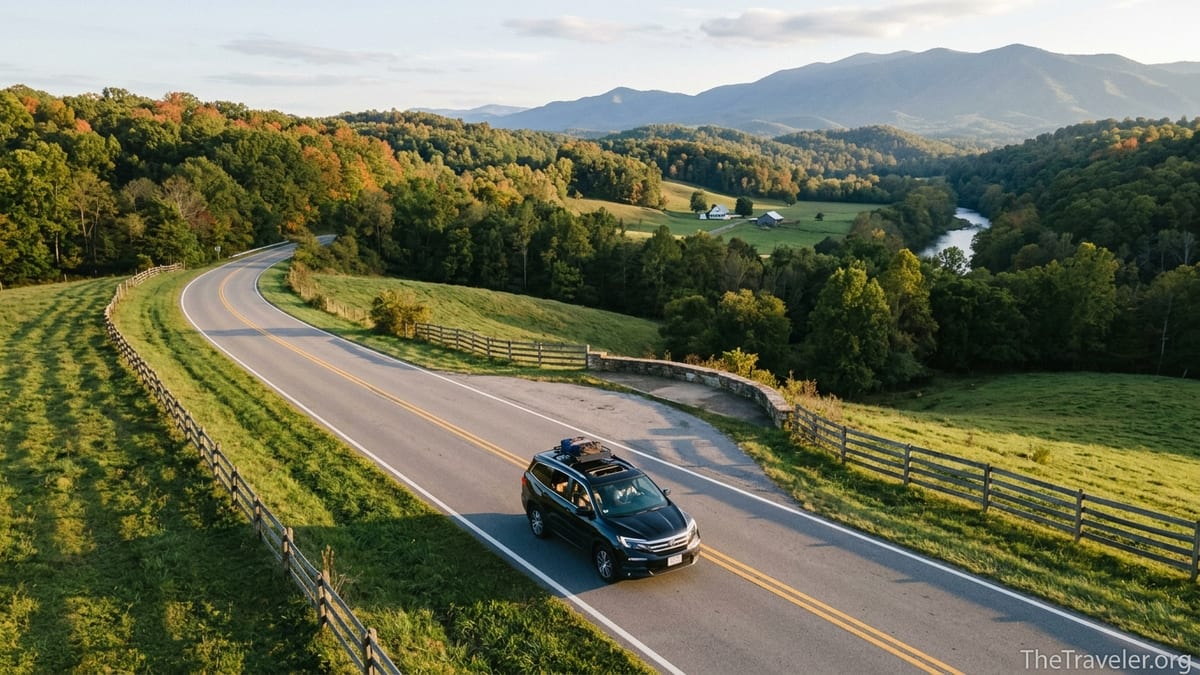
Tennessee was built for road trips. From the hazy blue ridges of the Smokies to blues-soaked river towns and small-batch whiskey hollows, the Volunteer State rewards travelers who slow down, roll the windows down and follow the two-lane roads. Whether you prefer a fully guided tour, a curated self-drive itinerary or simply a spectacular scenic highway to explore at your own pace, Tennessee offers some of the most memorable road trips in the American South.
Get the latest updates straight to your inbox!
How to Choose the Right Tennessee Road Trip Experience
Before locking in a Tennessee road trip, it helps to be clear about how you like to travel. Some visitors want the freedom of an independent self-drive route where they can linger at a viewpoint or detour to a random roadside diner. Others prefer the structure of a guided experience, with a driver handling mountain curves and a local guide adding context about music history, Civil War battlefields or the state’s deep whiskey heritage. Tennessee offers all of these formats, often on the same stretch of road.
Self-drive itineraries are widely available through regional travel companies and tourism offices, especially for classic routes like the Natchez Trace Parkway, the Tennessee Whiskey Trail and Great Smoky Mountains loops. These often come as downloadable maps or printed flipbooks that outline suggested daily distances, viewpoints, and lodging clusters, leaving you to book your own rental car and hotels. Expect to drive between 75 and 200 miles a day depending on how much hiking or sightseeing you build in.
Guided day tours are concentrated around hubs like Nashville, Memphis, Chattanooga and Gatlinburg. Popular options include small-group excursions from Nashville into whiskey country, day trips from Gatlinburg into Great Smoky Mountains National Park, or scenic drives from Chattanooga that link Lookout Mountain with the Ocoee River and the Cherohala Skyway. Prices typically start around 70 to 120 dollars per person for a day trip in a van or mini-coach, with premium private drivers charging several hundred dollars per day for customized itineraries.
For many travelers, a hybrid approach works best: base yourself in one or two major cities, rent a car for flexibility, then book targeted guided tours for the more complex segments. For example, you might self-drive the Natchez Trace for two days and then join a dedicated distillery tour in Lynchburg, or explore the Smokies on your own but hire a local guide for a sunset wildlife drive when you want to focus on the scenery instead of the hairpin curves.
The Natchez Trace Parkway: Tennessee’s Classic Slow Road
The Natchez Trace Parkway is one of the country’s iconic long-distance drives, stretching roughly 444 miles from Nashville, Tennessee, to Natchez, Mississippi. In Tennessee, the parkway arcs southwest from the outskirts of Nashville through rolling farmland and hardwood forest, with no commercial traffic allowed and a speed limit generally set at 50 miles per hour. The result is a remarkably calm driving experience that feels far removed from the nearby interstates.
Most travelers access the parkway about 17 miles southwest of downtown Nashville via Highway 100, near the landmark Loveless Cafe, then drive at least as far as the Double Arch Bridge at Birdsong Hollow, an elegant concrete span that has become one of the state’s most photographed road-trip scenes. Beyond the bridge, Tennessee’s section includes short walks to Jackson Falls and Fall Hollow Falls, viewpoints over the Duck River and pullouts where you can walk short preserved segments of the original Natchez Trace footpath.
This route is best approached as an unhurried journey. Many visitors from Nashville choose to drive a 70 to 100 mile round trip to the bridge and nearby waterfalls as a day excursion, possibly combined with a late lunch back at a meat-and-three cafe in the city. Others commit to a multi-day southbound trip, overnighting at small inns and B&Bs just off the parkway in Tennessee and northern Alabama. Because the road has limited access points and no gas stations, you will need to exit for fuel and lodging; planning fuel stops around towns like Franklin or Collinwood makes the drive straightforward.
The Natchez Trace Parkway is light on commercial attractions and heavy on atmosphere. It suits travelers who value quiet overlooks, historic markers and picnic areas under big trees more than shopping or nightlife. Cyclists and motorcyclists also gravitate to this road, especially in spring and fall when dogwoods bloom or the hardwood forests burn with color. If you are booking a guided experience, look for day tours from Nashville that specifically advertise stops at the Double Arch Bridge and waterfall hikes, as these capture the essence of the Tennessee stretch.
Great Smoky Mountains & East Tennessee Scenic Byways
On the opposite side of the state, Great Smoky Mountains National Park anchors some of Tennessee’s most dramatic mountain drives. The park’s central spine is Newfound Gap Road, which connects Gatlinburg, Tennessee, with Cherokee, North Carolina, via a series of sweeping curves and overlooks. It is not technically a tour route you book in advance, but rather a public highway that forms the backbone of many self-drive itineraries. Travelers often combine it with side roads such as the Cades Cove Loop, Roaring Fork Motor Nature Trail and Foothills Parkway for a full Smokies circuit.
The Tennessee Department of Transportation has designated a number of official scenic byways in this region, including a Great Smoky Mountains Byway that strings together mountain towns, overlooks and heritage sites across several counties. Drivers can expect a mix of gentle river-valley sections and steeper climbs, with scenic pullouts that look across layered blue ridges. Because this is one of the most visited national parks in the United States, it pays to travel early in the morning or outside peak summer weekends if you prefer quieter roads.
Guided drives into the Smokies range from budget-friendly van tours that run from Gatlinburg, Pigeon Forge or Sevierville to private jeep safaris that tackle gravel forest roads and remote overlooks. A typical half-day scenic drive tour might cost 70 to 110 dollars per adult and include stops at a historic homestead, a couple of overlooks, and a short waterfall walk. Some operators offer themed trips such as fall-foliage photography tours, firefly viewing nights in late spring, or winter wildlife drives focused on spotting elk and black bears from a safe distance.
For self-drivers, a common pattern is to overnight in Gatlinburg or Pigeon Forge, then dedicate one day to Cades Cove and Laurel Creek Road, another to Newfound Gap Road and Clingmans Dome, and a third to less-trafficked roads like the Foothills Parkway. Booking accommodation well ahead for peak seasons and building in flexible time for traffic delays will keep this mountain road trip enjoyable rather than stressful.
Tennessee Whiskey Country: Lynchburg, Nashville & Beyond
No discussion of Tennessee road trips is complete without mentioning whiskey country. The Tennessee Whiskey Trail connects dozens of distilleries spread across the state, from craft producers in urban neighborhoods to legendary names set in rural hollows. It is intentionally designed as a self-guided network of stops rather than a single continuous bus route, which makes it an attractive project for self-drivers over several days or multiple visits.
A classic introduction links Nashville with Lynchburg, home of Jack Daniel’s. Many visitors opt to rent a car in Nashville, then head south for the roughly 75-mile drive to Lynchburg, passing through rolling farmland and small towns. Once there, guided distillery tours introduce the charcoal mellowing process and barrel aging that define Tennessee whiskey. Standard tours are typically priced in the 25 to 40 dollar range, with tasting flights and special releases available for an additional fee. Because tastings are involved, some travelers choose to book organized day trips from Nashville that include round-trip transportation so no one in the group has to drive after sampling.
Beyond Lynchburg, the Whiskey Trail reaches into central Tennessee communities like Tullahoma, Shelbyville and Columbia, as well as eastward toward Knoxville and westward toward Memphis. This creates natural regional clusters that are ideal for one- or two-day loops. For example, a weekend based in Nashville might include a day heading south to Lynchburg and a second day visiting smaller craft distilleries closer to the city. A separate East Tennessee trip might combine Knoxville-area distilleries with a Smokies road trip, tying together mountain views and tasting rooms that highlight corn, rye and experimental finishes.
Planning is essential for this kind of road trip. Distilleries often have limited tour slots and may require advance bookings, especially on Fridays and Saturdays. Many locations are set on rural roads without rideshare coverage, so you should designate a driver, arrange a local car service, or choose a guided tour that bundles transportation and tastings. The official trail guide and printed maps break the state into easily digestible sections and can help you set realistic driving times between stops.
Chattanooga, Lookout Mountain & Southern Highlands Drives
Chattanooga sits at a crossroads of river, ridge and plateau, making it a strong base for road trips through the southern Appalachians. The city itself is framed by Lookout Mountain and Signal Mountain, each reached by twisting local roads that reward patient drivers with sweeping valley views. From here, travelers can continue along ridgelines into northwest Georgia or follow the Tennessee River Gorge, sometimes called the Grand Canyon of Tennessee, for a combination of water and cliff scenery.
Several tour operators in Chattanooga offer guided drives that bundle Lookout Mountain attractions such as Rock City, Ruby Falls and the inclined railway into half-day or full-day excursions. These tours typically run in minibuses or vans, cost in the range of 80 to 130 dollars per person, and are popular with visitors who prefer not to manage parking and steep grades. Self-drivers can replicate the same loops by following Lookout Mountain Parkway and connecting secondary roads, allowing more time at trailheads or river overlooks.
Adventurous drivers may also be drawn to nearby highland roads like the Ocoee Scenic Byway and the Cherohala Skyway, which link Tennessee to North Carolina through a series of sweeping mountain curves and national forest vistas. These routes are not exclusive to Tennessee, but they form part of larger regional road-trip concepts such as the Great Southern Parkway, a stitched-together journey that uses the Natchez Trace, Cherohala Skyway, Blue Ridge Parkway and Skyline Drive as a continuous scenic corridor. For Tennessee visitors, sampling the segments near Chattanooga offers a taste of this bigger idea without committing to a multi-state expedition.
Regardless of whether you drive yourself or join a tour, it pays to check weather and road conditions ahead of time in this part of the state, particularly in late fall and winter when fog, ice or heavy rain can make ridgeline roads more challenging. Booking a local guide for the highest and most remote sections is a sensible option if you are not comfortable with mountain driving.
Music City to Memphis: Urban Culture on the Open Road
Not all Tennessee road trips are about mountain passes and rural byways. The corridor between Nashville and Memphis offers a different kind of journey, one defined by music history, food culture and wide, open interstates punctuated by short scenic detours. Many visitors arrive by air in either Nashville or Memphis, rent a car, then build a loop that connects the two cities with a night or two in smaller communities along the way.
A common pattern begins with two or three nights in Nashville exploring honky-tonk venues, the Country Music Hall of Fame, and nearby neighborhoods, followed by a day’s drive west. While the most direct route is along Interstate 40, diversions to visit places such as Jackson or Brownsville can add character to the trip. In Jackson, visitors learn about rockabilly roots and the region’s railroad history, while small-town barbecue joints along the way turn lunch into a highlight of the day.
Once in Memphis, the focus shifts to the Mississippi River and the city’s rich musical heritage, from Beale Street blues clubs to Sun Studio and museums chronicling soul, rock and civil rights history. Travelers who prefer not to navigate big-city driving can park the car at a central hotel and rely on walking, streetcars or rideshare services within the urban core, using the rental mainly for the intercity segments. Guided city tours by bus or van are widely available in both Nashville and Memphis, often priced between 50 and 90 dollars for half-day orientation circuits.
For those with additional time, it is possible to extend this urban road trip south into Mississippi or north into Kentucky, adding river towns, Civil War sites and blues-related stops. However, even a simple one-week loop that begins and ends in Nashville, with three nights there, two in Memphis and one in between, offers a satisfying blend of live music, regional food and relaxed highway driving.
Practical Planning Tips, Seasons & Safety
Regardless of which Tennessee road trip you choose, a few practical considerations can make the experience smoother. First, timing. Spring and fall are widely considered the best seasons for scenic driving, particularly in the Smokies and along the Natchez Trace, when temperatures are moderate and foliage is either emerging or changing color. Summer offers long daylight hours but also heavier traffic around national parks and popular lakes. Winter can bring snow and ice to higher elevations but leaves lower-elevation routes quiet and atmospheric.
Accommodation prices vary significantly with season and special events. In cities like Nashville and Chattanooga, weekend rates often climb sharply during festivals, sports events or peak holiday periods, so booking several months ahead is wise if your road trip overlaps with major concerts or college football games. In mountain towns like Gatlinburg and Pigeon Forge, fall foliage weeks and school holidays see similar spikes. Flexible travelers who can visit midweek or outside school breaks will usually find both quieter roads and better room rates.
In terms of costs on the ground, most scenic roads in Tennessee do not charge tolls, and the Natchez Trace Parkway and Great Smoky Mountains National Park do not require an entry fee to simply drive through. Your main expenses will be fuel, lodging, food and any optional guided tours or attraction tickets. Compact rental cars are generally more economical for fuel and easier to maneuver on narrow mountain roads, while larger SUVs appeal to families or groups carrying outdoor gear.
Finally, safety deserves attention. Mountain and byway driving in Tennessee often involves sharing the road with cyclists, motorcyclists and wildlife. Keep speeds moderate, especially on blind curves, and avoid driving at night on unfamiliar rural roads where deer are active. If your plans include whiskey or brewery visits, designate a driver or choose a guided experience that provides transportation. Cell coverage can be patchy in remote areas, so downloading offline maps and carrying physical directions through national parks and forested sections is a smart backup.
FAQ
Q1. What is the best first-time Tennessee road trip for most travelers?
For a first visit, many travelers enjoy combining Nashville with a day or two on the Natchez Trace Parkway plus a separate two- or three-day loop through Great Smoky Mountains National Park, which offers a balance of city culture and classic mountain scenery.
Q2. Do I need a four-wheel-drive vehicle for Tennessee scenic drives?
No. The major routes described here, including the Natchez Trace Parkway, Newfound Gap Road, Foothills Parkway and typical whiskey-country roads, are paved and suitable for standard rental cars in normal conditions, though winter storms can temporarily make some mountain roads more difficult.
Q3. How many days should I plan for a Natchez Trace Parkway trip from Nashville?
If you are only sampling the Tennessee section as a day trip from Nashville, a full day is enough to reach the Double Arch Bridge and nearby waterfalls. To drive most or all of the parkway south toward Mississippi, many travelers allocate three to five days with overnight stops in small towns along the way.
Q4. When is the best time to drive in the Great Smoky Mountains?
Spring and fall are particularly rewarding, with wildflowers and emerging leaves in April and May and fall color typically peaking sometime between early October and early November, depending on elevation and weather. Weekdays outside school holidays are usually less crowded.
Q5. Can I visit distilleries on the Tennessee Whiskey Trail without driving myself?
Yes. In areas such as Nashville and Lynchburg, several tour companies offer day trips with transportation included, allowing you to join distillery tours and tastings without needing a designated driver. In more rural areas you may need to arrange a private driver or limit tastings if you are driving.
Q6. Are there entry fees for Tennessee’s main scenic roads?
Most of the state’s headline scenic drives, including the Natchez Trace Parkway and primary roads through Great Smoky Mountains National Park, do not charge a toll or basic driving fee, though some attractions and parking areas may have separate charges.
Q7. How far is it to drive between Nashville and Memphis, and is it scenic?
The most direct route between Nashville and Memphis is roughly 210 miles along Interstate 40, which takes about three to four hours of driving. While the interstate itself is straightforward rather than dramatic, short detours into small towns, barbecue spots and music heritage sites can make the journey more interesting.
Q8. Is it safe to drive mountain roads in Tennessee for someone not used to them?
Most well-known mountain routes in Tennessee are engineered for everyday traffic and are safe if you drive conservatively, use lower gears on descents and avoid distractions. If you are nervous about steep grades or sharp curves, consider booking a guided tour for the most challenging segments.
Q9. Do I need to book Smoky Mountains or byway accommodations in advance?
In peak seasons, especially summer and fall foliage weeks, it is wise to book lodgings in Gatlinburg, Pigeon Forge and popular small towns several weeks or even months ahead. In quieter shoulder seasons, you may find more flexibility, but reservations are still recommended for weekends.
Q10. Can I combine Tennessee road trips with neighboring states?
Yes. Many itineraries extend Tennessee drives into North Carolina via the Smokies, into Georgia near Chattanooga, or south along the Natchez Trace into Mississippi. With careful planning, you can create a multi-state loop that still uses Tennessee’s roads as the backbone of the journey.