


I thought I knew Tennessee. In my mind it was a greatest-hits reel of country songs in Nashville honky-tonks and misty overlooks in the Smoky Mountains. Then I spent time driving, walking, paddling and tasting my way across the state, and the story shifted completely. Tennessee revealed itself as a place of inventive food scenes, urban wilderness, quirky prison-turned-distilleries and cypress-filled earthquake lakes. The music and mountains are still there, of course, but they are only the opening track.
Get the latest updates straight to your inbox!
Discovering an Urban Wilderness in Knoxville
My first surprise came not in some remote corner of Appalachia, but ten minutes from downtown Knoxville. South of the river, the city has stitched together an “Urban Wilderness,” more than 60 miles of trails and greenways where locals mountain bike before work and families hike after school. You can start your morning with coffee on Market Square and, in less time than it takes to finish a podcast episode, be standing on a bluff at Ijams Nature Center watching paddlers slide along the Tennessee River.
At Ijams, I rented a kayak for a couple of hours and paddled out around the rocky outcrops of Mead’s Quarry Lake, an old marble quarry that now feels like a pocket-sized Canadian wilderness. On shore, teenagers were scrambling up the rocks while a yoga class quietly held poses on paddleboards. It felt a world away from the brick facades and old theaters of downtown, yet my parking meter was still running only a few miles up the road.
Back in the city core, Knoxville kept confounding my expectations. Instead of generic bar food, Market Square is lined with spots serving fried chicken on fluffy biscuits, seasonal salads, and craft cocktails built around Tennessee-made spirits. On Saturday mornings in season, the square fills with the Market Square Farmers’ Market, where more than a hundred local vendors set up stalls with heirloom tomatoes, artisan cheeses and fresh flowers. You can pick up strawberries grown an hour away, grab lunch from a food truck, and be listening to a busker all within a few paces.
By the time I walked from the brick-lined Old City to a riverside greenway at sunset, Knoxville had shifted in my mind from college-football town to one of the South’s more livable small cities. It is the kind of place where you can tour a historic theater in the afternoon, sip a locally roasted cold brew on a side street, then finish the day on a woodland trail without ever touching an interstate.
Chattanooga’s Riverfront Creativity
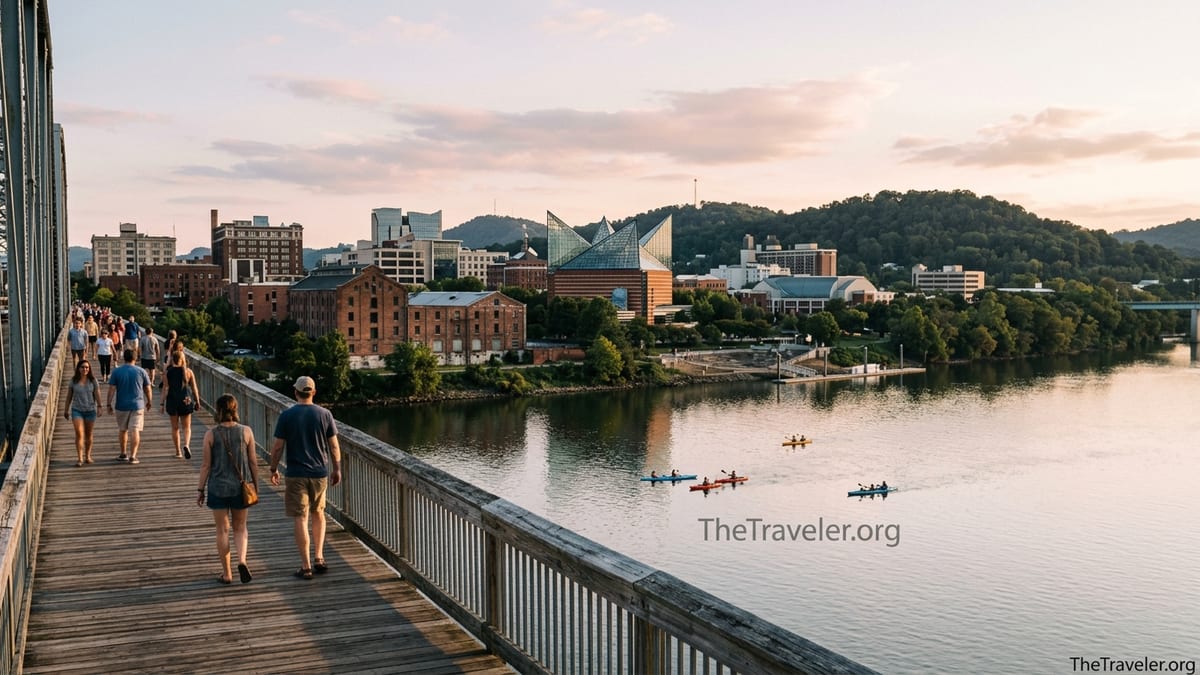
Chattanooga is often summarized as “outdoor town on the river,” and it certainly earns that title with rock climbers on Lookout Mountain and cyclists on the Tennessee Riverwalk. What surprised me was how much of the city’s identity now revolves around art, design and playful public spaces. The miles-long riverfront is anchored by an aquarium that looks like a pair of glass ship prows and flanked by a modern pedestrian bridge, wide enough that joggers, dog walkers and photographers barely have to dodge one another.
Cross that bridge and you find yourself in the NorthShore district, where boutiques sell locally designed prints and small-batch soaps, and independent cafes serve espresso in mismatched ceramic mugs. On a Friday evening art crawl, galleries along Main Street opened their doors with wine, live painting and local bands. It would not have felt out of place in a Pacific Northwest city, yet the views out the window were undeniably Tennessee: river bluffs, a historic carousel, and wooded hills rising just beyond downtown.
Chattanooga also leans into hands-on creativity in ways that go beyond traditional museums. At the Creative Discovery Museum downtown, families cluster around water tables that explain river ecology and music stations where kids drum and strum their own soundtracks. A few blocks away, repurposed industrial buildings now house shared studios, breweries and event spaces where you can stumble into everything from avant-garde “noise nights” to neighborhood craft markets. The city’s message is clear: here, you do not only look at art, you make it.
What stood out was how seamlessly the outdoors and the arts were woven together. One afternoon I biked along the riverfront through an open-air sculpture park, where huge abstract pieces rose from the grass with the mountains in the distance. A few hours later I was sitting on a brewery patio, listening to a genre-bending band that mixed bluegrass instruments with electronic beats. Chattanooga did not fit the tidy stereotype of a Southern river town; it felt more like a creative lab framed by ridgelines.
West Tennessee’s Otherworldly Cypress Swamps
If most visitors think of Tennessee’s scenery in terms of blue mountains, West Tennessee is usually an afterthought. That changes the moment you push a canoe into the still, tannin-dark waters of Reelfoot Lake. Formed by a series of massive earthquakes in the early 1800s, this shallow lake is unlike anything else in the state. Bald cypress trees, some well over a century old, rise straight out of the water, their roots spread into knobby knees that look like sculptures.
I joined a local guide for a slow paddle at sunrise, when the mist still clung to the lake’s surface. Egrets stalked the shallows while a bald eagle traced circles overhead, searching for its own breakfast. The guide explained how parts of the surrounding farmland suddenly dropped during the quakes, filling with water from the Mississippi River and creating this flooded forest. It is a place that feels part bayou, part Midwestern marsh, and very far from the Nashville skyline.
On shore, the rhythm of life around Reelfoot Lake remains tied to the seasons. In winter, anglers tow aluminum boats behind pickup trucks and launch before dawn in search of crappie. In summer, families rent simple cabins or book rooms at modest lakeside lodges where the evening entertainment is a rocking chair, a plate of fried catfish and the sound of frogs starting up at dusk. There are no big-chain attractions here, just mom-and-pop fish shacks, bait shops, and hand-painted signs pointing to boat ramps.
Driving the backroads of northwest Tennessee, I realized how much of the state is defined not by mountains but by water and wetlands. Cypress groves, oxbow lakes and wildlife refuges line stretches of highway that most interstate drivers never see. For travelers willing to leave the four-lane behind, this corner of Tennessee offers a slow, reflective counterpoint to the bright lights of the big cities.
Small-Town Main Streets and Unexpected Food Scenes
Between Tennessee’s better-known hubs lie dozens of small towns that have quietly reinvented themselves around food, art and a renewed pride in Main Street. Instead of neon-lit music venues, you find century-old brick storefronts with murals, bakeries and locally owned bookstores. On a Sunday afternoon in one such town, I joined a line that snaked out the door of a cafe known for its pimento cheese sandwiches and seasonal pies. The total for lunch, dessert and a generous tip still came in under what a single artisan cocktail would cost in a major coastal city.
What ties many of these towns together is an emphasis on locally sourced ingredients. At a family-run restaurant in a former hardware store, the server pointed out that the pork came from a farm two counties over and the greens were delivered that morning from a nearby hollow. Menus across the state often read the same way: catfish from area rivers, sweet potatoes from west of the Tennessee River, berries grown just down the road. It is farm-to-table without the fanfare, born of necessity and tradition rather than trend.
Markets reinforce that connection. In many communities, Saturday means folding tables set up near courthouse squares, with farmers offering baskets of peaches and jars of honey beside soap makers and woodworkers. I met a cheesemaker who had left a corporate job in Nashville to revive a small dairy in Middle Tennessee, and a baker who started with a cottage license selling sourdough loaves from her porch before expanding to a permanent shop on Main Street. Their stories mirror a broader shift: younger Tennesseans returning to small towns, bringing new energy while honoring long-standing roots.
This culinary undercurrent changed how I planned my days. Instead of plotting only museums and viewpoints, I found myself timing drives around when a particular bakery’s cinnamon rolls came hot out of the oven or when a food truck regularly parked beside a downtown brewery. Tennessee’s small-town food scenes are not as loudly advertised as its big-city restaurants, but they can be just as memorable.
From Prison Walls to Whiskey Stills
Of course, you cannot talk about Tennessee without mentioning whiskey, but even here the surprises go beyond famous labels. The Tennessee Whiskey Trail connects dozens of distilleries across the state, from industrial-scale operations recognizable from store shelves to tiny outfits where the owner still gives the tour and signs the bottles. At many stops, you can pick up a passport, collect stamps and learn how each place tweaks the alchemy of grain, water and oak.
The most unexpected distillery I visited sat behind the stone walls of a former maximum-security prison tucked in the hills of East Tennessee. Today, instead of inmates, you find visitors walking along corridors lined with interpretive signs about the facility’s history, then stepping into a modern tasting room where copper stills gleam behind glass. You can stand in a former exercise yard with a cocktail in hand, listening to stories of prison escapes and Prohibition-era bootlegging. It is part history lesson, part craft-spirits education, and a vivid symbol of how the state repurposes its past.
Elsewhere, distilleries are woven seamlessly into the fabric of day-to-day life. In the Nashville area, you might pass a small urban operation tucked into a repurposed warehouse, its barrels stacked high in a brick-walled room that smells faintly of vanilla and toasted oak. In the countryside, you might pull off a two-lane highway into a gravel lot, walk through a barnlike structure, and find a tasting bar where the person pouring your sample also tends the mash. Tasting flights typically cost less than a casual lunch, and many spots apply the fee toward a bottle if you decide to bring home a souvenir.
What struck me was how much storytelling accompanied each pour. At one family-owned distillery, the guide talked about a grandfather who distilled illegally in the hills long before laws changed, while at another the focus was on new grains and experimental cask finishes aimed at a global market. Together, they made clear that Tennessee whiskey is not a monolith. Behind the stereotypes of caramel-colored liquor in square bottles lies a living culture of makers, innovators and historians.
A Different Side of Nashville
Nashville’s music credentials are impossible to miss. The surprise is how quickly you can sidestep the neon of Lower Broadway and find a city that feels more like a cluster of eclectic neighborhoods than a tourist machine. A few blocks from the most crowded honky-tonks, tucked into side streets, you find coffee shops where songwriters are editing lyrics over laptops, and small galleries displaying work by local painters and photographers.
In emerging districts, old brick warehouses have been reborn as shared spaces where you can wander from an artisan chocolate shop to a plant-filled wine bar to a coworking space that hosts evening talks. Murals add splashes of color to the sides of cinderblock buildings, often with references that locals understand best: a favorite dive bar, a beloved radio station, a nod to a historic neighborhood. You can spend an afternoon walking mural to mural, grabbing snacks from food trucks and listening to the hum of the city without ever hearing a live band.
Food in Nashville has long outgrown the binary of hot chicken and meat-and-three. Tucked on side streets are bakeries selling kouign-amann beside buttermilk biscuits, ramen shops with lines out the door, and taquerias where the tortillas are pressed to order. It is still possible to eat very well for the price of a modest entree in bigger cities, especially at lunch, when daily specials might include locally sourced vegetables, catfish or barbecue on a plate big enough to share.
Even the way Nashville relaxes goes beyond honky-tonks. Locals head to green spaces that trace the river, or to neighborhood parks where pickup soccer games spring up in the evenings. In warmer months, outdoor markets and pop-up vintage fairs fill parking lots and side streets. The soundtrack might still include guitars, but the setting is more likely to be a shaded courtyard than a stage bathed in colored lights.
The Takeaway
By the time I crossed the state line at the end of my trip, Tennessee had undone most of my preconceptions. Yes, I heard country songs and saw mountain vistas, but I also paddled through cypress swamps born of earthquakes, wandered an urban wilderness just beyond a downtown skyline, and tasted whiskey in a place that once housed prison cells. I met farmers selling produce on courthouse squares, artists leading workshops in former factories, and distillers turning generations of family lore into legal bottles.
If you go with a checklist built only around famous venues and park overlooks, you will certainly have a good time. But the real Tennessee appears when you linger in neighborhoods that do not yet have souvenir stands, drive the two-lane roads instead of the interstates, and follow your nose to a bakery or cafe that locals recommend offhandedly. It is in those moments that the state reveals its quieter strengths: resilience, creativity and a deep connection to land and community.
On my next trip, I will still pack hiking boots and leave space in my luggage for a bottle or two. But I will also bring curiosity for the unexpected: a farmers’ market stall in a town I have never heard of, a trailhead sign pointing into a patch of woods on the edge of a city, a hand-painted board on a roadside promising pie. In Tennessee, the best surprises often start with small detours.
FAQ
Q1. When is the best time of year to explore Tennessee beyond the music scene?
Spring and fall are ideal, with mild temperatures, blooming wildflowers or colorful foliage, and generally comfortable conditions for hiking, paddling and walking around cities and small towns.
Q2. Do I need a car to experience these lesser-known parts of Tennessee?
You can explore central neighborhoods of cities on foot or by rideshare, but a car makes it much easier to reach small towns, lakes, distilleries and trailheads that are not on major transit routes.
Q3. How expensive is it to travel through Tennessee outside the main tourist hotspots?
Outside the most popular districts, costs are often moderate. Simple motel rooms, affordable local diners and reasonably priced activities like state parks and small museums help keep daily budgets manageable.
Q4. Is it possible to visit distilleries if I am not a big whiskey drinker?
Yes. Many distilleries emphasize history and craftsmanship as much as tasting, and some offer alternatives like cocktails with smaller pours, non-alcoholic beverages or the option to skip samples entirely and just tour.
Q5. Are places like Reelfoot Lake and the Urban Wilderness suitable for families?
They can be great for families, provided you match activities to ages and abilities. Gentle hikes, ranger-led programs, easy paddling routes and guided boat tours are usually available in season.
Q6. How many days should I plan if I want to see both cities and rural areas?
A week gives you time to combine at least one city such as Nashville, Knoxville or Chattanooga with a slower swing through small towns and a day or two at a lake or in the countryside.
Q7. Do I need advance reservations for distillery tours and tastings?
On weekends and during busy travel periods, it is wise to reserve tours or tasting slots in advance, especially at smaller or more popular distilleries that limit group size.
Q8. What should I pack for a trip that includes both cities and outdoor activities?
Comfortable walking shoes, a light waterproof jacket, casual clothes that work in both restaurants and on short hikes, and a daypack for water, sunscreen and a camera are usually enough.
Q9. Is Tennessee easy to explore for solo travelers?
Yes. Larger cities have active hostel and hotel scenes, while small towns often feel welcoming to solo visitors. Common-sense precautions apply, but many travelers report feeling comfortable exploring on their own.
Q10. Can I see interesting parts of Tennessee without visiting the Smoky Mountains or Broadway in Nashville?
Absolutely. You can focus on riverfront neighborhoods, small-town main streets, lakes, wildlife refuges, and distillery routes and still come away with a rich sense of the state.