


For years, Tennessee tourism headlines have belonged to Nashville. Honky-tonks, celebrity-backed bars, and bachelorette parties turned Music City into a shorthand for the entire state. But talk to road-trippers, outdoor lovers, and food-focused travelers in 2026, and a different story emerges. Tennessee is quietly winning over visitors who are looking past Broadway to river gorges, walkable small cities, and a fast-growing state park system that offers adventure, culture, and real value for money.
Get the latest updates straight to your inbox!
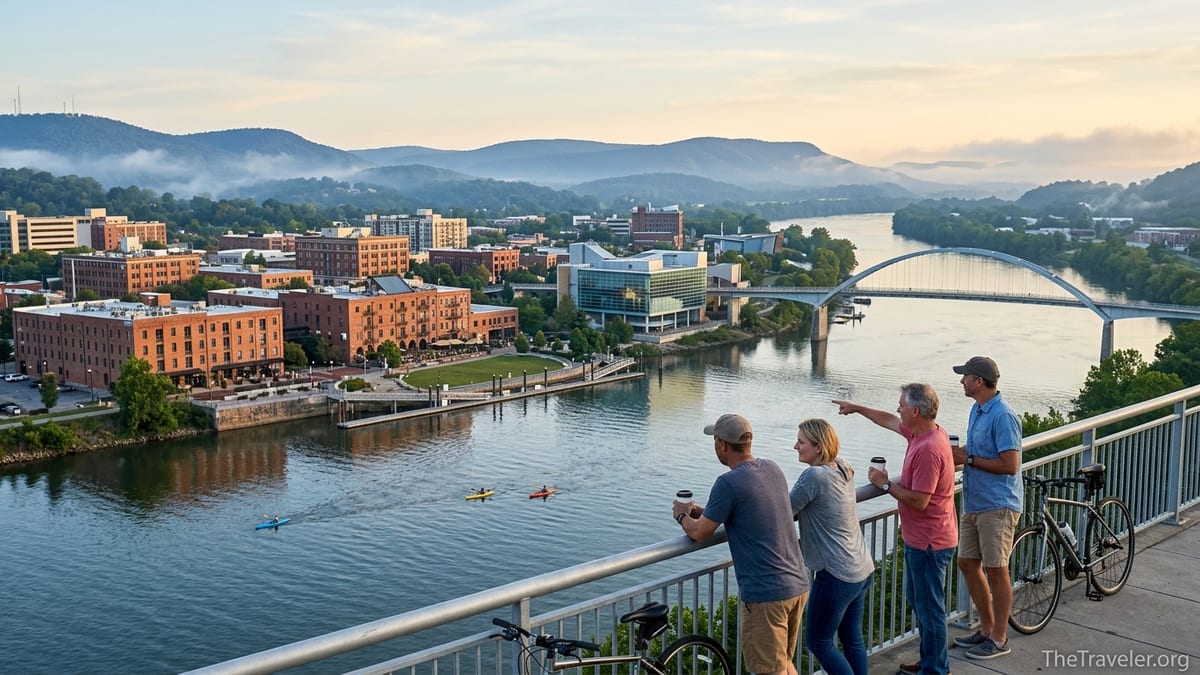
Beyond Broadway: How Travelers Are Rewriting the Tennessee Itinerary
Spend a weekend people-watching on Lower Broadway and you could assume every out-of-state visitor to Tennessee is here for the same thing: live country music, neon, and late nights. Yet tourism boards around the state report that more visitors are linking Nashville with at least one other Tennessee destination, or skipping it altogether in favor of quieter, more affordable cities like Chattanooga, Knoxville, and Johnson City. In online travel forums, it is common to see itineraries that read “fly into Nashville, then head to the mountains” or “one night in Nashville, three nights in Chattanooga.”
Part of the shift is simple economics. Average weekend hotel rates in downtown Nashville often rival mid-tier New York or Chicago prices, especially around major events. Travelers notice that they can book a stylish room in downtown Knoxville or a riverfront hotel in Chattanooga for significantly less, then spend the savings on guided hikes, craft beer, or tickets to attractions like the Tennessee Aquarium. Families who might once have treated Nashville as the entire trip now treat it as a gateway to the rest of the state.
There is also fatigue with the party-first image. Many repeat visitors say they appreciate that other Tennessee cities feel more relaxed, less commercial, and easier to navigate with kids. Where Nashville’s core can feel dominated by national bar brands and souvenir shops, places like Chattanooga’s Southside or Knoxville’s Old City are filled with independent restaurants, neighborhood breweries, and public art. Travelers looking for “the real Tennessee” increasingly start their search in these smaller, more livable hubs.
Crucially, the state itself is leaning into that broader story. In recent years Tennessee’s tourism campaigns have highlighted mountain biking in the Cherokee National Forest, paddling in the Tennessee River Gorge, and road trips that connect music heritage sites from Memphis to Bristol. When you add in the rapid expansion of the state park system, the result is a destination that appeals as much to hikers, families and digital nomads as it does to honky-tonk fans.
Chattanooga: Outdoor Capital With Small-City Comforts
Chattanooga has been one of Tennessee’s quiet success stories for more than a decade, and in 2025 it secured a high-profile endorsement when the Outdoor Writers Association of America chose the city to host its 2025 conference. That decision brought hundreds of outdoor-focused travel journalists to the “Scenic City,” where they spent days exploring Lookout Mountain, paddling the Tennessee River, and visiting urban nature hubs like the Tennessee Aquarium and Reflection Riding Arboretum. For prospective visitors, it was a signal that Chattanooga’s blend of city and wild is nationally recognized.
For travelers, the appeal is straightforward. Within a short drive of downtown, you can hike sandstone bluff trails with river views, ride world-class singletrack, or float through the Tennessee River Gorge on a guided kayak tour. Outfitters operate sunset paddle trips that start a few minutes from the city’s riverfront parks. On a typical long weekend, a visitor might spend a morning rock climbing at a local crag, have lunch at a food hall in the Southside district, then cap the day with live music at a converted train station or under the Market Street Bridge.
The city’s investment in outdoor infrastructure is just as important as the scenery. The Tennessee Riverwalk, a paved multi-use path, connects downtown with neighborhoods and parks for miles along the water, making it easy for visitors to explore by foot or rental bike. In fall and spring, Chattanooga’s recreation department publishes activity guides featuring ranger-led hikes, full moon paddles, and weekend programs in local parks and nearby wildlife areas. These are low-cost, plug-and-play experiences for visitors who may not have their own gear or deep backcountry skills.
Chattanooga also works as a base for exploring newer state parklands. North Chickamauga Creek Gorge State Park lies to the northwest of the city, protecting a rugged sandstone canyon with swimming holes and day hikes. To the west, Bigfoot Adventure in Tracy City combines camping, ziplines, and proximity to South Cumberland’s famous Fiery Gizzard Trail, putting a multi-day outdoor itinerary within a 90-minute drive of downtown. For travelers who want mountain scenery and modern coffee shops in the same trip, Chattanooga keeps rising to the top of the list.
Knoxville: College Town Energy Meets Mountain Gateway
Knoxville was once known nationally mainly as a college town and football destination. In the past few years, though, it has been gaining attention as a more affordable, lower-key alternative to Nashville for people who want walkability, food culture, and easy access to the Smokies. Moving-industry data circulating in late 2025 even suggested Knoxville was among the most in-demand small metros in the country for new residents, a trend that tends to foreshadow tourism interest as new restaurants, hotels, and creative projects follow.
Visitors arriving in 2026 find a downtown that feels more polished than a decade ago but still locally grounded. Market Square hosts frequent festivals and outdoor concerts; Gay Street mixes historic theaters with new restaurants and cocktail bars. Local hospitality groups have opened venues like The Kennedy, a stylish restaurant that nods to the natural beauty of the Tennessee Valley, and are investing in new projects on Gay Street and in South Knoxville. On the lodging side, a 161-room AC Hotel by Marriott is under construction in the heart of downtown, scheduled to open in late 2026, signaling confidence that demand will continue to grow.
Knoxville’s real superpower, though, is its position as a mountain gateway without mountain-town prices. From downtown, visitors can be driving into Great Smoky Mountains National Park in roughly an hour, or into quieter corners of the Cherokee National Forest in a similar timeframe. The city’s own Urban Wilderness system strings together more than 50 miles of trails, lakes, and quarries across South Knoxville, reachable by bike or a short rideshare from downtown. A traveler can fly in, check into a hotel near Market Square, and be mountain biking on singletrack or hiking to a quarry overlook by mid-afternoon.
Major projects are reshaping Knoxville’s leisure landscape as well. Covenant Health Park, a new downtown multi-purpose stadium just east of the Old City, is bringing minor-league baseball and concerts into easy walking range of breweries and restaurants. Public transit routes have been adjusted so visitors can reach the stadium and nearby nightlife without driving, a convenience that budget-conscious and younger travelers increasingly expect. Add in a growing calendar of festivals, from spring dogwood celebrations to fall craft beer events, and Knoxville looks less like an afterthought between Nashville and the Smokies and more like a destination in its own right.
Northeast Tennessee: Johnson City, Craft Beer, and High-Country Trails
Far from the state’s big interstates, Northeast Tennessee has been quietly building a reputation among travelers who value smaller crowds, mountain scenery, and an emerging craft food and drink scene. Johnson City, once a largely industrial and rail hub, now shows up regularly in conversations about under-the-radar Appalachian destinations. Its compact downtown is anchored by the historic Tweetsie Depot, where Yee-Haw Brewing runs a lively beer garden with outdoor seating and mountain views. Around the corner, Johnson City Brewing Company has grown from a homebrew club into a local fixture, pouring small-batch beers and hosting community events.
For many travelers, the attraction is the combination of these urban comforts with easy access to trails and lakes. Locals swap tips about camping at Watauga Lake or mountain biking on nearby ridgelines in the same breath as recommendations for tacos or coffee downtown. The Tweetsie Trail, a rail-trail that runs out of the city toward the countryside, gives visitors an approachable way to experience rolling Appalachian farmland on foot or via rental bike. In late summer, events like the Meet the Mountains Festival introduce newcomers to regional outfitters, paddling clubs, and guided adventures in one convenient spot.
Just down the road, Lamar Alexander Rocky Fork State Park showcases the more rugged side of the region. The park protects thousands of acres of hardwood forest and clear mountain streams in a steep Appalachian valley, with trails that appeal to both casual hikers and serious backcountry enthusiasts. The atmosphere is more like a national forest than a manicured urban park: mossy boulders, rhododendron tunnels, and cold, fast-moving water. For travelers used to crowded national park trailheads, a weekday hike at Rocky Fork or other regional state natural areas can feel like a revelation.
Local tourism agencies have started to market the region with the tagline “brews and views,” and it fits. A long weekend might include a morning paddle on Watauga Lake, lunch at a downtown Johnson City burger spot, an afternoon of beer tasting at a historic depot, and an evening outdoor concert on a small stage backed by the Blue Ridge foothills. Compared with better-known mountain towns just across state lines, prices for lodging and dining remain relatively modest, which makes Northeast Tennessee particularly attractive for road-trippers and younger travelers.
State Parks and Wild Places: Tennessee’s Secret Advantage
If there is one factor that may determine Tennessee’s long-term appeal beyond Nashville, it is the state’s extraordinary investment in public lands. Since 2019, state leaders have pursued a deliberate strategy of expanding and upgrading Tennessee’s park system. By 2025, the state had dedicated or expanded multiple parks in a single year, and by early 2026 park enthusiasts were tracking more than 60 established state parks, with several additional sites in the planning pipeline as new parks or major expansions.
New parks and designations have been coming online across the map. Savage Gulf State Park, carved out of the South Cumberland plateau, highlights dramatic sandstone gorges and waterfalls, giving hikers a multi-day alternative to the region’s more famous but often crowded day hikes. Other areas such as North Chickamauga Creek Gorge protect deep river canyons within day-trip range of cities like Chattanooga. Recent announcements have included plans for parks in river valleys, old farm properties, and forest tracts near communities that previously had limited access to public land.
Just as important as adding acreage is how Tennessee is making these parks usable for more people. Under an initiative often described by officials as a push to become one of the most accessible park systems in the country, the state has been rolling out all-terrain wheelchairs, improved trails, and expanded amenities like adult-size changing tables in restrooms. A family traveling with a disabled adult, for example, might now choose a state park cabin vacation over a conventional resort because they know the trails and facilities are being upgraded with their needs in mind. These improvements have real-world consequences for where travelers decide to book.
On the lodging side, parks such as Henry Horton on the Duck River are adding or modernizing lodges and improving river access, transforming what were once primarily local day-use spots into viable weekend bases for paddlers, anglers, and golfers. New properties like Scott’s Gulf Wilderness State Park and other recently dedicated sites offer backcountry-style experiences without the need to secure scarce national park permits. For budget-conscious travelers, a night in a modern state park cabin or a well-maintained campground can cost less than half of an equivalent hotel stay near Nashville, yet come with miles of hiking right outside the door.
Cultural Roads Less Traveled: From Dolly Stops to Local Festivals
Tennessee’s cultural draw has never been limited to the honky-tonks of Lower Broadway, and recent developments are making it easier for travelers to build itineraries that connect smaller communities through music, storytelling, and local traditions. Dolly Parton remains a central figure in this landscape. Her Dollywood theme park and nearby resorts in Pigeon Forge and Sevierville already anchor many family road trips, and in summer 2026 she is adding a new roadside travel stop off Interstate 65, giving travelers another reason to break up a long drive with a bit of Dolly flavor. Combined with her existing attractions, it is now possible to plot an entire “Dolly corridor” across the state, from the foothills to the interstate.
Smaller cities are creating their own cultural calling cards. Johnson City’s Shirefest, hosted by the public library, blends Appalachian crafts with a playful nod to Tolkien’s Shire, complete with storytelling, live music, and craft demonstrations. It is the sort of low-cost, highly local festival that rarely appears in national rankings but can define a trip for a family or book-loving couple who stumble upon it while planning. In Knoxville, the relocation and expansion of the Muse children’s science museum into a larger facility at Chilhowee Park is set to turn an underused fairground into a year-round family learning hub, strengthening the city’s case as a base for parents who want both museums and mountain hikes in a single itinerary.
Even beer and food culture are serving as travel magnets outside the big metros. Northeast Tennessee’s “brews and views” branding reflects what visitors actually experience when they sip an IPA on an outdoor patio with mountain ridges in the distance. In South Knoxville, brunch venues and new restaurants cluster near trailheads and river put-ins, making it easy to turn a morning paddle or trail run into a full day out without ever crossing a highway. Many of these spots are housed in renovated depots, warehouses, or historic storefronts, giving visitors a tangible sense of place that can be harder to find in the entertainment districts of larger cities.
For travelers who care about authenticity and community feel, these experiences often carry more weight than a polished big-city attraction. The chance to chat with a brewer about a seasonal lager inspired by a local river, or to hear a bluegrass band at a neighborhood brewery where half the crowd knows each other, can become the story they tell when they get home. As more of these hyperlocal offerings take root, Tennessee’s cultural map is filling in well beyond Nashville’s spotlight.
The Takeaway
Nashville is not going anywhere. It will remain one of America’s most visited cities, with world-class music and nightlife that rightly draw millions. What is changing, though, is the assumption that Nashville is the only reason to plan a trip to Tennessee. In 2026, the travelers who feel most satisfied with their trips are often the ones who venture farther: the family that splits a week between Dollywood and a riverside cabin in a state park, the couple that spends one night on Lower Broadway and three nights exploring Chattanooga’s river gorge, the group of friends that meets up in Knoxville for breweries and backcountry hikes.
Several forces are driving this shift: a statewide investment in parks and conservation, the rise of smaller cities that offer walkability and culture at lower prices, and a growing menu of festivals, breweries, museums, and roadside stops that tell a more nuanced story about what Tennessee is. For budget-minded travelers, the value proposition is clear. For outdoor enthusiasts, the access is improving each year. And for those who have already “done” Nashville once, these emerging destinations provide compelling reasons to come back.
For anyone planning a Tennessee trip today, the most rewarding strategy may be to treat Nashville not as the main event but as one stop on a larger journey. Look at the map, draw a rough triangle between Chattanooga, Knoxville, and the high-country towns of Northeast Tennessee, and then see how many trails, breweries, museums, and small festivals you can connect along the way. The answer explains why Tennessee keeps winning over travelers who are looking for more than a single strip of neon.
FAQ
Q1. Is Tennessee worth visiting if I am not interested in Nashville’s nightlife?
Tennessee has become a strong destination for outdoor adventure, small-city culture, and family travel. Cities like Chattanooga, Knoxville, and Johnson City offer riverfront walks, craft breweries, museums, and easy access to mountains and lakes without relying on honky-tonks or late-night bar scenes.
Q2. What is a good first-time itinerary that goes beyond Nashville?
A popular option is to spend one or two nights in Nashville, then drive to Chattanooga for two or three days of riverfront exploring and hiking, followed by time in Knoxville or the Smokies. Another approach is to base yourself entirely outside Nashville, using Chattanooga or Knoxville as hubs for nearby state parks and small towns.
Q3. Are Tennessee’s smaller cities more affordable than Nashville?
In general, yes. While prices vary by season and event, visitors often find that hotel rates, restaurant checks, and parking costs are noticeably lower in Chattanooga, Knoxville, and Northeast Tennessee communities than in central Nashville, especially on weekends.
Q4. How easy is it to access outdoor activities without camping experience?
Very easy. Many Tennessee state parks offer short, well-marked trails, ranger-led programs, and rental cabins or lodges. In cities like Chattanooga and Knoxville, outfitters lead guided paddling, climbing, and biking trips suitable for beginners, and urban trail systems let you hike or ride without going deep into the backcountry.
Q5. When is the best time of year to visit Tennessee beyond Nashville?
Spring and fall are ideal, with mild temperatures and colorful scenery. Summer is popular for lake trips and higher-elevation hikes, though it can be hot and humid in the valleys. Winter brings quieter trails and better lodging deals, especially in the mountains and smaller cities.
Q6. Do I need a car to explore Tennessee outside Nashville?
A car provides the most flexibility, especially for reaching state parks and smaller towns. Within cities like Chattanooga and Knoxville, however, many attractions, restaurants, and riverfront paths are walkable or reachable by local transit and rideshare, so you can park once and explore on foot for much of your stay.
Q7. Are Tennessee state parks family-friendly?
Yes. Most parks have picnic areas, short trails suitable for kids, and basic amenities. Many offer playgrounds, visitor centers with exhibits, and seasonal programs such as junior ranger activities or guided nature walks, making them easy additions to a family road trip.
Q8. How does Tennessee compare to nearby states for outdoor travel?
Tennessee competes well with neighboring states by combining mountains, rivers, and plateaus with a rapidly expanding state park system and several mid-sized cities that function as comfortable bases. Travelers often appreciate that they can pair serious hiking or paddling with good food and music in the same long weekend.
Q9. Is it possible to plan a road trip focused on Dolly Parton attractions?
Yes. Many visitors link Dollywood and resorts in the Pigeon Forge and Sevierville area with other Dolly-related stops, and a new roadside travel stop off Interstate 65 adds another point on the map. Combined with music venues and museums across the state, it is easy to build a themed itinerary.
Q10. How far in advance should I book lodging outside Nashville?
For popular times such as fall foliage weekends, summer holidays, and large events, it is wise to book several months ahead in places like Chattanooga, Knoxville, and gateway towns near the Smokies. At quieter times, you can often find last-minute rooms, especially in state park lodges and smaller cities.