


Tennessee is one of those states that feels instantly familiar, even if it is your first visit. You have seen its misty mountains in car commercials, heard its songs on the radio, and watched its neon-lit music streets in countless TV shows. Yet nothing quite prepares you for experiencing it in person: the soft blue ridgelines of the Great Smoky Mountains, the thrum of guitars on a Nashville rooftop, the wail of a Beale Street blues solo spilling into the Memphis night. Stretching from Appalachian high country to the Mississippi River, Tennessee is a road trip in culture, sound, and scenery that feels uniquely American.
Get the latest updates straight to your inbox!
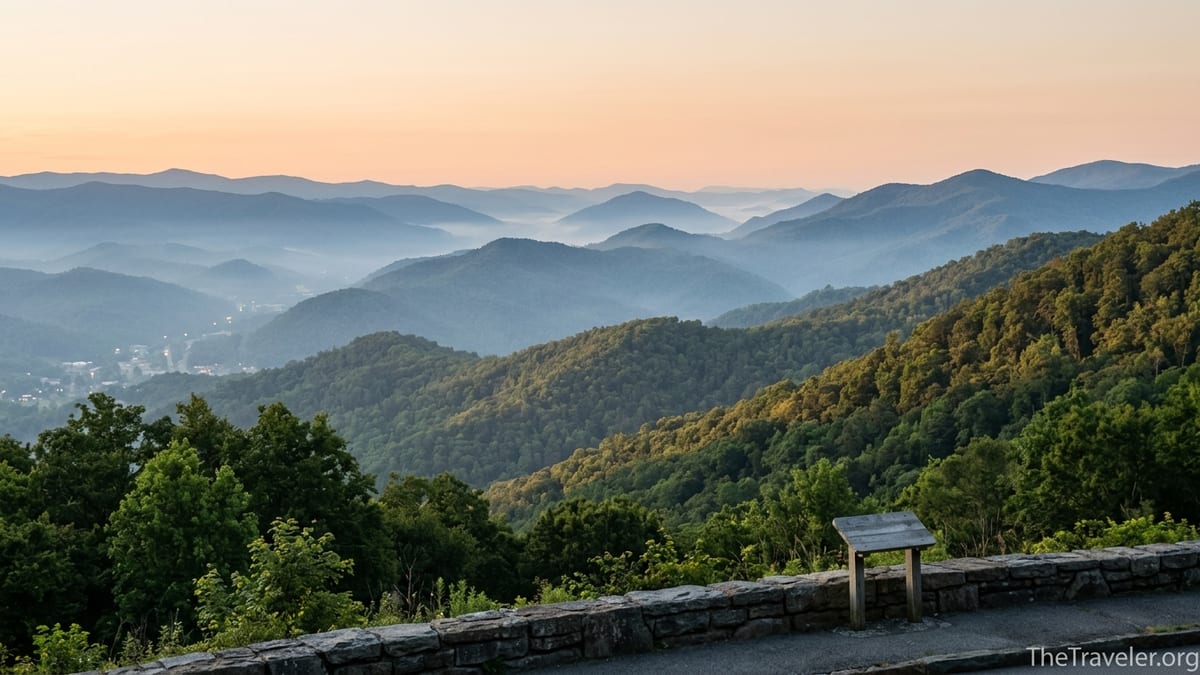
The Smoky Mountains: America’s Most Visited National Park
The eastern edge of Tennessee rises suddenly into the Great Smoky Mountains, a UNESCO World Heritage Site and the most visited national park in the United States, drawing well over 10 million visitors most years. The “smoke” you see from overlooks like Newfound Gap or Clingmans Dome is not pollution but natural mist formed as dense forests breathe moisture into the air. On a typical summer afternoon, those blue-gray layers of haze wrap around ridge after ridge, giving road-trippers on Newfound Gap Road a view that feels almost endless.
For many travelers, Gatlinburg and Pigeon Forge are the main gateways. From downtown Gatlinburg, you can be on the popular Laurel Falls Trail in about a 15-minute drive, trading pancake houses and taffy shops for a shaded walk to a 75-foot waterfall. Early risers might drive Little River Road toward Cades Cove, a broad valley ringed by mountains where deer and wild turkeys graze in open fields, and where black bears are often spotted at dawn or dusk. A typical family might spend a morning biking the 11-mile Cades Cove Loop on a vehicle-free day, then picnic in the grass near one of the historic churches that date back to the 1800s.
Because the park has no entrance fee, it is an easy add-on for long road trips. You might book a basic motel room in Pigeon Forge or Gatlinburg for a moderate nightly rate, then spend your days exploring hundreds of miles of free hiking trails and scenic pullouts. In autumn, traffic can be heavy as visitors search for peak foliage along routes like the Roaring Fork Motor Nature Trail, so staying two or three nights can make it easier to time your outings for quieter early mornings or weekdays.
Weather in the Smokies shifts quickly with elevation. In July, downtown Gatlinburg can feel hot and humid, while temperatures at Newfound Gap, more than 3,000 feet higher, can be more than 10 degrees cooler with a fresh breeze. In spring, wildflowers carpet the forest floor on trails like Porters Creek, while winter can bring rime ice and snow to Clingmans Dome, sometimes closing roads. Packing layers, a rain jacket, and sturdy shoes matters more here than in many other Southern destinations.
Mountain Towns With Personality: Gatlinburg & Pigeon Forge
The park might be wild, but the neighboring towns lean joyfully into entertainment. Gatlinburg hugs a narrow valley at the park’s edge, where pedestrian-friendly streets line up candy shops, small galleries, and moonshine tasting rooms. It is common for visitors to ride the aerial tramway up the mountain in late afternoon for bird’s-eye views and then stroll back downtown in the evening with a paper cone of fudge or taffy in hand.
Ten miles down the road, Pigeon Forge spreads out in a long strip of theaters, attractions, and family amusements. This is where you find Dollywood, Dolly Parton’s theme park, which blends Smoky Mountain culture with roller coasters and live shows. A typical summer day might see families alternating between a wooden coaster, a Southern gospel performance in a small theater, and a plate of skillet-fried chicken in the park’s craft-focused areas. In recent seasons, new experiences dedicated to Dolly’s life and music have given fans more reason to linger between rides.
Pigeon Forge also offers plenty of lower-key diversions for travelers who would rather not ride coasters. Dinner theaters pair hearty meals with country music revues or comedy shows, while attractions like mountain coasters and mini-golf courses light up after dark. Cabin rentals in the hills above town are popular for extended families, often featuring multi-story decks with hot tubs and views of distant ridgelines. For many visitors, a perfect Smokies evening is less about nightlife and more about grilling on the deck while mist settles into the hollows below.
Both towns cater heavily to road trippers. Parking is widely available, and many attractions sell combo or multi-day tickets that make it easier to mix a full day in the national park with a half day at Dollywood or a short visit to an aquarium or museum. That flexibility makes the region a practical base for travelers who want wilderness, live shows, and kid-friendly activities all in one place.
From Mountain Ballads to Country Hits: Nashville’s Creative Energy
Follow Interstate 40 west from the Smokies and the mountains gradually flatten into rolling farmland and small towns before Nashville’s skyline rises ahead, crowned by the distinctive AT&T Building. Known worldwide as “Music City,” Nashville has long been a magnet for songwriters, session musicians, and hopeful young performers. Visitors get an immediate sense of that energy on Lower Broadway, the downtown strip where neon guitar signs hang above multi-story honky tonks pumping live music from late morning until the small hours.
Stepping into a typical Broadway bar, you might find a band playing familiar country hits on the ground floor while, two stories up, a different group covers rock classics on a rooftop patio overlooking the Cumberland River. Many venues do not charge a set cover during the day but rely on tips and drink sales, so it is easy to sample several stages in an afternoon. At night, lines can form outside spots branded with stars’ names, and taxis drop off bachelorette parties in matching outfits, giving the street a festival-like atmosphere almost every weekend.
Beyond Broadway’s party vibe, Nashville reveals a deeper cultural side. The Ryman Auditorium, once home to the Grand Ole Opry, still hosts concerts ranging from bluegrass to indie rock, and day tours walk visitors past worn pews and backstage dressing rooms. The Country Music Hall of Fame and Museum displays rhinestone suits, handwritten lyric sheets, and classic instruments that connect generations of artists. In the nearby Music Row district, rows of low-rise studios and publishing houses remind travelers that the songs they hear on the radio often begin life in modest writing rooms on these blocks.
Neighborhoods around downtown offer a different pace. Travelers staying in areas like 12South or East Nashville find coffee shops that double as songwriter hangouts, independent record stores, and smaller clubs where up-and-coming acts test new material. A typical evening might involve dinner at a casual barbecue joint, a stroll past murals and boutiques, then a show at a neighborhood venue with a modest ticket price and a devoted local crowd. For visitors, this mix of mainstream honky tonks and more intimate songwriter spaces is a huge part of what makes Nashville feel like a living, breathing music ecosystem rather than a theme park.
Memphis: Blues, Soul, and the Mississippi River
On Tennessee’s western edge, Memphis leans against the Mississippi River with a musical legacy that has shaped the sound of the world. If Nashville is where many songs are crafted into hits, Memphis is where whole genres took root. Walking down Beale Street in the evening, you hear why: guitar-driven blues pouring from open doors, brass riffs from a corner band, and the low murmur of crowds moving between clubs. Many venues on Beale feature live music daily, from early evening sets aimed at families to late-night jam sessions that stretch toward midnight.
Travelers exploring during the day often start at historic studios and museums. At Sun Studio, guides walk small groups into the room where Elvis Presley, Johnny Cash, and Jerry Lee Lewis once recorded, pointing out the exact spot where Elvis stood to sing his first single. At Stax Museum of American Soul Music, set on the former site of the Stax recording studio, visitors move past stage costumes, vintage instruments, and a re-created studio space that celebrates artists like Otis Redding and Isaac Hayes. Graceland, Elvis’s former home just south of downtown, offers mansion tours and exhibits that draw fans from across the globe.
Memphis is also known for its food, especially slow-smoked barbecue. A visitor might order a pulled pork sandwich at a counter-service joint near downtown for a reasonable price or sit down for a rack of dry-rub ribs at a long-running restaurant where blues records line the walls. Pairing a late lunch with a stroll along the riverfront at Tom Lee Park or watching the sunset from the bluffs near downtown has become a common pattern for travelers who want to balance heavy meals with fresh air and river views.
Despite shifts in downtown development and events, Memphis retains a gritty, lived-in authenticity that appeals to travelers seeking music history that still feels close to the surface. Street-corner buskers near Beale, church choirs spilling onto sidewalks on Sunday mornings, and pop-up shows in small neighborhood venues remind visitors that the city’s musical spirit is not confined to museums. Many road-trippers end up wishing they had added an extra night to simply wander, listen, and let the city’s layered stories sink in.
Discovering Tennessee’s Smaller Music Towns
While Nashville and Memphis dominate headlines, some of Tennessee’s most memorable experiences happen in smaller towns where music and history intermingle on a more intimate scale. To the northeast, the twin cities of Bristol, Tennessee and Bristol, Virginia bill themselves as the “Birthplace of Country Music,” referencing early commercial recordings made here in the 1920s. Today, visitors can tour a downtown museum that explores those sessions, then step back outside to find murals and markers honoring the artists who helped shape early country sounds.
Further south, Chattanooga sits between steep ridges and the Tennessee River, blending outdoor adventure with a growing music and food scene. A traveler might spend the day riding the incline railway up Lookout Mountain, walking through historic battlefields, or visiting the riverfront aquarium, then end the evening at a neighborhood venue listening to regional bands. On summer weekends, outdoor concerts and festivals bring locals and visitors together on the riverfront, giving the city a laid-back, college-town feel.
Even towns that rarely make national lists can surprise you with their live music. In college communities like Knoxville, Johnson City, and Murfreesboro, students pack small clubs to hear indie bands, bluegrass pickers, or singer-songwriters. A road-tripper pulling off the interstate for a night might stumble into a bar where a local band is playing originals for the price of a modest cover charge, with a tip jar at the edge of the stage. These chance encounters are often the moments travelers remember long after they forget which attraction had the biggest gift shop.
For those who plan ahead, aligning a trip with local festivals can add another layer. Events celebrating everything from bluegrass to blues and rock appear on regional calendars throughout the year, often paired with food trucks and craft vendors. In practice, this might mean timing a Smokies hiking trip to coincide with a mountain music festival in a nearby town or planning a weekend in West Tennessee around a small blues celebration. Because many of these events are run by local organizations, details and dates can change, so checking the latest schedules before you drive is essential.
Road Trips, Scenic Byways, and Practical Planning
Tennessee’s narrow, horizontal shape almost invites road trips. It is entirely possible to start a week in the cool mist of the Smokies and end it watching the sun set over the Mississippi River, all without leaving the state. A common route begins in Gatlinburg, continues west on Interstate 40 through Knoxville and Nashville, then finishes in Memphis, covering roughly 450 miles. Spread over seven to ten days, that drive allows for two or three nights near the Smokies, a few nights in Nashville, and at least two nights in Memphis.
Drivers looking for scenic alternatives can mix in smaller highways and byways. South of Nashville, the Natchez Trace Parkway offers a quieter, tree-lined route with picnic areas and short walking trails, while in East Tennessee roads around Townsend and Wears Valley provide gentler access to the Smokies with fewer crowds than the main Gatlinburg corridor. In West Tennessee, detours through small river towns introduce travelers to landscapes of broad fields, wetlands, and quiet backroads that feel far removed from the bright lights of Broadway or Beale.
Seasonality plays a big role in how Tennessee feels. Summer brings long days and busy trails in the Smokies, crowded honky tonks in Nashville, and warm, humid nights on Beale Street. Autumn is peak foliage season in the mountains, often filling lodgings months in advance, while shoulder seasons like late April or early November can offer milder weather and thinner crowds. Winter tends to be quieter outside of holiday peaks, with occasional snow in the mountains and more affordable rates in the cities, though some outdoor activities may be limited.
On the practical side, many attractions offer advance ticketing and timed entry to manage demand, especially on weekends and holidays. Booking lodging early, especially cabins near the national park and downtown hotels in Nashville, helps avoid last-minute price spikes. Travelers on a budget often pair a couple of nights in higher-priced city centers with more economical stays in suburbs or nearby towns, using rideshares or public transit when possible to reach central districts for evenings out.
The Human Element: Hospitality, Heritage, and Change
Beyond landscapes and music stages, what many visitors remember most about Tennessee is the people they meet. In a Smokies visitor center, a ranger might pause to trace your route on a paper map, suggesting a quieter trail or safer overlook. In a Nashville songwriter round, performers share the stories behind their lyrics, inviting audiences into the personal side of the music business. On Beale Street, a blues guitarist might banter with passersby between songs, turning strangers into a makeshift community for the length of a set.
At the same time, Tennessee grapples with the effects of its own popularity. The Smokies’ status as a top national park brings economic benefits to gateway towns but also raises concerns about traffic, crowded trails, and pressures on wildlife. In places like Nashville, rapid growth along Broadway has transformed some long-running honky tonks and replaced smaller venues with multi-level entertainment complexes bearing celebrities’ names. In Memphis, debates around festivals and downtown development reflect broader conversations about who benefits from tourism and how to protect cultural authenticity.
For travelers, being part of the solution can be simple and practical. In the national park, that might mean visiting lesser-known trailheads, packing out trash, and obeying wildlife distance guidelines even when everyone else seems to edge closer for a photo. In cities, it could involve spending money not just in the most famous venues but also in independent clubs, record shops, and restaurants where locals gather. Taking a moment to learn about the history behind the music, including difficult chapters of civil rights struggles and economic hardship, adds depth to what might otherwise be just another night out.
When visitors approach Tennessee with curiosity and respect, they often find that locals respond in kind. A brief conversation with a server about their favorite band, a chat with a gallery owner about regional crafts, or a question for a park ranger about how climate change is affecting the Smokies can transform a standard vacation into a more meaningful journey. Those human connections, layered over the mountains, rivers, and guitar riffs, are a big part of what makes the state feel special long after the trip is over.
The Takeaway
Tennessee’s magic lies in the way its contrasts fit together. In the east, ancient mountains cradle hollows filled with mist and birdsong, while a short drive away Pigeon Forge and Gatlinburg buzz with theme parks and family attractions. In the center of the state, Nashville’s studios and honky tonks craft songs that travel the world, even as small neighborhood venues nurture the next wave of voices. To the west, Memphis stands on the Mississippi with a musical legacy carved into every guitar lick, balancing tough history with enduring soul.
For travelers, this means a single trip can include a sunrise hike to a Smokies overlook, an afternoon listening to country hits from a rooftop stage, and a late-night blues set in a dim Memphis club, all within a week. It is a place where you can eat a biscuit breakfast on a mountain porch and later that same day scan the walls of a legendary studio, recognizing album covers from your own playlists. The distances are drivable, the experiences varied, and the stories still unfolding.
What ultimately makes Tennessee special is not any one attraction but the way its landscapes and music scenes reflect one another: rooted, resilient, and always evolving. Whether you come for the hiking, the honky tonks, the barbecue, or the chance to walk the same streets as your musical heroes, you are stepping into a state that has shaped American culture far beyond its borders. And once you have heard a fiddle echo off a Smoky Mountain ridge or watched the neon of Broadway and Beale shimmer after a summer storm, you may find yourself planning the next visit before the current one has even ended.
FAQ
Q1. How many days do I need to see both the Smoky Mountains and Nashville?
Most travelers find that seven to ten days works well, allowing two or three nights near the Smokies, three nights in Nashville, and time for travel days in between.
Q2. When is the best time of year to visit the Great Smoky Mountains?
Late April to early June and late September to early November usually offer milder temperatures and good hiking conditions, though fall foliage weeks can be very busy.
Q3. Is it better to stay in Gatlinburg, Pigeon Forge, or a cabin outside town?
Gatlinburg is walkable and close to trailheads, Pigeon Forge has more shows and attractions, while cabins outside town offer quieter settings and mountain views.
Q4. Do I need a car to enjoy Nashville and Memphis?
A car makes it easier to move between cities and neighborhoods, but if you stay downtown, you can often rely on walking, rideshares, and the occasional local transit ride.
Q5. Are the honky tonks on Broadway and the clubs on Beale Street family-friendly?
Daytime and early evening hours can be suitable for families, but both areas shift to a louder, more adult nightlife scene later at night, especially on weekends.
Q6. How expensive is Tennessee compared with other popular U.S. destinations?
Major city centers and peak dates can be pricey, but overall Tennessee often feels more affordable than coastal hubs, especially if you mix city stays with smaller towns.
Q7. Can I visit Dollywood and the national park in the same trip without feeling rushed?
Yes, many visitors base themselves in Pigeon Forge or Gatlinburg for three or four nights and alternate between full park days and Dollywood or other attractions.
Q8. Is Tennessee safe for solo travelers and first-time U.S. visitors?
Most visitors have trouble-free trips by following standard precautions, choosing well-reviewed lodging, and staying aware, especially late at night in busy entertainment districts.
Q9. How can I experience live music without only going to the most touristy spots?
Ask locals for recommendations, check neighborhood venues and songwriter rounds, and look beyond the busiest blocks of Broadway or Beale for smaller, more local rooms.
Q10. What should I pack for a trip that includes mountains and music cities?
Bring comfortable walking shoes, layers for changing mountain weather, casual clothes suitable for bars and shows, and a light rain jacket for summer storms.