


More news on this day
A Southern Railway passenger service derailing near Lewes in East Sussex on 13 August has overturned carriages, injured multiple people and triggered severe disruption across the Sussex rail network at the height of the summer travel season.
Get the latest news straight to your inbox!
What Happened Near Lewes and the Scale of the Disruption
Reports indicate that a Southern Railway train traveling between London Victoria and Eastbourne left the tracks just outside Lewes station in East Sussex on the afternoon of 13 August. Images from the scene show several carriages on their side on an embankment with emergency responders working from track level and from the tops of the overturned cars. Early coverage describes a low to moderate speed derailment, with passengers describing a sudden series of jolts before the train toppled.
According to published coverage, about 150 people were on board at the time of the incident, with early reports speaking of a number of “walking wounded” and a small number of more serious injuries but no immediate confirmation of fatalities. Passengers have described broken glass, soot and smoke inside some carriages, as well as a chaotic evacuation onto the embankment and nearby fields.
The derailment has effectively severed one of the most heavily used rail arteries in Sussex, with services halted in both directions between Brighton and Lewes and knock-on disruption reported on wider Southern and Thameslink routes. With the incident occurring close to a major junction, congestion is affecting not only coastal services toward Eastbourne, Hastings and Seaford, but also links into London for commuters and summer visitors.
Rail accident investigators and infrastructure engineers are expected to remain at the scene for some time, meaning that the section of track near Lewes is likely to stay closed while inspections, recovery of rolling stock and repairs take place. Travellers should plan for disruption on this part of the network lasting at least through the end of the day and potentially longer.
Current Service Status on Key Sussex Rail Routes
Following the derailment, publicly available information shows that all direct rail services between Brighton and Lewes have been suspended, with rail operators advising passengers not to attempt to travel through the affected corridor unless their journey is essential. Trains that would normally run from London Victoria and London Bridge towards Eastbourne, Seaford and Hastings are being terminated early or diverted where alternative lines exist.
Brighton, usually a major hub for services along the south coast and into London, is experiencing crowding and extended waiting times as trains are turned back or rerouted. Some coastal trains are running only as far as Brighton from the west, while services approaching from the east are being held or cancelled before reaching the blocked section near Lewes. Commuter flows in the late afternoon and evening peak are particularly affected, with operators warning of limited capacity on any routes that remain open.
Further along the coast, travellers heading for Eastbourne and Hastings face extended journey times or a need to switch to road-based alternatives. Where possible, rail operators are seeking to keep some limited services running on unaffected stretches of line, but timetables are being revised at short notice and traditional peak patterns have been abandoned for the time being.
Because the derailment has occurred during a period of hot weather when other parts of the network are already under strain, the incident is compounding a day of wider national rail disruption. Travellers connecting from long distance services or from London airports may find that carefully timed itineraries no longer work as planned and should build in extra time.
Likely Causes, Safety Context and Weather Factors
It is too early for an official explanation of the Lewes derailment, but early commentary from rail specialists and local observers points to a combination of track and ground conditions, possibly influenced by recent high temperatures. Photos circulating in public forums appear to show warped or misaligned rail near the site, as well as disturbed ballast on a curved section of line just before the carriages overturned.
In recent summers, infrastructure reports for the Sussex route have highlighted the increasing challenge of maintaining track geometry during heatwaves, when steel rails expand and the underlying embankments can dry and shift. Under such conditions, even minor defects can escalate quickly, especially where lines are heavily trafficked by commuter and regional services operating at relatively high frequency.
Despite the dramatic images, the pattern of injuries reported so far fits with the broader safety record of modern UK passenger rail, where derailments that overturn carriages remain rare and are less likely to result in large numbers of fatalities than in earlier decades. Modern rolling stock is designed with stronger crashworthiness standards and interior fittings intended to reduce the risk of serious harm in low to medium speed incidents.
An independent investigation is expected to examine track condition, recent maintenance records, train speed, signalling data and the condition of the embankment and surrounding land. The findings will be closely watched across the network, particularly in other regions where heat-related track issues and high passenger volumes coincide.
Alternative Routes and Options for Stranded Travellers
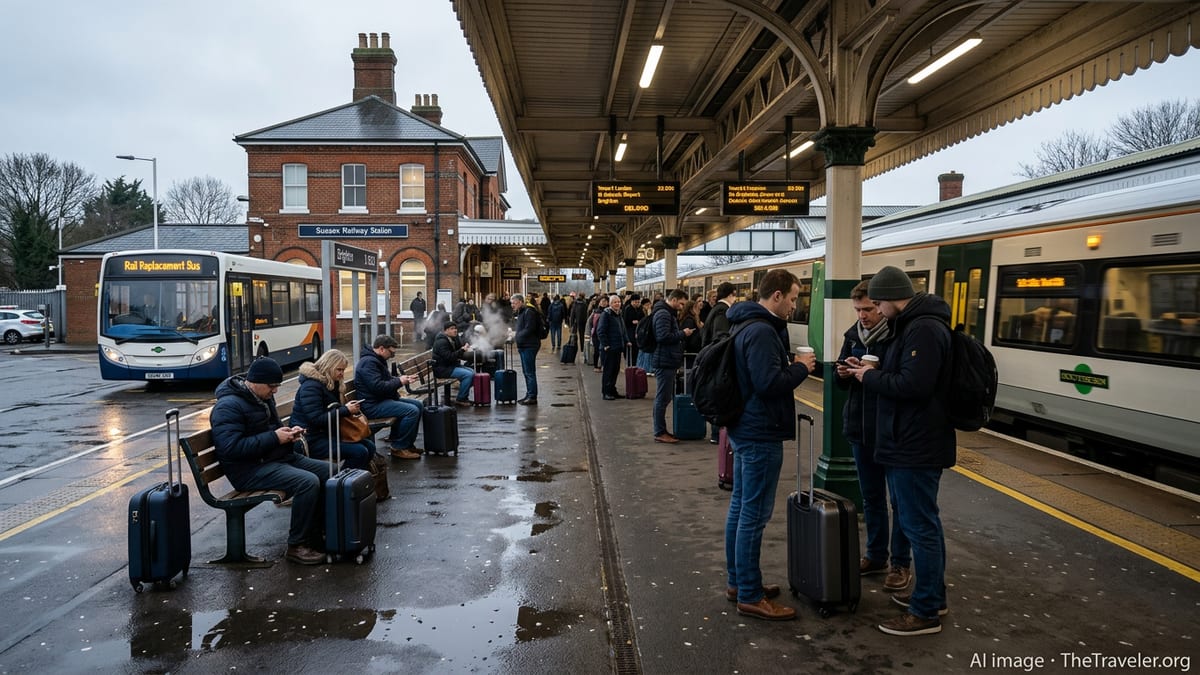
With the Brighton to Lewes corridor blocked, travellers have several practical alternatives, although all involve longer journey times and potential crowding. Rail operators are rolling out rail replacement buses between key stations on either side of the closure, particularly linking Brighton, Lewes and Eastbourne. These buses are expected to run at high frequency while rail lines remain shut, but journeys will be slower and road congestion around Lewes may add further delays.
Passengers traveling between London and Brighton who do not need to continue east along the coast are generally able to use alternative main lines into the capital that do not pass through the affected area. Services on other corridors into London, however, may be busier than usual as travellers divert away from the Sussex route. Flexible tickets are likely to be accepted on alternative services, and travellers are advised to check the latest operator notices before boarding.
For those needing to reach Eastbourne, Hastings or smaller coastal towns from Brighton or London, a combination of rail and bus may be the most reliable short term solution. This can include taking trains to unaffected junctions, then switching to replacement buses or local services that operate on isolated sections of track that remain open east of the derailment site.
In addition, intercity and regional coach services are an option for some journeys, particularly for longer trips beginning or ending in London or major south coast cities. Road travel by car is possible but drivers should be prepared for heavier than usual traffic on the A27 and other local routes as both replacement buses and private vehicles seek to bypass the blocked rail line near Lewes.
Practical Advice for Travellers in the Coming Days
With rail investigations and engineering work expected to continue beyond the initial emergency response, travellers using Sussex routes should plan for ongoing disruption rather than a rapid return to normal service. Those with non-essential journeys, including leisure trips to the south coast, may wish to postpone travel until there is clearer information about line reopening times and revised timetables.
Commuters and visitors who must travel should check service updates frequently on the day of travel, as train times and stopping patterns are likely to change at short notice. Allowing significant extra time for connections, particularly to and from airports and long distance trains, will help reduce the risk of missed departures. Where possible, flexible tickets, open returns or season tickets that permit travel on more than one route will provide the greatest resilience as operators adjust services.
Some workplaces in London and along the south coast may choose to encourage remote working or flexible hours while the disruption persists, which can help reduce peak crowding on the limited services that continue to operate. Schools, event venues and tourism businesses in Brighton, Lewes and surrounding towns are also likely to monitor the situation closely, as disrupted rail access may affect attendance and visitor numbers.
For now, the derailment near Lewes serves as a stark reminder of the vulnerability of busy regional rail corridors during extreme weather and high demand. Regular travellers on the Sussex route may wish to keep alternative journey plans in mind for future heatwaves, including pre-identified bus, coach or secondary rail options that can be activated quickly when major incidents close a key section of track.