


The French Riviera has a reputation for glamour, but planning a trip that actually captures its best beaches, old towns and hilltop villages can be surprisingly tricky. Distances are short, but the choice of bases, the coastal trains and the sheer number of pretty stops make it easy to miss the classics or waste time zigzagging. This guide walks you through how to structure a first visit so you hit the major highlights, using concrete examples of routes, passes and neighborhoods that work in real life.
Get the latest updates straight to your inbox!
Decide How Long to Stay and What Kind of Trip You Want
Before you book anything, be clear about what you want from the French Riviera, because that will shape everything from your base to your budget. Many first time visitors try to do too much in three days and end up seeing little more than train platforms and seafront promenades. As a rule of thumb, plan at least five full days if you want to combine Nice, Monaco, Cannes and a hilltop village like Èze or Saint Paul de Vence without feeling rushed. Seven days lets you add slower beach time or an extra coastal town such as Antibes or Menton.
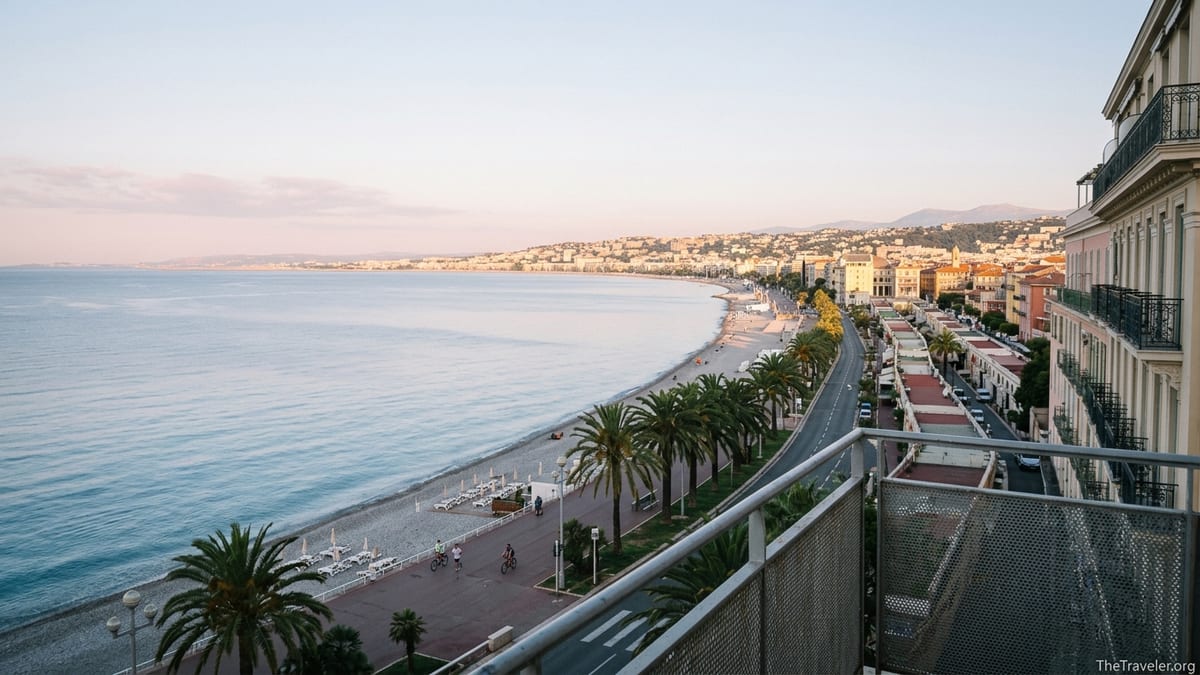
Think in terms of trip style rather than just a checklist of names. If you are dreaming of museums, markets and food, you will design a different itinerary than someone focused on beach clubs and nightlife. A culture focused stay might center on Nice’s old town, the Matisse Museum and day trips to Antibes and Saint Paul de Vence. A sun and sea oriented week might prioritize long afternoons on the pebbles of the Promenade des Anglais, sandy stretches near Cannes and beach clubs on the Cap d’Antibes. Families with children may want shorter day trips and an apartment near a playground and calmer beach such as Villefranche sur Mer.
Be realistic about energy levels. Moving hotels every night to “see everything” often backfires. It usually works better to pick one main base plus, at most, one secondary base if you are staying a full week. For example, spend four nights in Nice for urban highlights and day trips, then three nights in Antibes or Cannes for a softer resort feel. This structure ensures you visit the major names while still having time to simply sit on a terrace and enjoy where you are.
Choose the Right Base: Nice, Cannes, Antibes or Monaco
For most travelers, the most practical base is Nice. It has the largest choice of accommodation, an airport with direct tram access into town, and frequent TER coastal trains in both directions. If you stay near Nice Ville train station or within a 10 to 15 minute walk of the Promenade des Anglais, you can reach Monaco in about 25 minutes by regional train and Cannes in roughly 30 to 40 minutes. This makes it easy to visit marquee sights such as Monaco’s Old Town, the Palais des Festivals in Cannes and the Picasso Museum in Antibes without changing hotels.
Cannes suits travelers who want a more compact upscale resort feel and are happy to use trains for eastbound day trips. The Croisette seafront has sandy beaches, which some visitors prefer to Nice’s pebbles. A typical pattern is to base in Cannes if you are visiting outside peak festival periods and want to walk everywhere in the evening between your hotel, restaurants and the beach. From Cannes, you can still reach Nice and Monaco by train, though day trips east will take slightly longer than from Nice.
Antibes offers a quieter old town and a good compromise between the two. Its walled historic center, daily covered market and coastal ramparts feel more small town than city. Many visitors who want to avoid late night noise but still have a central base choose Antibes and then day trip to Cannes, Nice or even the Lerins Islands via boat. Monaco, on the other hand, is more of a day trip destination for most first time Riviera visitors. Hotels there are often significantly more expensive, and the practical pattern is to stay in Nice or Menton and take a morning train to Monaco to see the Casino, the Old Town and the Oceanographic Museum before returning in the evening.
When comparing bases, plug some sample days into a map or train timetable so you see the real travel times. For instance, if you base in Nice and plan a day like “breakfast in Nice, mid morning in Antibes, afternoon in Cannes, evening back in Nice,” you will realize that you are spending roughly one and a half to two hours total just on trains and walking to and from stations. That may be worthwhile once, but you probably do not want to repeat it every day of a short trip.
Use Trains, Trams and Passes to See More in Less Time
The TER coastal train is the backbone of most French Riviera itineraries. It connects major stops such as Nice, Villefranche sur Mer, Monaco, Menton, Antibes and Cannes. Tickets for short hops are generally modestly priced, and trains typically run at least twice per hour in the daytime on core sections. For example, a typical visitor might buy a same day ticket from Nice Ville to Monaco Monte Carlo in the morning, then hop off at Villefranche sur Mer on the way back for a swim before returning to Nice in the evening on a separate ticket.
If you plan to ride trains and local buses frequently over several days, look at regional passes that combine networks. A practical example is a multi day pass that covers TER trains across the Alpes Maritimes department as well as local buses and trams in cities such as Nice and Cannes. Travelers commonly purchase a three or seven day version when they know they will be bouncing daily between Nice, Cannes, Antibes and Monaco. The upfront cost can feel high, but if you are doing multiple journeys each day, it often works out cheaper than buying individual tickets and saves time at machines.
Within Nice itself, the Lignes d’Azur network of trams and buses makes it easy to move between the airport, central station, seafront and residential neighborhoods. In 2025 and 2026, a typical single ticket on the urban network costs under 2 euros when bought on the official app or at a tram stop. Visitors often pick up a rechargeable card at a tram machine and load several trips or a 24 hour product. For example, you might arrive at Nice Côte d’Azur airport, ride the tram into town using a standard city ticket, then reuse the same card that evening to ride the tram to the old port and back.
On days when you are stringing together multiple stops in one direction, consider a simple linear route instead of bouncing back and forth. A concrete day trip plan from Nice could be to catch an early TER to Menton for a morning wander, hop off at Monaco for the early afternoon and finish in Villefranche sur Mer for a sunset swim on the way home. The same principle works in the other direction for Antibes and Cannes. This approach reduces your total train time and helps ensure you do not miss one of the headline towns simply because you ran out of energy and daylight.
Map Out the Classic Highlights So You Do Not Miss Them
Lists of “best of the Riviera” can feel overwhelming, so it helps to think of the region in a few anchor highlights that nearly every first time visitor enjoys. In Nice, these include strolling the Promenade des Anglais, exploring the narrow lanes and market of Vieux Nice, and taking in the views from Castle Hill. Many itineraries also build in at least one museum such as the Matisse Museum on the Cimiez hill or the Museum of Modern and Contemporary Art near the old town. Even with only two full days in Nice, you can usually cover these with time left for a swim or café break.
Monaco’s highlights cluster around three main areas: the Old Town on the Rock with the Prince’s Palace, the yacht filled harbor and the Monte Carlo district around the Casino. A realistic half day visit might start with a late morning train from Nice, a walk up to the Old Town for lunch and a palace or museum visit, then a stroll down via the harbor to the Casino square before heading back on an afternoon train. Unless you are a motorsport enthusiast planning around the Grand Prix period, you generally do not need an overnight stay to see the classic Monaco sights.
Cannes and Antibes offer a softer side of the Riviera’s glamour. In Cannes, many visitors want a photograph by the Palais des Festivals steps and a walk along the Croisette, then some time on the beach. In practice, this often adds up to a relaxed day trip rather than a rushed half day. Antibes’ old town is more intimate, with stone lanes, a daily Provençal market and the Picasso Museum overlooking the sea. If you have five or more days, spending a full day between Antibes and its Cap coastal walk is a good way not to feel that you barely saw the town on your way to somewhere else.
Finally, do not skip at least one hilltop village. Èze, perched dramatically above the sea between Nice and Monaco, is the classic choice. A common strategy is to ride the TER to Èze sur Mer and then a bus up to the village, or to take a direct bus from Nice. You wander the steep medieval lanes, visit the exotic garden at the summit for panoramic views and then descend later in the afternoon. Saint Paul de Vence offers a different feel, more focused on art galleries and stone ramparts. Choosing one or the other, rather than trying to squeeze both into a single already packed day, often leads to a more satisfying experience.
Build a Day by Day Itinerary That Actually Works
Once you understand the geography, sketching a day by day plan becomes much simpler. For a five day first trip based in Nice, one workable structure is to dedicate days one and two mainly to Nice itself. That could mean a first afternoon getting oriented on the Promenade des Anglais and in Vieux Nice, followed by a full second day visiting Castle Hill, the market at Cours Saleya and one or two museums. You might finish with an evening dinner in the old town, perhaps trying socca from a traditional stand and a seafood main at a midrange bistro.
Day three could be your Monaco and Èze combination. Many travelers leave Nice by TER around 9 or 10 a.m., arrive in Monaco mid morning, tour the Old Town and harbor, then depart mid afternoon for Èze village by bus. After a few hours in Èze, including a visit to the hilltop gardens and a coffee with a view, you return to Nice by early evening. This is a busy day, but still realistic if you keep an eye on local bus timetables and avoid overloading it with long restaurant meals.
Day four might be devoted to Antibes and Cannes. One concrete pattern is to take the morning train to Antibes, spend three to four hours wandering the old town, market and seafront ramparts, visit the Picasso Museum and have lunch at a simple local restaurant. After lunch, you hop back on the TER for the short ride to Cannes, walk the Croisette, dip your feet in the sand and stroll the old quarter of Le Suquet before returning to Nice after sunset. If you find that pace rushed, you can instead give Antibes its own full day and save Cannes for another trip.
For day five, keep things flexible. If a place captured your heart earlier in the week, use this as a buffer day to go back. Many visitors choose to return to Villefranche sur Mer for a slower beach day, to spend more time in a favorite Nice neighborhood or to take a short boat trip such as from Cannes to the Lerins Islands. Leaving one unplanned day at the end gives your itinerary breathing room in case of bad weather, delayed trains or simple fatigue, and helps ensure you do not go home having rushed from sight to sight without ever pausing.
Budgeting, Eating and Avoiding Common Mistakes
The French Riviera can be expensive, but thoughtful planning keeps costs under control without sacrificing the highlights. Accommodation will take the biggest bite, especially in July and August, during major events or if you want a seafront address in Nice, Cannes or Monaco. If you are on a moderate budget, look at well located midrange hotels or apartments one or two streets back from the Promenade des Anglais in Nice or a short walk inland from the Croisette in Cannes. Prices often drop significantly compared to prime seafront while still keeping you within easy reach of the water.
Food is where you can save the most while still experiencing local flavors. A practical pattern is to make lunch your main sit down meal and keep dinners simpler. Across the Riviera, many restaurants offer a fixed price lunch menu that might run roughly 15 to 25 euros per person for two or three courses. You could, for example, try a menu du jour in Antibes featuring a starter of salade niçoise, a main of grilled local fish and a simple dessert, then make dinner later a picnic of market cheese, fruit, bread and a bottle of local wine back on your balcony.
One common mistake is underestimating sun and heat, especially from late spring to early autumn. It is easy to pack your days too heavily and then find yourself exhausted on a hilltop village climb at midday. Build in rest periods and shade. For instance, plan museum visits for the early afternoon when streets are hottest, and schedule uphill walks for earlier or later in the day. Another frequent error is failing to validate transport tickets. On trams and buses you must validate your card or paper ticket as you board or on the platform, and inspectors do check. Getting caught with an unvalidated ticket can mean an on the spot fine that costs more than an entire day of travel.
Finally, think carefully before renting a car. For many itineraries that focus on the coast and major hilltop villages, public transport is not only easier but faster, thanks to traffic congestion and tricky parking in historic centers. A car can be useful if you plan to explore inland Provence, remote hill villages or rural wineries, but for a first trip concentrating on Nice, Monaco, Antibes and Cannes, your time and budget are usually better spent on trains, trams and the occasional taxi for late nights or early airport departures.
The Takeaway
Planning a French Riviera trip that captures the region’s essence is less about squeezing in every town on the map and more about choosing a smart base, using public transport well and giving yourself enough time. With five to seven days, a base in Nice or Antibes, a clear sense of your priorities and a few strategic day trips, you can see the iconic sights of Nice, Monaco, Cannes, Antibes and at least one hilltop village without feeling like you spent your holiday commuting.
Use concrete tools such as regional train passes, tram cards and realistic travel times to build days that flow naturally rather than hop frenetically. Anchor your itinerary around proven highlights like the Promenade des Anglais, Monaco’s Old Town, the Croisette, Antibes’ market and Èze’s panoramic views, then leave space for cafés, swims and unplanned detours. Done this way, your French Riviera journey will feel less like a checklist and more like a series of vivid, specific days that add up to a memorable whole.
FAQ
Q1. How many days do I need on the French Riviera for a first visit?
Most travelers are happiest with five to seven full days, which allows time for Nice, Monaco, Antibes or Cannes and at least one hilltop village without rushing.
Q2. Is Nice or Cannes a better base for seeing the main highlights?
Nice is usually more practical thanks to its airport, tram network and central position on the TER coastal line, while Cannes suits those prioritizing sandy beaches and a compact resort feel.
Q3. Do I need a car to visit Monaco, Èze and Antibes from Nice?
No, you can comfortably visit all three by combining TER regional trains with local buses, with journey times typically under an hour each way from Nice.
Q4. When is the best time of year to visit the French Riviera and avoid crowds?
Late April to early June and late September to October usually offer warm weather, sea swimming for many people and lighter crowds than the July and August peak.
Q5. How much should I budget per day for a midrange trip excluding flights?
A rough midrange estimate might be around 150 to 250 euros per day for two people, covering accommodation, meals, local transport and modest sightseeing, depending on season and location.
Q6. Are beaches in Nice really all pebbles, and are there sandy options nearby?
Yes, Nice’s central beaches are mostly pebbles, but you will find sandy stretches in Cannes, Juan les Pins and parts of Antibes, all reachable by short train rides.
Q7. Is it worth buying a regional transport pass instead of single tickets?
If you plan multiple train and bus rides daily between towns like Nice, Monaco, Antibes and Cannes over several days, a regional pass can be both cheaper and more convenient than individual tickets.
Q8. Can I swim in the sea outside the main summer months?
Many visitors comfortably swim from roughly late May to early October, though exact dates depend on your tolerance for cooler water and the year’s conditions.
Q9. What should I book in advance besides accommodation and flights?
In busy months, book any must do restaurants, guided tours, popular museums with timed entries and special experiences such as certain beach clubs or boat trips in advance.
Q10. Is the French Riviera safe for solo travelers using public transport at night?
The main towns are generally considered safe by European standards, but it is still wise to stick to well lit routes, check last train times and use licensed taxis for very late returns.